 Everett
 Why Decks Near Lake Stevens Wear Out Faster Than People Expect
Lake Stevens sits just inland from Everett in Snohomish County, and the wood or composite under your feet takes on a very specific kind of abuse here. It's not one dramatic storm that does the damage — it's the steady, months-long pattern of driving rain, damp ground fog off the lake, and salt-tinged marine air that drifts inland from Puget Sound on a west wind. None of that is severe on its own. Stacked up over a decade or two, it's exactly what breaks a deck down from the inside.
Add in the moss season that runs from roughly October through April, and you get a surface that stays wet longer than it should, fasteners that corrode quietly under the boards, and framing lumber that never fully dries out between rain events. A deck built for a drier climate, or built without accounting for any of this, tends to show real structural problems well before it looks bad on the surface.
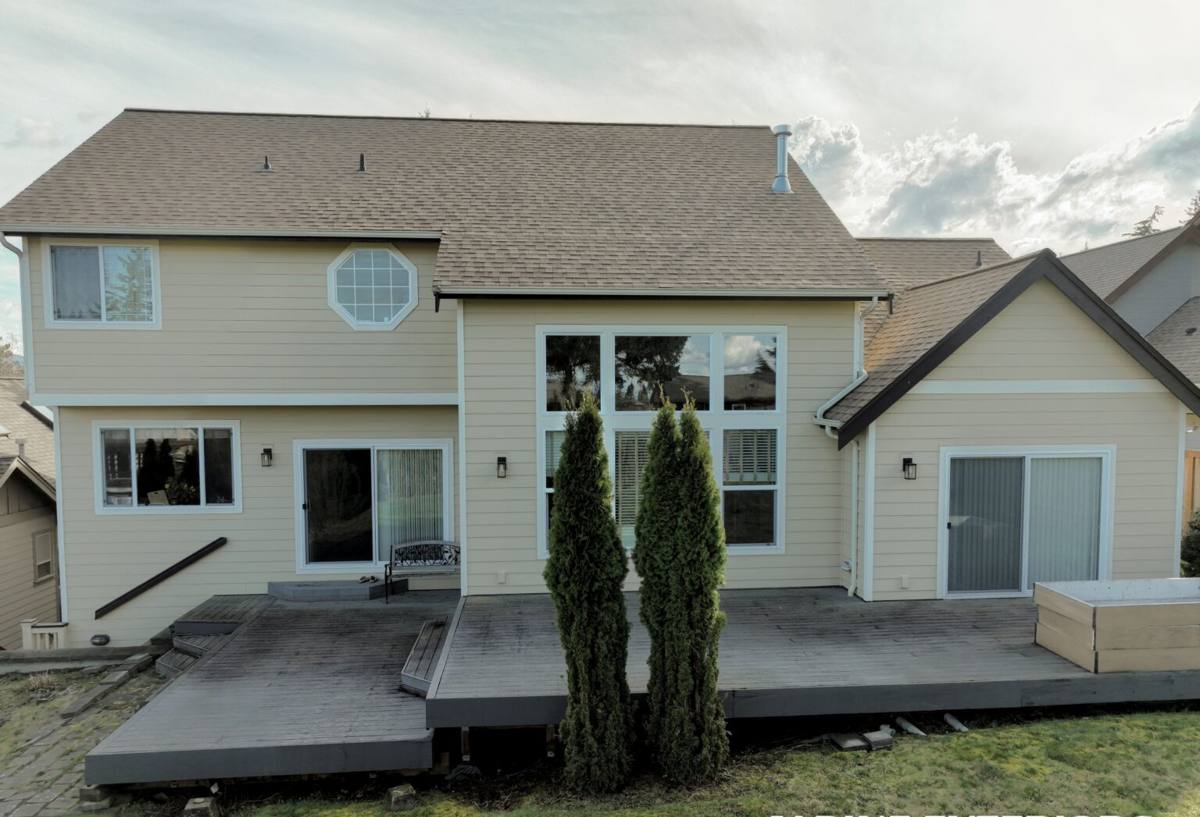
Signs a Deck Needs Replacement, Not Another Repair
Homeowners often call us wanting a quote to "fix a few boards," and that's a completely reasonable place to start. But there's a point where patching stops making sense and full replacement becomes the honest recommendation. Here's how we tell the difference on a typical Lake Stevens property:
Repair is usually enough when:
- Individual boards are cupped, splintering, or gray, but the frame underneath is solid
- Railings are loose but the posts aren't rotted at the base
- Fasteners are popping or rusting on an otherwise sound structure
Replacement is the right call when:
- A screwdriver sinks into the ledger board, joists, or posts with light pressure
- There's soft or spongy decking in more than one area, not just a single board
- The deck was built without proper flashing where it meets the house — a very common issue on older Snohomish County homes
- Footings have shifted, heaved, or were never poured to current frost depth
- You can see daylight or gaps opening up between the ledger and the house siding
What a Correct Deck Replacement Actually Involves
A deck is only as good as what you can't see once it's finished. Most deck failures we're called out to inspect trace back to three things done wrong the first time: ledger attachment, flashing, and moisture management at ground level. A proper replacement addresses all three, every time, regardless of what decking material goes on top.
Ledger and flashing
Where the deck attaches to the house is the single most important connection on the entire structure, and it's also the most common point of hidden rot in this climate. Correct practice means through-bolting (not just lag screws) into solid framing, and a proper flashing detail that sheds water away from the house rather than trapping it behind the ledger board. This is where a lot of driving-rain damage originates on homes around here.
Framing and footings
Joists, beams, and posts need to be sized for the actual span and load, not just "what was there before." Footings should sit below frost depth and bear on undisturbed or properly compacted soil — ground around Lake Stevens can hold moisture longer than you'd guess, and a footing poured on soft or saturated soil will eventually settle unevenly.
Fasteners and hardware
In a marine-influenced climate, standard fasteners corrode faster than most homeowners expect. We use stainless steel or heavy hot-dip galvanized hardware rated for ground contact and treated lumber, and we match connector hardware to whatever decking and framing material is actually going on the job — mixing incompatible metals is a fast way to get galvanic corrosion at every joint.
Decking Material Comparison for This Climate
There's no single "best" decking material — there's the right material for your budget, your maintenance appetite, and how much moss-season moisture you're willing to deal with. Here's how the common options actually perform locally:
| Material | Moisture & Moss Behavior | Maintenance | Typical Lifespan Here |
|---|---|---|---|
| Pressure-treated wood | Absorbs moisture, needs airflow underneath to dry between rains | Annual cleaning, periodic sealing/staining | 15–20 years with upkeep |
| Cedar | Naturally moisture-resistant but still needs to shed water and dry | Regular sealing to hold color and resist graying | 15–20 years with upkeep |
| Capped composite | Sheds surface moisture well; moss can still grow on shaded, low-airflow boards | Occasional wash-down, no staining or sealing | 25–30+ years, warrantied |
| PVC decking | Doesn't absorb moisture at all; best option where shade and dampness are constant | Occasional wash-down | 25–30+ years, warrantied |
We're candid with clients about trade-offs rather than pushing one product line. Composite and PVC cost more up front and some homeowners prefer the look and feel of real wood — that's a legitimate choice as long as you're realistic about the sealing schedule a wood deck needs in a climate this wet. Where a deck sits mostly in shade near mature trees, which describes a fair number of Lake Stevens lots, we'll flag that moss will still find capped composite eventually and talk through spacing and airflow to slow it down.
Our Deck Replacement Process
We keep this straightforward because a deck project shouldn't feel like a mystery to the homeowner paying for it.
- On-site assessment — we inspect the existing structure from the ledger down to the footings, not just the visible decking, and tell you honestly whether repair or replacement makes sense.
- Written scope and estimate — material options, structural work needed, and a clear price range before anything is torn out.
- Permitting — we handle the Snohomish County or applicable local permit application for you where one is required.
- Demolition and disposal — old decking, railing, and any compromised framing removed and hauled off.
- Structural rebuild — ledger, flashing, framing, and footings brought up to current code, regardless of what the old deck had.
- Decking, railing, and finish work — installed to the manufacturer's specifications for whichever material you've chosen.
- Final walkthrough — we go over the finished deck with you, including what maintenance it will actually need.
What Deck Replacement Costs Depend On
We won't quote a number without seeing the site, but these are the factors that move the price up or down on almost every project:
| Factor | Why It Matters |
|---|---|
| Deck size and shape | Square footage plus corners, angles, and multiple levels all add labor |
| Decking material chosen | Wood costs less upfront; composite and PVC cost more but need far less upkeep |
| Height above grade | Taller decks need more substantial framing, footings, and stair/railing work |
| Condition of the existing structure | Rotted framing or undersized footings mean more rebuild, not just resurfacing |
| Railing style | Cable, glass, and composite railing systems cost more than standard wood balusters |
| Permit and inspection requirements | Adds time and a fee, but protects you if you ever sell the home |
Permits and Local Requirements
Most deck replacements that involve structural changes — new footings, a raised deck, or a deck attached at a new point on the house — require a permit through Snohomish County or the applicable local jurisdiction. Simply swapping decking boards on a sound existing frame sometimes doesn't trigger a permit, but replacing the frame itself generally does. We pull the necessary permits as part of the job rather than leaving that step to the homeowner, because an unpermitted structural deck can become a real problem at resale.
Maintaining a New Deck Through Moss Season
Even a well-built deck needs a little seasonal attention in this climate. A short list of habits keeps a new deck looking and performing the way it should for the long haul:
- Sweep leaves and debris off the deck surface before fall rains set in — trapped organic matter is what moss and algae feed on
- Rinse the deck surface a couple of times during the wet months, especially in shaded areas
- Keep gutters and downspouts clear so runoff isn't dumping directly onto or near the deck structure
- Check that vegetation isn't crowding the deck and blocking airflow underneath
- For wood decks, plan on resealing on the schedule the product calls for — usually every 1–3 years depending on sun exposure
- Have the ledger connection and footings glanced at every few years, even if the decking itself looks fine
Why a Crew That Already Works Lake Stevens Matters
A deck replacement isn't just a build — it's a decision about how this specific piece of property drains, how much shade it gets, and how the wind and rain off Puget Sound actually hit that side of the house. A crew that works Everett and the surrounding Snohomish County communities regularly has already seen how local lots behave through a full wet season and a full dry one, which shapes real decisions: where to add extra airflow under the frame, how deep footings need to go in soil that holds water longer than people expect, and which decking holds up against the moss growth that's just part of living here.
It also means we're not disappearing after the last board is screwed down. If a fastener works loose two winters from now or you want an honest look at how the deck is holding up, we're a local call, not a name from an out-of-town lead-generation site.
If you're weighing repair versus replacement, or you're just not sure what your current deck's frame and footings are actually doing under the surface, we're happy to take a look. Use the form below to request a free, no-pressure estimate.