 Everett
 Roof Repair Built for the Delta Neighborhood's Climate
Homes in the Delta area of Everett sit close enough to Puget Sound that salt-laden air is part of daily life, and that air is harder on a roof than most homeowners realize. Add Snohomish County's long stretch of driving rain each fall and winter, plus a moss season that can run from October well into spring, and you have three separate stressors working on the same roof at the same time. A roof repair here isn't just patching a leak — it's addressing whichever combination of salt exposure, wind-driven water, and moss growth caused the problem in the first place.
We work on roofs throughout Everett, but Delta's mix of older housing stock and its proximity to the water means we see certain failure patterns more often here than in drier, more inland parts of the county. That local pattern recognition is what separates a roof repair that actually holds from one that reopens in a year.
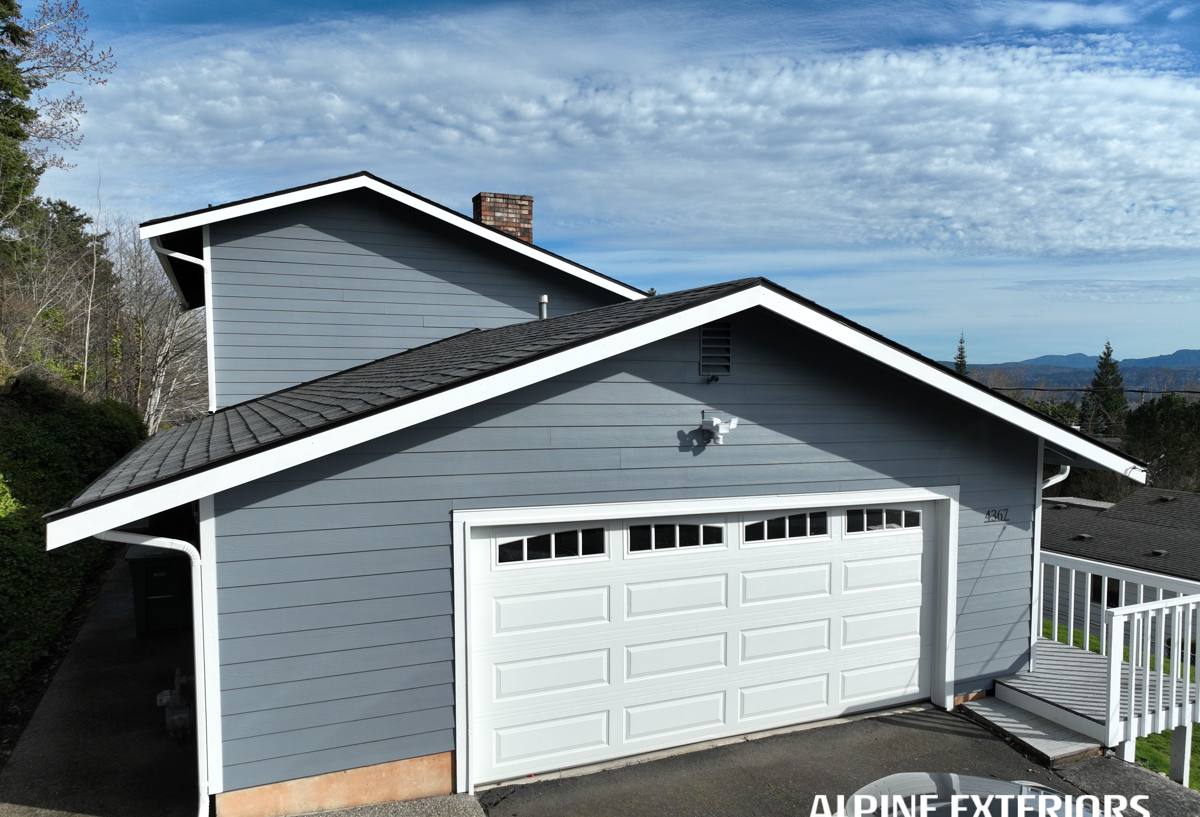
Why Delta Roofs Wear Differently
Salt Air and Metal Fatigue
Salt air accelerates corrosion on any exposed metal — flashing, nail heads, gutter fasteners, and vent caps. Once flashing starts to pit or rust through, it stops shedding water the way it should, and that's one of the most common sources of a "mystery leak" that shows up nowhere near where the water is actually entering.
Driving Rain and Wind-Driven Water
Storms off the Sound don't just drop rain straight down — wind pushes it sideways and up under shingle edges, ridge caps, and anywhere flashing isn't sealed tight. A roof that would shed a calm rain just fine can still leak during a wind-driven storm if the details around penetrations and edges aren't done correctly.
Moss Season
Everett's damp, mild climate is close to ideal for moss growth on roofs, especially on north-facing slopes and anywhere shade keeps a section of roof from drying out between rains. Moss holds moisture against the roofing material far longer than it would otherwise sit there, which shortens the life of shingles and creates the exact conditions that lead to rot in the decking underneath.
Signs a Delta-Area Roof Needs Repair
- Water stains on interior ceilings or upper walls, especially after a windy rainstorm rather than a calm one
- Visible moss or dark streaking concentrated on shaded or north-facing slopes
- Granules collecting in gutters or at the base of downspouts
- Curling, cracked, or missing shingles, particularly near roof edges and valleys
- Rusted or visibly pitted flashing around chimneys, skylights, or vent pipes
- Soft or spongy spots when walking the roof deck (a sign of decking rot beneath the surface)
- Daylight visible through the attic roof deck or soffit
Any one of these on its own might be minor. Several together usually mean water has been getting in for a while, and the repair needs to address the underlying cause, not just the visible symptom.
What a Correct Roof Repair Actually Involves
Diagnosis Before Anything Gets Touched
A repair that starts with "here's the leak, here's a patch" often misses the real entry point. Water travels along the underlayment and framing before it shows up as a stain, so the visible damage and the actual failure can be several feet apart. A correct repair starts with tracing the water path, not just covering the stain.
Flashing and Underlayment
Given how hard salt air is on metal flashing in this area, repair work often includes replacing corroded flashing rather than resealing it. Underlayment that's been saturated or has failed needs to come out — sealant alone doesn't fix underlayment that's already breaking down.
Decking Repair
If moss or a slow leak has been sitting on a section of roof long enough, the plywood decking underneath can soften or rot. Shingling over soft decking is a shortcut that fails fast; a proper repair cuts out and replaces any compromised decking before new roofing goes back on.
Moss and Debris Removal
Moss has to be removed correctly — scraping or pressure-washing too aggressively can strip granules and shorten the life of otherwise sound shingles. We remove growth using methods that don't damage the roofing surface, then treat the area to slow regrowth.
Ventilation Check
Poor attic ventilation traps moisture that feeds moss growth from underneath and accelerates rot. Any thorough repair includes a look at whether the attic is venting properly, since fixing the roof surface without addressing ventilation just sets up a repeat problem.
Our Roof Repair Process
- Inspection. We walk the roof (weather permitting) and check the attic from the inside, tracing suspected leak paths rather than assuming the stain marks the source.
- Honest diagnosis and written estimate. We tell you what's actually wrong, what it will take to fix it correctly, and what it costs — before any work starts.
- The repair. We replace what needs replacing — flashing, decking, shingles, underlayment — rather than layering a patch over a bigger problem.
- Cleanup and check. We clear debris and old materials from the site and the gutters, and confirm the fix from both the roof surface and the attic side.
Repair or Replace? How We Help You Decide
| Situation | Repair usually makes sense | Replacement usually makes sense |
|---|---|---|
| Age of roof | Under 15-20 years, isolated damage | Near or past expected lifespan, widespread wear |
| Extent of damage | Localized to one slope, flashing area, or penetration | Multiple slopes affected, or damage found in more than one repair visit |
| Decking condition | Sound, with maybe one small soft area | Rot or soft spots in several locations |
| Moss history | Recent growth, caught early | Years of untreated moss with granule loss across the roof |
There's no fixed rule here — it comes down to what we actually find once we're up there. We'll walk you through the reasoning either way rather than defaulting to whichever job is bigger.
What Affects the Cost of a Roof Repair
| Factor | Why it matters |
|---|---|
| How much decking needs replacing | Rotted plywood adds material and labor beyond the surface repair |
| Flashing condition | Salt-air corrosion often means full flashing replacement, not resealing |
| Roof pitch and access | Steeper or harder-to-reach sections take more time and safety setup |
| Matching existing shingles | Older or discontinued shingle colors/profiles can be harder to match cleanly |
| Extent of moss damage | Long-term moss growth can mean a larger repair area than the visible leak suggests |
Simple flashing or shingle repairs are typically a modest cost; jobs involving decking replacement or multiple problem areas run higher. We won't give you a number until we've actually looked, because guessing on a roof leads to change orders later — something we try to avoid.
Materials We Work With
For most repair work in this area, we match the existing roofing material rather than introducing a different product to one section of the roof, since mismatched materials age differently and can create new problems at the transition. Where a client is open to it, we'll discuss options that hold up better against moss and salt air over time — but any recommendation comes with the honest trade-offs, including maintenance needs, cost, and how well a given material matches the rest of the roof, not a sales pitch.
Why Hire a Crew That Already Works in Delta
A roofer who mainly works drier, inland areas may not immediately recognize what heavy moss regrowth or salt-corroded flashing looks like at an early stage, because they simply don't see it as often. Crews who work Everett's near-water neighborhoods regularly know which slopes tend to hold moisture, which flashing details fail first in this climate, and how to sequence a repair around Snohomish County's rain patterns so the roof isn't left exposed longer than necessary. That familiarity shows up in fewer callbacks and repairs that hold through a full wet season, not just until the next storm.
Homeowner Maintenance Checklist
- Have gutters and downspouts cleared at least twice a year, more often under overhanging trees
- Look for moss or dark streaking on shaded slopes each fall before the rains set in
- Check the attic after a heavy wind-driven storm for new stains or damp insulation
- Trim back branches that keep a section of roof shaded and slow to dry
- Have flashing around chimneys, skylights, and vents inspected every few years for corrosion
- Address small leaks promptly — a slow drip left over a wet season can turn into a decking repair
If you're seeing any of the warning signs above, or it's simply been a while since your roof was looked at, we're happy to come out and give you a straight answer — no pressure, no upsell. Fill out the form below for a free estimate on your Delta-area roof repair.