 Everett
 Why Eastmont Homes Need Windows Built for This Climate
Eastmont sits close enough to the water and the weather patterns that roll off Puget Sound that its homes take a different kind of beating than houses further inland in Snohomish County. Salt-tinged air works on metal hardware and unprotected wood over years, not days, so the damage is easy to miss until a window won't latch right or the sash has gone soft at the corner. Add in driving, wind-blown rain that hits window faces at an angle rather than straight down, and you have a climate that punishes any window with weak seals, thin flashing, or a frame material that wasn't chosen with moisture in mind.
Then there's moss season — the long stretch of mild, wet months when anything shaded and slow to dry becomes a growing surface. Moss and algae don't just live on roofs; they take hold in window tracks, on sills, and in the corners of frames that don't get enough sun or airflow to dry out between rain events. Over time that trapped moisture is what actually breaks a window down, well before the glass itself ever fails.
A generic window swap doesn't account for any of this. A window installed correctly for Eastmont accounts for all three: salt exposure, wind-driven rain, and a long wet season, from the material choice down to how the flashing is lapped.
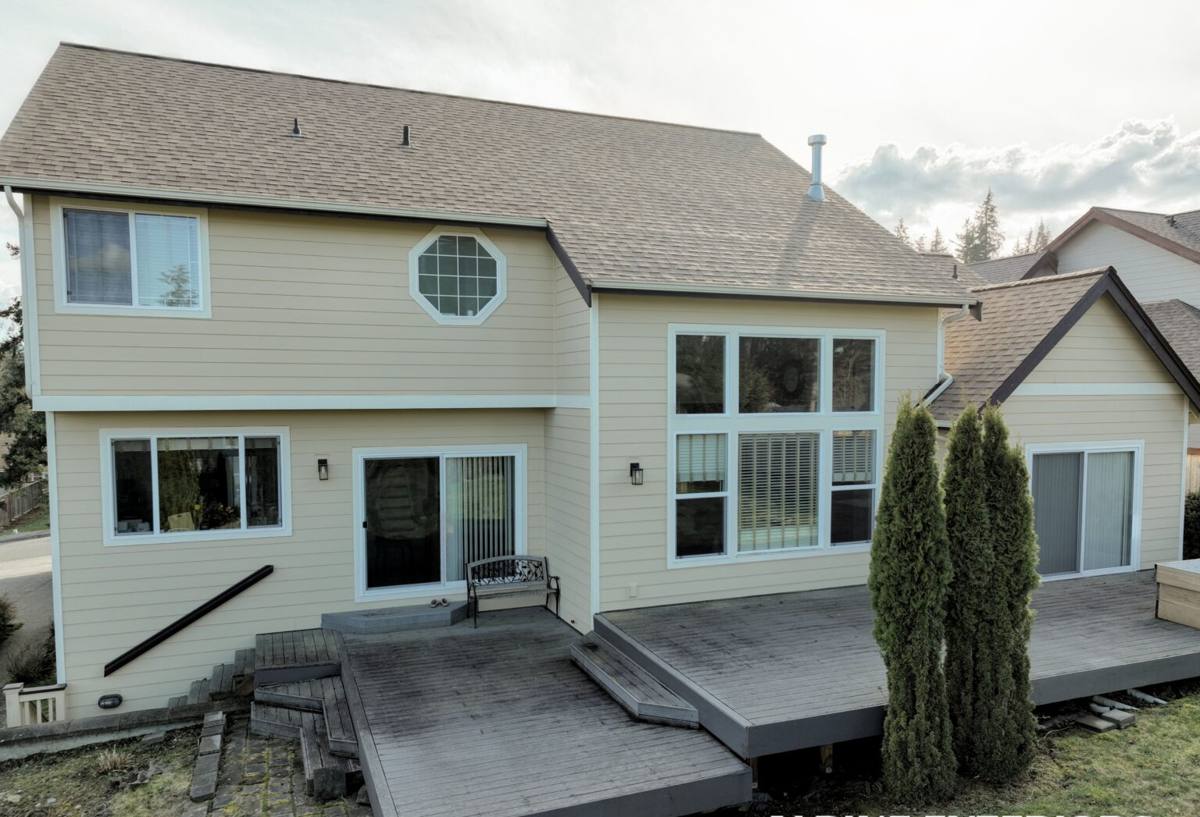
What "Custom" Actually Means for a Window Replacement
"Custom" gets used loosely in this trade, so it's worth being specific. For an Eastmont home, custom windows means the units are built to the actual rough opening measurements of your house rather than forced into a stock size, and the design decisions — frame material, glass package, operating style, exterior color — are made based on that specific wall's sun exposure, wind load, and how exposed it is to weather off the Sound.
Where Custom Decisions Actually Matter
- Exact-fit sizing so there's no oversized gap that has to be packed with extra shim and sealant, which is where leaks start
- Frame material matched to exposure — a wall that takes the brunt of driving rain deserves a different spec than a sheltered side yard window
- Glass package chosen for orientation — west and south-facing rooms in this area get real solar gain on clear days, even with our mostly overcast climate
- Operating style suited to the room — casements seal tighter against wind-driven rain than sliders, which matters more on exposed elevations
- Exterior finish and color that will actually hold up to years of damp, salt-influenced air without chalking or fading unevenly
Signs Your Eastmont Home's Windows Are Underperforming
Most homeowners don't replace windows because they woke up wanting new windows — they replace them because something started bothering them. Here's what that usually looks like locally:
- Condensation forming between the panes (a sign the seal has failed, not something you can fix from outside)
- Visible moss, algae, or black staining building up in the bottom track or on the sill, even after cleaning
- Drafts you can feel on a windy, rainy day specifically — not just in general cold weather
- Wood trim or sill that feels soft, or paint that's bubbling near the window's exterior edge
- Hardware that's stiff, corroded, or won't lock flush anymore
- A noticeable rise in heating costs without any other explanation
Any one of these on its own might just need a repair. Several at once, especially on the side of the house that faces prevailing weather, usually means the window and its surrounding flashing are due for full replacement rather than another patch.
Material and Glass Options: What Holds Up Here
There's no single "best" window material — there's a best material for a given wall, exposure, and budget. Here's how the common options actually perform under Everett's coastal-influenced, wet conditions:
| Material | Moisture & Salt Air Performance | Maintenance | Best Use on an Eastmont Home |
|---|---|---|---|
| Vinyl | Very good — won't rot or corrode, handles damp cycles well | Low — occasional cleaning | Most elevations, especially budget-conscious full-house replacements |
| Fiberglass | Excellent — very stable in wet/dry and temperature swings | Low | Exposed, weather-facing walls where long-term stability matters most |
| Aluminum-clad wood | Good exterior protection, but any breach in the cladding exposes wood underneath | Moderate — exterior is low-maintenance, interior wood needs periodic attention | Homes wanting a wood interior look with better weather resistance than bare wood |
| Bare wood | Poor in this climate without diligent upkeep — driving rain and long wet seasons accelerate rot | High — regular painting/sealing required | Only where historic accuracy or a specific look is the priority, and upkeep is planned for |
We're upfront that we steer most Eastmont customers away from bare wood on weather-exposed elevations — not because wood is a bad material, but because the maintenance schedule it needs to actually last in a marine-influenced climate is more than most homeowners want to keep up with. That's a maintenance-burden judgment call, not a knock on the material itself.
Glass Packages Worth Discussing
Beyond frame material, the glass itself matters. Double-pane with a low-E coating is the baseline we'd recommend for any Eastmont install; argon gas fill adds a meaningful efficiency bump for a modest cost difference. On rooms that catch more wind and rain directly, laminated glass options add extra impact and sound resistance, which some homeowners value on street-facing or particularly exposed rooms.
Our Installation Process, Start to Finish
The install itself is where most of the long-term performance is won or lost — a great window installed poorly will leak and fail early no matter what it's made of. Here's how we approach a custom window job:
- On-site assessment. We measure every opening individually and look at the condition of the existing sill, flashing, and framing before ordering anything.
- Material and glass selection. We walk through options based on that specific wall's exposure, not a one-size answer for the whole house.
- Precise ordering. Custom units are built to your actual openings, not standard sizes with gaps to fill.
- Removal and opening prep. We check for hidden rot or moisture damage behind the old window before it's covered back up — this is often the only chance to catch a problem early.
- Flashing and weather barrier integration. Proper lapping with the existing house wrap or siding so water is directed out, not trapped in.
- Installation and shimming. The unit is set level, plumb, and square, then properly fastened and insulated around the frame.
- Sealing and finish work. Exterior sealant, interior trim, and a final operation check on every window installed.
- Final walkthrough. We check operation, locks, and seals with you before we consider the job done.
Flashing, Sealing, and Moisture Management (the part most crews skip)
This is worth its own section because it's the step that determines whether a window lasts 25 years or leaks in year three, and it's also the step that's invisible once the trim goes back on. In a climate with as much driving rain as this area gets, flashing has to shed water outward at every layer — head, jambs, and sill — with proper overlap into the existing weather-resistive barrier. A window that looks perfect from the inside can still be failing behind the wall if this step was rushed.
We also pay attention to drainage at the sill pan specifically, since that's the spot where water that does get past the outer defenses needs somewhere to go rather than sitting against wood framing. In a long moss season, standing moisture that can't escape is exactly what feeds the growth and rot problems homeowners eventually notice from outside.
Cost Factors for Custom Window Projects
Every custom job is priced around the specifics of the house, but the factors that move the number are consistent. Here's what actually drives cost up or down on a project like this:
| Factor | How It Affects Cost |
|---|---|
| Frame material | Vinyl is typically the most economical; fiberglass and clad-wood run higher |
| Window size and quantity | Larger openings and whole-house projects benefit from per-unit efficiencies |
| Glass package | Low-E, argon fill, or laminated glass each add incremental cost for specific performance gains |
| Operating style | Casements and awnings generally cost more than fixed or standard single/double-hung units |
| Condition of existing framing | Hidden rot or damage found during removal can add repair scope beyond the window itself |
| Access and elevation | Second-story or hard-to-reach windows add labor time |
As a broad range, straightforward vinyl replacements tend to sit at the lower end per window, with fiberglass, larger custom shapes, or upgraded glass packages pushing individual units higher. The only way to get a real number is a walkthrough of your specific windows, which is what a free estimate is for.
Maintenance Checklist for Coastal Snohomish County Homes
Even the best window benefits from a little seasonal attention in this climate. This is the routine we'd recommend for Eastmont homeowners:
- Clear window tracks and weep holes of debris and moss buildup at least twice a year
- Rinse salt-influenced grime off exterior frames periodically, especially on wind-exposed sides of the house
- Check exterior caulking annually and touch up anywhere it's cracked or pulled away
- Inspect for soft spots on any wood trim or sill components during your regular home walkaround
- Lubricate hardware — locks, hinges, rollers — if operation starts to feel stiff
- Watch for condensation between panes as an early sign of seal failure
Why a Crew That Already Works Eastmont Matters
Window performance in this trade isn't just about the product — it's about whether the installer understands the specific conditions a house faces. A crew that regularly works Eastmont and the surrounding Everett area already knows which elevations tend to take the worst of the driving rain, how moss season affects sill drainage, and how salt-influenced air shows up in hardware over time. That's knowledge you don't get from a crew that mostly installs in a dry, inland climate and treats every job the same way.
It also means a faster, more informed estimate — we're not learning Snohomish County's weather patterns on your project, we're applying what years of local jobs have already taught us.
Ready for a No-Pressure Estimate?
If your Eastmont home's windows are drafty, fogged, hard to operate, or just due for an honest assessment, we're happy to take a look. There's no obligation and no pressure — just a straightforward walkthrough and a clear picture of your options. Use the form below to request your free estimate.