 Everett
 Why Eastmont Roofs Take a Different Kind of Beating
Eastmont sits close enough to Puget Sound and the Snohomish County tree canopy that its roofs deal with a combination most inland homes never see: salt-laced air, long stretches of driving rain off the Sound, and a moss season that can run nine months out of the year in shaded, north-facing yards. None of these on their own is unusual for Western Washington. Together, on a roof that's reaching the end of its life, they accelerate problems fast — granule loss on shingles, soft decking under moss mats, and corrosion on fasteners and flashing that weren't rated for a marine-influenced climate.
A new roof installation in this neighborhood isn't just "put shingles on a house." It's an opportunity to correct whatever the original roof got wrong — usually ventilation, flashing detail, or underlayment choice — so the replacement actually outlasts the one it's replacing instead of failing the same way in the same timeframe.
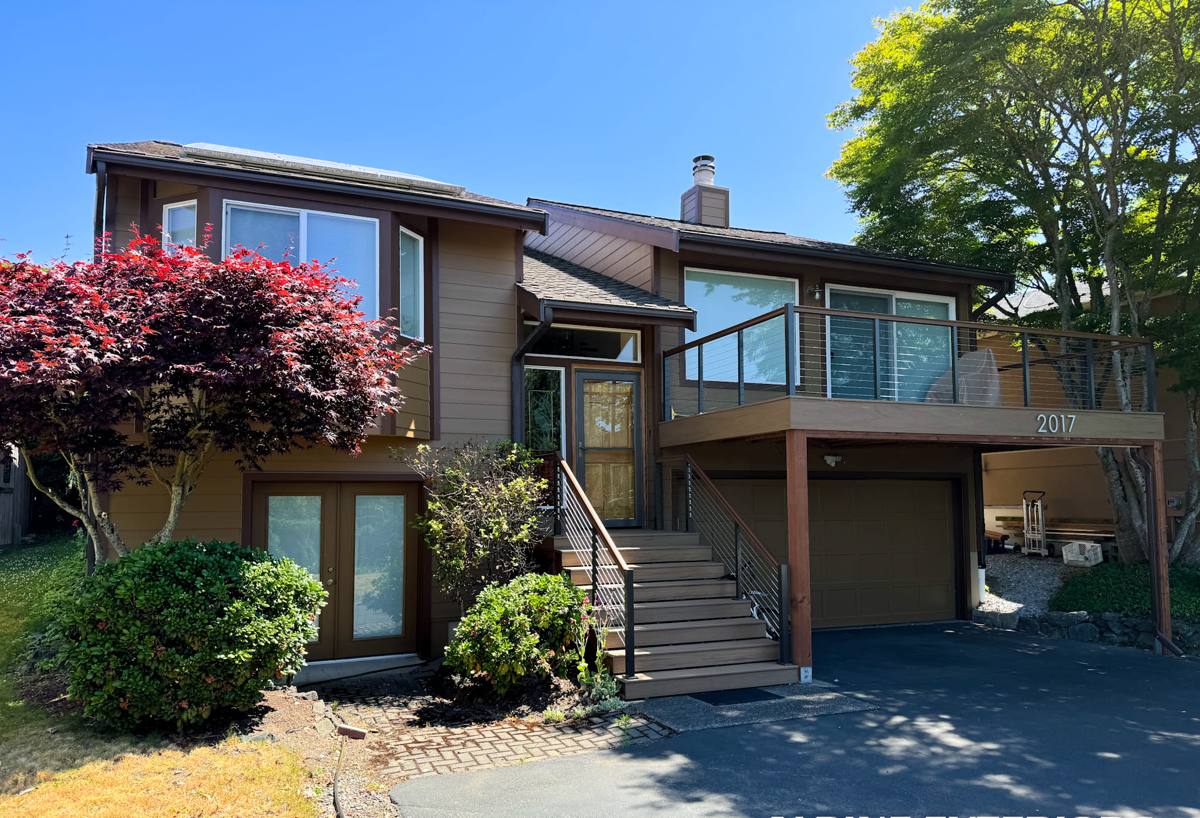
What Everett's Climate Actually Does to a Roof
Salt Air and Metal Fatigue
Homes closer to the water deal with airborne salt that speeds up corrosion on exposed metal — nails, flashing, gutter hardware, and vent stacks. Standard electro-galvanized fasteners can start showing rust streaks years before the shingles around them are due for replacement. It's a small detail that gets skipped constantly, and it's one of the first things we upgrade on a new install.
Driving Rain and Wind-Driven Water
Storms coming off the Sound don't always fall straight down — wind pushes rain sideways and up under shingle edges, especially at low-slope transitions, valleys, and anywhere two rooflines meet. This is where underlayment quality and proper shingle nailing patterns matter more than the shingle brand itself.
Moss Season
Shaded lots with mature trees — common throughout Eastmont — stay damp longer after every rain, which is exactly what moss needs to establish. Moss doesn't just look bad; it holds moisture against the roof surface, lifts shingle edges as it grows, and works its way toward the decking over time. A roof installed without moss-resistant details or adequate ventilation will fight this battle every year of its life.
What a Correct New Roof Installation Actually Involves
A roof replacement done right is a sequence, and skipping steps is how a roof that looks fine on day one fails at year eight instead of year twenty-five.
- Full tear-off. We don't layer over old roofing. Tear-off lets us actually see the decking, not guess at its condition from the attic.
- Decking inspection and repair. Any plywood or OSB that's soft, delaminated, or moss-stained from long-term moisture gets replaced — not skimmed over with an extra layer of felt.
- Ice-and-water shield at vulnerable zones. Eaves, valleys, and roof-to-wall transitions get self-adhering waterproof membrane, not just standard felt, because these are the spots wind-driven rain finds first.
- Synthetic underlayment across the field. More tear-resistant and consistent under wet, humid conditions than old-style felt paper.
- Flashing replaced, not reused. Chimneys, skylights, sidewalls, and any roof penetration get new step flashing and counterflashing sized correctly — reused flashing is a common source of slow leaks that don't show up until well after installation.
- Proper ventilation balance. Intake at the eaves, exhaust at the ridge, sized to the attic — this is the single biggest factor in whether moss and moisture problems come back.
- Corrosion-resistant fasteners and hardware. Especially relevant for anything within a mile or two of the water.
- Final inspection and cleanup. Nail sweep, gutter check, and a walk-through before we consider the job finished.
Material Options: What Fits an Eastmont Roof
There's no single "best" material for every house — it depends on roof slope, budget, tree cover, and how long the homeowner plans to stay in the house. Here's how the common options actually compare under Snohomish County conditions.
| Material | Moss/Moisture Behavior | Typical Lifespan Here | Cost Position |
|---|---|---|---|
| Architectural asphalt shingle | Good with copper/zinc strips and proper ventilation; moderate moss resistance without them | 20-30 years | Lower to mid |
| Algae-resistant (AR) asphalt shingle | Better long-term moss/algae resistance built into the granules | 25-30 years | Mid |
| Standing seam metal | Sheds moisture fast, minimal surface for moss to grip | 40-50+ years | Higher upfront |
| Cedar shake | Attractive but holds moisture and needs regular maintenance in shaded, damp lots | Varies widely with upkeep | Mid to higher |
For heavily shaded Eastmont lots, we lean toward algae-resistant shingles or metal, paired with ventilation upgrades, over materials that need frequent maintenance to fend off moisture. That's a maintenance-and-moisture judgment, not a knock on any manufacturer — cedar can be a great roof for the right homeowner who's committed to upkeep.
Ventilation: The Detail That Determines Whether Moss Comes Back
We see more premature roof failures caused by poor attic ventilation than by bad shingles. When intake and exhaust aren't balanced, warm moist air gets trapped in the attic, condenses against the underside of the decking, and keeps the roof surface cooler and damper than it should be — ideal conditions for moss and premature granule loss. Correcting this during a new install, rather than leaving the original vents in place, is one of the most cost-effective things we do on every job.
Signs Your Old Roof Had a Ventilation Problem
- Moss concentrated on the north or shaded side, but also creeping across the whole field
- Curling or cupping shingles well before their expected age
- Visible frost or condensation on the underside of the roof deck in winter (check the attic)
- Uneven snow melt patterns across the roof
- Musty attic smell even with no active leak
Our Process, Start to Finish
Homeowners in Eastmont are usually juggling this alongside work and family, so we keep the process predictable:
- On-site assessment. We walk the roof and attic, not just look from the ground, and check for moss patterns, soft decking, and ventilation gaps.
- Written scope and pricing. What's being torn off, what's being replaced, what materials are specified — before any work starts.
- Permit handling. Roof replacement in Everett and unincorporated Snohomish County typically requires a permit; we pull it and schedule required inspections so the homeowner isn't left navigating that alone.
- Weather-aware scheduling. We don't tear off a roof and leave decking exposed overnight during an active rain pattern — sequencing matters here more than in drier climates.
- Daily site cleanup. Tear-off debris and nails don't sit around; magnetic sweeps happen before we leave each day.
- Final walk-through. We go over the finished roof and attic ventilation with the homeowner before calling the job done.
Questions Worth Asking Any Roofing Crew Before You Hire
Eastmont has plenty of roofers passing through, especially after storm season. A few questions separate a crew that works this area regularly from one that doesn't:
- Are you licensed and insured in Washington, and can you provide proof directly (not just a claim)?
- Will you pull the permit, or is that left to the homeowner?
- What underlayment and ice-and-water shield do you use at eaves and valleys specifically?
- Will you inspect and replace damaged decking as part of the base price, or is that a change-order surprise?
- How do you handle attic ventilation — do you assess it, or just match what's already there?
- What's the manufacturer's warranty versus your own workmanship warranty, and what voids each?
Warranty and Long-Term Maintenance
A new roof has two separate warranties worth understanding: the manufacturer's material warranty (covering shingle or metal defects) and the installer's workmanship warranty (covering how it was put on — flashing, sealing, nailing pattern). Manufacturer warranties are generally prorated and can be voided by improper installation, which is exactly why the installation details matter as much as the product chosen. After installation, the most useful maintenance for an Eastmont home is a periodic check for moss growth and clearing of gutters and valleys where trees drop debris — small, regular attention that prevents most of the moisture problems the climate here tends to cause.
Why a Crew That Already Works Eastmont Matters
A roofing crew that regularly works this part of Snohomish County has already seen how the local rain patterns, tree cover, and salt exposure play out over years, not just at install day. That shows up in small decisions — which valleys get extra membrane, where corrosion-resistant hardware is worth the upgrade, how ventilation gets balanced on a shaded lot — that a crew unfamiliar with the area might not think to flag. It also means faster response if a question comes up after installation, rather than tracking down a contractor from outside the region.
If you're weighing a roof replacement in Eastmont, we're glad to take a look and walk you through what your specific roof needs — no pressure, no obligation. Use the form below to request a free estimate.