 Everett
 Deck Repair Built for Lake Stevens Weather
A deck in Lake Stevens lives a different life than a deck in a dry climate. Between the marine-influenced air that moves through this part of Snohomish County, the long stretches of driving rain from fall through spring, and a moss season that can run eight months or longer, the wood, fasteners, and connections on a local deck are under near-constant low-grade attack. None of it looks dramatic day to day. It shows up later as a soft spot near a ledger board, a wobble in a railing post, or moss creeping across boards that used to shed water fine.
We repair decks in Lake Stevens on a regular basis, and the failure patterns here are consistent enough that we can usually tell a homeowner what we expect to find before we ever pull a board. That familiarity matters. A repair that ignores how this climate actually behaves tends to fail again within a season or two, in the same spot, for the same reason.
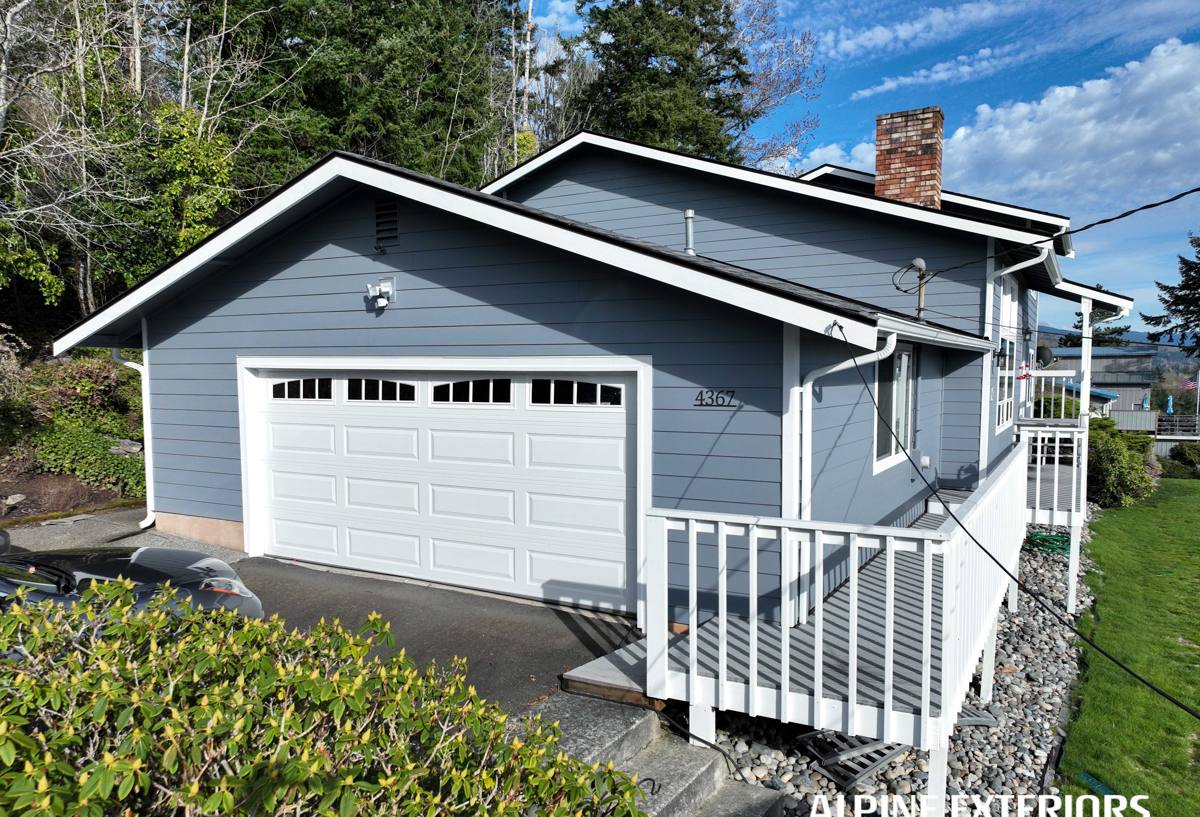
Why Decks in This Area Wear the Way They Do
Moisture that never fully leaves
Snohomish County doesn't get long dry spells the way some inland regions do. Decks here rarely get the extended drying-out period that lets wood fully release moisture before the next rain arrives. Boards stay damp longer at the joints, under railings, and anywhere debris collects — which is exactly where rot starts.
Moss and organic growth
Moss doesn't just look bad. It holds moisture directly against the board surface, blocks sunlight and airflow that would otherwise help wood dry, and its root structure works into fine surface checks in the wood, widening them over time. On a deck that gets partial shade from trees or the house itself, moss can establish itself in a single wet season and keep coming back every year after unless the surface and drainage are addressed.
Marine-influenced, salt-tinged air
Even away from the immediate waterfront, air moving inland off Puget Sound carries enough salt content to accelerate corrosion on exposed metal — deck screws, joist hangers, bolts, and railing hardware. Once a fastener starts to corrode, it loses grip strength in the wood around it long before it visibly fails, which is part of why a deck can feel "soft" in one spot without any obvious rot.
Freeze-thaw cycling
Lake Stevens doesn't get extreme winters, but it gets enough freeze-thaw cycling most years to matter. Water that's worked its way into a crack, a fastener hole, or a joint expands when it freezes and pushes the wood fibers apart a little more each time. It's a slow, cumulative kind of damage — one freeze does almost nothing, but a decade of them is a real factor in why older decks develop soft spots and loose connections.
The Warning Signs Worth Acting On
Most deck failures don't happen suddenly. They announce themselves first, usually months or years ahead of any real danger, if you know what to look for.
- Boards that feel springy or soft underfoot, especially near the house or along the perimeter
- A railing post that moves when you push on it — even a little
- Visible moss, algae, or dark staining that keeps returning after cleaning
- Gaps opening up between boards, or fasteners backing out and sitting above the surface
- Discoloration or a soft, spongy feel where the deck attaches to the house (the ledger board area)
- Stairs that feel less solid than they used to, or a noticeable sway in the stringers
- Standing water that takes more than a day to fully drain after rain
Any one of these on its own might be minor. Two or three together, especially near the ledger or stair connections, usually means it's time for a closer look before the next repair becomes a much bigger one.
What a Correct Repair Actually Involves
Deck repair gets a bad reputation in this region because a lot of it is done as a surface fix — replace the board that looks bad, sister a post, call it done. That approach treats the symptom and leaves the underlying moisture or structural issue in place, which is why the same spot often fails again.
A repair done right starts with figuring out why that spot failed in the first place, not just what's visibly damaged.
Our process
- On-site assessment. We walk the full deck, not just the area you're concerned about, and check ledger attachment, post bases, joist condition, railing connections, and drainage. Problems in this climate rarely stay isolated to one board.
- Probe and confirm. Soft or suspect wood gets probed to find the real extent of rot or damage, since surface staining often understates what's happening underneath.
- Address the cause, not just the symptom. If moisture is pooling because of poor slope, missing flashing, or blocked drainage, that gets corrected as part of the repair — otherwise the replacement lumber just fails on the same timeline as what it replaced.
- Match structural grade, not just appearance. Replacement framing lumber and connectors are sized and rated to match (or improve on) what should have been there originally, not just whatever board looks close in the aisle.
- Fasteners and hardware suited to this climate. Given the corrosion risk from marine-influenced air, we use fasteners and structural connectors rated for exterior, corrosive-prone environments — not standard interior-grade hardware that looks fine for the first year or two.
- Finish and seal exposed wood. Any new or exposed lumber gets properly finished so it isn't absorbing moisture from day one, and cut ends — often the most overlooked spot — get sealed too.
- Walkthrough before we leave. We show you what we found, what we did, and what to keep an eye on going forward.
Repair or Replace? An Honest Look
Not every deck problem needs a full rebuild, and not every deck is worth repairing indefinitely. The honest answer depends on how much of the structure is affected and how old the deck already is.
| Situation | Repair usually makes sense | Replacement usually makes sense |
|---|---|---|
| Damage location | Isolated to a few boards, one railing section, or one post | Spread across ledger, multiple joists, and framing |
| Deck age | Under 15-20 years, otherwise sound structure | Original framing near or past its practical service life |
| Cause of damage | Identifiable and fixable (drainage, one bad board, hardware) | Systemic — undersized original framing, chronic moisture throughout |
| Cost pattern | Targeted repair costs a fraction of replacement | Repeated repairs are starting to add up close to rebuild cost |
| Code/safety | Meets current attachment and railing standards once repaired | Original construction predates current safety requirements |
We'll always give you a straight answer on which category your deck falls into. If a repair genuinely solves the problem, that's what we'll recommend — there's no advantage to us in talking a homeowner into a rebuild they don't need.
Ledger Boards, Railings, and Stairs Get Extra Attention
Three areas cause a disproportionate share of the deck repair calls we get in this region, and they're worth understanding on their own.
Ledger board connections
The ledger is where the deck attaches to the house, and it's also where water most often gets trapped against wood that can't dry out — sandwiched between the deck framing and the house wall. A failing ledger is a structural safety issue, not a cosmetic one, since it's a major load path for the entire deck.
Railings and guard posts
Railing posts take lateral load every time someone leans on them, and that repeated stress finds weak fasteners or rotted post bases fast. A railing that moves is one of the more common things we're called out for, and it's one of the more important to fix promptly.
Stairs
Stair stringers see concentrated foot traffic and, on many Lake Stevens properties, they run down a slope where drainage and moss are worse than on the main deck surface. Loose or spongy stair treads deserve a look sooner rather than later.
Maintenance That Actually Extends the Life of a Repair
A good repair lasts a lot longer with a small amount of seasonal upkeep. None of this requires special skill — it's mostly about staying ahead of moisture and growth before they take hold.
- Clear leaves, needles, and debris from between boards and along the perimeter, especially heading into fall
- Treat moss and algae early in the season rather than waiting for it to spread
- Keep gutters and downspouts near the deck clear so runoff isn't draining directly onto or under it
- Check railing posts and stair treads for movement once or twice a year
- Reseal or refinish exposed wood on the schedule the product calls for — in this climate, stretching that interval is one of the most common ways small problems become big ones
- Look underneath the deck occasionally, not just at the surface — that's where early rot and hardware corrosion usually show up first
Why Local Experience on This Kind of Repair Matters
Deck repair looks straightforward from a distance, which is part of why it gets done poorly so often — swap a board, tighten a post, move on. What actually determines whether a repair holds up in Lake Stevens is whether the person doing it understands how moisture, moss, and marine-influenced air move through a deck's structure over years, not just what's visible on the day of the visit.
A crew that works this specific area regularly has already seen how a given deck orientation, shade pattern, or construction style tends to fail here. That's not something you get from general deck repair experience in a different climate — it comes from working the same soil, weather, and building patterns in this part of Snohomish County repeatedly.
We also stand behind the repair itself. If we tell you a fix will hold, we mean it holds under the conditions this deck actually experiences — not under ideal, dry-climate conditions that don't apply here.
Get a Straight Answer About Your Deck
If you're noticing soft spots, a loose railing, moss that keeps coming back, or you just want a professional opinion before a small problem turns into a structural one, we're glad to come take a look. Estimates are free and there's no pressure — we'll tell you honestly whether you're looking at a targeted repair, a larger fix, or something that can wait. Use the form below to request a free estimate for your Lake Stevens deck.