 Everett
 Edmonds Roofs Face a Specific Set of Problems
Edmonds sits close enough to the Sound that salt-laden air reaches roofing materials year-round, and the weather pattern that rolls through Snohomish County doesn't do roofs any favors either. You get long stretches of driving rain that finds every weak seam, followed by cool, shaded, damp conditions that are close to perfect for moss growth. A roof here isn't just shedding water during a storm — it's dealing with near-constant moisture exposure for much of the year, plus the slow corrosive effect of salt air on fasteners, flashing, and metal components.
That combination is why roof problems in this area tend to look different than they would in a drier inland climate. Moss doesn't just sit on top of shingles looking messy — it lifts edges, holds water against the roof deck, and works its way under flashing over time. Driving rain doesn't just test the field of the roof — it tests every transition point: valleys, chimney flashing, skylight curbs, and the places where a roof meets a wall. Repair work in Edmonds has to account for all of that, not just patch the obvious spot.
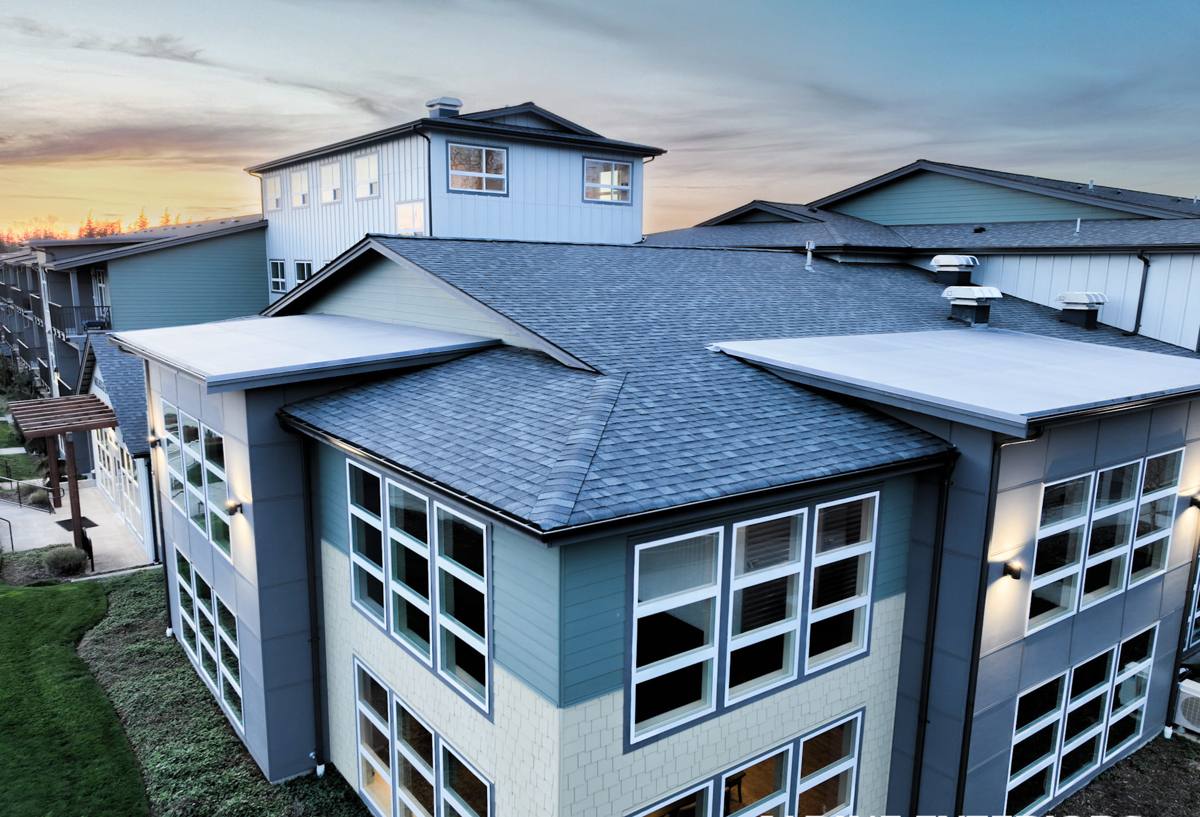
Signs an Edmonds Roof Needs Repair
Most roof repairs get called in after a leak shows up inside the house, but by then the underlying problem has usually been developing for a while. Homeowners in this area should watch for:
- Moss buildup along the lower edge of the roof or in shaded valleys, especially on north-facing slopes
- Granules collecting in gutters, a sign the shingle surface is wearing down
- Curling, cracked, or lifted shingle edges, particularly after a windy storm
- Rust staining or visible gaps at chimney, vent pipe, or skylight flashing
- Dark streaking or soft spots on the roof deck visible from the attic
- Water stains on interior ceilings, especially near exterior walls or where two roof planes meet
Any one of these on its own might just need monitoring. Several at once, or anything involving flashing and moisture together, is worth a proper inspection before the next rainy stretch.
What a Correct Roof Repair Actually Involves
It Starts With Finding the Real Source
Water that shows up on a ceiling rarely originates directly above the stain — it travels along rafters, sheathing, and underlayment before it finds a path inside. A repair that only addresses the visible leak point without tracing it back to the actual failure (a cracked pipe boot, a nail hole, a flashing gap) tends to resurface within a season or two, usually during the next hard rain.
Flashing Gets as Much Attention as Shingles
In a climate with this much sustained rain, flashing failures cause more leaks than worn shingle material does. Step flashing at wall intersections, counter-flashing at chimneys, and valley metal all need to be checked for corrosion, proper lap, and correct sealant — not just visually inspected from the ground. Salt air accelerates corrosion on lower-grade metal flashing, so we look closely at fastener condition and metal thickness, not just whether the flashing is technically still in place.
Moss and Debris Removal Comes Before Any Patch
Repairing a section of roof without clearing the moss and organic debris around it just means the new work sits next to the same conditions that caused the original damage. Proper moss removal uses low-pressure methods that clear growth without stripping granules or damaging the shingle mat, followed by a zinc or copper treatment strip where appropriate to slow regrowth in shaded areas.
Underlayment and Deck Condition Matter
Once a section is opened up for repair, that's the moment to check the underlayment and roof deck underneath. Soft, delaminated sheathing or degraded underlayment won't hold a new patch properly, and covering it up without addressing it just delays a bigger repair.
Our Roof Repair Process
- Inspection and documentation: we walk the roof (or use ladder and binocular inspection where the pitch or condition makes walking it unsafe) and document every problem area, not just the one that prompted the call.
- Honest scope discussion: we tell you plainly whether this is a targeted repair, a larger section replacement, or a sign the roof is nearing the end of its service life. We're not trying to sell a full reroof when a repair will hold.
- Moss and debris clearing: the work area and surrounding sections get cleared before any repair begins.
- Removal of damaged material: shingles, flashing, and underlayment in the affected area are removed down to sound decking.
- Deck repair if needed: any soft or damaged sheathing is replaced before new material goes down.
- Correct reinstallation: new underlayment, flashing, and shingles matched as closely as possible to the existing roof, installed with proper laps and fastening for this region's wind and rain exposure.
- Final check: we inspect adjacent areas one more time so you're not calling us back for something we could have caught the same visit.
Repair vs. Replacement: How We Help You Decide
| Factor | Favors Repair | Favors Replacement |
|---|---|---|
| Age of roof | Under 15-20 years, depending on material | Approaching or past expected lifespan |
| Extent of damage | Isolated to one section or flashing point | Widespread granule loss, multiple leak points |
| Deck condition | Sound sheathing found on inspection | Soft, rotted, or delaminated decking in several areas |
| Moss history | Manageable with cleaning and treatment | Long-term moss damage has degraded the shingle mat broadly |
| Match availability | Existing shingle color/style still obtainable or close match acceptable | Discontinued product, patch would be visually obvious |
We'll walk you through where your roof falls on this and give you a straight answer, including cases where a repair now is the right call even if replacement is a few years out.
Materials We Use and Why
For flashing, we favor heavier-gauge metal over the thin, economy-grade material that shows corrosion faster in a salt-air environment — it costs a bit more up front but holds up considerably longer here than closer to Puget Sound's edge. For underlayment, synthetic options generally outperform older felt products in this climate: they hold up better to the extended wet exposure that can happen between the tear-off and the final shingle layer going down during a repair, and they resist tearing during installation in damp conditions.
When it comes to shingles, we match to your existing roof wherever a reasonable match exists, since patch repairs that clash visually reduce curb appeal for no structural benefit. Where a full match isn't available, we'll talk through options rather than installing something that looks obviously out of place.
Moss and Algae Prevention Checklist
Between repairs, a few maintenance habits meaningfully extend the life of a roof in this climate:
- Keep gutters and valleys clear of needles and leaf debris, which hold moisture against the roof surface
- Trim back overhanging branches to reduce shade and improve airflow across the roof
- Have moss professionally removed at the first sign of growth rather than waiting for it to spread
- Consider zinc or copper control strips near the ridge on shaded slopes prone to regrowth
- Schedule a roof check after major wind or rain events, not just on a fixed annual schedule
- Avoid pressure washing shingles yourself — it strips granules and shortens the roof's life
Why It Matters That We Already Work in Edmonds
A crew that works Edmonds and the broader Everett area regularly has already seen how the local exposure plays out on real roofs — which slopes hold moss longest, which flashing details tend to fail first in homes built during certain eras, and how driving rain off the Sound behaves differently than a typical inland storm. That's not something you get from a general repair checklist; it comes from doing this work repeatedly in this specific set of conditions.
It also means we're not guessing at permitting norms, material availability, or what a reasonable timeline looks like around the wetter months here. We plan repair work with Snohomish County's weather patterns in mind, not around a generic seasonal calendar.
What to Expect When You Call Us
We start with a straightforward roof assessment — no pressure toward a bigger job than you need. If it's a contained repair, we'll say so and give you a clear scope. If we find signs the roof is further along in its lifespan than expected, we'll explain what we saw and why, so the decision is yours to make with full information.
If you're dealing with a leak, visible moss buildup, or just want a second opinion on a roof's condition before it becomes an emergency, we're glad to take a look. Reach out for a free, no-pressure estimate using the form below.