 Everett
 Why Board & Batten Suits Forest Park
Forest Park is one of Everett's older, more wooded residential pockets — mature tree canopy, a mix of mid-century homes and newer infill, and a lot of shade that changes how a house dries out after weather moves through. Board and batten siding has become a popular choice here because it reads as clean and vertical against all that greenery, and it holds up visually in a neighborhood where a lot of homes already lean toward simple, traditional lines. But the look is only half the story. What actually matters for a Forest Park home is how the siding performs once it's up — how it sheds water, how it handles the shade and moisture that collect under the tree cover, and how it stands up to the salt-tinged air that reaches inland from Puget Sound.
This page is about that one job, done right, in this one part of Everett: board and batten siding installed to hold up in Snohomish County's specific mix of salt air, driving rain, and a moss season that can run half the year.
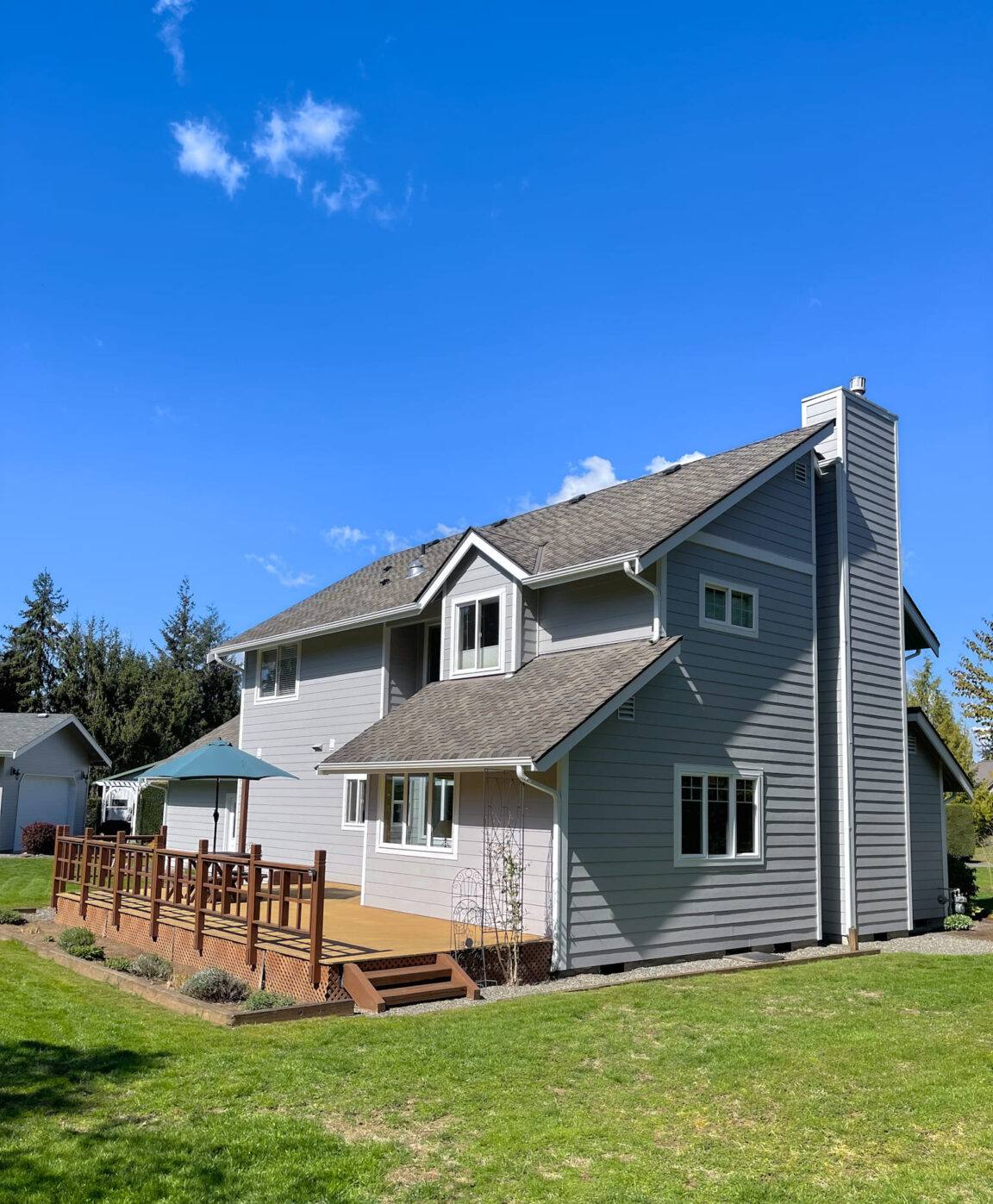
What Everett's Climate Actually Does to Board & Batten Siding
Board and batten is a vertical siding system — wide flat panels with narrow strips (battens) covering the seams. Done correctly, it's a durable, water-shedding assembly. Done with the wrong materials or the wrong details, it's one of the faster ways to trap moisture against a house, because every batten seam is a potential water path if it isn't detailed properly.
Salt Air and Fasteners
Everett sits close enough to Puget Sound that airborne salt is a real factor, especially on homes with more open exposure. Salt-laden moisture accelerates corrosion on unprotected metal — fasteners, flashing, trim nails. On a board and batten wall, the batten strips are fastened directly through the panel and into the framing, which means there are more exposed fastener heads per square foot than on a typical lap siding job. Using the right corrosion-resistant fasteners, and setting them correctly, matters more here than it would in a drier inland climate.
Driving Rain and Water Management
Snohomish County doesn't just get rain — it gets wind-driven rain that pushes water sideways into wall assemblies, not just straight down. Board and batten's vertical seams need a real water-resistive barrier behind them and correctly lapped flashing at every horizontal transition — window heads, roof-wall intersections, foundation lines. A batten seam that looks fine from the ground can still be letting wind-driven rain track behind the panel if the underlying flashing and barrier work wasn't done in sequence.
Moss Season and Shaded Elevations
With Forest Park's tree cover, north- and east-facing walls in particular can stay damp for extended stretches through fall, winter, and into spring. Moss and algae don't just look bad — sustained organic growth holds moisture against the siding surface longer than it would otherwise sit there, which stresses paint film, caulking, and any exposed wood-based components over time. Siding material choice and surface finish both affect how much of a foothold moss actually gets.
Why We Only Install James Hardie for This Job
We install James Hardie fiber cement exclusively — we don't install vinyl board and batten, engineered wood panels, primed spruce, cedar, or other fiber cement brands. For a climate like Everett's, that's a deliberate standard, not a sales pitch.
Vinyl board and batten is lightweight and low-cost up front, but it's a plastic product that expands and contracts with temperature swings, can warp or crack under impact in colder snaps, and doesn't offer the crisp, flat panel look that board and batten is supposed to deliver — it tends to read as visibly synthetic up close. Engineered wood and primed spruce panels can look excellent when new, but they're wood-based products that rely entirely on an intact paint film and sealed edges to keep moisture out; in a wet, shaded, moss-prone environment like Forest Park, any breach in that seal is where rot starts, and it's very hard to catch early on a vertical panel system.
James Hardie fiber cement is non-combustible, doesn't rot, and holds paint and factory finish far longer than wood-based alternatives because it isn't feeding moisture into an organic substrate. For board and batten specifically, we use Hardie's vertical panel system with a factory ColorPlus finish, engineered in the HZ5 formulation for the wetter, milder Pacific Northwest climate zone that includes Snohomish County. That's a real, material difference in how the wall performs ten and twenty years out — not just how it looks on install day.
What a Correct Installation Actually Involves
Water-Resistive Barrier and Rainscreen
Every board and batten job starts with a continuous water-resistive barrier over the sheathing, with all seams and penetrations properly lapped and taped. On most Forest Park homes, we install a rainscreen gap behind the panels — a small vertical air space that lets any moisture that does get past the outer surface drain and dry out instead of sitting against the wall. In a climate with this much sustained rain and shade-driven dampness, that gap is one of the details that separates a siding job that lasts from one that doesn't.
Panel Layout and Batten Spacing
Panel joints and batten spacing get planned before the first piece goes up — not improvised as the crew moves across the wall. Consistent batten spacing is what gives board and batten its clean, deliberate look; uneven spacing is one of the most common signs of a rushed installation.
Fastening and Flashing Details
Fasteners are placed and spaced to manufacturer specification, using corrosion-resistant fasteners appropriate for coastal-influenced exposure. Flashing at window heads, roof lines, and any horizontal transition is integrated with the water-resistive barrier in the correct shingle-lap sequence, not applied as an afterthought. These are the details that don't show up in a walk-by inspection but decide how the wall performs during the next atmospheric river event.
Installation Checklist Worth Asking About
- Continuous water-resistive barrier with properly lapped and taped seams
- Rainscreen gap behind the panels for drainage and drying
- Corrosion-resistant fasteners suited to a salt-air-influenced climate
- Correctly sequenced flashing at windows, roof lines, and all penetrations
- Consistent, pre-planned batten layout and spacing
- Manufacturer-specified fastener pattern and panel gapping for expansion
- Factory-finished panels (ColorPlus) rather than field-painted substrates wherever possible
Board & Batten vs. Other Common Options
| Factor | Vinyl Board & Batten | Engineered Wood / Primed Spruce | James Hardie Fiber Cement |
|---|---|---|---|
| Moisture tolerance in wet, shaded areas | Doesn't rot, but seams can trap moisture behind panels | Vulnerable if paint film or seals fail | Non-combustible, doesn't rot; performs well when rainscreen-detailed |
| Finish longevity | Color can fade; can't be easily refinished | Relies on field paint maintenance | Factory ColorPlus finish holds color longer, backed by its own warranty |
| Appearance | Can look visibly synthetic up close | Authentic look when new; degrades with weathering | Crisp, flat panel look that holds up over time |
| Impact/temperature resistance | Can crack or warp in cold snaps | Dents and moisture-swells more easily than fiber cement | Rigid, stable across temperature swings |
| Typical upfront cost | Lowest | Moderate | Higher upfront, lower lifetime maintenance cost |
Our Process for Forest Park Homes
We start with an on-site assessment of the specific elevations — which walls face the prevailing wind and rain, which stay shaded longest, and what the existing wall assembly looks like once old siding comes off. From there we address any sheathing or moisture issues found underneath before anything new goes up; covering a problem with new siding doesn't fix it. Installation follows manufacturer specification for the water-resistive barrier, rainscreen, panel layout, and fastening, with flashing integrated at every transition as the job progresses — not patched in afterward. We finish with a walkthrough so the homeowner sees exactly what was done and why.
Maintenance and Long-Term Care
Board and batten siding installed correctly with a factory finish needs relatively little upkeep, but Forest Park's tree cover means moss and algae are worth watching, particularly on north-facing and heavily shaded walls. A periodic soft wash and keeping gutters and downspouts clear go a long way toward keeping moisture from sitting against the wall longer than it should. Because ColorPlus finish is factory-applied and warrantied, homeowners aren't stuck on the same repainting cycle that wood-based or field-painted siding requires — that's a real difference in long-term cost, not just a talking point.
Why Local Experience in Forest Park Matters
A crew that already works this part of Everett knows which elevations in a neighborhood like this tend to stay damp longest, how mature tree cover changes drying time after a storm, and what Snohomish County's permitting and inspection process actually requires before work starts. That local pattern recognition is what keeps a board and batten installation from becoming a five-year moss and moisture problem — it's not something a crew figures out on the first job in an unfamiliar area.
If you're weighing board and batten for a home in Forest Park, we're happy to walk the property, look at your specific exposure and shade conditions, and give you a straight assessment — no pressure, no upsell. Reach out below for a free estimate.