 Everett
 Building Decks for Forest Park's Wooded, Coastal Climate
Forest Park sits among some of the most mature tree canopy in Everett, and that shade is a mixed blessing for anyone who owns or wants to build a deck there. The same tree cover that keeps summer afternoons cool also keeps deck surfaces damp for days after a storm, which is exactly the kind of environment moss and algae need to take hold. Add in Snohomish County's long, wet fall-to-spring stretch and the salt-tinged air that rolls in off Puget Sound, and you have a climate that is genuinely tougher on outdoor structures than most homeowners expect until they've lived through a few seasons of it.
A deck built without those conditions in mind will usually still look fine the day it's finished. The problems show up eighteen months to three years later — soft spots near the house, corroded fasteners bleeding rust streaks, boards cupping, and a green film that comes back within weeks of every cleaning. Building correctly the first time costs less than fixing it later, and it's a lot less disruptive.
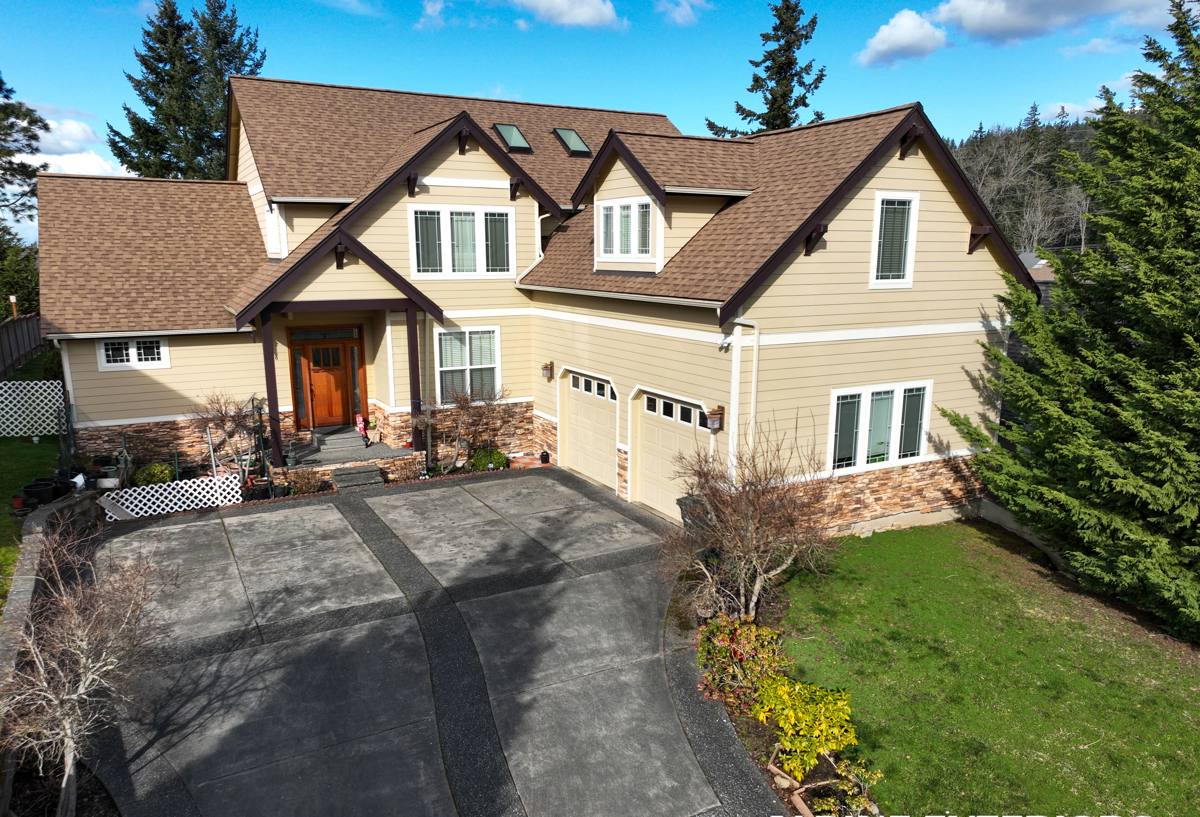
What Forest Park's Site Conditions Do to a Deck
Moss, Algae, and Shade
Decks tucked under mature trees or on the north/shaded side of a house dry out slowly. Standing moisture on a deck surface for extended periods is the single biggest driver of moss growth, mildew staining, and — on wood decking — early rot at board edges and fastener holes. A deck plan that ignores sun exposure and airflow is planning for a maintenance headache from day one.
Salt Air and Corrosion
Everett's proximity to the Sound means a steady low level of salt in the air, even well inland from the immediate waterfront. Over years, that salt accelerates corrosion in any fastener, hanger, or bracket that isn't rated for it. A deck can look structurally sound while its hidden hardware is quietly rusting away underneath — which is why the hardware spec matters as much as the decking on top.
Driving Rain and Water Intrusion
Pacific Northwest storms often come in sideways, not straight down. That means water gets driven up under boards, into ledger connections, and behind poorly flashed trim in a way that vertical-rain assumptions from drier climates don't account for. Every point where the deck meets the house is a potential entry point for water into the structure itself, not just the deck.
What a Correctly Built Deck Needs Here
Ledger Attachment and Flashing
The ledger board — where the deck bolts to the house — is the most common failure point on decks in this region, and it's almost always a water problem, not a load problem. Proper flashing (installed in the right order relative to the house's existing weather barrier) keeps rain from tracking behind the siding and into the rim joist. This is not an area to shortcut, and it's one of the first things we check on any inspection of an older deck.
Footings and Framing Hardware
Footings need to be sized and set to the depth required by local code, which accounts for frost and soil conditions specific to the site — this gets verified with the county rather than assumed. Above the footings, every hanger, post base, and structural screw should be rated for ground contact and coastal exposure, not just generic exterior-grade. The cost difference between standard and corrosion-rated hardware is small; the difference in how long it lasts under Forest Park's tree cover and salt air is not.
Decking Material Fit
There's no single "best" decking material — there's a best fit for how shaded the site is, how much upkeep the homeowner wants to do, and budget. A deck in full sun with an owner who enjoys yearly maintenance has different needs than a heavily shaded deck for someone who wants to power-wash once a year and be done.
| Decking Material | Moss/Mildew Resistance | Maintenance | Typical Lifespan Here |
|---|---|---|---|
| Pressure-treated wood | Moderate — needs regular cleaning and sealing | Annual cleaning, periodic sealing/staining | 10–15 years with upkeep |
| Cedar | Good natural resistance, but still needs care in deep shade | Sealing every 1–2 years to hold color and repel moisture | 15–20 years with upkeep |
| Composite decking | Good — resists rot, still needs surface cleaning in heavy shade | Occasional washing, no sealing/staining | 25–30+ years |
| PVC/capped polymer decking | Very good — fully capped, minimal moisture absorption | Lowest — soap and water as needed | 25–30+ years |
Design Choices That Reduce Long-Term Maintenance
Board Orientation and Spacing
How boards run relative to the house and how much gap is left between them affects how fast a deck sheds water after rain. Tighter gaps look clean but hold debris and moisture longer; proper spacing lets leaves and needles wash through instead of composting on the surface — which matters a great deal under Forest Park's tree canopy.
Under-Deck Drainage and Airflow
On decks with usable space underneath, or built low to the ground, airflow beneath the joists is what keeps framing dry between storms. Blocking that airflow with dense landscaping or skirting installed without vents is one of the most common causes of hidden rot we find on older decks in shaded yards.
Railings and Code Compliance
Most local codes require guardrails at a minimum height on any deck raised a certain distance above grade, along with baluster spacing tight enough to prevent a small child from passing through. These aren't optional details — they're inspected, and they're there because deck railing failures are a real safety issue. We build to code as a baseline, not an upgrade.
Our Process for a Forest Park Deck Project
- Site walk and design conversation. We look at sun exposure, tree cover, drainage, and how the space will actually be used before talking materials.
- Material and layout selection. We walk through the real trade-offs — wood versus composite versus PVC — based on your site and how much maintenance you want to take on.
- Permitting. We handle the permit application and coordinate required inspections with the City of Everett or Snohomish County, depending on the property's location.
- Demolition (if replacing an existing deck). Old decking, framing, and any compromised ledger connections are removed and inspected before new work begins.
- Footings and framing. Footings are set to code depth, and framing goes up with corrosion-rated hardware throughout.
- Ledger flashing and attachment. This connection gets particular attention given how much water intrusion damage starts here in our climate.
- Decking, railing, and stairs. Installed with attention to board orientation, fastening method, and code-compliant railings.
- Final inspection and walkthrough. We confirm the deck passes inspection and walk you through any maintenance the material you chose will need.
Signs Your Current Deck Needs Attention
If you're not sure whether your existing deck needs repair or replacement, these are the warning signs worth taking seriously before the next wet season:
- Soft, spongy, or bouncy spots anywhere in the decking, especially near the house
- Rust streaks running down from screws, hangers, or brackets
- Persistent moss or dark staining that returns quickly after cleaning
- Gaps, cracks, or separation where the deck meets the house siding
- A railing that flexes or moves when leaned on
- Visible daylight gaps or corrosion at joist hangers underneath the deck
- Standing water that takes more than a day or two to fully dry after rain
Any one of these on its own might be minor. Several together usually mean it's time for a real inspection rather than another round of surface cleaning.
Why Local Experience with Forest Park Matters
A deck built by a crew that only works drier inland climates will make different assumptions than one built by a crew that works Everett and Snohomish County neighborhoods every week. Knowing which yards sit under heavy tree cover, how the local building department wants footings and ledger connections documented, and which hardware actually holds up near the Sound isn't something you get from a general contractor's spec sheet — it comes from doing this work here, repeatedly, and seeing what does and doesn't hold up a few winters later.
That local pattern-recognition is what separates a deck that needs attention again in three years from one that's still solid in twenty.
If you're planning a new deck or wondering whether an existing one in Forest Park needs repair or replacement, we're happy to take a look and give you a straightforward, no-pressure estimate — just fill out the form below.