 Everett
 Forest Park has seen a steady run of new homes, additions, and down-to-the-studs remodels over the past several years, and on nearly every one of those jobs the windows are one of the few components that, if installed wrong, you won't find out about until a wall is already wet. New-construction window installation is a different trade than swapping out an old window — it's about how the window ties into the wall assembly before siding ever goes up. In a neighborhood this close to Puget Sound's salt air and Everett's long wet season, that connection between window and wall is what decides whether a house stays dry for the next 30 years or starts showing rot behind the trim in five.
This page is specifically about new-construction window installation for Forest Park homes — what the job actually involves, what our climate demands from it, and why it matters to hire a crew that has done this work in this neighborhood before, not just windows in general.
New-Construction vs. Replacement: Why the Distinction Matters
"New-construction" windows aren't a different product line so much as a different installation method. They come with a nailing flange (fin) around the perimeter of the frame, which gets integrated directly into the wall's weather-resistive barrier (WRB) and flashing system before the siding goes on. Replacement or "insert" windows, by contrast, get set into an existing frame with the exterior trim and siding already in place, and they rely on sealant and the old opening's condition rather than a fully integrated flashing plane.
For a new build, an addition, or a gutted remodel in Forest Park, new-construction windows are almost always the right call — they give you a continuous drainage plane from roof to foundation, which is exactly what you want when the wall is open and you have the chance to build it correctly the first time.
Where the Method Actually Matters
- New home construction — windows install as part of the original building envelope
- Additions tying into an existing roofline or wall
- Full remodels where siding and sheathing are being removed anyway
- Garage or shop conversions with new rough openings
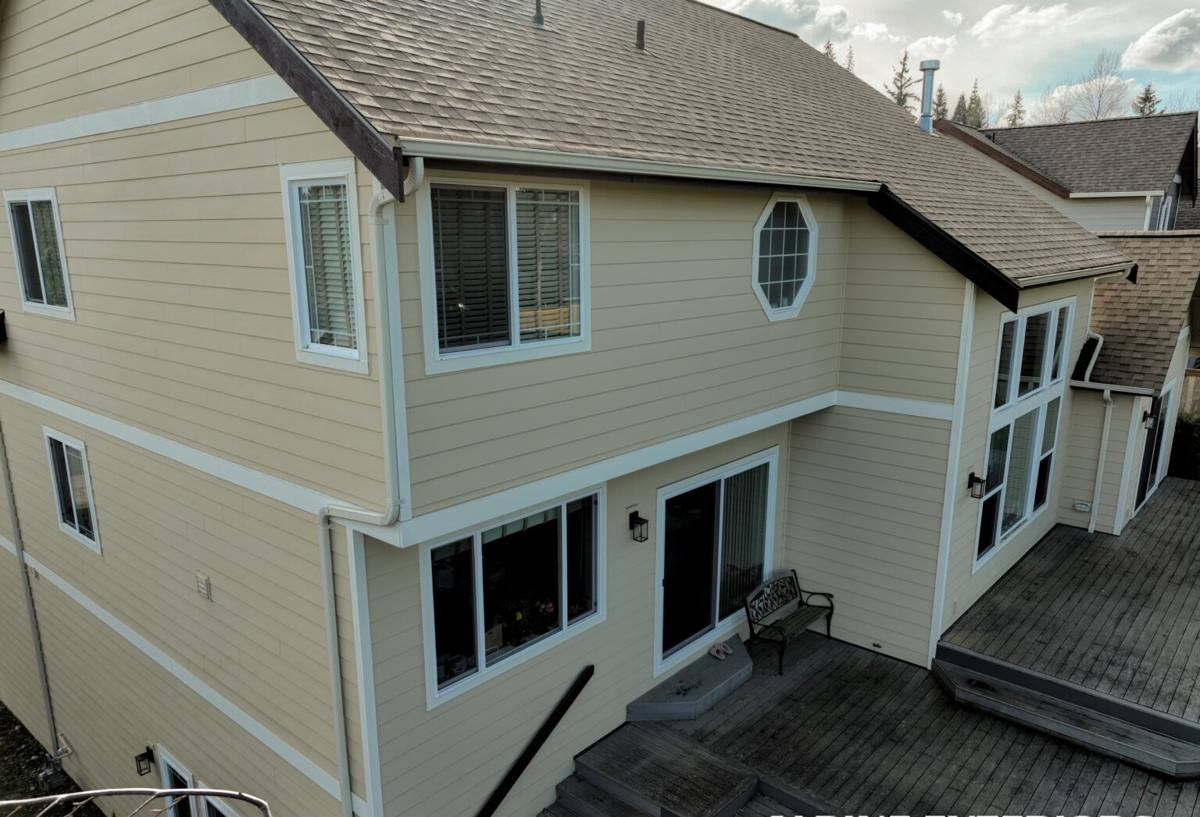
What Everett's Climate Asks of a Window Install
Snohomish County doesn't get hurricanes, but it gets something arguably harder on a building envelope: months of steady, wind-driven rain, salt-laden air off the Sound, and a moss season that keeps roofs and siding damp far longer than drier climates ever would. None of that is dramatic on its own, but it's relentless, and a window opening is one of the most likely places for that moisture to find a way in if the flashing detail isn't right.
The Three Things We're Installing Against
- Driving rain: wind-driven rain doesn't just fall on a window, it pushes sideways into any gap in the flashing or sealant — this is why lap sequencing (each layer overlapping the one below it) matters more here than in calmer climates.
- Salt air: being close to the water accelerates corrosion on fasteners, hardware, and metal flashing that isn't rated for it. Cheap or mismatched metals will pit and stain years before they should.
- Sustained dampness / moss season: our long wet stretch means any trapped moisture behind a window doesn't get a chance to dry out the way it might in a drier region — it just sits, and that's when rot and mold start.
What a Correct New-Construction Install Actually Involves
The window itself is rarely the weak point. The failures we get called out to fix almost always trace back to the sequence around the window, not the unit itself. A proper install follows a specific order, and skipping or reversing steps is how leaks happen — sometimes not for a year or two, which is exactly why it's worth getting right the first time.
- Rough opening check: confirm the opening is square, level, and sized correctly before the window ever shows up on site.
- Sill pan flashing: a sloped, sealed pan at the bottom of the opening so any water that gets past the window has a path back out, not into the wall.
- WRB integration: the housewrap or building paper gets cut and lapped so it directs water down and over the window flange, never behind it.
- Window setting: shimmed, leveled, and fastened per the manufacturer's schedule — not just "close enough."
- Flange and flashing tape: jambs and head flashed in the correct shingle-lap order (sides first, then top) so every layer sheds water onto the layer below it.
- Sealant at the interior: a continuous air seal on the inside, which also controls condensation — a real issue in our humidity.
- Exterior trim and siding tie-in: siding and trim installed so they don't trap water against the window frame.
Frame and Glass Choices for a Marine Climate
Homeowners usually ask us about brand names, but the more useful question is which frame material and glazing package actually holds up in this climate. We don't push one product line — we walk through the honest trade-offs for a Forest Park build.
| Frame Material | How It Handles Our Climate | Trade-Offs |
|---|---|---|
| Vinyl | Good moisture and salt-air resistance, no corrosion risk | Can expand/contract with temperature swings; quality varies a lot by manufacturer |
| Fiberglass | Very stable dimensionally, excellent in wet/coastal conditions | Higher upfront cost than vinyl |
| Wood-clad | Classic look, good performance if cladding and flashing are done right | Exposed wood or failed cladding seams are a real maintenance liability in our rain |
| Aluminum | Strong and slim sightlines | Poor thermal performance and can corrode faster in salt air without proper coatings |
Whatever frame material fits the project, we pay close attention to hardware and fastener ratings near the Sound — stainless or coated fasteners are worth the small upcharge when the alternative is streaking and corrosion in a few years.
Where New-Construction Window Installs Go Wrong
Most of the callbacks we see on new construction trace back to a short list of avoidable mistakes. If you're vetting a bid or a crew for a Forest Park project, this is what to ask about directly.
- Reverse-lapped flashing (top flap installed before the sides), which funnels water behind the window instead of away from it
- No sill pan, or a flat instead of sloped one, leaving no path for incidental water to escape
- Housewrap cut and taped incorrectly around the opening, breaking the drainage plane
- Over-reliance on caulk as a substitute for proper flashing sequence — sealant is a backup, not the primary defense
- Mismatched fasteners that corrode and stain siding within a few seasons in salt air
- Skipping manufacturer-specified shim and fastening points, leading to frame racking and failed seals over time
Our Process on Forest Park Jobs
We work directly with homeowners, and just as often with builders and general contractors, on new-construction window packages in and around Forest Park. That usually means:
- Reviewing the window schedule and rough openings against the plans before installation day
- Coordinating timing with the WRB and siding crews so the drainage plane stays continuous
- Flashing and sealing to a consistent standard on every opening, not just the ones that are easy to reach
- Documenting the install as we go, which matters for both warranty coverage and any inspection sign-off
Because we already work in this part of Everett, we know which inspectors are looking for what, and we don't treat Snohomish County's wet-climate detailing as optional or "extra" — it's just how the job gets done here.
What Drives Cost on a New-Construction Window Job
| Factor | Why It Moves the Price |
|---|---|
| Number and size of openings | More openings and larger units mean more flashing, labor, and material |
| Frame material | Vinyl, fiberglass, and wood-clad carry different unit costs |
| Glazing package | Upgraded low-E coatings or gas fills add cost but pay back in comfort and lower condensation risk |
| Wall complexity | Odd angles, tall walls, or multi-story openings take more time and access equipment |
| Coordination needs | Jobs timed tightly with a builder's schedule take more planning than a standalone remodel |
We don't quote a job without seeing the plans or the opening conditions in person — window pricing swings too much on the details above to give an honest number any other way.
Why Local Experience in Forest Park Matters
A window crew that's worked this neighborhood already knows the wind exposure, the typical lot grading, and how the local building department expects flashing and drainage documented. That's not something you get from a general contractor bid sheet — it comes from having done the work here before, in this climate, on this kind of build. It's the difference between a window that's technically installed and one that's actually built to handle an Everett winter.
If you've got a new build, an addition, or a remodel taking shape in Forest Park, we're happy to take a look at your plans or your rough openings and walk you through what a correct install looks like for your project. Reach out for a free, no-pressure estimate using the form below.