 Everett
 Why Forest Park Roofs Age the Way They Do
Forest Park sits close enough to Puget Sound and the Snohomish River valley that roofs here take on a different kind of wear than roofs twenty miles inland. Salt-laden air off the water accelerates corrosion on exposed metal — nail heads, flashing, gutter hardware — long before the shingles themselves give out. Add the driving, sideways rain that comes with our fall and winter storm systems, and you get wind-driven moisture finding its way under laps and around penetrations that would stay dry in a calmer climate. Then there's moss. Everett's tree cover, humidity, and mild winters add up to a moss season that can run eight or nine months of the year on a north-facing or shaded slope.
None of this means Forest Park roofs fail faster than roofs anywhere else in Snohomish County. It means the details that actually matter — fastener choice, flashing metal, underlayment type, ventilation balance — carry more weight here than they would in a drier, calmer part of the state. A roof replacement done to a generic spec, without accounting for this specific mix of salt exposure, wind-driven rain, and moss pressure, tends to show its age within five or six years instead of lasting out its full warranty period.
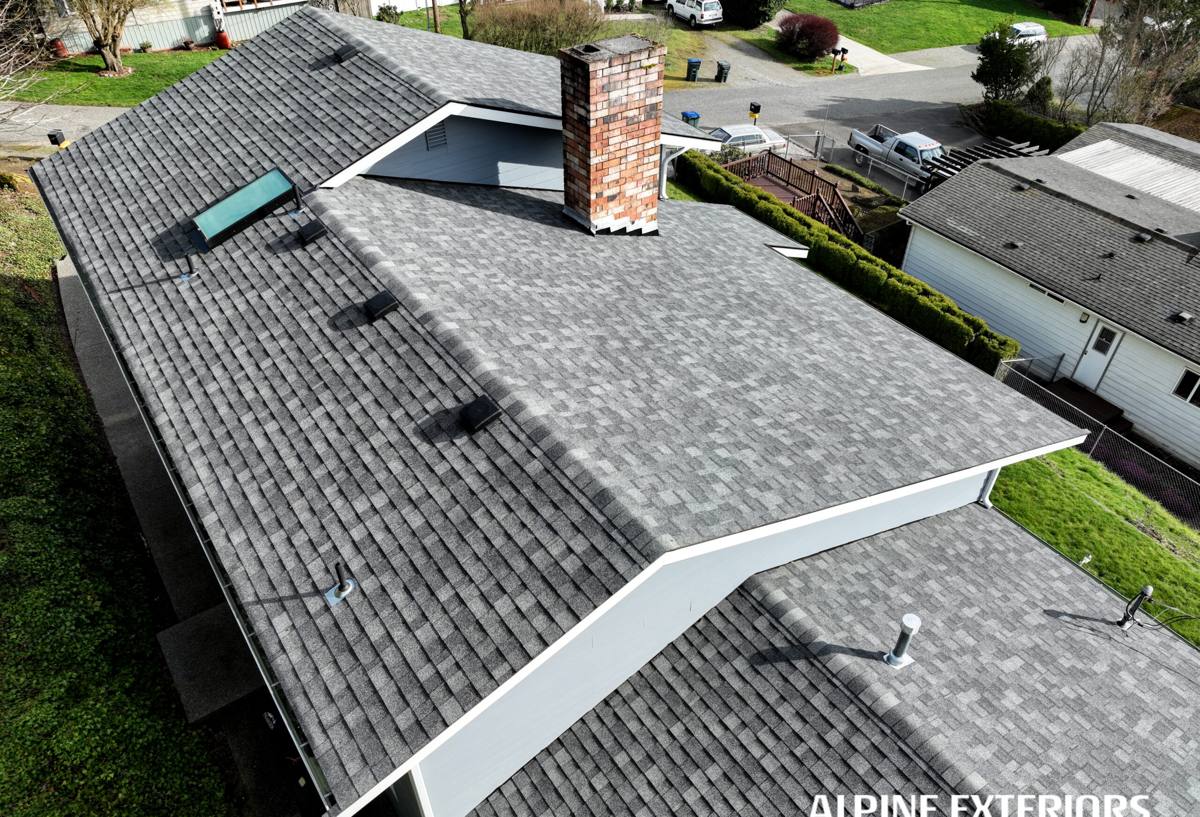
Signs a Forest Park Home Needs a New Roof, Not Another Repair
Most homeowners call us after noticing one obvious problem — a stain on a ceiling, a shingle in the yard after a windstorm — but the roof is usually telling a longer story. Here's what we look for during an inspection to decide whether repair still makes sense or whether replacement is the honest recommendation:
- Granule loss heavy enough that you can see bare asphalt mat on multiple slopes, not just one weathered spot
- Moss colonies that have lifted shingle edges rather than just sitting on the surface
- Soft or spongy decking felt underfoot during inspection, especially near valleys and eaves
- Flashing around chimneys, skylights, and sidewalls that's rusted, cracked, or was never step-flashed correctly to begin with
- Daylight visible through the roof deck from inside the attic
- A roof already past 20-25 years old on standard asphalt shingle, regardless of how it looks from the curb
If a roof is showing two or more of these at once, patching becomes a short-term fix that costs money now and again in two years. That's a judgment call we'll walk you through honestly rather than defaulting to the more expensive answer.
What a Correct Roof Replacement Actually Involves
Tear-Off and Deck Inspection
We remove the old roofing down to bare decking rather than layering over it. Layering hides rot, traps moisture, and voids most manufacturer warranties outright. Once the deck is exposed, we inspect every sheet of plywood or OSB for soft spots, delamination, or water staining and replace what's compromised before anything new goes down. In a neighborhood like Forest Park, where mature tree canopy keeps some roof sections shaded and slow to dry, deck rot around valleys and behind chimneys is common enough that we budget time for it rather than treating it as a surprise change order.
Underlayment and Ice-and-Water Protection
Given how much wind-driven rain this area sees, we use synthetic underlayment across the full roof rather than the older felt paper, and we run self-adhering ice-and-water membrane at eaves, valleys, and around every penetration — chimneys, vents, skylights. That membrane is what stops water that gets past the shingle layer during a hard blow from ever reaching the deck.
Flashing
Flashing is where most premature leaks originate, and it's also where salt air does the most damage over time. We use corrosion-resistant metal at all flashing points and step-flash sidewalls and chimneys properly rather than relying on caulk or roof cement as a substitute for correct metalwork. Caulk is a maintenance item, not a waterproofing method — we use it as a supplement, never a fix.
Ventilation
A roof replacement is the right time to correct ventilation, and in this climate it matters more than most homeowners expect. Balanced intake at the eaves and exhaust at the ridge keeps moisture from condensing inside the attic during our cool, damp winters, and it keeps shingles from cooking from underneath during summer heat spikes. Poor ventilation is one of the most common reasons a roof fails years ahead of its rated life.
Material Options That Make Sense for This Climate
There's no single "best" roofing material — the right choice depends on your home's exposure, roof pitch, budget, and how much moss maintenance you're willing to stay on top of. Here's how the common options compare for a Forest Park home specifically:
| Material | Salt Air & Driving Rain Performance | Moss Resistance | Typical Lifespan Here |
|---|---|---|---|
| Architectural asphalt shingle | Good when installed with proper flashing and underlayment; the most common and cost-effective choice | Moderate — benefits from copper or zinc strips at the ridge | 20-25 years |
| Standing seam metal | Excellent once finished with a coastal-rated coating; sheds wind-driven rain very well | High — little surface for moss to grip | 40-50 years |
| Synthetic/composite shake | Very good; doesn't absorb moisture the way wood does | Moderate to high depending on product | 30-40 years |
| Cedar shake | Requires diligent maintenance in wet, shaded conditions | Low without regular treatment | 15-25 years with upkeep |
We install cedar shake when a homeowner wants that look and understands the maintenance commitment, but we're upfront that in a shaded, moisture-heavy setting like Forest Park it demands more attention than asphalt or metal to avoid moss and rot taking hold early. That's a maintenance conversation, not a knock on the material — it's simply what wood needs in this environment.
Moss and Algae: Prevention Built Into the Roof, Not Bolted On
Moss doesn't just look bad — it holds moisture against the shingle surface and works its rhizoids under shingle edges, lifting them and creating entry points for water. On every replacement we install zinc or copper control strips near the ridge, which release trace metal ions with every rainfall that inhibit moss and algae growth across the slope below. It's a passive system with no moving parts and nothing to maintain, and it's far more effective installed at the time of replacement than added later. We also make sure tree branches aren't left overhanging the roofline where debris and shade collect, since that's the single biggest driver of moss pressure on homes throughout this part of Snohomish County.
Our Process, Start to Finish
- Inspection and estimate — we walk the roof (weather permitting) or use a ladder assessment and attic inspection to give you an honest scope, not just a drive-by number
- Material selection — we go over the trade-offs above based on your budget and how the roof faces prevailing wind and rain
- Scheduling — we work around Everett's wet-season windows and give you a realistic timeline rather than overpromising a one-day turnaround
- Tear-off and deck repair — full removal, deck inspection, and replacement of any compromised sheathing
- Installation — underlayment, ice-and-water membrane, flashing, and the roofing material itself, installed to manufacturer spec so your warranty stays intact
- Cleanup and magnetic sweep — yard and driveway cleared of debris and stray fasteners before we call the job done
- Final walkthrough — we show you the completed work and go over any maintenance items, like moss strip upkeep, before we leave
What Drives the Cost of a Roof Replacement
Every roof is different, and we won't quote a number without seeing the roof, but these are the factors that move the price most for Forest Park homes:
| Factor | Why It Matters |
|---|---|
| Roof size and pitch | Steeper roofs take longer to work safely and use more material per square |
| Number of existing layers | Tear-off of two layers costs more in labor and disposal than one |
| Deck condition | Rot found during tear-off means replacement sheathing, which is priced as it's discovered, not guessed upfront |
| Material choice | Asphalt, metal, and composite shake carry very different material costs per square |
| Roof complexity | Valleys, dormers, chimneys, and skylights all add flashing labor |
| Access | Tree cover, tight side yards, or limited driveway access can affect equipment and dumpster placement |
Most straightforward asphalt shingle replacements on homes in this area land in a broad middle range, with metal and composite shake running higher for material cost but lower over time in maintenance and lifespan. We'll give you the real range for your roof after a walkthrough — not a number pulled from a national average that has nothing to do with your house.
Why Working With a Crew That Knows Forest Park Matters
A roof replacement is only as good as the details nobody sees once it's finished — the flashing behind the chimney, the ventilation balance in the attic, the fastener pattern that holds up in wind gusts off the Sound. Crews that work this area regularly already know which details to prioritize because they've seen what fails here and why. That's not a substitute for a manufacturer's installation standards — it's local judgment layered on top of them: knowing which slopes need extra moss protection, which valleys collect the most wind-driven rain, and which older Forest Park homes tend to have decking that needs a closer look before anyone commits to a number.
We also stand behind the work with a workmanship warranty in addition to the manufacturer's material warranty, because the two cover different things — materials can be defective, but a poorly installed roof with perfect shingles will still leak.
Questions to Ask Before You Sign
- Are you licensed and insured in Washington, and can you provide proof?
- Will you tear off down to the deck, or is a layover being proposed?
- What underlayment and ice-and-water shield are included, and where specifically will they be installed?
- Who handles flashing at chimneys and sidewalls, and is it step-flashed or caulk-dependent?
- Is moss/algae protection included, and what does it consist of?
- What's covered under your workmanship warranty, separate from the manufacturer's material warranty?
- How do you handle unexpected deck rot found during tear-off — priced upfront or added later?
If you're weighing a roof replacement for a Forest Park home, we're happy to take a look and give you a straight answer — whether that's a full replacement, a targeted repair, or simply a maintenance plan to get a few more years out of what you have. Request a free, no-pressure estimate using the form below.