 Everett
 Why Glenhaven Roofs Wear Faster Than People Expect
Glenhaven sits close enough to Puget Sound and Possession Sound that salt-laden air is a constant, low-grade stress on every exposed surface of a house — including the roof. Add in Snohomish County's long wet season, where driving rain comes sideways off frequent windstorms instead of falling straight down, and you get moisture finding its way into laps, fasteners, and flashing details that would stay dry in a calmer climate. Many established Everett neighborhoods also carry mature tree cover, which drops needles and leaf litter into valleys and along eaves. That debris holds moisture against the roofing material long after a storm has passed, which is exactly the environment moss needs to take hold.
None of this means a roof in Glenhaven is doomed to fail early. It means the installation has to account for these specific stresses from the start — the underlayment, the flashing metal, the ventilation, and even the nailing pattern all matter more here than they would in a dry inland climate. A new roof installed the right way for this area should comfortably outlast one installed with generic, one-size-fits-all methods.
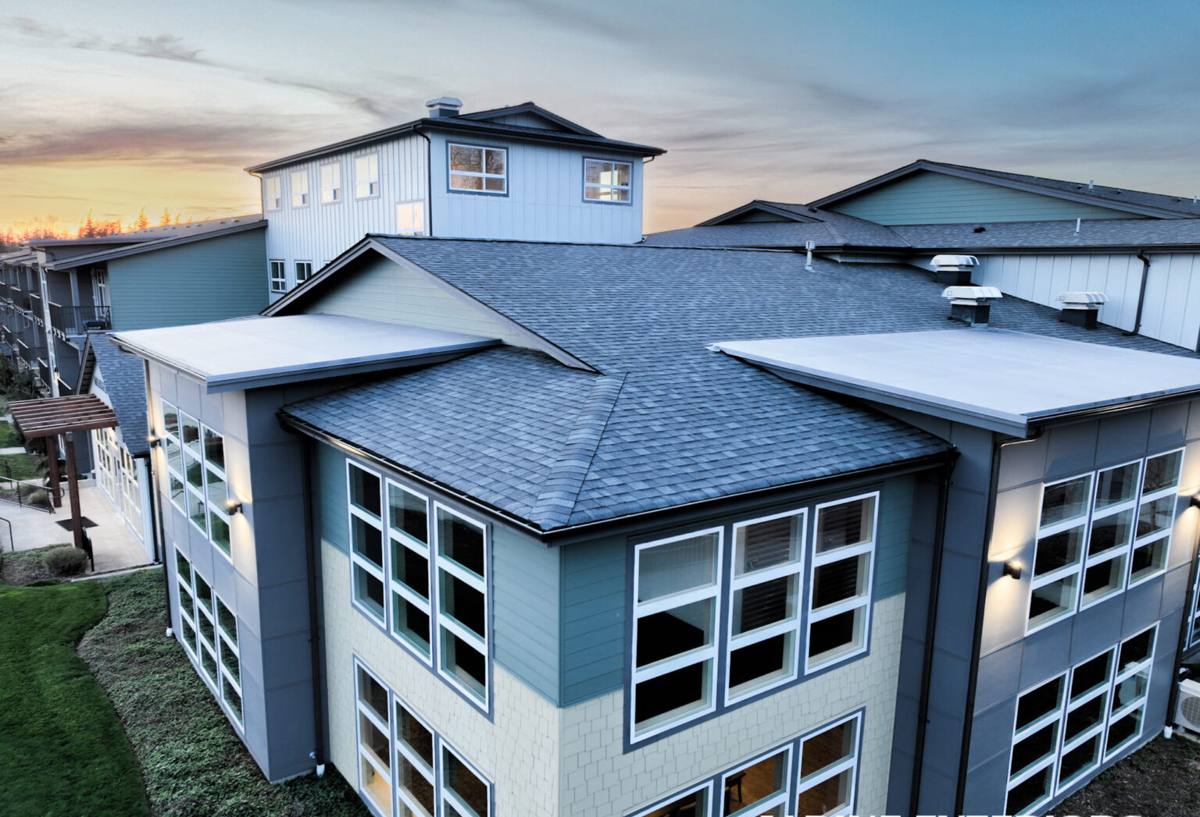
What "Correct" Actually Means on a New Roof Installation
A new roof is more than laying shingles over what's there. A properly installed roof is a system of layered components, and skipping or shortcutting any one of them shows up as a leak, premature wear, or a warranty that won't hold up when you need it.
Tear-Off and Deck Inspection
We remove the old roofing material down to the deck rather than layering over it. That's the only way to actually see the plywood or OSB sheathing underneath. In a climate as wet as Snohomish County's, hidden rot around old nail penetrations, valleys, and chimney or vent flashing is common on older roofs, and it has to be cut out and replaced before anything new goes down. Roofing over soft or damaged decking just hides a problem that gets more expensive the longer it sits.
Underlayment and Ice-and-Water Protection
The underlayment is the roof's backup layer if wind-driven rain ever gets past the surface material — and in this area, it will, eventually, at least at the edges and valleys. We use synthetic underlayment across the full roof and self-adhering ice-and-water membrane at eaves, valleys, and any roof-to-wall transitions, which are the spots most exposed to wind-driven rain and ponding.
Flashing and Metal Details
Flashing around chimneys, skylights, vents, and sidewalls is where most roof leaks actually start, not in the open field of shingles. Salt air accelerates corrosion on lower-grade or older galvanized flashing, so we install corrosion-resistant metal and never reuse old flashing on a new roof, even when it looks intact. Reused flashing is a common shortcut that saves an installer a few minutes and costs the homeowner a leak two or three years down the road.
Ventilation
An underventilated attic traps warm, moist air against the underside of the roof deck, which speeds up rot and helps moss and algae get a foothold from underneath as well as above. We check existing intake and exhaust ventilation as part of every new roof installation and correct it — adding ridge vents, soffit vents, or baffles — rather than just replacing the surface and leaving the same airflow problem in place.
Choosing a Roofing System for Glenhaven's Climate
Most Glenhaven homes end up choosing between a few practical options. Each one handles salt air, rain, and moss differently, and the right choice depends on your roof's pitch, your home's style, and how much long-term maintenance you want to take on.
| Material | Moss/Moisture Resistance | Maintenance | Typical Lifespan |
|---|---|---|---|
| Architectural asphalt shingle | Good with proper algae-resistant granules | Low — periodic moss removal | 25-30 years |
| Standing seam metal | Very good — sheds moisture, sheds moss | Very low | 40-50+ years |
| Synthetic composite (slate/shake look) | Good — doesn't absorb moisture like wood | Low | 40-50 years |
| Cedar shake | Requires diligent upkeep in this climate | High — regular treatment and cleaning | 20-30 years with upkeep |
We don't install cedar shake as a rule on this coast, not because it's a bad-looking product, but because keeping it ahead of moss and rot in a marine climate takes a level of ongoing maintenance most homeowners don't want to sign up for. Architectural asphalt shingle with algae-resistant granules is the most common, cost-effective choice for Glenhaven roofs, and standing seam metal is worth the higher upfront cost for homeowners who want to essentially stop thinking about their roof for decades.
Our Installation Process, Step by Step
- On-site inspection and estimate. We walk the roof (or use a drone where pitch or access makes that safer), check the attic for ventilation and moisture signs, and give you a written estimate with material options.
- Material selection and permitting. Once you choose a system, we handle the Snohomish County or City of Everett permit paperwork — most full re-roofs require one, and skipping it can create problems at resale.
- Protecting the property. We stage tarps and plywood over landscaping, walkways, and anything below the work area before tear-off starts.
- Tear-off and deck inspection. Old material comes off down to the sheathing, and any damaged decking is identified and priced before replacement — no surprises after the fact.
- Underlayment, flashing, and ventilation install. Ice-and-water membrane, synthetic underlayment, new flashing, and any ventilation corrections go in before the finish material.
- Roofing material installation. Shingles, panels, or composite material go down to manufacturer specification, including proper nailing pattern and exposure.
- Cleanup and magnetic sweep. We clear debris and run a magnetic sweep for stray nails around the property.
- Final walkthrough. We go over the finished roof with you, confirm everything meets the estimate, and provide warranty paperwork.
What Drives the Cost of a New Roof
Every quote should be specific to your house, but the same handful of factors move the price up or down on nearly every Glenhaven roof:
| Cost Factor | Why It Matters |
|---|---|
| Roof size and pitch | Steeper roofs require more safety equipment and labor time |
| Number of layers to remove | Older homes sometimes have two or more layers of shingles to tear off |
| Deck condition | Rotted sheathing found during tear-off adds material and labor |
| Material choice | Asphalt shingle, metal, and composite carry very different price points |
| Roof complexity | Valleys, dormers, skylights, and chimneys each add flashing work |
| Ventilation upgrades | Adding or correcting intake/exhaust venting is often worth doing during a re-roof |
We'd rather walk your roof and give you real numbers than quote a broad range that doesn't mean much until we've seen your specific situation.
Signs Your Glenhaven Home Needs a New Roof, Not a Repair
- Shingles that are curling, cupping, or losing granules in large patches
- Dark streaking or thick moss growth across large sections rather than isolated spots
- Soft or spongy spots when walking the roof deck
- Daylight visible through the roof boards from inside the attic
- Water stains on interior ceilings or in the attic after heavy rain
- A roof approaching or past 20-25 years old, even without obvious damage
- Repeated repairs to the same area over the past few years
If you're only seeing one or two of these, a repair may still make sense. If several apply at once, a full replacement is usually the more cost-effective path — patching a roof that's failing broadly just delays a bigger repair bill.
Moss, Algae, and Long-Term Roof Care After Installation
A correctly installed new roof will resist moss far better than an old one, but Everett's long wet season and moss-friendly conditions don't disappear once the new roof is on. Keeping gutters and valleys clear of leaf litter, trimming back overhanging branches where practical, and having the roof looked at every couple of years go a long way toward protecting the investment. We're glad to walk a homeowner through simple moss-prevention steps at the end of an install — it's a five-minute conversation that can add years to a roof's real-world lifespan in this climate.
Why Hiring a Crew That Already Works Glenhaven Matters
A roofer who mainly works dry, inland climates can still install a technically correct roof on paper and have it underperform here, simply because they're not used to designing for wind-driven rain, salt air corrosion, and heavy moss pressure as the default condition rather than the exception. Crews who work Snohomish County and Everett neighborhoods regularly already know which flashing details fail first in this climate, how local permitting works, and what ventilation corrections actually solve moss and moisture problems here rather than just moving them around. If your street or HOA has specific guidelines on roofing material or color, it's also worth checking those before you finalize a choice — we're happy to help you navigate that if it applies to your property.
If you're weighing a repair against a full replacement, or you just want a straight answer on what your roof actually needs, we're glad to come take a look. Reach out for a free, no-pressure estimate using the form below.