 Everett
 Storm Damage Roof Repair for Lake Stevens Homes
Lake Stevens sits far enough inland to feel a little sheltered from Puget Sound weather, but anyone who's lived through a winter here knows that's only partly true. Wind funnels down through the trees around the lake, rain comes in sideways during the big fronts, and the same marine-influenced weather pattern that soaks the rest of Snohomish County still rolls through on a regular basis. When a storm damages a roof here, the fix needs to account for what actually caused the problem — not just patch over it and hope the next storm doesn't find the same weak spot.
This page is about one thing: storm damage roof repair for homes in and around Lake Stevens, done by a crew that already works this area regularly. We're not going to walk you through every roofing service we offer — just what you need to know if a storm has left your roof damaged and you're trying to figure out what happens next.
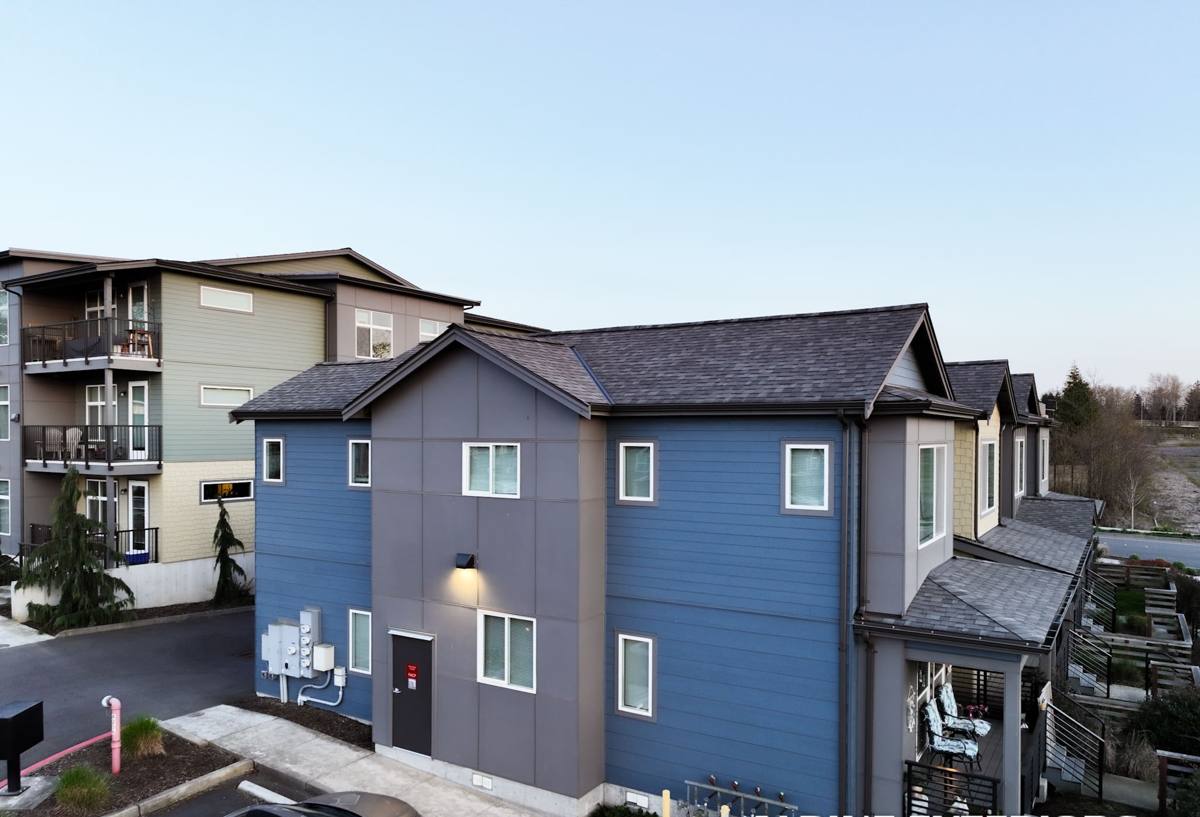
What Our Regional Climate Does to a Lake Stevens Roof
Every roof in this part of Washington deals with the same basic pressures, and Lake Stevens is no exception:
Wind and Driving Rain
Storm systems moving off Puget Sound bring gusty wind and rain that doesn't fall straight down — it drives sideways under shingle edges, into ridge caps, and around any flashing that's aged or wasn't installed tight to begin with. A roof that's been fine for years can suddenly leak during one bad storm simply because wind found the one seam that was already marginal.
Tree Cover and Debris
Lake Stevens has a lot of mature trees close to rooflines — part of what makes the area appealing to live in, but also a real source of storm damage. Wind-snapped branches, whole limbs, and heavy debris strikes are among the most common causes of storm-related roof damage we see out here, along with the gradual wear that comes from limbs scraping shingles in every windstorm even when nothing breaks off.
Moss and Moisture
Shaded, damp roof sections stay wet longer after every storm, which is exactly what moss needs to take hold. A long moss season is a fact of life in this region, and moss does more than look bad — it lifts shingle edges, holds moisture against the roof deck, and turns a roof that could have handled the next storm fine into one that's already compromised when it hits.
None of this means every roof in Lake Stevens is in trouble. It means storm damage repair here has to be diagnosed with these specific stressors in mind, not treated as a generic patch job.
Signs of Storm Damage Worth Getting Checked
Some storm damage is obvious. A lot of it isn't — and the damage you can't see from the ground is often the kind that leads to a bigger repair bill later if it's ignored. After a windstorm or heavy rain event, it's worth looking for:
- Shingles that are visibly lifted, curled, cracked, or missing entirely
- Granules collecting in gutters or at downspout outlets (a sign of shingle surface wear from wind and debris impact)
- New or worsening moss growth in shaded valleys or north-facing slopes
- Dented or dislodged flashing around chimneys, vents, and skylights
- Water stains on interior ceilings or in the attic, especially near exterior walls
- Branches or debris resting on the roof, even if nothing looks broken underneath
- Sagging in the roofline or soft spots when the roof deck is walked
- Gutters pulled loose or full of shingle debris after a storm
Any one of these on its own might be minor. Several together, or damage near a valley or chimney where water concentrates, usually means it's time for a proper inspection rather than a wait-and-see approach.
What a Correct Storm Damage Repair Actually Involves
A repair that only addresses what's visible from the ground is a repair that's likely to need doing again. A correct storm damage repair works from the deck outward:
Deck Inspection First
Before anything gets replaced on the surface, the roof deck underneath needs to be checked for soft spots, rot, or moisture intrusion — especially anywhere shingles were missing or lifted. Installing new shingles over a compromised deck doesn't fix the underlying problem, it just hides it.
Underlayment and Flashing
Wind-driven rain damage is often a flashing or underlayment failure, not just a shingle failure. Storm repair should include checking flashing at every penetration — chimneys, vents, skylights, and valleys — since these are the spots where sideways rain most often finds a way in, and where a quick shingle-only patch tends to leave the real problem untouched.
Matching Materials
Where shingles are being replaced rather than the whole roof, matching the existing material in weight, profile, and as close to color as the product line allows matters for both appearance and performance — mismatched shingles can create uneven wear patterns and stand out visually for years.
Moss and Debris Cleanup
Any repair on a Lake Stevens roof should include clearing moss and debris from the repair area and nearby valleys as part of the job, not as a separate service. Leaving moss in place around a fresh repair undermines it from day one.
Our Process, Start to Finish
- Inspection. We walk the roof (weather permitting) and check the deck, flashing, valleys, and any area you've flagged as a concern — not just the obvious damage.
- Documentation. We note and photograph what we find, which matters both for your own records and for any insurance claim you may file.
- Written estimate. You get a clear scope of work and cost before anything starts — what's being repaired, what materials are used, and why.
- Repair. We fix what's actually damaged: deck, underlayment, flashing, and shingles, in that order, using materials that match your existing roof where possible.
- Final check. We walk the completed repair with you so you know exactly what was done and what to watch for going forward.
Repair or Replace? What Actually Drives That Decision
Not every storm-damaged roof needs a full replacement, and not every roof can be reasonably patched. The honest answer depends on a few concrete factors:
| Factor | Leans Toward Repair | Leans Toward Replacement |
|---|---|---|
| Roof age | Under 10-12 years, or recently replaced | Near or past expected shingle lifespan |
| Extent of damage | Localized — one slope, one area | Widespread across multiple slopes |
| Deck condition | Solid, no rot found | Soft spots or rot found in multiple areas |
| Prior moss/moisture history | Isolated, first occurrence | Chronic moss and moisture damage over years |
| Material availability | Matching shingles still available | Discontinued line, poor match likely |
We'll tell you honestly which side of that table your roof falls on. If a repair is a reasonable, durable fix, that's what we'll recommend — a roof doesn't need to be replaced just because it was damaged.
Storm Damage and Insurance Claims
Many storm damage repairs in Lake Stevens are covered in whole or in part by homeowners insurance, depending on your policy and the cause of damage. We're not your insurance company and can't promise coverage or a claim outcome, but we can help with the practical side:
- Providing clear photo documentation of the damage and its likely cause
- Writing an estimate in a format adjusters typically expect
- Explaining, in plain terms, what we found and why it needs the repair we're recommending
What you decide to do with your insurer, and how you file, is entirely your call — we're here to give you accurate information to work with, not to manage your claim for you.
Why a Crew That Already Works Lake Stevens Matters
Storm damage repair isn't a one-size-fits-all trade. A crew that regularly works Lake Stevens and the rest of the greater Everett area has already seen how this specific climate plays out on roofs — which valleys collect moss first, which flashing details tend to fail under wind-driven rain, and how tree cover around the lake affects debris damage compared to more open parts of Snohomish County. That kind of familiarity means less guesswork and a repair that's built for the conditions your roof actually faces, not generic advice pulled from a different climate.
It also means we're a known, reachable local business — not a storm-chasing crew that shows up after a big weather event and is gone before the next one. If something about the repair needs a follow-up, we're still here.
Reducing Future Storm Damage
A good repair now is worth more if it's paired with a few habits that reduce how much the next storm can do:
- Trim back branches that overhang or touch the roofline where it's safe to do so
- Clean gutters and downspouts before the fall storm season so water has somewhere to go
- Have moss treated or removed before it spreads across a full slope, not after
- Get flashing and valleys checked every couple of years, even without visible damage
- Walk the exterior after any significant windstorm and look up, not just around
None of this eliminates storm damage entirely — no roof in this region is immune to wind and rain — but it does reduce how often you're dealing with it and how serious the damage tends to be when it happens.
Get a Straight Answer on Your Roof
If a recent storm has left you with damage, missing shingles, or just a nagging feeling that something's not right up there, we're happy to take a look. We'll give you a clear, honest read on what we find and a written estimate with no pressure to move forward. Fill out the form below to schedule a free estimate for your Lake Stevens home.