 Everett
 Composite Decking for Lynnwood Homes
Lynnwood sits in that stretch of Snohomish County where Puget Sound's salt air meets a long, wet winter and a shoulder season that never quite dries out. A deck here has to survive months of standing moisture, wind-driven rain that gets up underneath railings and ledger boards, and a moss season that can run from October well into May. We build and install composite decking for homeowners in and around Lynnwood, and this page covers what that job actually involves — not the marketing version, the real one.
This isn't a general "composite decking" pitch. It's specific to what a deck needs to hold up in this part of Everett's service area, what a correct installation looks like underneath the boards where nobody's looking, and why the details matter more here than they would in a drier climate.
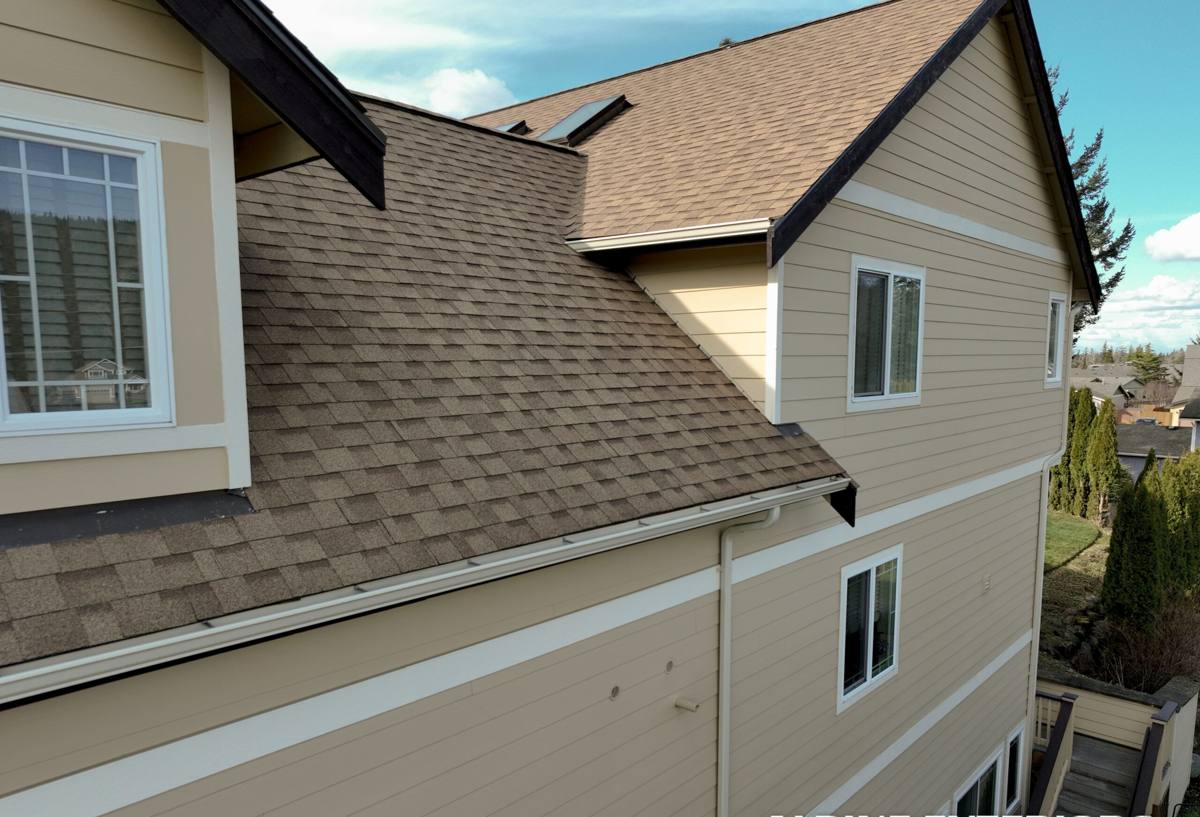
Why Lynnwood's Climate Is Hard on Decks
Three things work against outdoor structures in this area, and they compound each other:
- Salt air: Proximity to Puget Sound means airborne salt and moisture accelerate corrosion on fasteners, brackets, and any exposed metal hardware. Standard interior-grade screws or under-spec'd flashing corrode faster here than inland.
- Driving rain: Winter storms in this region rarely fall straight down. Wind pushes rain sideways and up under rail caps, around post bases, and behind ledger boards where a deck attaches to the house — which is exactly where rot and water intrusion start if flashing wasn't done right.
- Long moss season: Shade, moisture, and mild temperatures are ideal moss conditions for most of the year. Moss on a deck surface isn't just cosmetic — it holds moisture against the board, and on a poorly ventilated substructure it keeps the framing damp long after the surface looks dry.
None of this is unique to Lynnwood specifically — it's Snohomish County and greater Puget Sound weather generally — but it's the baseline every deck built here has to be designed around, not an afterthought.
Composite vs. Wood vs. PVC: What Actually Makes Sense Here
We install composite decking most often in this area because it strikes a reasonable balance for this climate, but it's not automatically the right call for every homeowner or every budget. Here's the honest comparison:
| Material | Moisture Behavior | Maintenance | Upfront Cost | Long-Term Trade-offs |
|---|---|---|---|---|
| Pressure-treated wood | Absorbs and releases moisture; prone to cupping and splitting in wet-dry cycles | Annual staining/sealing recommended | Lowest | Shortest realistic lifespan in this climate without diligent upkeep |
| Composite (wood-plastic) | Low absorption; resists rot but surface can hold moss/algae if not ventilated properly | Periodic cleaning, no staining or sealing | Mid-range | Best balance of durability and cost for most Lynnwood homes |
| Capped PVC | Essentially non-absorbent | Lowest maintenance | Highest | Higher material cost; some homeowners find the look less natural |
We're not going to tell you wood decking is a bad product — it isn't, if you're willing to maintain it. What we won't do is install it and let a homeowner believe it needs less attention than it does. That's a maintenance-burden conversation we have honestly before the job starts, not after.
Why We Lean Composite in This Service Area
Given the salt air and rain exposure typical of Lynnwood properties, composite decking removes the annual staining cycle that pressure-treated wood demands — a cycle that's easy to fall behind on when the weather window for staining (dry, moderate temperatures) is narrower here than in drier climates. Composite boards also don't splinter, cup, or check the way wood does after repeated wet-dry cycles.
What a Correct Composite Deck Installation Involves
The board brand matters less than what's underneath it. A composite deck fails early almost exclusively because of substructure or drainage mistakes, not because the decking material itself failed. Here's what we treat as non-negotiable:
Framing and Joist Spacing
Composite boards typically require tighter joist spacing than wood decking — usually 16 inches on center, sometimes closer depending on the board profile and whether the deck runs diagonal. Installing composite over framing spaced for wood decking is a common shortcut that leads to bounce and premature board sag.
Fasteners and Hardware
Given the salt air exposure common around Lynnwood, we use corrosion-resistant, coated fasteners rated for treated lumber and composite contact — not bargain-bin screws that'll show rust streaks on the board surface within a couple seasons.
Ledger Board Flashing
Where the deck attaches to the house, proper flashing (and often a waterproof membrane behind it) keeps driving rain from working its way behind the ledger and into the house's wall assembly. This is the single most common point of hidden water damage on ledger-attached decks in this climate, and it's invisible once the deck is built — which is exactly why it has to be done right the first time.
Ventilation and Drainage Underneath
Composite decking needs airflow beneath the boards to dry out after rain. A deck built low to the ground or over unventilated framing traps moisture underneath, which encourages mold and slows drying — undermining the whole reason to choose composite in the first place. We plan clearance and airflow into the framing design, not as an afterthought.
Post Bases and Footings
Posts set directly in wet soil or concrete without a proper standoff base wick moisture upward regardless of what decking material sits on top. Post bases that keep wood off grade and off standing water matter as much in Lynnwood's wet winters as anything above the deck surface.
Our Process
The work happens in a fairly predictable sequence, and we walk homeowners through each step before it starts:
- On-site assessment: We look at the existing structure (if any), grade and drainage around the deck footprint, sun/shade exposure, and how the deck ties into the house.
- Design and material selection: Board profile, color, railing style, and layout, matched to budget and to how the space will actually be used.
- Permitting: Most deck projects in Snohomish County jurisdictions require a permit, particularly for anything attached to the house or built above a certain height. We handle that paperwork rather than leaving it to the homeowner.
- Demo and framing: Removal of any old structure, then framing built to current code and to composite manufacturer spacing requirements.
- Flashing and waterproofing: Ledger flashing, membrane where needed, post base installation.
- Decking, railing, and trim installation: Boards, fascia, railing system, and any built-in features (stairs, benches, etc.).
- Final walkthrough and cleanup: We inspect the finished deck with the homeowner and clear the site of debris and packaging.
What Drives the Cost of a Composite Deck
| Factor | Why It Matters |
|---|---|
| Deck size and shape | Square footage and complexity (angles, multiple levels) directly affect board and labor cost |
| Board tier | Entry-level composite vs. capped/premium composite boards vary meaningfully in price and appearance |
| Height and substructure | A deck built over a walkout basement or on a slope needs more framing and support than a low, grade-level deck |
| Railing system | Composite or aluminum railing costs more than basic wood or cable options |
| Site access | Tight side-yard access or a fenced backyard can add labor time for material handling |
| Permit and inspection requirements | Attached decks and taller structures typically need permitting, which adds time and a modest fee |
We give homeowners a written estimate that breaks these factors out, rather than a single lump number — that way you can see where the money's actually going and adjust scope if needed.
Maintenance in a Wet, Mossy Climate
Composite decking is genuinely lower-maintenance than wood, but "low-maintenance" isn't "no-maintenance" — especially with Lynnwood's moss season working against you most of the year. A practical seasonal checklist:
- Sweep debris (leaves, needles, seed pods) off the deck regularly — trapped organic matter holds moisture and feeds moss and algae growth.
- Rinse the deck surface periodically with a garden hose; a soft-bristle brush and mild soap handles most moss and algae buildup without damaging the board's cap layer.
- Avoid pressure washers on composite unless you know the manufacturer's PSI limits — too much pressure can pit or strip the surface finish.
- Check that gaps between boards stay clear so water can drain through rather than pooling.
- Inspect railing posts and stair connections once a year for loose hardware — freeze-thaw cycles and wind exposure can work fasteners loose over time.
- Keep gutters and downspouts near the deck clear so roof runoff isn't dumping extra water onto the deck surface or framing below.
Permits and Code Considerations
Deck projects attached to a house, elevated above a certain height, or built within setback distances typically require a building permit in Snohomish County jurisdictions, including areas around Lynnwood and Everett. Requirements can include guardrail height, baluster spacing, footing depth (often tied to frost line and soil bearing), and stair geometry. We pull permits and coordinate inspections as part of the job rather than treating that as the homeowner's separate errand — it's part of doing the work correctly, and skipping it is one of the more common ways deck projects run into trouble later, whether at resale or at insurance time.
Why Hiring a Crew That Already Works Lynnwood Matters
A deck installer who mostly works drier inland markets can build a technically sound deck on paper and still get the details wrong for this climate — under-flashing a ledger board, spacing framing for a drier region's norms, or skipping the ventilation clearance that keeps a deck dry underneath through a Pacific Northwest winter. We're based out of Everett and do this work regularly throughout Snohomish County, including Lynnwood, so the salt air exposure, the rain patterns, and the moss cycle aren't unknowns we're solving for the first time on your project — they're the baseline we design every deck around.
That local familiarity also means we know which permit offices and inspection timelines apply, and we're not guessing at frost depth or drainage requirements that differ from one jurisdiction to the next.
Get a Free, No-Pressure Estimate
If you're weighing a new composite deck or replacing an aging one, we're happy to come take a look, walk the site with you, and put together a straightforward written estimate — no pressure, no upsell script. Use the form below to get started.