 Everett
 Why Lynnwood's Climate Is Hard on Ordinary Siding
Lynnwood sits close enough to Puget Sound and the surrounding Snohomish County lowlands that homes here deal with a specific combination of weather stress that a lot of siding products simply weren't built for: salt-tinged marine air moving in off the Sound, long stretches of driving, wind-blown rain rather than gentle drizzle, and a moss and algae season that can run most of the year on shaded north- and west-facing walls. None of these on their own is extreme. Together, over a decade or two, they're what separates siding that still looks sharp from siding that's swelling, staining, or rotting at the bottom courses.
Wood-based products absorb that moisture cycle and pay for it in swelling, cupping, and eventual rot at seams and butt joints. Vinyl handles rain fine but goes brittle and fades faster under the UV and temperature swings we get even in a mild Western Washington climate, and it does nothing to slow moss growth on shaded walls. James Hardie fiber cement doesn't solve every problem on its own — installation quality still does most of the work — but the material itself starts from a much stronger position: it's not organic, it doesn't feed mold or moss the way wood does, and it holds paint and factory finish far longer under UV and salt exposure.
What James Hardie's HZ Product Line Actually Changes
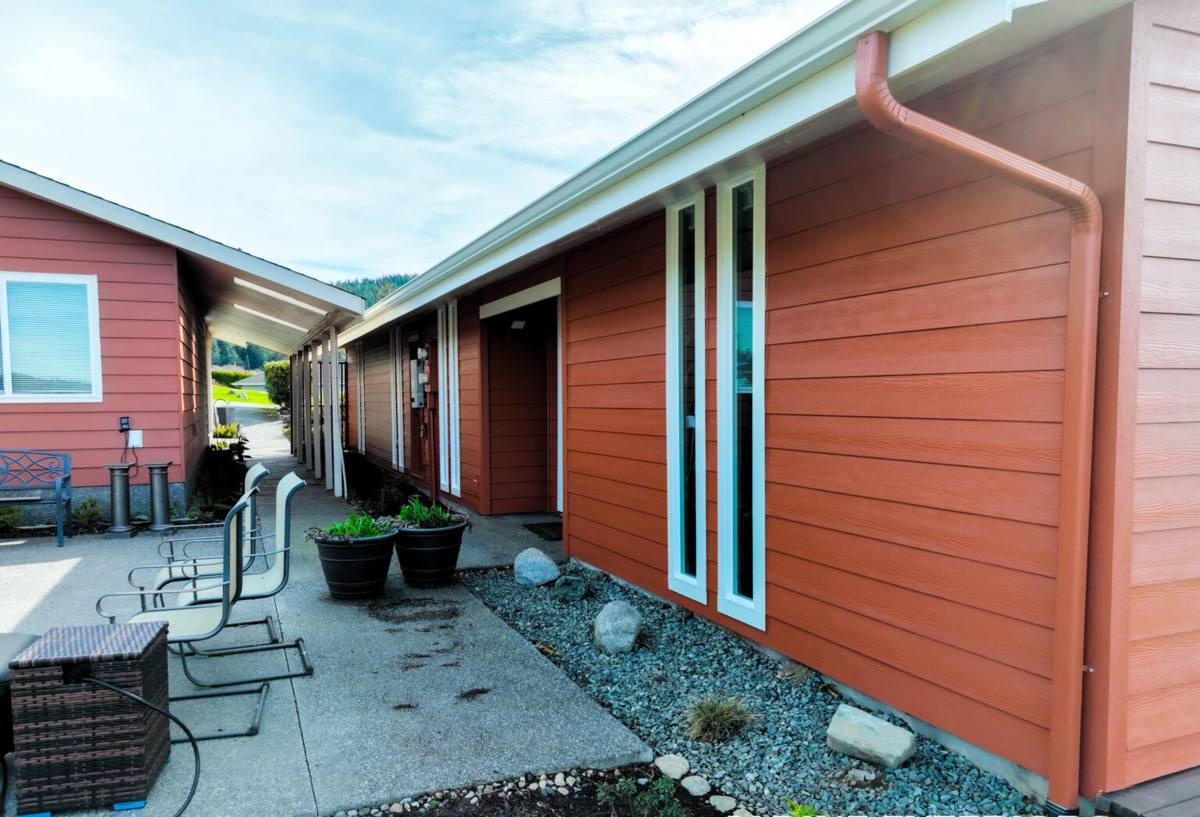
James Hardie engineers its siding in regional "HZ" formulations rather than shipping one universal product everywhere. For the Pacific Northwest, that means a formulation tuned for high-moisture, moderate-freeze conditions rather than the hot, dry-cycling formulation sold in the Southwest. It's a genuine engineering difference, not a marketing label — the fiber cement mix and moisture tolerance are matched to what a marine-influenced climate like Everett and Lynnwood actually puts a wall through.
On top of that, ColorPlus Technology — Hardie's factory-applied finish — is baked on and cured under controlled conditions rather than sprayed on site. That matters here specifically because field-applied paint on fiber cement is only as good as the weather window it was applied in, and a rainy Snohomish County fall doesn't always give a crew a clean, dry stretch to cure paint properly. A factory finish sidesteps that problem entirely and comes with a longer, more consistent warranty against fading and peeling than site-applied paint can offer.
Board Options Homeowners in Lynnwood Typically Choose
- HardiePlank lap siding — the most common choice for standard Lynnwood residential streets; comes in several exposure widths and smooth or cedar-textured finishes.
- HardieShingle — used for accent gables or full-shingle looks where a home wants a more traditional Northwest coastal appearance without the maintenance of real cedar shingle.
- HardiePanel — vertical panel siding, often paired with board-and-batten trim on modern or farmhouse-style builds.
- HardieTrim — fiber cement trim boards used around windows, corners, and fascia so the whole envelope matches in material and warranty, not just the field siding.
What a Correct Installation Involves Here
Fiber cement siding is only as good as the wall assembly behind it. A rushed or undersized crew can install genuine James Hardie product and still end up with a wall that traps moisture — the material gets blamed, but the failure is almost always in the details underneath it. In a rain-heavy area like this, those details matter more than they would in a drier climate.
Drainage Plane and Rainscreen Gap
Correct installation starts with a weather-resistive barrier behind the siding and, ideally, a drainage gap (rainscreen) that lets any moisture that does get behind the boards drain and dry out instead of sitting against sheathing. This is the single biggest factor in long-term performance for a climate with as much driving rain as Everett gets, and it's the step that's easiest for a crew unfamiliar with the region to skip or shortcut.
Flashing and Water Management at Penetrations
Windows, doors, hose bibs, vents, and deck ledgers are where most siding failures actually start — not the field of the wall. Proper head flashing, kick-out flashing at roof-to-wall intersections, and sealed penetrations keep wind-driven rain from working its way behind the siding at exactly the spots where it's most likely to try.
Fastening, Clearances, and Manufacturer Specs
James Hardie publishes specific fastener spacing, nailing patterns, and minimum clearances — siding-to-grade, siding-to-roofline, siding-to-deck — that are part of what keeps the manufacturer's warranty valid. Clearance from grade and hard surfaces is especially important here, since splashback off walkways and planting beds during heavy rain is a steady source of moisture at the bottom courses if that gap isn't respected.
Caulking and Joint Treatment
Butt joints and cut ends need to be sealed and primed per spec, particularly on cut edges where the factory ColorPlus finish has been exposed by a saw. Skipping this is invisible on install day and shows up as staining or swelling at joints a few years later.
Comparing Approaches: What Changes With the Material and the Install
| Factor | Wood/engineered wood siding | Vinyl siding | James Hardie, correctly installed |
|---|---|---|---|
| Moisture absorption | High — swells, cups, rots at joints | None, but traps moisture behind panel | Non-combustible, does not absorb or feed rot |
| Moss/algae resistance | Low on shaded walls | Low — moss grows on the surface film | Higher; factory finish resists organic growth better |
| Finish durability | Depends entirely on repaint schedule | Fades and chalks with UV/salt exposure | Factory-cured ColorPlus holds color far longer |
| Salt air tolerance | Poor — accelerates rot and finish failure | Moderate — becomes brittle over time | Formulated for marine/moisture climates (HZ line) |
| Where failures actually occur | Field of wall, especially lower courses | Seams and fastening points | Almost always at flashing/penetration details, not the board itself |
Our Process for a Lynnwood Home
- Walk-through and assessment. We look at existing siding condition, wall assembly, drainage, and any trouble spots — rot at trim, staining patterns, moss buildup on north-facing walls — that tell us what's actually happening behind the surface.
- Written scope and product selection. We spec board style, exposure, color, and trim, and lay out what the drainage plane and flashing plan will look like for that specific home.
- Removal and sheathing check. Old siding comes off and we inspect sheathing for hidden rot before anything new goes up — this is often where a home's real story shows up.
- Weather barrier and rainscreen installation. House wrap or building paper, plus drainage gap material where called for, goes on before a single piece of Hardie board is hung.
- Flashing at every penetration. Windows, doors, and roof intersections get flashed and sealed to manufacturer spec before siding closes them in.
- Siding installation to Hardie's fastening and clearance specifications. Correct nailing pattern, joint treatment, and grade clearance throughout.
- Final walk-through. We check caulking, trim details, and touch-up needs with the homeowner before calling the job done.
Why a Crew That Already Works This Area Matters
A siding job in Lynnwood isn't identical to the same job forty miles inland. A crew that regularly works Snohomish County knows which walls on a given lot orientation tend to hold moss, how much clearance to build in given how often we get sustained rain events rather than short showers, and what permitting and inspection expectations look like locally. That familiarity shows up in small decisions — where to add extra flashing, which wall gets a wider drainage gap, how aggressively to plan around a wet-season install schedule — that a crew passing through the area for a single job is less likely to think about.
It also matters for scheduling. Siding installation needs reasonably dry conditions for the weather barrier and flashing steps to go in correctly. A local crew that knows the seasonal rain patterns here plans install windows around that reality instead of fighting it.
Maintaining Hardie Siding in a Moss-Prone Climate
James Hardie siding is genuinely low-maintenance compared to wood, but "low-maintenance" isn't "no-maintenance," especially with as much shaded, damp wall exposure as this area sees.
- Rinse siding annually, especially shaded and north-facing walls, to keep moss and algae from establishing.
- Keep gutters clear so overflow isn't running down the wall face during heavy rain events.
- Trim back landscaping and shrubs so walls get airflow and sun exposure to dry out between storms.
- Check and re-caulk joints and trim intersections every few years as part of normal upkeep.
- Watch grade lines near planting beds and walkways — soil or mulch that's crept up over the siding's clearance should be pulled back.
- Have flashing and caulking inspected after any major windstorm or unusually wet winter.
Cost Factors to Expect
| Factor | Why it moves the price |
|---|---|
| Existing siding removal and disposal | Tear-off, especially with rot repair underneath, adds labor beyond a straightforward re-side |
| Board style and texture | Lap vs. shingle vs. panel, and smooth vs. cedar-textured finish, price differently |
| Trim scope | Full HardieTrim package around windows, corners, and fascia adds cost versus field siding alone |
| Wall complexity | Dormers, multiple gables, and cut-up elevations take more labor per square foot than a simple rectangular wall |
| Sheathing repair | Rot discovered once old siding is off is priced separately, since it's not always visible beforehand |
| Color and finish | Standard ColorPlus palette versus custom or premium colors can shift material cost |
Every home is different once the old siding comes off, which is why we give a written estimate after a walk-through rather than a phone-quote number — it's the only way to price the job on what's actually there instead of guessing.
If you're weighing a re-side in Lynnwood or elsewhere around Everett, we're happy to come take a look, walk you through what we're seeing on your specific home, and put together a straightforward, no-pressure estimate — just fill out the form below to get started.