 Everett
 Why Lynnwood Windows Wear Out Differently Than Windows Inland
Lynnwood sits close enough to Puget Sound and the Everett shoreline that homes here deal with a specific combination of weather stress: salt-tinged air moving in off the water, long stretches of driving rain that comes in sideways during winter storms, and a moss and mildew season that can run eight months or more in shaded, north-facing exposures. None of these things destroy a window overnight. They work slowly, at the seals, the sills, and the frame corners, until a window that looked fine from the driveway is quietly failing on the inside.
Salt air is corrosive to certain hardware and finishes over time, especially on windows facing open exposure toward the water. Driving rain finds any gap in flashing or caulk and pushes water sideways and even slightly upward under wind pressure, which is why a window can leak during a storm but stay bone dry in a light rain. And the moss and moisture that build up on siding, trim, and window sills create a constant low-grade dampness that rots wood components and holds water against seals that were never designed to sit wet for months at a time.
None of this means Lynnwood is a uniquely bad place for windows. It means the installation details that don't matter much in a dry climate matter a great deal here, and it's why we treat every window replacement in this area as a moisture-management job first and a cosmetic upgrade second.
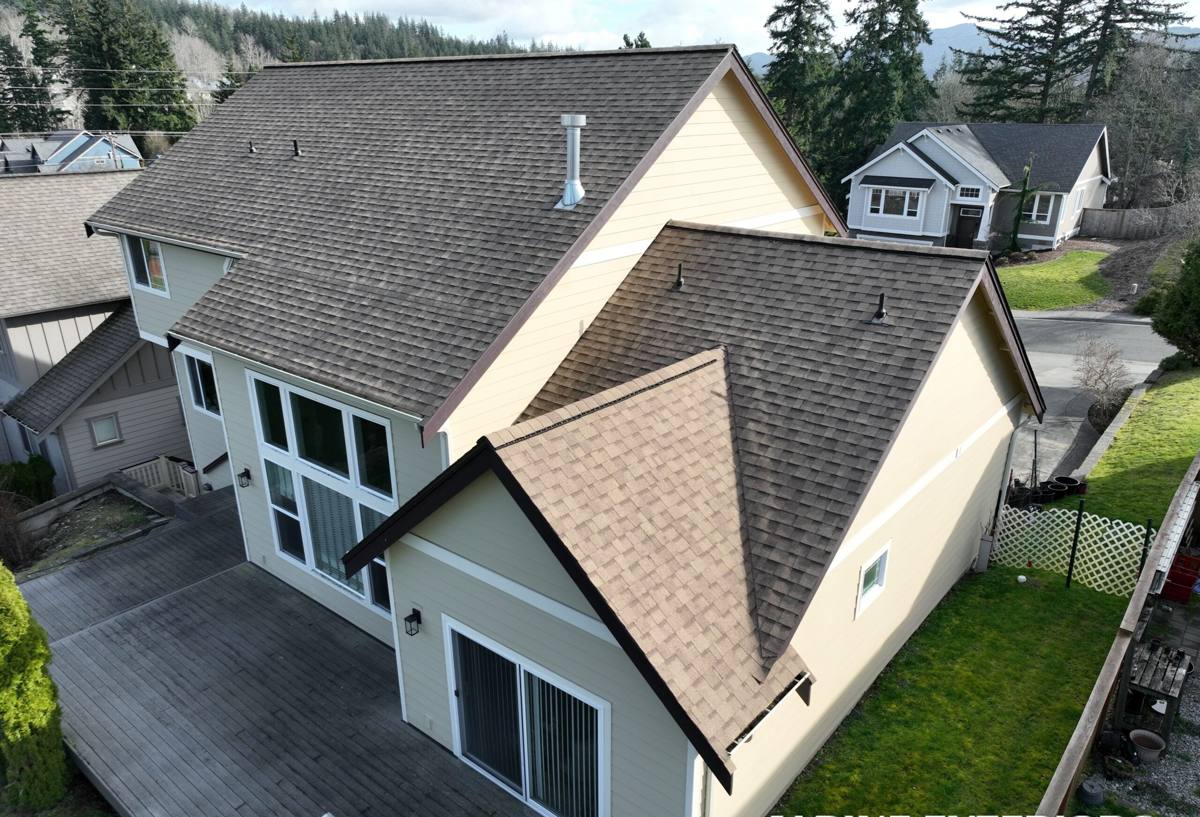
Signs a Lynnwood Home Needs Window Replacement, Not Just Repair
Not every problem window needs full replacement. But in our experience working this area, certain symptoms point to a frame or seal failure rather than something a caulk tube can fix.
- Fogging or a persistent haze between panes of double-pane glass, which means the seal has failed and the gas fill is gone
- Soft or spongy wood at the sill, jamb, or lower corners when pressed with a fingertip
- Visible moss, algae, or black staining on the exterior trim around the window, especially on north- or west-facing walls
- Windows that are hard to open, don't latch fully, or have visibly sagged in the frame
- A cold draft at the frame edge on windy days, even with the window fully closed and locked
- Water staining on interior drywall or trim below or beside the window after a hard rain
If you're seeing more than one of these on the same window, that's usually a sign the failure has moved past the glass unit and into the frame or the wall assembly behind it, which changes the scope of the job.
What a Correct Window Replacement Actually Involves
It starts before the old window comes out
A rushed crew pulls the old window, sets the new one, and caulks the outside. A correct job starts by inspecting the rough opening once the old unit is out: checking the sheathing and framing for hidden rot or water staining, confirming the opening is square and level, and deciding whether the existing flashing can be reused or needs to be replaced.
Flashing and water management, not just caulk
Caulk is a backup, not a water barrier. The actual water management comes from properly lapped flashing tape and, where called for, a sloped sill pan that directs any water that gets past the window back out to the exterior instead of down into the wall cavity. In a climate with as much wind-driven rain as Snohomish County sees, this step is the difference between a window that's dry in year one and one that's still dry in year fifteen.
Setting, shimming, and sealing
The new window gets shimmed square and plumb at the manufacturer's specified points, fastened per the manufacturer's instructions (not just "wherever there's wood behind the trim"), insulated around the frame gap with low-expansion foam or backer rod, and finished with an appropriate exterior sealant rated for the local temperature swing and UV exposure. Interior trim goes back cleanly, and the whole opening is checked for square operation before we call it done.
Choosing a Window Frame Material for This Climate
Frame material matters more here than in a dry inland climate because it determines how the window handles constant moisture exposure and temperature swings over decades, not just how it looks on day one.
| Frame Material | Moisture Behavior | Maintenance | Best Fit |
|---|---|---|---|
| Vinyl | Does not rot or corrode; seams and welds are the main long-term watch point | Low — occasional cleaning, no painting | Most Lynnwood homes; strong value and low upkeep |
| Fiberglass | Very stable in wet/dry cycling; expands and contracts close to the surrounding wall material | Low | Larger openings or homes wanting a tighter, more rigid frame |
| Wood-clad | Exterior cladding protects the wood, but any breach at the cladding seam can trap moisture against wood | Higher — cladding seams and interior wood finish need periodic attention | Homes prioritizing an interior wood look, with realistic maintenance expectations |
| Aluminum | Prone to condensation and thermal transfer unless thermally broken | Moderate | Limited use; we're selective about where we recommend it here |
We don't push one brand or material as a blanket answer, because the right choice depends on the specific wall, exposure, and budget. What we do insist on is a frame system with a proven track record in wet coastal climates and manufacturer flashing details we can actually execute correctly — some window systems look good on paper but are genuinely difficult to flash properly in the field, and we'll tell you honestly if that's the case for a product you're considering.
Full-Frame Replacement vs. Insert (Pocket) Replacement
Homeowners often ask whether they need a full-frame replacement or whether an insert window — a new unit set inside the existing frame — will do. Both are legitimate approaches, and the right one depends on the condition of what's already there.
| Factor | Insert Replacement | Full-Frame Replacement |
|---|---|---|
| When it's appropriate | Existing frame is solid, square, and dry | Existing frame shows rot, water damage, or is out of square |
| Access to sheathing/flashing | Limited — you're trusting what's already behind the frame | Full access to inspect and correct flashing and sheathing |
| Glass area | Slightly reduced due to the new frame nesting inside the old one | Can match or maximize original glass area |
| Relative cost | Lower labor cost | Higher labor cost, reflects the added scope |
Given how much moisture cycling Lynnwood windows deal with, we're cautious about recommending inserts on any opening where we can't confirm the existing frame and sill are sound. An insert set into a frame that's already holding hidden moisture just seals the problem back up behind new glass.
Our Process, Start to Finish
- On-site assessment — we look at every window being considered, not just the ones you've flagged, and check for the rot, gaps, and drainage issues described above.
- Honest scope and estimate — you get a written estimate that separates straightforward replacements from any opening that may need extra framing or flashing repair, so there are no surprise change orders mid-project.
- Material selection — we walk through frame material, glass package, and grille options based on your home's exposure and budget, not a one-size-fits-all recommendation.
- Removal and opening inspection — old windows come out carefully, and we inspect the rough opening before setting anything new.
- Installation — proper flashing, shimming, insulation, and sealing as described above, following manufacturer specifications for that unit.
- Final walkthrough — every window opens, closes, and locks correctly before we consider the job finished, and we point out anything we noticed that's worth watching.
Why Local Experience in Lynnwood and Snohomish County Matters
Window installation instructions read the same everywhere in the country, but the conditions they get tested against don't. A crew that mostly works dry, low-wind climates can do a technically fine installation that still leaks here, simply because they under-built the flashing detail for how hard wind-driven rain hits an exposed wall in this part of Washington. A crew that works Snohomish County regularly has already seen which details hold up through a full wet season and which ones show problems by the following winter.
That local track record also shows up in smaller, practical ways: knowing which product lines actually have manufacturer support and warranty service available in this region, understanding how local permitting and code requirements apply to window replacement, and being realistic about seasonal scheduling since exterior work slows down during the wettest stretches of the year.
Keeping New Windows Performing for the Long Haul
A correctly installed window still benefits from basic upkeep, especially in a climate that stays damp for so much of the year.
- Rinse sills and tracks periodically to clear dirt and organic debris before it holds moisture against the frame
- Check exterior caulk lines once a year, particularly after a hard winter, and have any cracked or separated sealant addressed early
- Keep gutters and downspouts clear so overflow isn't running down the wall directly above window openings
- Trim back vegetation or overhangs that keep a window in constant shade, since that's where moss and mildew take hold fastest
- Operate locks and hardware a few times through the year, even on windows you rarely open, to keep them functioning
If you're weighing window replacement for a Lynnwood home, we're happy to take a look and give you a straight assessment of what's actually needed — no pressure, no inflated scope. Reach out for a free estimate using the form below, and we'll walk the property with you and answer whatever questions come up.