 Everett
 Why Roofs in Mukilteo Wear on Their Own Schedule
Mukilteo sits right on the water, and that changes how a roof ages compared to homes a few miles inland in Everett. Salt-laden air off Possession Sound accelerates corrosion on fasteners, flashing, and metal components. Driving rain off the Sound doesn't just fall straight down — wind pushes it sideways under shingle edges and into anything that isn't properly lapped or sealed. And the long, wet Snohomish County moss season means organic growth gets a head start on north-facing slopes and shaded valleys almost every year. None of this means Mukilteo roofs fail faster across the board, but it does mean the same 25-year shingle can perform very differently here than it would in a drier, inland climate. A replacement done right accounts for all three factors from the start, not as an afterthought.
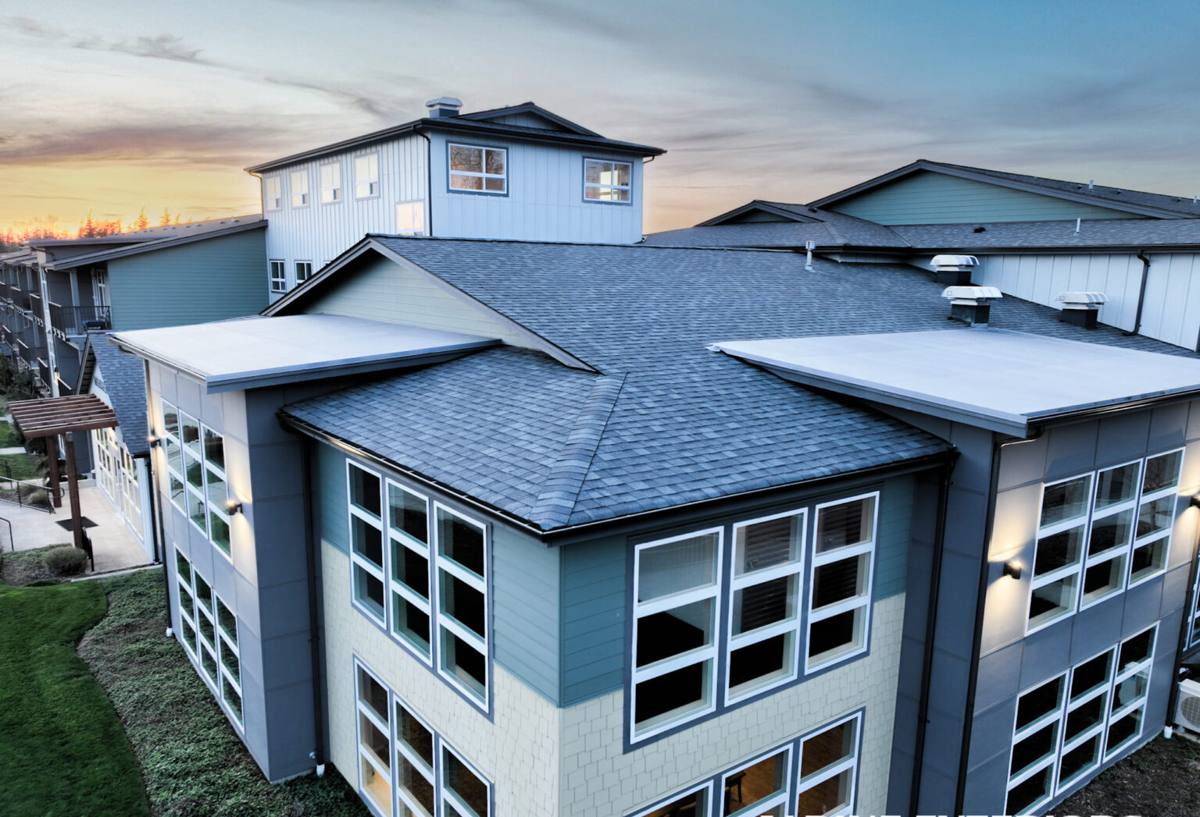
Signs a Mukilteo Roof Needs Replacement, Not Just Repair
Homeowners often call us for a repair and find out the roof has actually reached the point where patching it further is a poor use of money. Here's how to tell the difference before you spend on a repair that won't hold.
What you can often see from the ground or attic
- Granule loss heavy enough that shingles look patchy or shiny in spots — a sign the surface layer protecting against UV and rain is gone.
- Shingles that are cupping, curling at the edges, or cracking, especially on south- and west-facing slopes.
- Moss mats thick enough to hold water against the roof surface rather than just staining it.
- Rust streaking or pitting around flashing, vents, or any exposed metal fasteners.
- Daylight visible through the roof deck from inside the attic, or damp insulation after a heavy rain.
- Multiple past repairs in different areas — a pattern that usually means the underlying material is failing, not just one spot.
What matters even if the roof "looks fine"
Age matters as much as appearance. A roof that's inside its expected service life but was installed with poor ventilation, minimal underlayment, or corner-cutting on flashing can look acceptable from the curb while failing underneath. This is common in older Snohomish County housing stock that's been re-roofed once or twice without addressing the original ventilation setup. We'll always tell you honestly if a repair is the smarter call — replacement is a bigger investment and we don't recommend it unless the roof actually needs it.
What a Correct Roof Replacement Actually Involves
A roof replacement is more than swapping old shingles for new ones. The parts you don't see are what determine whether the roof holds up through another decade of Puget Sound weather.
Tear-off and deck inspection
We remove the existing roofing down to the deck rather than layering over it. This lets us inspect the sheathing for soft spots, rot, or delamination — issues that are common wherever roofs have taken on moisture over the years. Any damaged decking gets replaced before anything new goes down; installing new roofing over a compromised deck just hides the problem.
Underlayment and water protection
Given how much wind-driven rain this area sees, underlayment choice isn't a place to cut corners. Synthetic underlayment sheds water better and holds up longer than older felt products, and we use ice-and-water shield membrane at vulnerable points — eaves, valleys, and around penetrations — where wind can push rain uphill under standard shingle laps.
Ventilation
Proper intake and exhaust ventilation keeps moisture from condensing inside the attic, which matters in a climate where the air itself carries a lot of humidity for much of the year. Poor ventilation shortens shingle life from underneath, regardless of how good the roofing material is.
Flashing and metal detailing
Chimneys, skylights, wall intersections, and vent pipes are where most roof leaks actually start. In a salt-air environment, we pay close attention to flashing material and fastener choice, since standard steel components corrode faster this close to the water than they would a few miles inland.
Choosing a Roofing Material for Mukilteo's Marine Climate
There's no single "best" roofing material for every home — it depends on your budget, your roof's exposure, and how much long-term maintenance you're willing to do. Here's how the common options stack up specifically against salt air, driving rain, and moss.
| Material | Moss & Algae Resistance | Wind-Driven Rain Performance | Salt Air Considerations | Typical Maintenance |
|---|---|---|---|---|
| Standard asphalt shingle | Moderate — algae-resistant granule options help | Good with proper underlayment and sealing | Fasteners and flashing need corrosion-resistant hardware | Periodic moss removal on shaded slopes |
| Architectural/dimensional shingle | Good, especially with algae-resistant granules | Strong — thicker profile sheds wind-driven rain well | Same fastener and flashing considerations as standard shingle | Lower than standard shingle; still needs moss checks |
| Metal roofing | Excellent — sheds moss and debris | Excellent when properly fastened and sealed | Requires marine-grade coatings or fasteners to manage corrosion long-term | Low, but coating and fastener condition should be checked periodically |
| Cedar shake | Poor without diligent upkeep — retains moisture | Moderate; installation quality is critical | Higher maintenance burden in a wet, salt-air environment | High — regular treatment and moss management required |
We install a range of these materials and will walk you through the honest trade-offs for your specific roof — slope, sun exposure, and how close you are to the water all factor in. We steer clients away from materials that carry a heavy maintenance burden in this climate unless they understand and accept that trade-off going in.
Moss, Algae, and Salt Air: Building Prevention Into the Job
Moss and algae aren't cosmetic problems — moss holds moisture against the roof surface and can work under shingle edges over time, while algae staining, though mostly cosmetic, indicates a damp, shaded environment that's also friendlier to moss. A replacement is the best time to address the conditions that cause it, not just the symptoms.
- Algae-resistant granules on shingles reduce staining but don't eliminate moss risk on shaded, low-slope areas.
- Proper attic ventilation reduces the temperature and moisture differential that helps organic growth take hold.
- Keeping gutters and valleys clear is a homeowner-side task that matters more here than in drier climates — standing debris holds moisture and speeds moss growth.
- Corrosion-resistant flashing and fasteners matter more near the water than a few miles inland, where standard hardware may corrode faster than the roofing material around it.
Our Replacement Process, Start to Finish
We keep the process straightforward and communicate at each stage so you're not guessing what's happening or when.
- Inspection and estimate — We assess your current roof, note any deck or ventilation issues, and give you a written scope and price before any work begins.
- Material selection — We go over the options that make sense for your roof's exposure and your budget, including honest maintenance expectations.
- Scheduling around weather — We plan for a dry work window where possible, since a partial tear-off left exposed overnight is a risk we avoid.
- Tear-off and deck repair — Old roofing comes off completely; any compromised sheathing is replaced before new materials go down.
- Underlayment, flashing, and ventilation work — The protective layers that actually determine long-term performance go in first.
- Final roofing installation — Shingles, metal panels, or your chosen material go on to manufacturer specification.
- Cleanup and walkthrough — Site cleanup, magnetic sweep for stray fasteners, and a final walkthrough so you know what was done and why.
Why a Crew That Already Works Mukilteo Matters
A roofing crew that regularly works Mukilteo and the surrounding Everett area brings something a general contractor from farther away often doesn't: familiarity with how this specific stretch of Snohomish County weather actually behaves. That means knowing which slopes on waterfront-facing homes take the worst of the wind-driven rain, which neighborhoods see the heaviest moss buildup, and how to sequence a tear-off around a marine weather window that can shift quickly. It also means we're already familiar with local permitting requirements and typical construction patterns in the area's housing stock, so there are fewer surprises once the deck is exposed. A crew that treats Mukilteo as just another stop on a wider service area is more likely to apply generic assumptions instead of adjusting for the way this location actually behaves.
Timing a Replacement Around Pacific Northwest Weather
Roof replacement can happen most of the year here, but timing still matters. Drier stretches make for cleaner tear-offs and reduce the risk of exposing your deck during an unexpected system moving in off the Sound. If your roof is showing clear signs of failure — active leaking, soft decking, or granule loss exposing the underlayment — it's worth addressing sooner rather than waiting for a "better" season, since ongoing exposure compounds the damage. For roofs that are aging but not yet failing, planning the work during a predictable dry window is usually the more comfortable choice, both for the crew and for your household.
If you're not sure whether your Mukilteo roof needs a repair or a full replacement, we're happy to take a look and give you a straight answer. Fill out the form below for a free, no-pressure estimate — no obligation, just an honest read on where your roof stands.