 Everett
 Windows on the Mukilteo Waterfront Face a Different Job Than Windows Inland
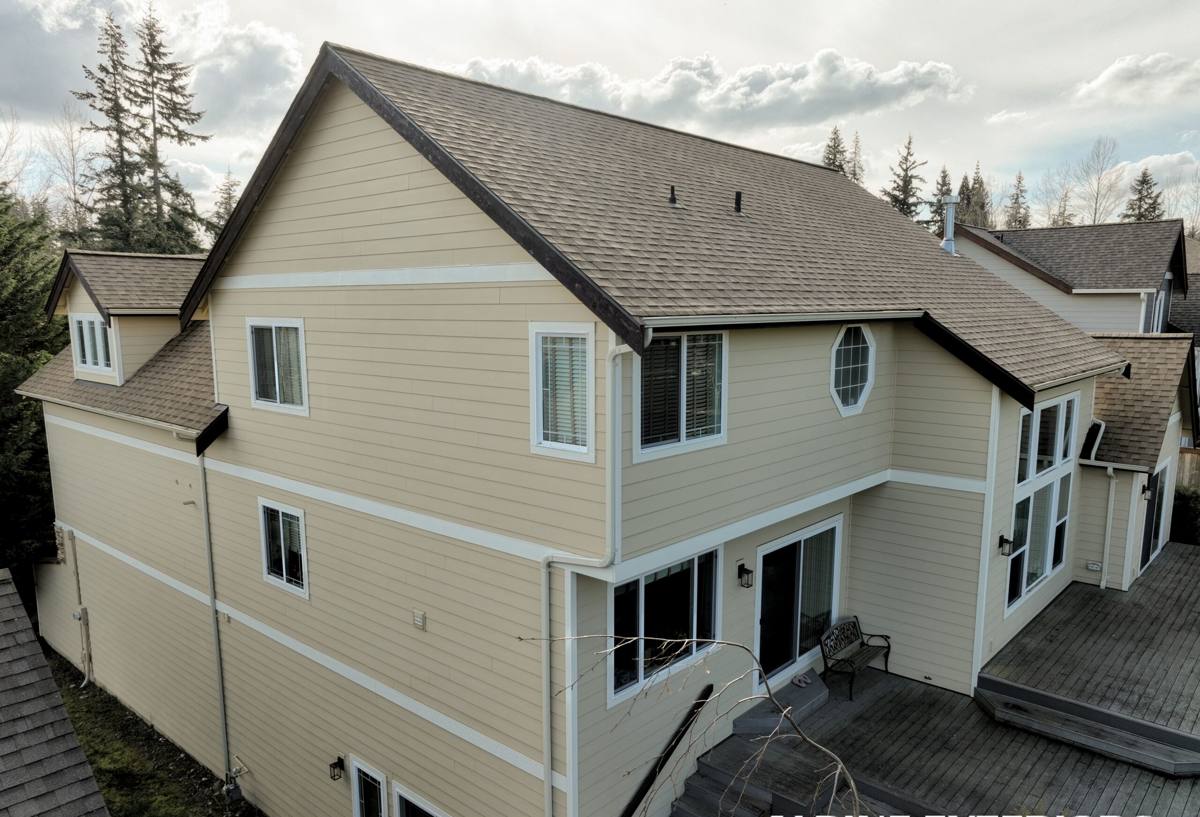
Mukilteo sits right on Puget Sound, and that location changes what a window has to survive day to day. Homes a few miles inland in Everett or unincorporated Snohomish County deal with plenty of rain, but Mukilteo adds salt-laden air blowing off the water, wind-driven rain that hits west and southwest-facing walls almost horizontally, and long stretches of gray, damp weather that keep exterior surfaces wet for days at a time. A window installation that would hold up fine on a sheltered inland lot can fail years early on a bluff-side or waterview home if it's not built and installed for that exposure.
This page covers what that means in practice: what salt air and driving rain actually do to windows over time, what a correct installation looks like on the flashing and sealing details that matter most here, and how we approach window jobs specifically in Mukilteo.
What Salt Air and Driving Rain Do to Windows Over Time
Salt in the air isn't just a coastal nuisance — it's chemically corrosive to metal, and it accelerates the breakdown of some sealants and finishes faster than plain rain does. Add Western Washington's wet season, and you get a few predictable failure patterns on windows that weren't installed with this climate in mind:
- Corroded hardware. Cheaper window hardware — hinges, locks, balance mechanisms — can pit and corrode faster near the water, making windows harder to open, close, or lock tightly.
- Sealant and caulk breakdown. UV exposure combined with salt and moisture cycling causes exterior sealants to crack and lose adhesion sooner than the manufacturer's stated lifespan.
- Wind-driven water intrusion. On exposed walls facing the Sound, rain doesn't just fall — it's pushed sideways into any gap in the flashing or trim. A window that would stay dry in a calmer setting can leak here if the water management details weren't done right the first time.
- Moss and organic growth. Snohomish County's long moss season isn't just a roof problem. Moss and algae take hold on window sills, trim, and anywhere water sits or drains slowly, holding moisture against wood trim and finishes and shortening their life.
None of this means Mukilteo homes need exotic materials. It means the installation details — flashing, sealant choice, drainage — need to be treated as essential, not optional, on every job.
Signs Your Current Windows Are Losing the Battle
Most window failures near the water show up gradually. Homeowners often live with early warning signs for a year or two before deciding to act. Worth checking for:
- Fogging or a permanent haze between panes of double- or triple-glazed glass — a sign the seal has failed and the insulating gas or air gap is compromised
- Soft or discolored wood trim or sill areas around the window frame
- Visible gaps, cracked caulk lines, or daylight around the frame edges
- Windows that stick, won't latch fully, or have stiff, corroded hardware
- A musty smell or peeling paint on interior walls near a window after heavy rain or wind events
- Noticeably colder drafts near the window frame in winter compared to the rest of the wall
Any one of these can be a minor fix. Several together, especially on a wall that takes direct weather off the Sound, usually points to a window and flashing system that's reached the end of its useful life.
What a Correct Window Installation Actually Involves
The window unit itself is only part of the job. In a marine-exposure climate like Mukilteo's, the installation details around the window are what determine whether it stays watertight for the next 20-plus years. A correct installation includes:
Sill Pan Flashing
A sloped, sealed pan at the bottom of the rough opening directs any water that does get past the window itself back outside, rather than letting it sit against framing. This is the single most important detail for preventing hidden rot, and it's also the step most often skipped or done poorly in low-cost replacement jobs.
Proper Integration with the House Wrap or WRB
Window flashing has to be layered correctly with the home's weather-resistive barrier — flashing tape and building paper or house wrap shingled so water is always directed outward and downward, never trapped behind a layer. Get the sequence wrong and you can create a leak path that wasn't there before, even with a brand-new window.
Sealant Selection and Placement
Not every exterior sealant is rated for long-term coastal exposure. We use products chosen for adhesion and flexibility in this climate, and we don't rely on caulk alone to do a flashing detail's job — caulk is the backup, not the primary water barrier.
Insulation and Air Sealing
Gaps around the frame get properly insulated (not overpacked, which can bow the frame) and air-sealed on the interior side, which matters for both comfort and preventing condensation inside the wall cavity.
Weep Path Clearance
Most window systems have small weep holes designed to let incidental water drain back out. If these get sealed over or blocked with debris during install, water has nowhere to go — a recurring issue we've corrected on window replacements originally done by other crews.
Frame Material Considerations for a Coastal Climate
Material choice matters less than installation quality, but it's still worth understanding the trade-offs for a home exposed to salt air and constant moisture.
| Frame Material | Corrosion / Moisture Behavior | Maintenance | Typical Trade-Off |
|---|---|---|---|
| Vinyl | Doesn't corrode; performs consistently in salt air | Low — occasional cleaning | Limited color/finish options; frame flexes more in large sizes |
| Fiberglass | Very stable in moisture and temperature swings; strong dimensional stability | Low | Higher upfront cost than vinyl |
| Wood or wood-clad | Attractive but exterior wood needs a durable clad or finish to hold up to salt and rain; bare wood sills are a common failure point | Higher — finish upkeep, moss/algae control | Best appearance option; requires more long-term care in this climate |
| Aluminum | Prone to corrosion and pitting in salt air unless it's a marine-grade finish | Moderate to high near water | We're selective about where we recommend it on Sound-facing walls |
We don't push one material on every job. What we do insist on is that whatever frame you choose has hardware and finishes rated to hold up to this specific coastline, and that the installation around it is done to the same standard regardless of budget tier.
Our Window Installation Process
- On-site assessment. We look at each window opening individually — exposure direction, current condition of the framing and sill, and any existing water damage before quoting anything.
- Material and glass selection. We walk through frame material, glass package (including options for better sound dampening, relevant near the ferry route and waterfront traffic), and hardware suited to salt exposure.
- Removal and opening inspection. Old windows come out carefully so we can check the framing and sheathing underneath for hidden moisture damage before anything new goes in.
- Flashing and sill pan installation. This is done to the same standard on every job — it's the step that determines whether the window stays dry for decades, not just for the first season.
- Window set, shim, and fasten. The unit is leveled, plumbed, and squared before fastening, so sashes operate smoothly and seals compress evenly.
- Exterior sealing and trim. Sealant, trim, and any cladding integration are finished to shed water outward, with weep paths left clear.
- Interior finish and walkthrough. Interior sealing, insulation, and trim are completed, and we walk the homeowner through operation and any maintenance notes specific to their exposure.
What Window Installation Typically Costs
Every home and opening is different, so exact numbers depend on your specific windows, but the main cost drivers are consistent:
| Factor | Why It Affects Cost |
|---|---|
| Frame material | Vinyl is generally the most budget-friendly; fiberglass and wood-clad cost more upfront |
| Window size and count | Larger openings and multi-window projects have more material and labor involved |
| Existing water or rot damage | Repairing damaged framing or sheathing found during removal adds cost but is essential, not optional |
| Glass package | Upgraded glass (extra panes, coatings, sound dampening) adds cost but can improve comfort and efficiency |
| Exposure and access | Upper-story or hard-to-access windows on exposed walls take more time to flash and seal correctly |
We give straightforward, itemized quotes so you can see what you're paying for — including the flashing and prep work, which is where a lot of the long-term performance comes from even though it's invisible once the job is done.
Why It Matters That We Already Work in Mukilteo
A crew that mostly works drier, inland sites can do a technically fine window install and still get surprised by how differently water behaves on a Sound-facing wall. We work across Everett and Snohomish County regularly, including homes along the water in Mukilteo, so the flashing sequencing, sealant choices, and material recommendations here aren't guesswork — they're based on what actually holds up against this coastline's salt air, wind-driven rain, and moss season, year after year. That local pattern recognition is often the difference between a window installation that's still watertight in fifteen years and one that starts showing leaks in three.
If you're dealing with drafty, foggy, or leaking windows, or planning ahead for a replacement before the wet season sets in, we're happy to take a look and give you a straightforward, no-pressure estimate. Use the form below to get started.