 Everett
 Why Mukilteo Windows Wear Differently Than Windows Inland
Mukilteo sits right on Puget Sound, and that changes what a window has to survive day to day. Homes here deal with a steady mix of salt-laden air, wind-driven rain coming off the water, and a long stretch of gray, damp months where moss and mildew get a real foothold on anything that traps moisture. None of that is dramatic on any single day, but it adds up year after year in ways that inland Snohomish County homes just don't experience at the same rate.
Salt air is corrosive to metal window hardware, screen frames, and older aluminum sashes. Driving rain finds gaps in flashing and trim that would never leak in a calmer climate. And moss doesn't just grow on roofs — it takes hold in window sills, tracks, and any horizontal surface that stays wet longer than it should. A window that's a perfectly fine product on paper can still fail early here if it wasn't built or installed with this specific exposure in mind.
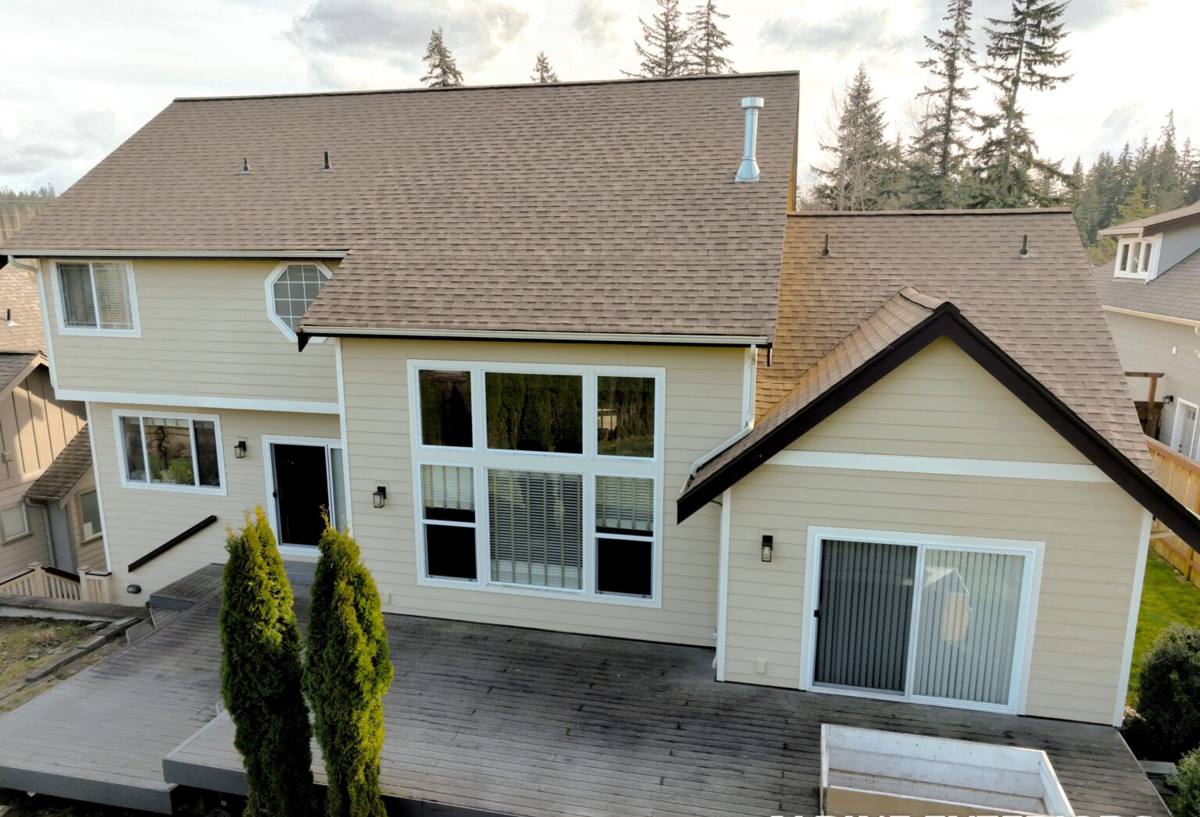
Signs a Mukilteo Home Needs Window Replacement, Not Just Repair
Not every problem window needs full replacement. But there's a point where patching stops making sense — either because the frame itself has failed or because the ongoing maintenance and energy loss cost more than a proper replacement would. Here's what we look for:
- Fogging or a hazy film between glass panes — the seal has failed and the insulating gas is gone, so no amount of cleaning fixes it
- Soft, spongy, or discolored wood around the frame or sill, especially on walls that face prevailing wind and rain
- Windows that are difficult to open, close, or lock — often a sign the frame has swelled, warped, or shifted
- Persistent moss, mildew, or black staining in the sill track that comes back within weeks of cleaning
- Noticeable drafts or a cold radiating feeling near the glass even when the window is fully closed and locked
- Rising energy bills without a clear cause elsewhere in the home
- Visible corrosion on hardware, hinges, or screen frames — common with older aluminum windows in salt-air exposure
If you're only seeing one of these, a repair or reseal might be enough. If you're seeing two or three together, especially any sign of wood rot in the frame, that's usually a replacement conversation.
What a Correct Window Replacement Job Actually Involves
Window replacement gets sold like a simple swap — old window out, new window in. In a marine climate like Mukilteo's, the install details matter more than the window itself. A window that's a good product but poorly installed will leak, fail early, or trap moisture inside the wall cavity where you won't see the damage until it's expensive.
What we check and do on every job
- Full inspection of the rough opening for hidden rot, soft framing, or prior water damage before anything new goes in
- Proper flashing installed in the correct sequence — this is the single biggest factor in whether wind-driven rain stays out
- A continuous weather-resistant barrier tied into the existing wall assembly, not just caulked over gaps
- Shimming and leveling so the window operates smoothly and seals evenly on all four sides
- Low-expansion foam and backer rod used correctly around the frame — too much foam bows the frame, too little leaves gaps
- Exterior trim and caulking sealed against wind-driven rain, with attention to the top and side joints where most leaks actually start
- A final operational check — every window opens, closes, and locks the way it should before we call the job done
Skipping any one of these steps is usually invisible on installation day and expensive two or three winters later.
Choosing the Right Window Materials for a Marine Climate
Frame material and glass package both matter more here than they would in a drier, inland climate. We steer homeowners toward materials that hold up to sustained moisture exposure and salt air without high ongoing maintenance.
Frame material trade-offs
Vinyl frames are the most common choice for good reason — they don't corrode, don't need painting, and handle moisture well when installed correctly. Fiberglass frames cost more up front but resist expansion and contraction better across temperature swings and hold paint longer if you want a custom color. Aluminum frames conduct cold and are more prone to corrosion in salt air over time, so we don't recommend them for most Mukilteo homes unless there's a specific architectural reason. Wood frames look great and perform well when properly clad or maintained, but they demand more upkeep in a climate this damp — moss and mildew find bare or worn wood fast.
Glass package considerations
Double-pane, low-E glass with argon gas fill is the practical standard for this area. Low-E coatings cut heat loss without darkening the room, and the argon fill improves insulation without adding meaningful cost. For homes facing the water directly, a slightly heavier glass package or laminated glass can help with both wind noise and impact resistance, though that's a decision based on exposure and budget, not something every home needs.
| Factor | What It Affects | What to Consider |
|---|---|---|
| Frame material | Long-term maintenance, corrosion resistance | Vinyl or fiberglass for low upkeep in salt air |
| Glass package | Energy bills, comfort near windows | Double-pane low-E with argon is standard here |
| Number of windows | Total project cost | Whole-house jobs often cost less per window than piecemeal replacement |
| Wall condition | Install complexity, potential repair cost | Hidden rot found during removal adds time and cost, but must be fixed |
| Window style | Operation, ventilation, cost | Casement windows seal tighter against wind-driven rain than sliders |
Window Styles That Perform Well in Mukilteo's Weather
Style choice affects more than looks — it affects how well a window resists the specific weather Mukilteo sees. Casement windows, which crank outward and seal by compression, tend to resist wind-driven rain better than sliding windows because the sash presses tighter against the frame as it closes. Double-hung windows are a good middle ground — familiar, easy to operate, and reasonably weather-resistant when installed with proper flashing. Sliding windows are fine for covered or less-exposed walls but are more prone to water intrusion on walls that take direct wind and rain. We'll talk through which walls of your home see the worst exposure and suggest styles accordingly, rather than pushing one style for the whole house by default.
Our Process, Start to Finish
- On-site assessment — We look at each window individually, not just the whole house at a glance. Exposure varies wall to wall, and so does what each window actually needs.
- Honest recommendation — We'll tell you plainly if a window needs full replacement, a repair, or can wait. We don't upsell a full-house job when a handful of windows would solve the problem.
- Clear, written estimate — Materials, labor, and any anticipated framing repair are spelled out before work starts, not discovered as surprise add-ons.
- Removal and inspection — Once old windows come out, we check the rough opening for hidden moisture damage before anything new goes in.
- Correct installation sequence — Flashing, weather barrier, shimming, and sealing done in the right order, every time, not shortcuts to save an hour.
- Final walkthrough — We test every window with you before we consider the job finished.
Why Local Install Experience Matters More Than the Brand of Window
Homeowners often assume the window brand is the main decision. In practice, the install is what determines whether a window performs for fifteen years or leaks within three. A crew that regularly works Snohomish County waterfront and near-waterfront properties already knows which walls in this area take the worst wind-driven rain, how the local building department expects flashing details handled, and what moss and moisture damage actually looks like when it's hiding behind trim instead of guessing at it. That local pattern recognition is hard to get from a crew that mostly works inland or out of the area — the failure points here are specific enough that experience with this exact climate matters.
What to Ask Before Hiring Anyone for Window Replacement
- Do you carry current licensing and insurance for work in Washington state, and can you provide proof?
- Will the same crew handle flashing and weather barrier work, or is that subcontracted separately?
- What's your plan if you find rot or moisture damage once the old window is out?
- What warranty covers the installation itself, separate from the manufacturer's product warranty?
- Can you walk me through your flashing sequence before work starts, not just after?
A contractor who answers these clearly and specifically, without hesitation, is usually one who does this work correctly and often.
Get a Straightforward Estimate
If your Mukilteo home has windows showing any of the wear signs above, or you're just planning ahead before another wet season sets in, we're happy to take a look and give you an honest read on what's needed — no pressure, no inflated scope. Use the form below to request a free estimate.