 Everett
 Building New in Snohomish? The Windows Need to Match the Climate, Not Just the Floor Plan
When a home is going up from the ground in the Snohomish area, the window package is one of the few decisions that's genuinely hard to fix later. Once siding, trim, and interior finish work close in around a window, correcting a bad flashing job or an undersized frame means tearing back into finished work. New-construction windows have to be right the first time — set correctly into the rough opening, flashed in the proper sequence with the house wrap, and matched to what this part of Snohomish County actually throws at a building envelope year-round.
That last part matters more here than in a lot of places. Snohomish sits close enough to Puget Sound and the region's marine air flow that homes deal with a mix of salt-laden moisture, long stretches of wind-driven rain, and a moss and algae season that can run most of the year on shaded elevations. A window package that would be fine in a drier inland climate can underperform here — not dramatically, but in the slow, cumulative way that shows up as sash corrosion, sill staining, or a soft spot in the framing five or ten years down the road.
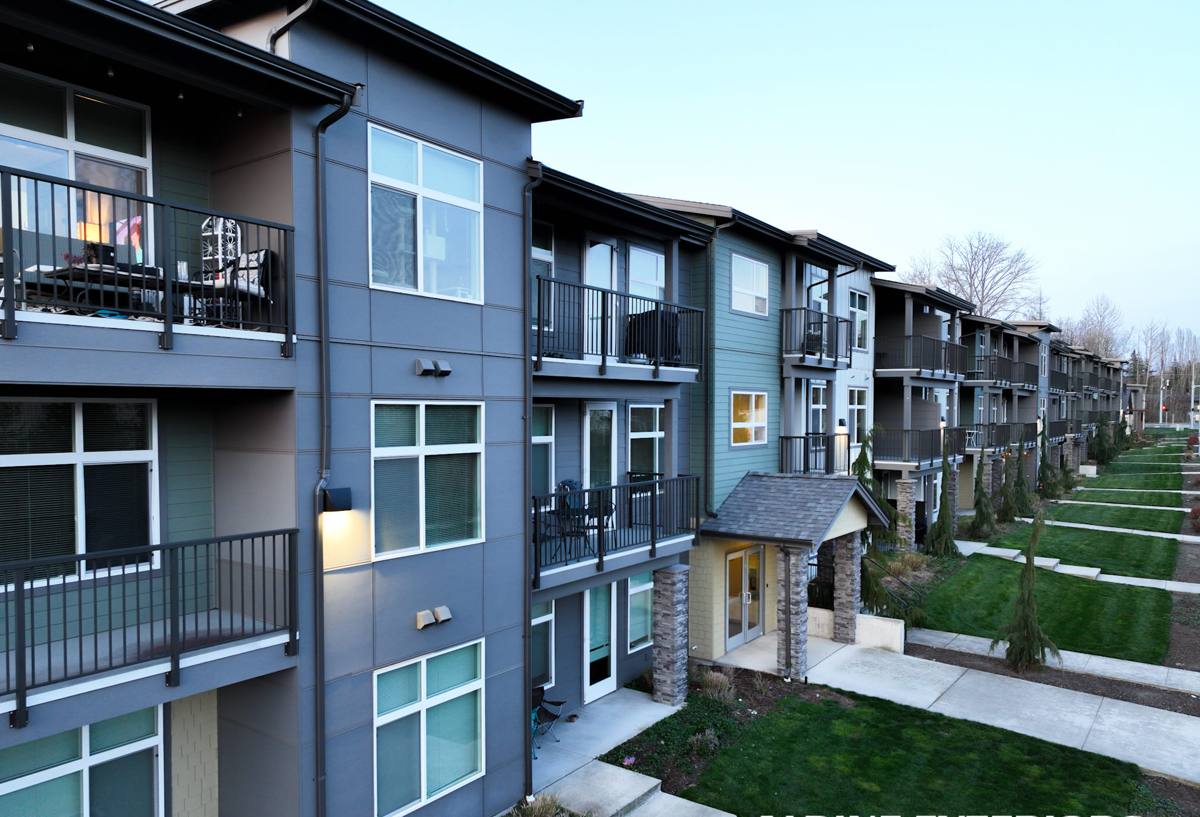
What New-Construction Windows Actually Are (and Why They're Not the Same as Replacement Windows)
New-construction windows are built with a nailing fin around the perimeter of the frame. That fin gets set against the sheathing and fastened before the house wrap and siding go on, which lets us integrate the window into the building's water management system as one continuous layer — sill pan, wrap, flashing tape, and window fin all lapped correctly so water sheds outward and down, never behind the assembly.
Replacement windows, by contrast, are typically flush-fin or pocket units designed to insert into an existing opening without disturbing the siding around it. They're a different product built to solve a different problem. Using a replacement-style window in new construction — or installing a new-construction window without integrating the fin into the wrap properly — is one of the more common ways a brand-new home ends up with a hidden moisture path behind the wall before it's even lived in.
Why the Distinction Matters for a Snohomish Build
With the amount of driving rain this area sees during fall and winter storm systems, wind pressure pushes water sideways against the building envelope, not just straight down. A nail-fin window that's flashed correctly resists that pressure because the water management layers are doing the work, not just the caulk bead. A window that's only sealed around the perimeter — without proper pan flashing and shingle-lapped wrap — is relying on sealant alone, and sealant is the first thing to fail under sustained wind-driven rain.
What This Region's Climate Demands From the Window Package
- Salt air exposure: Homes closer to the water deal with airborne salt that accelerates corrosion on hardware, screens, and unprotected metal components. Frame material and hardware finish both matter more here than in inland construction.
- Driving rain: Snohomish gets sustained wet weather with wind behind it, not just gentle drizzle. Sill pan flashing and correct fin integration are non-negotiable, not upgrades.
- Long moss and algae season: Shaded north- and west-facing elevations stay damp for extended stretches. Sills and horizontal trim members need drainage paths so standing moisture doesn't sit against the frame.
- Condensation potential: Cooler, humid air combined with well-sealed, energy-efficient new construction can create interior condensation on glass and frames if the glazing package and ventilation aren't matched to the home's tightness level.
None of this means Snohomish needs exotic or oversized window systems. It means the details — flashing sequence, frame material, drainage at the sill, hardware finish — need to be chosen deliberately rather than defaulted to whatever's cheapest or fastest to install.
Frame Materials: What Holds Up in This Climate
There isn't one "correct" frame material for every new build, but there are real trade-offs worth understanding before you commit to a full-house window package.
| Frame Type | How It Handles Local Conditions | Maintenance Consideration |
|---|---|---|
| Vinyl | Good moisture and salt resistance, no corrosion risk; performance varies by manufacturer quality | Low maintenance; limited color/repaint options long-term |
| Fiberglass | Very stable in temperature swings and wet conditions; strong resistance to warping | Low maintenance; higher upfront cost |
| Wood-clad | Attractive interior wood look; exterior cladding protects from rain if detailed correctly | Cladding seams and sills need periodic inspection in a wet climate |
| Aluminum | Strong but a poor thermal performer, and uncoated hardware is more prone to salt-air corrosion near the water | Requires quality anodized or powder-coat finish to hold up long-term |
For most new construction in the Snohomish area, we steer clients toward vinyl or fiberglass frames with quality hardware finishes, because they hold up against the salt air and moisture cycle with the least ongoing attention. Wood-clad is a legitimate choice for homeowners who want the interior wood look, as long as the cladding and sill details are installed to shed water correctly from day one.
Energy Performance and Code Requirements
Washington's energy code sets minimum glazing performance requirements for new construction, and those requirements are climate-zone specific. Snohomish County falls into the state's marine climate zone, which has its own U-factor and solar heat gain targets that differ from drier parts of the state. We work from the current code requirements for whatever jurisdiction the permit is pulled in, and we coordinate directly with the builder or GC so the glazing package matches what's on the energy compliance forms — there's no guessing involved.
Beyond meeting the code minimum, we talk with homeowners about where it makes sense to go beyond it — larger west- or south-facing glazing, for example, often benefits from a slightly better-performing glass package to manage both heat gain and condensation risk.
Our Installation Process for New-Construction Windows
1. Coordination With the Build Schedule
New-construction window installs have to land at the right point in the build sequence — after sheathing and house wrap are in but before siding closes in around the openings. We work directly with the builder or GC to slot into that window so nothing gets held up and nothing gets rushed.
2. Rough Opening Check
Before any window goes in, we verify the rough opening is square, level, and sized correctly to the manufacturer's specs. A window installed into an out-of-square opening will never seal or operate correctly, no matter how good the flashing job is.
3. Sill Pan and Flashing Sequence
We install a sloped sill pan first, then integrate flashing tape and the house wrap in proper shingle-lap order — each layer overlapping the one below it so water is directed outward and down, never trapped behind the window.
4. Setting and Fastening the Window
The window is shimmed, leveled, and fastened per manufacturer specifications, with backer rod and appropriate sealant at the interior and exterior perimeter — not sealant used as a substitute for proper flashing, but as the final layer on top of a system that's already doing the real work.
5. Final Inspection
Every install gets checked for square, level, smooth operation, and a complete flashing tie-in before we sign off, so it's ready for siding and trim to close in around it with confidence.
A Pre-Drywall Checklist Worth Reviewing With Your Builder
- Rough openings confirmed square and correctly sized before windows arrive on site
- Sill pan flashing installed and sloped to drain outward
- House wrap and flashing tape lapped in the correct shingle order at every window
- Frame material and hardware finish appropriate for salt-air exposure if the home is near the water
- Glazing package matches the energy code documentation filed with the permit
- All windows operate smoothly and lock properly before siding closes in around them
Why It Matters to Hire a Crew That Already Works the Snohomish Area
A crew that installs windows across different climates tends to default to a generic approach — whatever flashing detail and frame spec works "well enough" everywhere. A crew that regularly works new construction in Snohomish County has already seen what this specific mix of salt air, driving rain, and moss season does to a window package over time, and builds accordingly from the first install. That's the difference between a window that still operates smoothly and seals tight in ten years and one that starts showing sill staining or hardware corrosion well before it should.
We also know how local building departments in Snohomish County review new-construction glazing, which keeps inspections moving instead of turning into a back-and-forth over documentation.
Let's Talk About Your Build
If you're framing a new home or working with a builder in the Snohomish area, we're happy to walk through window specs, frame options, and installation timing before it becomes a scheduling problem. Reach out for a free, no-pressure estimate — we'll look at your plans and give you a straight answer on what makes sense for the site and the climate.