 Everett
 New Roofs Built for Silver Lake's Weather, Not Just Any Roof
Silver Lake sits close enough to Puget Sound and the lake itself that homes here deal with a specific mix of weather stress: salt-tinged marine air moving in off the Sound, long stretches of driving rain through fall and winter, and a moss season that can run eight or nine months out of the year under the tree cover common in this part of Everett. A roof that's correctly installed for these conditions looks a lot like a roof installed anywhere else in Western Washington — until you look at the details. Underlayment choice, ventilation, flashing at valleys and penetrations, and the starter and edge work are where a roof either handles this climate for 25-30 years or starts showing problems in year five.
When we install a new roof in Silver Lake, we're not treating it as a generic tear-off-and-replace job. We're accounting for the tree canopy that keeps sections of these roofs shaded and damp longer after a storm, the humidity that comes with proximity to the lake, and the wind-driven rain patterns typical of Snohomish County winters. That context changes real decisions on the job — which underlayment goes down, how much ridge and soffit ventilation we build in, and how we detail every valley and pipe boot.
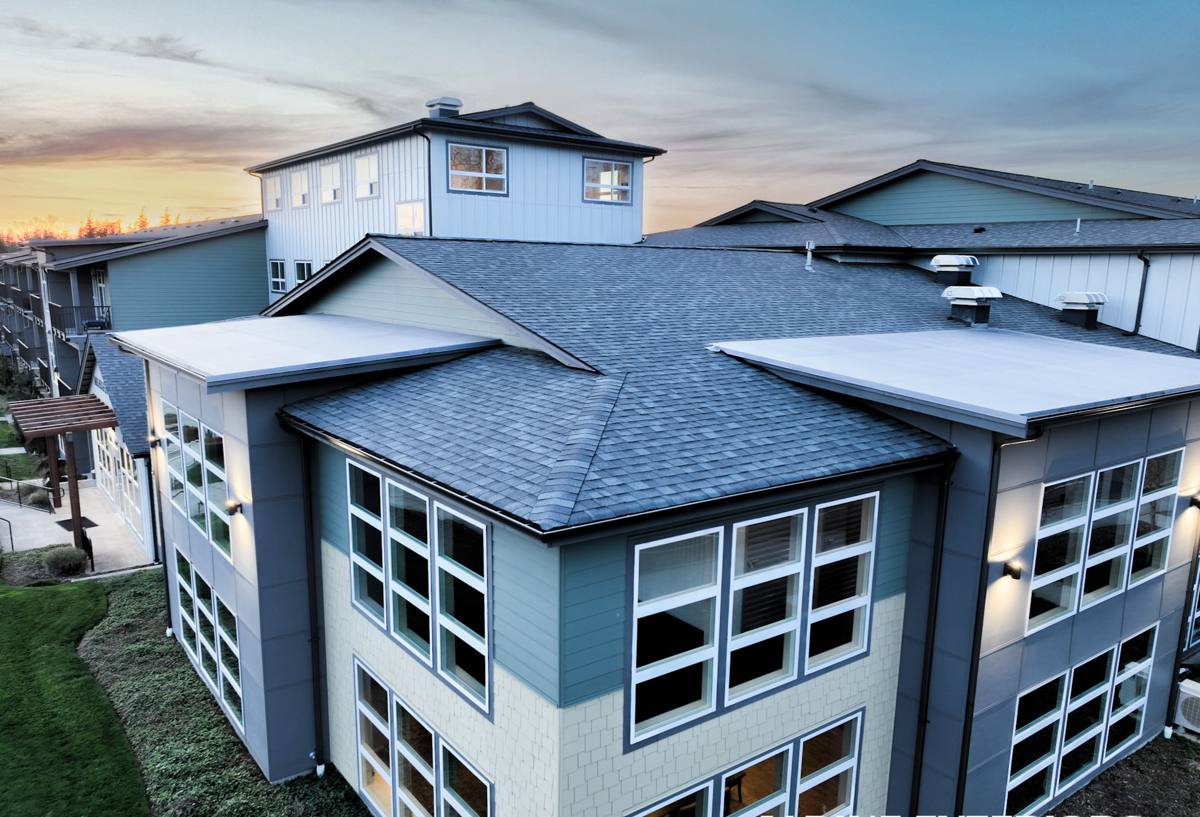
What Silver Lake's Climate Actually Does to a Roof
Moss and Organic Growth
Silver Lake's mix of mature trees and lake-effect humidity creates ideal conditions for moss, lichen, and algae growth on roofing. Moss isn't just cosmetic — it holds moisture against the roof surface, works its way under shingle tabs, and lifts them over time. A new roof installed with the right shingle granule treatment, proper slope transitions, and clean sightlines for sun and airflow will resist moss far longer than one installed without that in mind, though no roof in this area is completely moss-proof without periodic maintenance.
Driving Rain and Wind
Snohomish County storms frequently push rain sideways, not straight down. That matters because a roof that only sheds water well in a vertical downpour can still leak under wind-driven rain if the underlayment, flashing laps, and starter courses aren't installed to handle water moving uphill or sideways under the shingle edge. This is one of the most common gaps we find on older or improperly installed roofs in this area.
Salt Air and Metal Components
Proximity to Puget Sound means a low but real level of salt content in the air, which accelerates corrosion on unprotected metal — flashing, fasteners, and vents in particular. It's not as severe here as it would be right on the waterfront, but it's enough that we default to corrosion-resistant materials on every metal component of the roof system rather than the cheapest available option.
What a Correctly Installed New Roof Includes
A full roof replacement is more than laying new shingles over what's there. Done right, it includes:
- Complete tear-off of old roofing down to the deck, not a layover — this lets us actually inspect and fix what's underneath
- Deck inspection and repair of any soft, rotted, or delaminated sheathing before anything new goes down
- Ice-and-water or high-performance underlayment at eaves, valleys, and penetrations where wind-driven rain and moss-related moisture are most likely to find a way in
- Synthetic or felt underlayment across the full field, sized and lapped for our rain patterns
- New flashing at all valleys, chimneys, skylights, and wall intersections — reused old flashing is a common source of early leaks
- Balanced ventilation — intake at the soffits, exhaust at the ridge — sized to the attic volume, not just "whatever vent came with the shingle package"
- Proper starter strip and drip edge at all eaves and rakes
- Correct nailing pattern and fastener count per manufacturer specification, which is also what keeps a warranty valid
Roofing Material Options for Silver Lake Homes
Most Silver Lake homes are well suited to asphalt composition shingles, though metal roofing and, less commonly, cedar or synthetic shake come up in consultations. Here's how the main options stack up for this specific climate:
| Material | Moss/Moisture Resistance | Typical Lifespan | Notes for This Area |
|---|---|---|---|
| Architectural asphalt shingle | Good with proper install and treated granules | 25-30 years | Best balance of cost, appearance, and performance under tree cover; our most common install |
| 3-tab asphalt shingle | Fair | 15-20 years | Lower upfront cost but less wind and moss resistance; harder to justify given local weather |
| Standing seam metal | Excellent — moss struggles to hold on smooth metal | 40-50+ years | Higher upfront cost; needs marine-grade fasteners and coatings this close to the Sound |
| Cedar shake | Poor without diligent maintenance | 20-30 years with upkeep | Attractive but high maintenance burden in a moss-prone, damp environment — we walk homeowners through this trade-off honestly |
We don't install cedar shake as a default recommendation in this neighborhood — not because it's a bad product everywhere, but because the maintenance schedule needed to keep it moss-free and watertight under Silver Lake's tree cover is more than most homeowners want to take on. If a homeowner wants that look and understands the upkeep, we'll talk through it honestly rather than steer them away without explanation.
Our Installation Process
1. On-Site Assessment
We walk the roof and attic, check ventilation, look for existing moss or moisture damage, and identify anything specific to the home — steep pitches, multiple valleys, skylights, chimneys — that will affect the install plan.
2. Written Estimate
You get a clear, itemized estimate: materials, tear-off, disposal, and any deck repair contingencies spelled out ahead of time, not discovered mid-job.
3. Tear-Off and Deck Repair
Full removal of old roofing, deck inspection, and replacement of any compromised sheathing before a single new shingle goes down.
4. Underlayment and Flashing
This is where climate-specific decisions matter most — underlayment upgrades at vulnerable areas, new flashing throughout, and attention to every valley and penetration.
5. Roofing Installation
Shingles, metal panels, or shakes installed to manufacturer spec with correct nailing patterns and exposure.
6. Ventilation and Final Details
Ridge and soffit ventilation balanced, starter and drip edge finished, and a final walkthrough with the homeowner.
7. Cleanup and Magnetic Sweep
Full site cleanup, including a magnetic sweep for stray nails and debris removal.
What Drives the Cost of a New Roof
Every home is different, but the same handful of factors move the price up or down on most Silver Lake jobs:
| Factor | Why It Matters |
|---|---|
| Roof size and pitch | Steeper roofs take longer to work safely and use more material for the same square footage |
| Number of layers to remove | Tear-off of multiple old layers adds labor and disposal cost |
| Deck condition | Rotted or soft sheathing discovered during tear-off requires repair before installation continues |
| Number of valleys, penetrations, and features | Skylights, chimneys, and multiple valleys each require additional flashing work |
| Material choice | Asphalt, metal, and shake carry very different material and labor costs |
| Ventilation upgrades needed | Older homes often need added intake or exhaust ventilation to meet current standards |
Rather than quote a number that doesn't mean much without seeing the roof, we'll walk your specific home and give you a written estimate that accounts for these factors directly.
Why It Matters That We Already Work in Silver Lake
A crew that regularly works Silver Lake and the surrounding Everett neighborhoods already knows what this microclimate does to a roof over time — which slopes hold moss longest, how the tree cover here affects drying time after a storm, and which older homes in the area are likely to need ventilation upgrades alongside a new roof. That familiarity shows up in fewer surprises during tear-off and a install that's built for the conditions the roof will actually face, not a generic spec sheet.
It also means faster response for follow-up service, warranty questions, or storm damage down the road — you're not waiting on a crew that has to drive in from another county and relearn the area every time.
Signs Your Silver Lake Roof May Need Replacement, Not Repair
- Shingles that are cracked, cupping, or missing granules across large sections rather than one isolated spot
- Moss or dark algae staining that keeps returning within a season or two of cleaning
- Daylight visible through the attic roof deck, or damp insulation after storms
- A roof that's 20+ years old on asphalt shingle, even if it "looks okay" from the ground
- Multiple past repairs in different areas rather than one contained problem
- Soft spots or sagging visible along the roofline or in the attic decking
If you're only seeing one or two of these, a repair may still be the right call — we'll tell you honestly if replacement isn't necessary yet.
Get a Free, No-Pressure Estimate
If you're weighing a new roof for a Silver Lake home, we're happy to take a look, walk you through what we find, and give you a straight answer on whether it's time to replace or whether a repair will hold. Fill out the form below for a free estimate — no pressure, no obligation.