 Everett
 Why Forest Park Siding Wears Differently Than You'd Expect
Forest Park sits in a wooded, bluff-side pocket of Everett with more tree cover and closer proximity to Puget Sound than a lot of Snohomish County neighborhoods. That combination is tougher on exterior siding than most homeowners realize. The tree canopy keeps north and shaded walls damp longer after every rain. The elevation and closeness to the water mean salt-laden air moves through more often than inland neighborhoods ever see. And Everett's long, wet stretch from fall through spring gives moss and algae months to establish themselves on siding that never fully dries out.
None of that means Forest Park homes fall apart faster than anywhere else. It means the failure patterns look different, and a repair that would hold up fine in a drier, more open part of the county can fail early here if it doesn't account for the actual conditions on the wall.
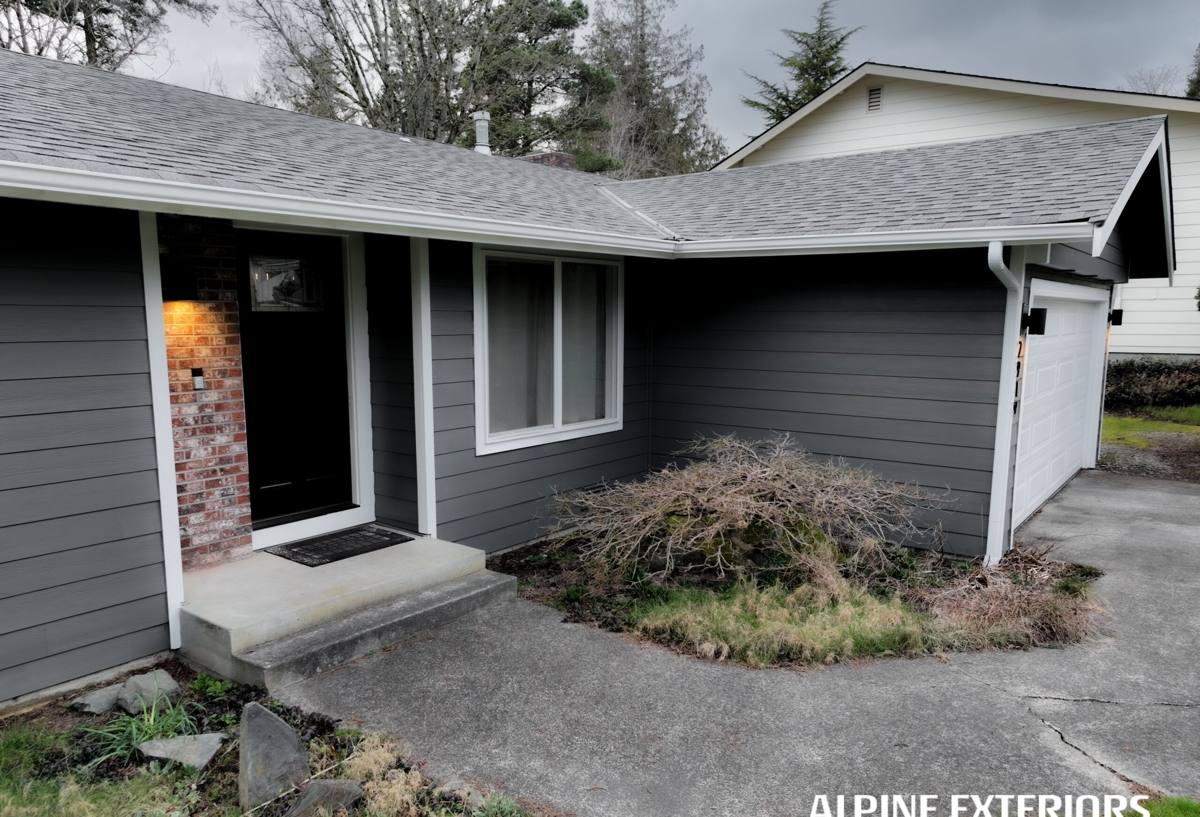
The Damage Patterns We Actually See in This Neighborhood
Every siding material fails in its own way, but a few patterns show up again and again on Forest Park homes:
- Moss and algae staining on shaded, north- and west-facing walls, especially under eaves and near mature trees — cosmetic at first, but it holds moisture against the surface long-term.
- Caulk and sealant failure around trim, window and door casings, and panel joints, which is usually the first crack that lets water start working its way in.
- Soft or delaminating panels on wood-based or wood-composite siding where moisture has been getting behind the material, often invisible from the ground until the panel is already compromised.
- Nail pops and gapped joints from repeated wet-dry, warm-cool cycling that loosens fasteners and opens hairline paths for water over several seasons.
- Salt-accelerated fading or pitting on lower-quality paint finishes, which shows up as chalky, uneven color on walls facing open air or slight elevation exposure.
The common thread is moisture that had time to sit. Salt air doesn't rot wood by itself, but it does help hold humidity against a surface and accelerate finish breakdown — and a long moss season means that surface rarely gets a real chance to dry between rain events.
Why "Just Patch It" Isn't Always the Right Call
A lot of siding repair requests start with a homeowner pointing at one obviously damaged spot. The visible spot is rarely the whole story. Moisture travels — it can enter at a failed caulk line near a window and show up as soft siding two feet away, or track down behind a panel and damage the sheathing before it ever reaches daylight. A repair that only addresses the visible symptom without checking what's happening behind it tends to come back within a year or two.
| Approach | When it's the right call | Risk if used wrong |
|---|---|---|
| Spot patch (caulk, sealant, small panel swap) | Isolated, recently-caught damage with no hidden moisture behind it | Papers over a bigger moisture problem that keeps spreading |
| Section repair (multiple panels, trim, and flashing) | Damage traced to a specific area — a corner, a window, a section of wall | Underestimating how far moisture has already traveled behind the wall |
| Full wall or full-side replacement | Repeated failures in one area, or damage found once panels come off | Treated as overkill and skipped, so the same failure recurs |
Part of doing this work honestly is telling a homeowner when a small patch is genuinely enough, and telling them just as plainly when it isn't.
What a Correct Siding Repair Actually Involves
Diagnosis before demolition
Before anything gets pulled off the wall, the damaged area and the area around it need a real look — probing for soft spots, checking how far discoloration or staining extends, and understanding whether the cause is a failed seal, a flashing gap, ongoing shade and moisture exposure, or age-related wear on the finish itself. Repairing the symptom without finding the cause just buys time.
Matching material and finish
On a fiber cement home, a correct repair means matching the profile, exposure, and factory finish so the repaired section doesn't stand out as a visibly different patch for the next twenty years. This is one of the real advantages of a factory-applied finish system — color and texture are consistent panel to panel in a way field-applied touch-up paint on other materials often isn't.
Flashing and water management, not just cosmetics
Any repair around a window, door, corner, or butt joint needs correct flashing and house-wrap integration underneath, not just fresh caulk on top. In a wet climate like Snohomish County's, the water management layer behind the siding matters more than the siding itself for keeping a repair from failing again.
Addressing what caused the damage, not just the damage
If moss and standing moisture caused the failure, a repair that doesn't also improve drainage, trim clearance, or ventilation in that spot is likely to fail the same way again. Sometimes that means recommending a branch be trimmed back, a downspout redirected, or a small grading fix — outside our trade, but worth pointing out.
Our Process for Forest Park Repair Calls
- On-site inspection of the damaged area and the surrounding siding, checking for soft spots, moisture behind panels, and the condition of trim, caulking, and flashing nearby.
- Honest diagnosis — what caused it, how far it's spread, and whether a patch, a section repair, or a larger fix is the right call.
- A clear, written scope so you know exactly what's being repaired, with what material, and why — no vague "as needed" line items.
- Correct execution — proper flashing and water management first, matched siding and finish second, so the repair holds up and blends in.
- Cleanup and a final walkthrough so you can see the completed work and ask questions before we consider the job done.
Why the Siding Material Behind the Repair Matters
We only install and repair James Hardie fiber cement siding — we don't work with vinyl, LP SmartSide, or other composite and wood-based products, and that standard shapes how we approach repair work too. Fiber cement doesn't absorb water the way wood-based siding can, doesn't warp or delaminate from repeated wet-dry cycling the way some composite products do over time, and its factory-applied ColorPlus finish holds color far more consistently than field-painted alternatives — which makes a repaired section far less likely to look like a patch. In a climate that gives siding a long wet season and regular salt air exposure, those material properties aren't cosmetic details — they're the difference between a repair that lasts and one you're revisiting in a few years.
Signs a Repair Won't Be Enough
Not every damaged wall needs full replacement, but some signs mean a spot repair is only delaying a bigger conversation:
- Soft or spongy siding in more than one area of the same wall
- Visible staining or discoloration that keeps returning after cleaning
- Siding that's been patched more than once in the same spot
- Moisture or damage found on the sheathing once siding is removed
- Widespread moss growth across most of a shaded elevation, not just one section
- Siding installed more than 20-30 years ago with a finish that's chalking or fading across the whole wall
If we find any of these during a repair call, we'll say so directly and explain the reasoning — not push replacement as a default answer.
Why It Matters to Hire a Crew That Already Works This Area
Forest Park's mix of tree cover, elevation, and closeness to open water means the same repair that works fine three miles inland can be under-built here. A crew that's already done work in this part of Everett has a feel for which walls dry slowly, where moss takes hold first, and how much of a margin to build into flashing and sealant details for the amount of driving rain this neighborhood actually gets. That local pattern recognition is the difference between a repair sized for "siding damage in general" and one sized for what actually happens to a wall in Forest Park over the following ten winters.
It also matters for something more practical: knowing the neighborhood's typical home ages, common siding materials, and the kind of access and staging a job like this usually needs, which keeps estimates accurate and the work efficient once we're on site.
What Affects the Cost of a Repair
| Factor | Why it matters |
|---|---|
| Extent of hidden moisture damage | Repairs that require opening up the wall to reach damaged sheathing cost more than a surface-level fix |
| Number and location of affected panels | A single accessible panel is a much smaller job than a scattered, multi-story repair |
| Matching existing material and finish | Older siding runs or discontinued colors can require more care to blend a repair seamlessly |
| Flashing and trim work involved | Repairs that include re-flashing a window or corner take more time than a caulk-and-patch fix |
| Access and site conditions | Tree cover, slope, and how the house sits on the lot affect staging and safety requirements |
We walk through these factors on-site so the estimate reflects the actual job, not a generic per-panel rate that doesn't account for what's really going on with your walls.
If you're seeing moss, soft spots, or staining on your Forest Park home's siding, we're happy to take a look and give you a straight answer about what it needs — no pressure, no obligation. Request a free estimate below and we'll schedule a time to come out.