 Everett
 Why North Everett Windows Take a Different Kind of Beating
North Everett sits close enough to Puget Sound and Possession Sound that salt-laden air is a constant, low-grade presence on every home in the neighborhood, even blocks back from the water. Add Snohomish County's long, wet stretch from October through May — driving rain that gets pushed sideways by wind off the Sound, followed by a moss season that seems to start earlier and last longer every year — and you've got a climate that's genuinely harder on windows than most manufacturers' warranty testing accounts for. Salt air accelerates corrosion on hardware and fasteners. Wind-driven rain finds gaps that a calmer climate would never expose. And moss and algae hold moisture against wood trim and sills long after the rain has stopped, which is exactly the condition that rots wood and swells vinyl frames out of square.
None of this means North Everett homes need exotic products. It means the details — flashing, sealants, frame material, and installation sequencing — have to be right the first time, because this climate doesn't give sloppy work much time to show its flaws.
What "Custom" Actually Means for This Job
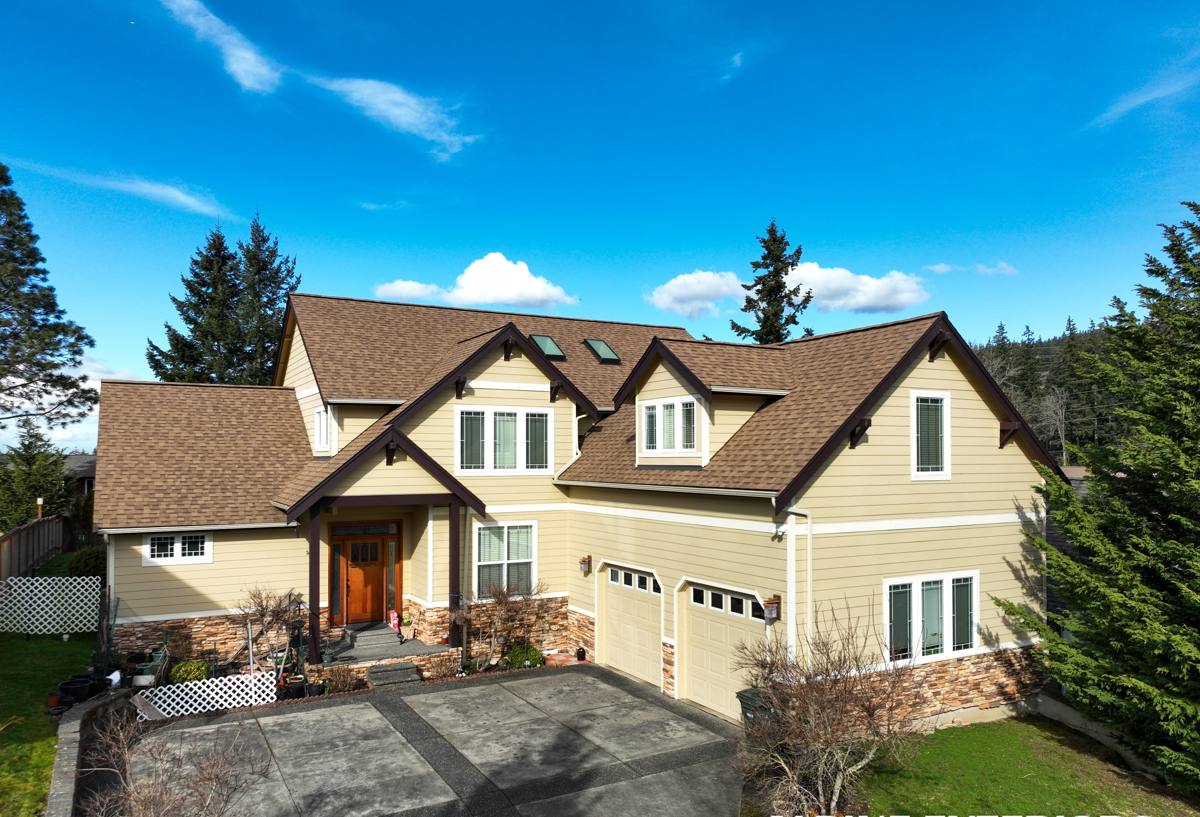
Custom windows aren't just special shapes or oversized openings, though North Everett's mix of older bungalows, mid-century ramblers, and newer infill homes gives us plenty of both. Custom means the window is built to the actual rough opening, the actual wall assembly, and the actual exposure of that specific wall — not a stock size trimmed to fit.
Where Custom Sizing Matters Most
- Older homes with settled or slightly out-of-square framing, common in North Everett's pre-1960s housing stock
- Additions or remodels where the new opening doesn't match a standard manufacturer size
- Larger picture or bay windows facing west or southwest, where wind-driven rain hits hardest
- Replacing multiple windows on the same wall where sightlines need to match exactly
A window that's slightly undersized and shimmed heavily, or oversized and packed with extra sealant to make up the gap, is where leaks start. Correct sizing isn't a luxury detail — in this climate it's the difference between a window that lasts decades and one that needs attention in five years.
Frame Material: What Holds Up Near Salt Air and Long Wet Seasons
We get asked constantly whether vinyl, fiberglass, or wood-clad is "best." The honest answer is that it depends on exposure, budget, and how much upkeep a homeowner wants to sign up for. Here's how the common options actually perform under North Everett's conditions:
| Frame Material | Salt Air / Corrosion | Moisture & Moss Exposure | Maintenance | Typical Cost Range |
|---|---|---|---|---|
| Vinyl (quality, welded corners) | Good — no metal to corrode in the frame itself | Handles standing moisture well; won't rot | Low — occasional cleaning | Lowest of the three |
| Fiberglass | Excellent — very stable, resists expansion/contraction | Excellent — dimensionally stable when wet or dry | Low | Mid to upper |
| Wood-clad (exterior clad, wood interior) | Cladding protects well if the seal stays intact | Vulnerable at end grain and cladding seams if moisture gets behind it | Moderate — watch cladding joints | Highest |
We don't push wood-clad windows on exposed North Everett walls unless a homeowner specifically wants the interior wood look and understands the trade-off: if moisture works behind the cladding at a corner joint, it can sit there unnoticed, and that's a maintenance burden we'd rather be upfront about than sell around. On direct wind and rain exposures, we lean toward vinyl or fiberglass with fully welded (not mechanically fastened) frame corners, because a welded corner is one less seam for wind-driven rain to test.
Hardware and Fasteners
This is the detail most homeowners never think to ask about, and it matters more here than almost anywhere inland. Standard steel fasteners and hinges corrode faster in salt-air neighborhoods like North Everett. We spec stainless steel or corrosion-resistant coated fasteners on exterior hardware, locks, and cladding attachment points as standard practice — not as an upcharge — because replacing a corroded lock five years in costs more than doing it right once.
Glass and Glazing for a Wet, Overcast Climate
Everett doesn't get brutal cold snaps often, but it does get long stretches of damp, overcast weather where indoor humidity has nowhere easy to go. That combination is what drives condensation on interior glass and, over time, seal failure in double-pane units.
- Low-E coatings help with year-round comfort and reduce condensation risk on interior glass during cold, wet mornings
- Argon-filled double-pane is standard for most North Everett homes; triple-pane is worth discussing on north- and west-facing walls with heavy exposure
- Warm-edge spacers (not older aluminum spacers) reduce the cold spot at the glass edge where condensation and eventual seal failure start
We won't recommend triple-pane across an entire house just to upsell the job — on a sheltered, south-facing wall it's often not worth the added cost. On an exposed west wall catching the brunt of driving rain and wind, it can be a smart, targeted upgrade.
The Installation Details That Actually Prevent Leaks
Most window failures we get called out to inspect in North Everett aren't product failures — they're installation failures. The window itself is fine; the flashing or sealant around it isn't.
Our Process
- On-site measurement and inspection — we check the rough opening, sill condition, and existing flashing before ordering anything, because a hidden problem behind the old window changes the plan
- Removal and opening prep — old sealant, damaged sill material, and any moss or algae staining at the opening get fully cleared, not just covered over
- Flashing correction — proper sill pan flashing and head flashing integrated with the existing house wrap or building paper, lapped correctly so water sheds outward, not into the wall
- Window setting and shimming — set plumb, level, and square, shimmed at the correct load points, not just wedged in place
- Sealing — exterior sealant rated for this climate's UV and moisture cycling, backer rod where gaps call for it instead of oversized caulk beads
- Interior finish and final check — trim reset, operation tested, and a walk-through so the homeowner sees exactly what was done
Step three is the one that gets skipped most often on rushed jobs, and it's the one that causes the leaks we see years later. Flashing is invisible once the trim goes back on, which is exactly why it has to be done right the first time.
Signs Your Current Windows Are Losing the Fight
Homeowners often assume window trouble means an obvious leak, but in this climate the early signs are quieter:
- Moss or dark algae staining building up on the sill or bottom trim faster than on the rest of the house
- Fogging or moisture between panes — a sign the seal has failed and the argon fill is gone
- Wood trim that feels soft or spongy at the corners, especially on west- or south-facing walls
- Drafts you can feel near the frame on windy, rainy days even with the window fully latched
- Paint or finish peeling at the frame edge, often the first visible sign moisture is getting behind the trim
- Difficulty locking or latching, which can mean the frame has swelled or shifted out of square
Catching these early is cheaper than waiting. Moisture that's been working behind a sill for a couple of wet seasons can spread into the wall framing before it's visible from outside.
Permits and Local Code Considerations
Window replacement in Everett generally requires a permit when you're changing the size of the opening, altering a load-bearing header, or working on a designated egress window in a bedroom — straight swaps into an existing opening are often simpler, but every job should be checked against current City of Everett and Snohomish County requirements before work starts, not after. Egress sizing matters in particular: bedroom windows have minimum opening dimensions for safety, and it's worth confirming existing windows even meet code before assuming a like-for-like replacement is the right call.
Cost Factors for a North Everett Window Project
| Factor | Why It Moves the Price |
|---|---|
| Number and size of openings | Larger custom sizes and specialty shapes cost more to manufacture and install than stock sizes |
| Frame material | Vinyl is typically most affordable; fiberglass and wood-clad run higher |
| Exposure and flashing repair needed | Walls with existing moisture damage or poor flashing need remediation before the new window goes in |
| Glass package | Standard double-pane Low-E vs. triple-pane or specialty coatings on high-exposure walls |
| New opening vs. like-for-like | Enlarging or resizing an opening involves framing and header work beyond the window itself |
| Trim and interior finish | Matching existing trim profiles or restoring wood trim adds labor |
We give straightforward estimates based on what we actually see at the house, not a phone-quote guess — a rotted sill or a header that needs work changes the number, and we'd rather find that before we start than surprise a homeowner mid-project.
Why Local Experience in North Everett Matters
A crew that works this neighborhood regularly already knows which walls take the worst of the wind-driven rain, how the housing stock's age tends to affect rough openings, and what moss and algae buildup usually means once you get the old trim off. That's not something you get from a general contractor passing through the area once. It shows up in small decisions — how much flashing overlap to use, whether a given sill needs full replacement or can be repaired, which frame material makes sense for a specific wall's exposure — that add up to a window that's still performing well a decade from now instead of one that looks fine on install day and starts failing in year four.
Get a Straight Answer on Your Windows
If you're noticing moss buildup, drafts, fogged glass, or you're simply planning ahead for a remodel in North Everett, we're happy to take a look and give you an honest read on what your windows actually need — no pressure, no inflated urgency. Use the form below to request a free estimate.