 Everett
 Siding Built for What North Everett Actually Deals With
North Everett sits close enough to Port Gardner Bay and the Puget Sound shoreline that salt-laden air is a daily fact of life on this siding, not an occasional nuisance. Add Snohomish County's long wet season, wind-driven rain off the water, and the shaded, moisture-holding conditions that let moss and algae get a foothold on north- and west-facing walls, and you have a climate that is genuinely hard on exterior materials. Siding that performs fine in a drier inland market can fail early here, and homeowners in this neighborhood often don't find out until paint is peeling, boards are soft at the bottom edge, or moss has worked its way into seams.
This page is about one thing: correctly installed fiber cement siding for North Everett homes specifically, why this climate makes the material choice and the installation details matter more than they would somewhere drier, and what a job done right actually looks like.
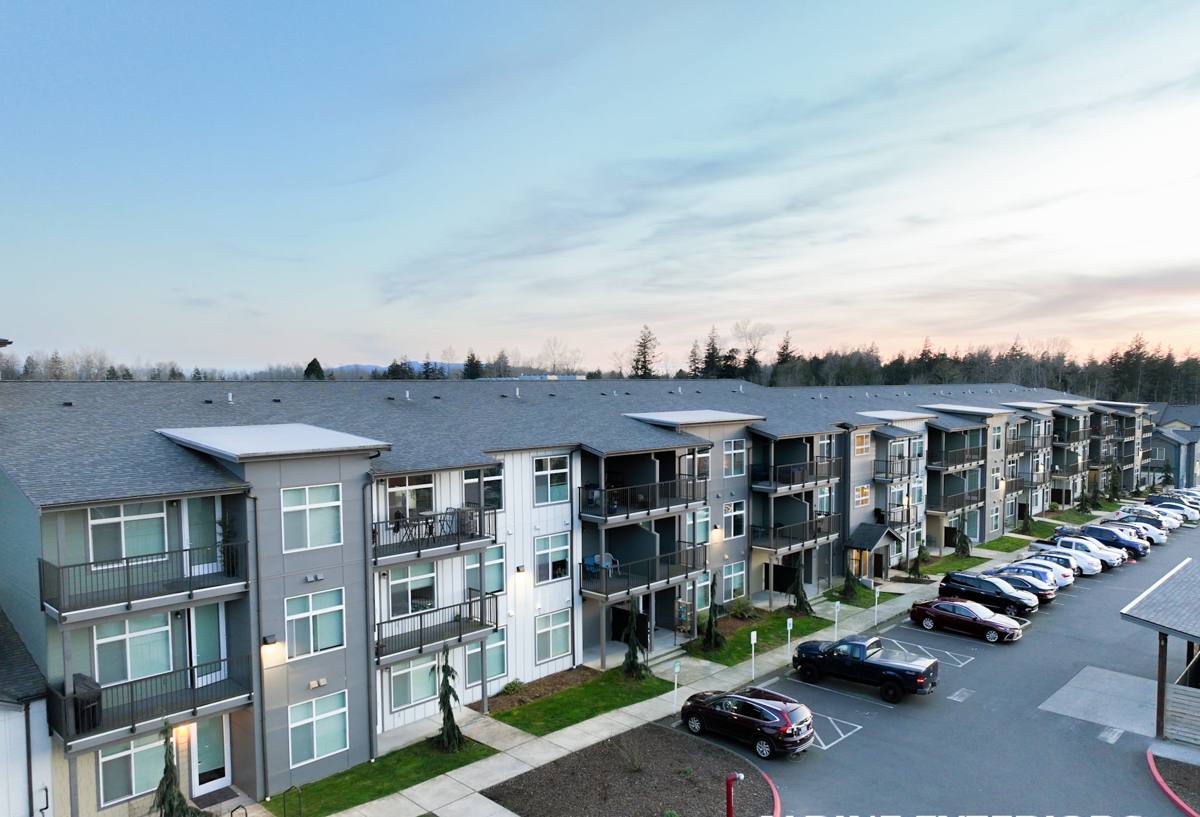
What Salt Air, Driving Rain, and Moss Season Do to Siding
Salt Air
Airborne salt from the bay doesn't just sit on the surface — over years it works into fasteners, trim joints, and any exposed or unsealed edge. On metal components it accelerates corrosion; on wood-based products it speeds up moisture uptake at cut ends and seams. Siding within a few miles of the water needs a finish and a fastening system that can shrug this off for decades, not just look good the first summer.
Driving Rain
North Everett's weather doesn't just rain straight down — wind off the Sound pushes rain sideways into wall assemblies, which is exactly the condition that exposes bad flashing, gaps at trim, and poorly lapped siding courses. A material can be technically "water resistant" and still let a home take on moisture damage if it's installed without correct water management behind it.
Moss and Algae Season
Shaded elevations, roof overhangs, and anything facing away from direct sun stay damp for extended stretches much of the year here. That's the exact environment moss and algae need to establish on a wall surface. Once organic growth gets a grip in a seam or at a butt joint, it holds moisture against the substrate underneath — which is where real damage starts, well behind what's visible from the yard.
Why We Only Install James Hardie Fiber Cement
Given those three conditions, we standardized on James Hardie fiber cement siding for every home we side, including here in North Everett. It's a decision based on how the material actually holds up over the long run in this specific climate, not brand preference.
- Non-combustible core — fiber cement doesn't feed a fire the way wood-based sidings can, which matters for insurance and peace of mind regardless of climate.
- Engineered for moisture — Hardie's HZ5 product line is formulated and tested for the Pacific Northwest's wet, humid conditions, which is a meaningfully different engineering target than a product built for a dry climate.
- ColorPlus factory finish — a baked-on finish applied under controlled factory conditions holds color and resists fading and moisture intrusion far better than field-applied paint, which is exactly the failure point we see on older, repainted siding in this area.
- Dimensionally stable — fiber cement doesn't swell, cup, or warp the way wood and some wood-composite products do when they take on repeated moisture cycles.
- Strong transferable warranty — backed by a manufacturer with decades of field performance data, not a newer product still proving itself.
We don't install vinyl, LP SmartSide, Cemplank, Allura, primed spruce, or cedar. Each of those has legitimate uses elsewhere, but none of them hold up to this specific combination of salt air, wind-driven rain, and sustained moss pressure as reliably as correctly installed Hardie — and we'd rather turn down work than put a product on a North Everett home that we don't believe will perform here for the long haul.
Material Comparison for This Specific Climate
| Factor | James Hardie Fiber Cement | Vinyl | Untreated Wood / Primed Spruce |
|---|---|---|---|
| Salt air resistance | Excellent — non-corrosive core, factory finish | Fair — can become brittle over time in coastal wind exposure | Poor — accelerates finish breakdown and rot at fasteners |
| Wind-driven rain tolerance | Strong when flashed and lapped correctly | Moderate — seams and panels can allow water intrusion | Weak — end grain and joints absorb water readily |
| Moss/algae resistance | Good — dense, stable surface resists organic growth | Good on the surface, but growth collects at seams | Poor — porous surface holds moisture that feeds growth |
| Finish longevity | Factory ColorPlus, long fade resistance | Color molded through, but fades and chalks over time | Field-applied paint, shortest repaint cycle |
| Fire performance | Non-combustible | Combustible, can melt/deform | Combustible |
What a Correct Installation Involves
Fiber cement only performs the way it's supposed to when it's installed to spec. In a climate like North Everett's, the installation details matter as much as the material choice, because they're what actually keeps wind-driven rain and moisture out of the wall assembly.
Weather-Resistive Barrier and Flashing
Before a single piece of siding goes up, the house needs a properly lapped weather-resistive barrier and correctly integrated flashing at every window, door, and penetration. This is the layer that actually stops water that gets past the siding — and it's also the layer that's invisible once the job is done, which is why it's the first thing corners get cut on with a rushed crew.
Proper Clearances and Gaps
Hardie siding needs specific clearance from grade, roof lines, decks, and other transitions, plus correctly sized gaps at trim that get sealed with the right sealant — not just butted tight. Skipping these clearances is one of the most common reasons fiber cement takes on moisture damage prematurely, and it's rarely visible until there's already a problem.
Fastening for Coastal Wind
Fasteners need to be corrosion-resistant and placed per manufacturer spec, both for wind performance in Puget Sound storm exposure and to avoid the corrosion issues salt air causes with lower-grade hardware.
Caulking and Joint Treatment
Every seam and joint is a potential entry point for wind-driven rain. Correct joint treatment and quality sealant — applied at the right joints, not every joint sealed indiscriminately, which can trap moisture — is a detail that separates a durable installation from one that fails in five years.
Our Process for North Everett Jobs
- On-site assessment — we look at your home's specific exposure: how close to the water, which walls face prevailing wind and rain, where moss and algae are already established, and where the existing siding or sheathing shows moisture damage.
- Tear-off and inspection — once old siding is off, we inspect sheathing and framing for hidden rot or moisture damage before anything new goes on. This is often where problems from a prior installation surface.
- Weather barrier and flashing correction — we install or correct the weather-resistive barrier and flashing at every penetration before siding starts.
- Hardie installation to manufacturer spec — correct clearances, fastening, and joint treatment throughout, not just on the street-facing elevations.
- Final walkthrough — we go over the finished job with you, including what maintenance (if any) to expect given your specific exposure.
What to Ask Any Contractor Before You Sign
- Are they installing to the manufacturer's published specifications for clearance, fastening, and flashing — and will they show you those specs?
- Do they inspect and address sheathing condition before installing new siding, or just cover what's there?
- What's their plan for elevations that face prevailing wind and rain versus more sheltered walls?
- Is the warranty from the manufacturer transferable, and what does the contractor's own workmanship warranty cover separately?
- Have they worked in this specific area before and can they speak to how homes here perform over time?
Maintenance Expectations in This Climate
Correctly installed Hardie siding in North Everett is low-maintenance, not no-maintenance. Because of the salt air and moss season, we recommend an annual visual check of shaded and water-facing elevations for early moss or algae growth, and a rinse-down if it's found before it establishes. Caulked joints and trim should be checked periodically, since sealant is the one component that wears out well before the siding itself does. None of this is heavy upkeep — it's the kind of occasional attention that keeps a correctly installed system performing for its full service life instead of running into avoidable problems.
Get a Straight Answer for Your Home
Every home in North Everett has its own exposure — some walls take the brunt of the weather off the water, others are more sheltered and dealing more with shade and moss. We'll walk your property, tell you honestly what condition your current siding is in, and lay out what a correct James Hardie installation would involve for your specific home. If you'd like a free, no-pressure estimate, the form below is the easiest way to get started.