 Everett
 Board & Batten in Pinehurst: A Classic Look Under Real Coastal Pressure
Board and batten siding has a strong, clean vertical look that suits a lot of the homes going up and being renovated around Pinehurst. It reads as modern farmhouse on some builds, craftsman on others, and works well as an accent alongside horizontal siding on the rest of the house. But the look is only half the story. Vertical siding lives with water differently than lap siding does, and in a Snohomish County neighborhood that sits close enough to Puget Sound to catch salt-laden air, along with driving winter rain and a moss season that can run most of the year, the material and the installation details matter more than the style choice does.
We install James Hardie fiber cement exclusively, in board and batten configurations built to hold up to what Pinehurst weather actually does to a house, not just what a spec sheet promises in a mild climate.
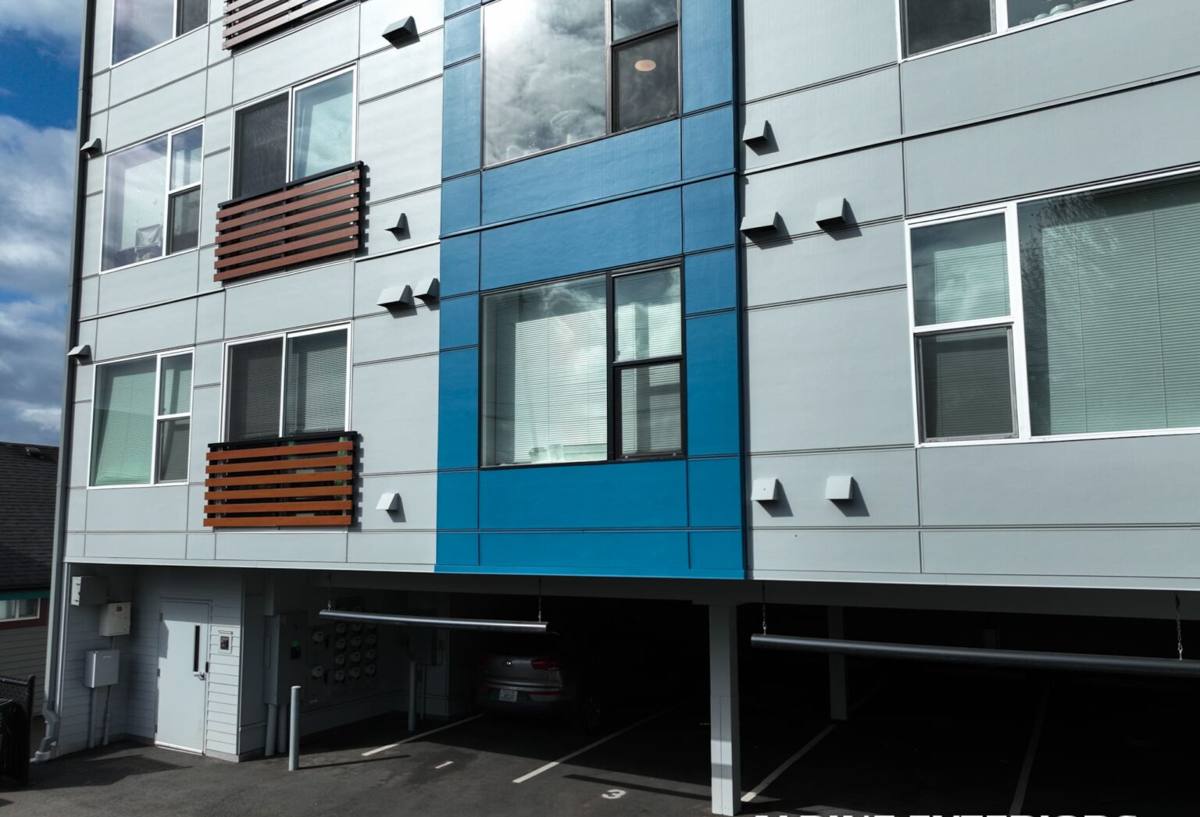
What Pinehurst's Climate Actually Does to Vertical Siding
Salt Air and Slow Corrosion
Homes in and around Everett that sit within reach of Puget Sound's salt air deal with faster corrosion of exposed metal fasteners, flashing, and trim than homes further inland. On board and batten siding, that matters because there's more exposed hardware per square foot than on lap siding — batten strips need to be fastened through to the substrate, and every one of those fastener points is a potential entry point for moisture if it's not sealed and finished correctly.
Driving Rain and Wind-Driven Moisture
Everett gets plenty of rain that doesn't fall straight down. Wind off the Sound pushes water sideways into wall assemblies, and vertical board and batten has long vertical seams running the full height of the wall — more linear feet of seam than a lap pattern covering the same wall. Every one of those seams needs a drainage plane behind it and correct batten placement over the joints, or water finds its way behind the siding and stays there.
Moss Season and Shaded Wall Faces
Pinehurst's tree cover and the Pacific Northwest's long, damp stretch from fall through spring create ideal conditions for moss and algae growth, especially on north- and west-facing walls that don't get much direct sun. Moss holds moisture against the siding surface for extended periods. On a material that can't handle sustained dampness, that's a slow path to rot or delamination. On the wrong finish, it's also a fast path to visible green staining that never fully washes off.
Why Board & Batten Behaves Differently Than Lap Siding
Lap siding sheds water downward by design — each course overlaps the one below it. Board and batten relies on a different logic: flat panels or boards butted or gapped together, with a narrow batten strip covering each seam. Done right, the batten protects the seam from direct water contact and the drainage plane behind the panel handles anything that gets past it. Done wrong — battens too widely spaced, seams not backed by proper flashing tape, or panels installed tight to grade without clearance — water gets trapped exactly where you can't see it until the damage shows up as soft trim, peeling paint, or a musty smell inside an exterior wall.
This is the main reason board and batten has a reputation for problems on some homes: not because the pattern is flawed, but because it leaves less room for installation shortcuts than lap siding does. A lap course that's slightly off still generally sheds water. A board and batten seam that's slightly off can hold it.
The James Hardie System We Use for Board & Batten
We install James Hardie fiber cement only — no vinyl, no LP SmartSide, no cedar or primed spruce boards, no Cemplank or Allura substitutes. For board and batten specifically, that means HardiePanel vertical siding paired with Hardie batten trim, or the Hardie Artisan Collection where a homeowner wants a more refined, tighter-grain appearance. Both are factory-finished with ColorPlus Technology, which bakes the color into the panel through multiple coats rather than relying on a job-site paint job that has to cure in whatever weather shows up that week.
Fiber cement doesn't feed moss the way wood fiber products can, doesn't swell or rot when a seal fails the way wood-based products do, and holds paint and color far longer than field-primed materials exposed to Everett's rain within days of installation. For a wall assembly that's going to face salt air and long damp stretches for the next few decades, that combination of moisture stability and factory-cured finish is the deciding factor in why we build board and batten out of Hardie and nothing else.
What a Correct Board & Batten Installation Involves
The material only performs as well as the installation behind it. On every board and batten job in Pinehurst, this is the baseline we work to:
- Weather-resistant barrier installed and inspected before any siding goes up, with all seams taped
- Flashing at every horizontal transition — window and door heads, roof-to-wall intersections, and the base of the wall
- A functioning drainage plane behind the panels so any moisture that gets past the surface has somewhere to go besides the sheathing
- Correct clearance at grade, decks, and patios — siding held up off hard surfaces per Hardie's published specs, not tight to the ground
- Battens spaced and fastened per manufacturer spec, landing squarely over panel seams rather than approximated by eye
- Fasteners set to the correct depth and pattern — overdriven or underdriven nails are one of the most common causes of early siding failure
- All cut edges and fastener heads field-sealed per Hardie's finishing requirements to maintain the factory warranty
- Caulking limited to where it belongs — sealed joints where specified, not used as a substitute for flashing
Skip any one of these and the siding can still look right for a season or two. In a climate that runs wet for most of the year, the gap between "looks right" and "is right" shows up eventually — usually behind the wall, where it's expensive to fix.
Board & Batten Material Comparison
| Material | Behavior in Salt Air & Driving Rain | Moss / Algae Resistance | Finish Longevity |
|---|---|---|---|
| James Hardie fiber cement | Dimensionally stable, doesn't swell or rot when moisture gets past a seam | Resists sustained dampness better than wood-based fiber products | Factory ColorPlus finish, decades before repaint typically needed |
| Cedar or primed spruce | Natural wood movement; vulnerable if finish fails or fasteners corrode | Feeds moss and algae growth more readily; needs regular treatment | Field-applied paint or stain, shorter repaint cycle |
| LP SmartSide (engineered wood) | Treated wood substrate; edge and cut-end sealing is critical | Better than raw wood but still an engineered wood product | Field or factory finish depending on product; installation sensitivity is higher |
| Vinyl board & batten | Doesn't rot, but can warp or crack in temperature swings and doesn't manage trapped moisture behind it | Low nutrient value for growth, but grime and mildew still collect in profile grooves | Color is through the material but can fade; lower impact resistance |
Our Process for Pinehurst Homes
We start with a walk of the exterior to look at existing drainage, roofline transitions, tree cover, and how much sun each wall face actually gets — the north and west walls in a lot of Pinehurst yards sit in shade most of the day, which affects both moss risk and how we plan the drainage detailing. From there we scope the tear-off, confirm the weather barrier and flashing plan, and lay out batten spacing before the first panel goes up. On occupied homes we sequence work to keep the house weathertight overnight rather than leaving open wall sections exposed to whatever the forecast throws at Everett that week. Cleanup includes magnetic sweeps for fasteners and hauling old material off site — we don't leave debris behind for the homeowner to deal with.
Why a Crew That Already Works Pinehurst Matters
A lot of what makes board and batten fail or succeed in this specific area isn't in a general installation manual — it's knowing which wall orientations in this neighborhood tend to hold moss, which lots have drainage patterns that push extra water toward the foundation line, and how much clearance to plan for given the landscaping and grade changes common on Pinehurst lots. A crew that's done this work in the neighborhood before isn't guessing at any of that. That local pattern recognition, combined with a single-material specialty in Hardie fiber cement rather than juggling installation methods across five different siding brands, is what keeps a board and batten job performing the way it should ten and twenty years out, not just on install day.
What to Expect Long-Term
A correctly installed Hardie board and batten system in this climate should need very little from a homeowner beyond periodic washing to keep pollen, road film, and organic growth from building up on shaded faces, and a normal eye kept on caulking at trim joints over the years. It should not need repainting on anything close to the cycle that field-finished wood or older paint jobs require. If you're comparing a bid for board and batten in Pinehurst, ask specifically about drainage plane details, batten spacing spec, and how cut ends and fasteners get sealed — those three answers tell you more about the long-term outcome than the price line does.
If you'd like a straight answer on what board and batten would look like on your specific home, we're glad to come out, walk the exterior, and put together a free, no-pressure estimate — no obligation either way.