 Everett
 Deck Replacement in Pinehurst: Built for What This Climate Actually Does to Wood
If you own a home in Pinehurst and your deck has started to feel soft underfoot, gray out no matter how often you clean it, or grow a faint green film in the shady corners every winter, you're not imagining things. This is one of the harder climates in the country on exterior wood structures. Salt-laden air moving in off Puget Sound, long stretches of driving rain through fall and winter, and a moss and algae season that can run six months or more all work on a deck at the same time, from multiple directions. A deck that would last two or three decades in a dry inland climate can start failing structurally in half that time here if it wasn't built or maintained with this environment in mind.
This page is specifically about replacing a deck in Pinehurst — not general deck advice, but what actually matters for a deck built and used in this part of Snohomish County.
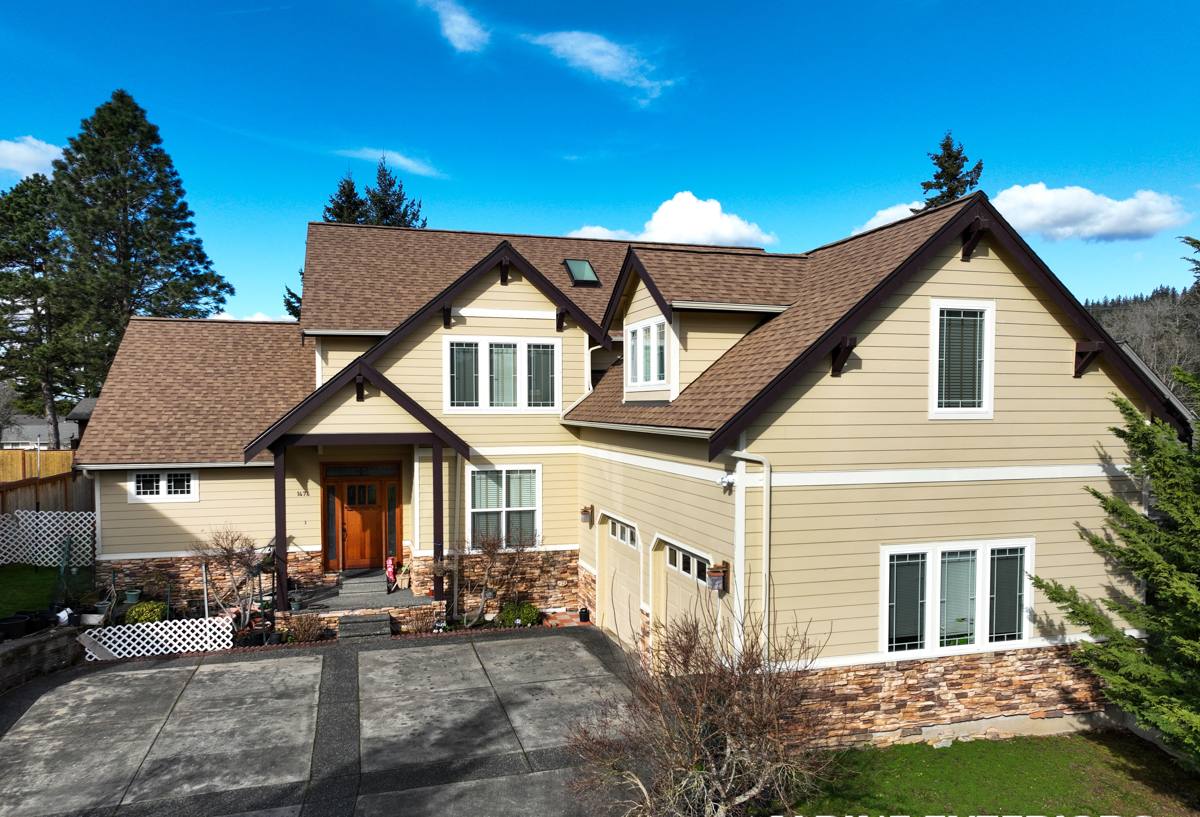
What Pinehurst's Climate Does to a Deck Over Time
Salt Air
Proximity to the Sound means airborne salt settles on everything outdoors, including deck hardware. Salt accelerates corrosion in fasteners, joist hangers, and any exposed metal connectors. Once a fastener starts rusting, it doesn't just look bad — it loses holding strength, and a deck's structural integrity depends on every hanger and bolt doing its job. Older decks built with standard galvanized hardware are especially vulnerable; the coating that protects the steel wears through faster in salt air than most people expect.
Driving Rain
Rain here doesn't just fall straight down — wind-driven rain gets pushed sideways into ledger boards, under rail caps, and into any gap where two pieces of wood meet. Water that gets trapped and can't dry out is the single biggest cause of rot in decks throughout Snohomish County. The ledger board — where the deck attaches to the house — is the most common failure point precisely because it's the hardest place for water to escape once it gets behind the flashing.
Moss and Algae Season
Shaded decks, north-facing decks, and decks under trees hold moisture longer, and that moisture plus organic debris equals moss and algae. Beyond being unsightly, a mossy deck surface is a slip hazard, especially on stairs, and moss roots hold water against the wood surface, extending the time boards stay wet after each rain event.
Signs a Pinehurst Deck Needs Replacement, Not Just Repair
- Soft or spongy spots in the decking, especially near the house or at board ends
- Visible rust streaking from screws, nails, or joist hangers
- Gaps or separation where the deck meets the house siding
- Persistent moss or dark staining that returns within weeks of cleaning
- Railings or stair stringers that flex or feel loose
- A deck older than 15-20 years that hasn't had structural hardware upgraded
- Visible daylight or gaps between joists and the ledger board
A deck can look salvageable from the top and still have compromised framing underneath. If more than a handful of boards are failing, or if the framing itself shows rot, patch repairs usually cost more over time than a clean replacement — you end up paying for labor twice instead of once.
What a Correct Deck Replacement Involves Here
A deck replacement done right in this climate isn't just swapping old boards for new ones. It's an opportunity to fix the underlying issues that caused the original deck to fail in the first place.
Ledger Board and Flashing
This is the connection point to your house, and it has to be done correctly or you're setting up the next deck to fail the same way. Proper flashing — installed so water sheds away from the house rather than behind the ledger — is non-negotiable in a climate with this much wind-driven rain.
Framing and Hardware
Given the salt air exposure common in Pinehurst, we favor corrosion-resistant fasteners and connectors rated for coastal or high-moisture use rather than standard-grade hardware. It costs a little more up front and saves you a structural problem in ten years.
Decking Material Choice
This is where homeowners have real options, and the right one depends on budget, maintenance tolerance, and how the deck is used.
| Material | Maintenance | Moisture/Moss Resistance | Typical Lifespan Here |
|---|---|---|---|
| Pressure-treated wood | Annual cleaning + periodic sealing | Moderate — needs upkeep to resist moss and rot | 10-15 years |
| Cedar | Regular cleaning + sealing to hold color and resist moisture | Naturally decay-resistant but still needs care in wet shade | 15-20 years |
| Composite decking | Occasional washing, no sealing/staining | Strong — resists moisture absorption and moss growth better than wood | 25-30+ years |
| PVC decking | Minimal — soap and water | Very strong — non-porous surface sheds water and resists staining | 25-30+ years |
We don't push one material on every homeowner. A shaded, north-facing deck under trees is a poor candidate for wood if you want to avoid a moss battle every winter — composite or PVC earns its higher upfront cost there. A sunnier, well-ventilated deck can do fine in cedar if you're willing to keep up with sealing. We'll walk through your specific site conditions and give you an honest read on what fits.
Drainage and Ventilation Underneath
Airflow under the deck matters as much as what's on top. Decks built low to the ground, or against grading that traps water, stay damp longer after rain and are more prone to hidden rot in the joists. Part of a proper replacement is making sure water has somewhere to go and air can move underneath.
Our Process for a Pinehurst Deck Replacement
- On-site assessment. We look at the existing structure, framing condition, drainage, sun/shade exposure, and how you actually use the space.
- Honest scope and material recommendation. Based on the site conditions, we tell you what's actually needed — not the most expensive option, the right one.
- Demolition and disposal. Old decking, railings, and compromised framing are removed and hauled off.
- Framing correction. Ledger flashing, joist hangers, and structural hardware are addressed as part of the rebuild, not left as-is.
- Installation. Decking, railings, and stairs go in to code, with attention to fastening patterns and gapping appropriate for the material and our wet climate.
- Final walkthrough. We go over care and maintenance specific to whatever material you chose, so you know what upkeep to expect.
Why Local Experience in Pinehurst Matters
A crew that works regularly in Pinehurst and the surrounding Everett area already knows which decks in this neighborhood tend to fail and why — usually a combination of shade exposure, original construction shortcuts, and the general wear that salt air and driving rain put on any structure this close to the Sound. That local pattern recognition means fewer surprises once demolition starts and a more accurate estimate from the start. It also means we're not learning Snohomish County's permitting and inspection requirements on your project — we already know what's expected.
We also stand behind our work with a crew you can actually reach afterward, not a subcontractor network that disappears once the invoice is paid.
Permits and Timing
Most deck replacements in Snohomish County require a permit, particularly when structural elements like framing, footings, or railings are involved. We handle that process as part of the job so you're not navigating it alone. As for timing, late spring through early fall tends to be the most practical window for deck construction here, simply because it allows framing and structural work to proceed without extended weather delays — though replacement can happen outside that window when needed.
What to Expect on Cost
Deck replacement cost depends heavily on square footage, material choice, height off the ground, railing style, and how much of the existing framing can be reused versus replaced. Composite and PVC decking cost more upfront than pressure-treated wood but typically cost less over the life of the deck once you factor in sealing, staining, and earlier replacement. Rather than quote a number that won't reflect your actual deck, we provide a detailed written estimate after seeing the site.
If your deck in Pinehurst is showing its age or you're just ready for something built to hold up to this area's salt air, rain, and moss, we're happy to come take a look. The estimate is free, there's no pressure, and you'll walk away with a clear, honest picture of what your deck actually needs.