 Everett
 Why Pinehurst Roofs Wear Out Faster Than the Brochures Say
Pinehurst sits close enough to Puget Sound and the Snohomish River valley that homes here deal with a specific mix of weather stress most manufacturer warranties were never really tested against: salt-tinged marine air, wind-driven rain that gets pushed sideways under poorly lapped shingles, and long stretches of gray, damp weather that keep roof surfaces wet for days at a time. None of that is dramatic on any single day. It's the accumulation that does the damage — granule loss speeds up, fastener corrosion creeps in earlier than it should, and shaded or north-facing slopes stay wet long enough for moss and algae to take hold and start working their way under the shingle tabs.
A roof that would last 25-30 years in a dry inland climate often shows real trouble in the low-20s here, sometimes sooner if the original installation cut corners on ventilation or underlayment. That's not a knock on any one product — it's just what Snohomish County weather does to a roof over time, and it's the reason a "new roof" job in this neighborhood needs to be built differently than the same job somewhere drier.
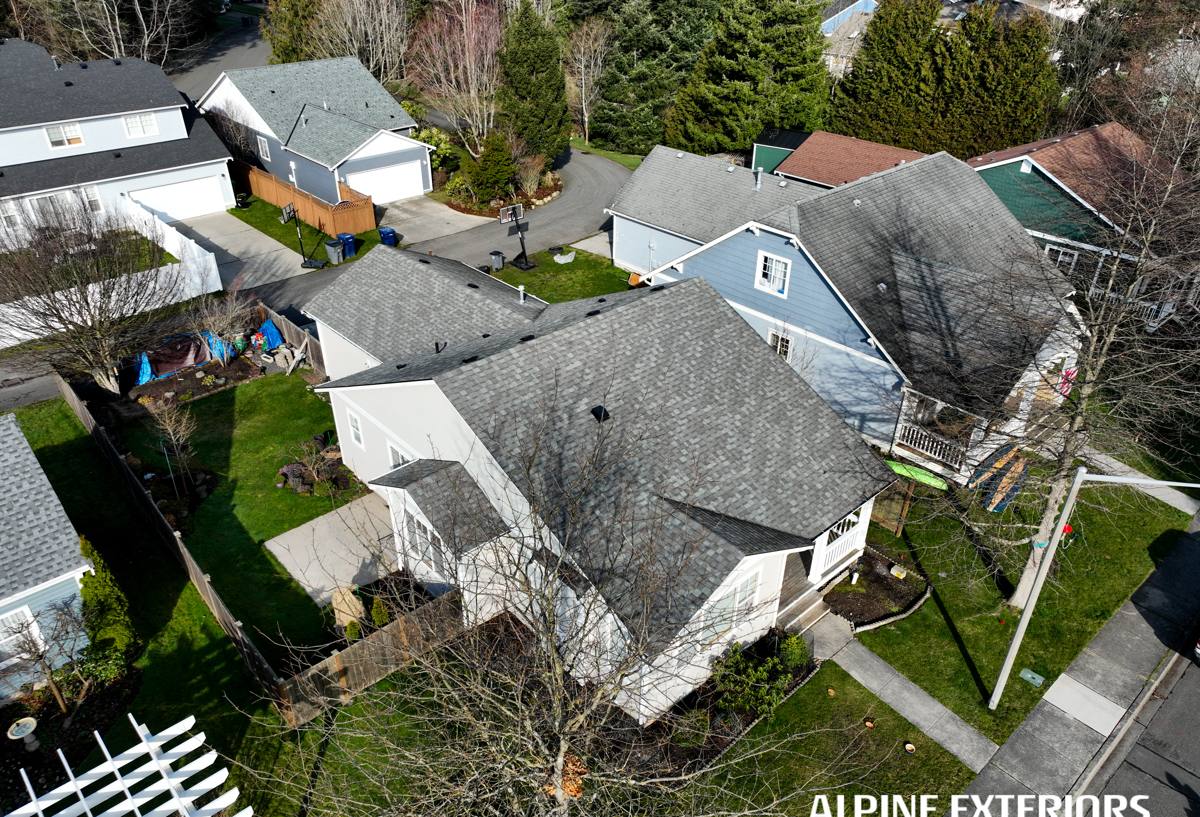
Signs a Pinehurst Home Needs a New Roof, Not Another Patch
Repairs make sense when the problem is isolated. A full new roof installation is usually the honest answer once the wear is spread across the whole field, not just one bad spot. Homeowners who call us are typically seeing some combination of:
- Shingles that are curling, cupping, or losing granules faster in some areas than others
- Moss established under the shingle tabs, not just sitting on the surface — this actually lifts shingles and lets water in
- Soft or spongy spots when walking the roof, which usually means the decking underneath is compromised
- Leaks showing up in more than one part of the attic or ceiling, especially after wind-driven rain
- An asphalt roof that's 20+ years old, regardless of how it looks from the ground
- Daylight visible through the roof deck from inside the attic
- Rising heating bills that track with worsening attic ventilation or insulation gaps at the roofline
If you're only seeing one or two of these in a small area, a repair may still be the right call, and we'll tell you that honestly during an inspection rather than pushing a full replacement you don't need yet.
What a Correct New Roof Installation Actually Involves
"New roof" gets sold as one thing, but it's really four separate jobs stacked together, and skipping or rushing any one of them is where premature failures come from — especially in a wet climate like ours.
Tear-Off and Deck Inspection
We remove the old roofing down to the deck rather than layering over it. That's the only way to actually see the plywood or plank decking underneath, which is where hidden rot, soft spots, and old leak damage show up. Any damaged sections get replaced before anything new goes down — installing new shingles over a compromised deck just hides the problem for a year or two before it resurfaces.
Underlayment and Ice-and-Water Protection
This layer matters more here than in drier climates, because it's the backup system that protects your home when wind-driven rain gets past the shingles themselves — which it eventually will, in every roof, in this kind of weather. Valleys, eaves, and areas prone to wind-driven rain get self-adhering waterproof membrane, not just standard felt, in the spots where it counts.
Ventilation
Proper intake and exhaust airflow keeps the attic dry and temperature-balanced, which does two things: it slows moss and algae growth by not trapping moisture against the underside of the deck, and it prevents the kind of condensation that rots decking from the inside — something that's easy to miss because it doesn't show up as an obvious roof leak.
Flashing and Penetrations
Chimneys, vents, skylights, and roof-to-wall transitions are where the large majority of leaks actually start, not in the open field of shingles. New flashing, properly stepped and sealed at every one of these points, is not optional on a correct installation — it's the difference between a roof that's watertight for decades and one that leaks within a few winters.
Material Options for Snohomish County Weather
There's no single "best" roofing material — there's a best fit for your home's exposure, roof pitch, budget, and how much long-term maintenance you're willing to take on. Here's how the common options actually perform in our climate:
| Material | Typical Lifespan Here | Moss/Moisture Behavior | Upfront Cost | Best Fit |
|---|---|---|---|---|
| Architectural asphalt shingle | 20-30 years | Good with proper ventilation and periodic moss treatment | Moderate | Most Pinehurst homes; best value-to-performance |
| Standing seam metal | 40-50+ years | Sheds moss and moisture well; minimal moss anchoring | Higher | Owners planning long-term, steeper roofs, modern styling |
| Cedar shake | 20-25 years with upkeep | Prone to moisture retention and moss without diligent maintenance | Higher | Owners committed to regular cleaning/treatment for the look |
| Synthetic/composite shake | 30-40 years | Doesn't absorb moisture like wood; low moss anchoring | Moderate-higher | Owners who want the cedar look without the wood maintenance |
We're upfront that cedar shake, while a beautiful traditional look, carries a real maintenance burden in this climate — it needs to breathe, dry out between rains, and get treated on a schedule, or moss and rot take hold faster than the material's reputation suggests. That's not a knock on cedar itself; it's just an honest trade-off homeowners should weigh before committing to the upkeep.
How Our Process Works, Start to Finish
On-Site Inspection and Written Estimate
We walk the roof, check the attic from the inside, and look at ventilation, flashing points, and any moss or moisture patterns specific to how your lot sits — shade, tree cover, and prevailing wind direction all affect the recommendation. You get a written estimate that spells out material, scope, and price, not a vague verbal number.
Permitting and Scheduling
A full roof replacement typically requires a permit through the local building department, and we handle that paperwork rather than leaving it on you. We schedule around the weather window as much as any Everett-area crew can — this is the Pacific Northwest, so we plan for rain days rather than pretending they won't happen.
Installation Day(s)
Depending on roof size and complexity, most residential jobs run one to three days. We protect landscaping and gutters, tear off in manageable sections so your home isn't left exposed overnight, and dry-in each section before moving to the next.
Cleanup and Final Walkthrough
Nail and debris cleanup, including a magnetic sweep of the yard and driveway, happens before we consider the job done. We walk the finished roof with you, cover warranty paperwork, and answer any questions before we leave.
Keeping Moss and Algae From Cutting Your New Roof's Life Short
A new roof in Pinehurst starts the same long fight against moss that the old one lost eventually. A few things meaningfully slow it down:
- Zinc or copper control strips installed near the ridge, which release trace metal ions that inhibit moss and algae growth on the slopes below every time it rains
- Ventilation that keeps the deck and shingle underside drier, since moss anchors fastest in persistently damp conditions
- Keeping overhanging tree limbs trimmed back so shaded sections of roof get more sun and airflow to dry out between storms
- Clearing gutters and valleys on a regular schedule so water isn't sitting against the shingle edges longer than it needs to
None of this makes a roof moss-proof — nothing in this climate is — but it's the difference between moss becoming a cosmetic issue you manage versus a structural one that shortens the roof's real service life.
Why a Crew That Already Works Pinehurst Matters
A roofing crew that regularly works this specific area already knows which slopes catch the worst of the wind-driven rain, which streets sit low enough to hold moisture longer into the spring, and what the local permitting office actually expects on a residential re-roof — none of which is universal knowledge, and all of which affects how a roof should be built here versus somewhere else in the county. It also means faster response if a warranty question or a storm-related issue comes up later, because we're not driving in from across the region to look at it.
What Actually Drives the Cost of a New Roof
Every roof is priced individually, but the estimate is built from the same handful of factors every time:
| Factor | Why It Matters |
|---|---|
| Roof size (squares) | More material and labor, straightforward scaling of cost |
| Pitch/steepness | Steeper roofs take longer, require more safety setup |
| Layers to tear off | Multiple existing layers mean more removal and disposal labor |
| Decking repair needed | Rotted or soft decking sections add material and labor not visible until tear-off |
| Material chosen | Asphalt, metal, and shake carry different material costs and install times |
| Roof complexity | Valleys, dormers, chimneys, and skylights all add flashing work |
| Access | Difficult site access can add setup and material-handling time |
Broad honest range: most straightforward asphalt shingle replacements on a typical Pinehurst home run in the moderate five-figure range, with metal or shake running higher. Your actual number depends on the factors above, and we'll walk through each one with you during the estimate rather than handing you a single vague figure.
Ready When You Are
If your roof is showing its age or you're just trying to plan ahead before the next wet season, we're happy to take a look and give you a straight answer — including telling you if a repair is still the smarter move. Reach out for a free, no-pressure estimate using the form below.