 Everett
 Why Port Gardner Decks Take More Punishment Than Inland Yards
A deck built a few miles inland in Snohomish County lives a different life than one built for a home near Port Gardner Bay. Homes closer to the water deal with salt-laden air moving off the bay, wind-driven rain that gets pushed sideways under eaves and railings, and a moss and algae season that runs longer here than almost anywhere else in the country. None of that is a reason to avoid an outdoor living space — it just means the deck has to be built and maintained with that reality in mind instead of copying a design that works fine in a drier climate.
Composite decking exists specifically to handle this kind of exposure better than solid wood, but "composite" is not one product with one performance level. The board brand, the core construction, the substructure underneath, and the way the deck is fastened together all matter more here than they would in a milder climate. A deck that looks identical to one in Arizona can behave completely differently after five Everett winters.
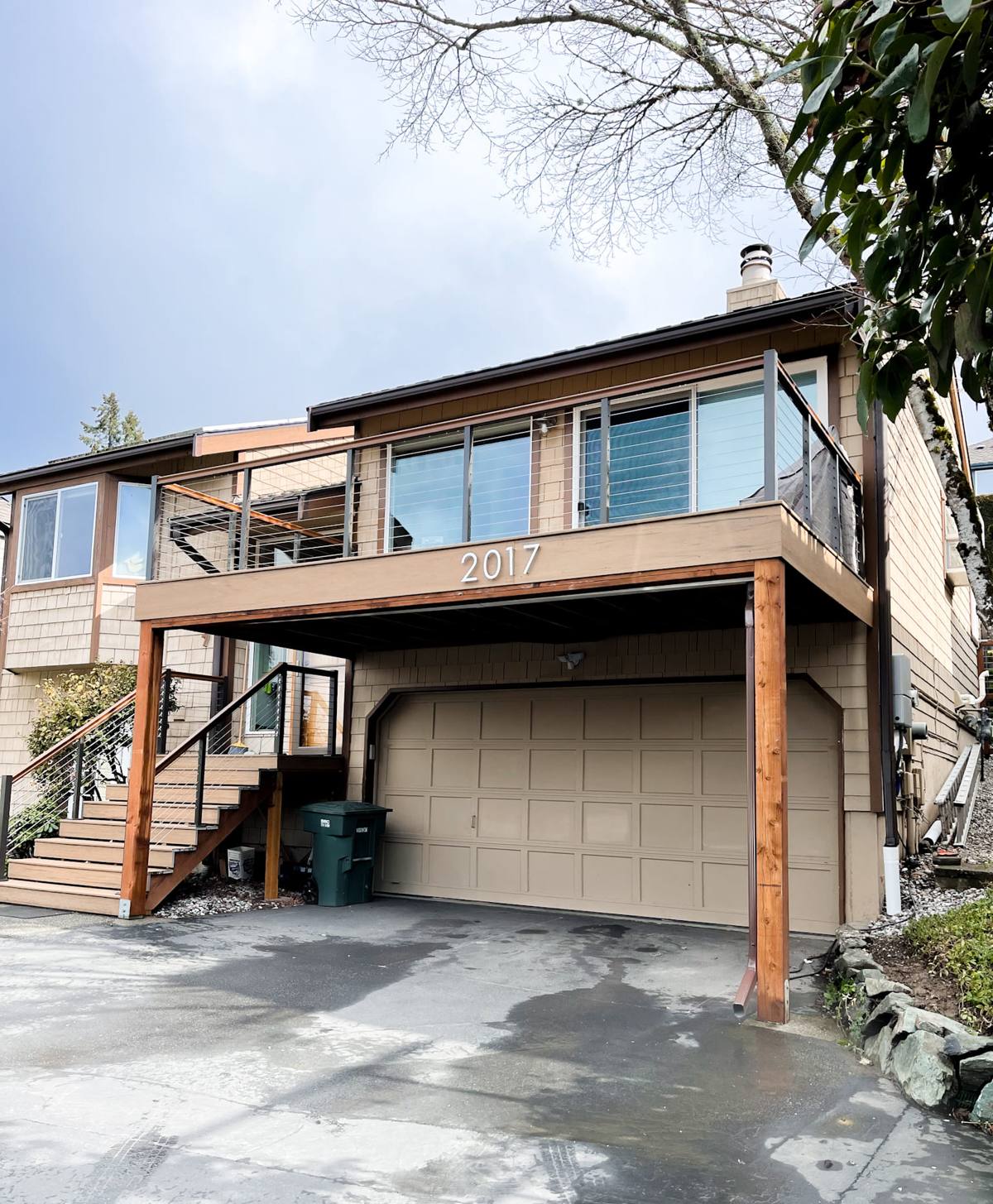
What a Correctly Built Composite Deck Needs in This Climate
Substructure and Fasteners
The boards on top get most of the attention, but the frame underneath is what determines whether a deck stays solid and dry-feeling for the long haul. In a salt-air, high-moisture environment, we specify corrosion-resistant fasteners and structural hardware rated for coastal or wet-use exposure — not standard interior-grade hardware that will streak, corrode, or weaken years before the decking itself shows wear. Joists, whether wood or composite-compatible framing, get treated and protected at every cut end, since a cut end is where moisture finds its way in first.
Ledger Flashing and Water Management
Where a deck attaches to the house, correct flashing is not optional — it is the single most common point of failure we see on older or poorly built decks in this region. Water that gets behind a ledger board without proper flashing doesn't just damage the deck; it can work its way into the home's siding and framing. Given how much rain Snohomish County sees over a typical year, we treat ledger flashing and proper water diversion as a non-negotiable part of every composite deck we build, not an upsell.
Airflow Underneath
Trapped moisture under a deck breeds the exact moss and mildew growth that's already a fight on top of the boards. We build in enough clearance and ventilation below the frame so air can move and the underside can actually dry out between the region's frequent rain events, instead of staying damp for weeks at a stretch.
Choosing the Right Composite Board
Not every composite board is built the same way, and the differences matter more in a wet, salt-exposed climate than they do in a catalog photo. The table below covers the trade-offs we walk homeowners through before recommending a specific product line.
| Decking Type | Moisture Behavior | Maintenance | Typical Lifespan |
|---|---|---|---|
| Capped composite (e.g., Trex, TimberTech) | Protective outer cap resists moisture absorption and staining | Occasional washing; no staining or sealing | 25-30 year manufacturer warranties are common |
| Uncapped/entry composite | More prone to moisture absorption at cut edges over time | Low, but more susceptible to mold in shaded, damp spots | Shorter warranty coverage, more variable performance |
| Cellular PVC decking | No wood content; essentially immune to rot and moisture absorption | Very low; wipes clean | Comparable or longer warranties, higher material cost |
| Traditional wood (cedar, treated pine) | Absorbs moisture, expands/contracts, prone to splintering and rot near the bay | Annual sealing/staining recommended | Shorter useful life without diligent upkeep |
For most Port Gardner-area homes, we lean toward capped composite or PVC precisely because they hold up to salt air and constant damp without the annual maintenance cycle that wood demands. Wood isn't wrong for every project, but we're honest that it asks more of the homeowner in a climate like this one.
Our Process, Start to Finish
Site Assessment and Design
We start at the house, not with a catalog. That means looking at sun and wind exposure, how close the deck sits to salt air off the bay, drainage patterns around the foundation, and how the deck will connect to existing siding and rooflines before recommending a layout or board.
Permitting
Most new decks and many deck replacements in Everett require a building permit, particularly when structural framing, footings, or elevation changes are involved. We handle the permit submission and inspection scheduling so the project stays compliant from the ground up.
Demolition and Structural Prep
If we're replacing an existing deck, we remove it down to sound framing (or the ground, if a full rebuild is needed) and inspect for hidden rot or water damage before building anything new on top of it — a step that's especially important on older decks near the water that have been absorbing moisture for years.
Installation
Framing goes in first with corrosion-resistant hardware, followed by ledger flashing, joist protection, and finally the composite boards using hidden fastener systems where the product line supports it, for a clean surface with no exposed screw heads to trap grime or moss.
Final Walkthrough
We walk the finished deck with the homeowner, check railing stability, board spacing, and drainage, and go over the maintenance schedule that fits the specific product installed.
Railings, Fascia, and Finishing Details
The details around the edges of a deck matter as much as the field boards in this climate. Composite or aluminum railing systems hold up better than painted wood railings, which take the brunt of driving rain and salt air and need repainting far more often. Fascia boards, stair stringers, and post wraps should match the decking material's moisture resistance — mixing a high-performance composite deck surface with untreated wood trim just moves the maintenance problem to a different part of the same structure.
Maintenance That Actually Matters in a Moss Climate
Composite decking is low-maintenance compared to wood, but "low-maintenance" doesn't mean "no maintenance," especially with the moss and algae pressure this region sees for a good chunk of the year. A short, realistic maintenance routine keeps a composite deck looking and performing the way it should:
- Sweep debris and organic buildup (leaves, needles, seed pods) off the boards regularly, especially in shaded areas where moss gets a foothold fastest
- Wash the deck surface once or twice a year with a soft-bristle brush and a cleaner rated for composite decking — avoid pressure washing at close range, which can damage the cap layer
- Keep gutters and downspouts clear so runoff isn't dumping extra water onto or under the deck
- Check railing posts and stair connections annually for movement, since fastener corrosion is the first sign of a problem in salt-air exposure
- Trim back overhanging vegetation to let sunlight and airflow reach shaded sections of the deck
Permits, Codes, and Snohomish County Considerations
Beyond the City of Everett's own permit requirements, decks near sloped or waterfront-adjacent lots around Port Gardner Bay can involve additional review depending on elevation, setback, and site conditions. Guardrail height, baluster spacing, and stair geometry all need to meet current building code, and older decks built before current code was in place often don't meet it if they're being replaced. We flag these issues at the design stage so there are no surprises once permitting or inspection begins.
Cost Factors to Expect
Composite decking costs more upfront than basic pressure-treated wood, but the honest comparison has to include maintenance labor and replacement cycles, not just the material price per square foot. The factors below tend to move a project's price the most:
| Factor | Why It Affects Cost |
|---|---|
| Board tier (entry composite vs. premium capped/PVC) | Higher-tier boards cost more per square foot but carry longer warranties and better moisture performance |
| Substructure condition | Rot or damage found during demo adds framing repair before new decking can go down |
| Deck height and footing requirements | Elevated decks need engineered footings and railings, which add labor and material |
| Railing and fascia material | Composite or aluminum railing systems cost more than basic wood but reduce future upkeep |
| Site access and slope | Waterfront-adjacent lots with grade changes can add complexity to footings and staging |
We give straightforward, itemized estimates so homeowners can see exactly where the cost is going and where there's room to adjust scope.
Why Hiring a Crew That Already Works Port Gardner Matters
A contractor who mostly builds decks inland doesn't always plan for salt air corrosion on hardware, moss-prone shaded zones under mature tree cover, or the amount of driving rain a waterfront-adjacent property in Everett actually takes over a winter. We work throughout Snohomish County, including homes around Port Gardner, and we build every deck assuming it will face that exposure — not as an afterthought, but as the baseline. That shows up in the fastener grade we use, the flashing detail at the house, and the honest conversation about which board tier is actually worth the money for a specific lot and sun exposure.
If you're planning a new composite deck or replacing one that's showing its age, we're happy to walk your property, look at sun and water exposure, and put together a straightforward, no-pressure estimate. Use the form below to get started.