 Everett
 Building Near the Water in Port Gardner Changes How Windows Should Go In
Port Gardner sits right against Port Gardner Bay, which means homes going up here face a combination most inland Snohomish County lots don't deal with: salt-laden air coming off the water, wind-driven rain that hits walls at an angle instead of falling straight down, and a wet season that runs long enough to grow moss on anything that stays damp too long. None of that is a reason to avoid building here — it's just a reason to get the window installation itself right the first time, because this is one part of a new home that's very expensive to fix once the siding and trim are closed up around it.
New-construction windows are a different job than replacing a window in an existing wall. On a new build, the window is going into open framing before the exterior finish exists, which means the installer controls the entire water-management path — the weather-resistive barrier, the flashing, the sill, and how the window ties into the rest of the building envelope. Get that sequence right and the window will perform for decades. Get it wrong and you won't see the problem until there's a stain on drywall two or three winters later.
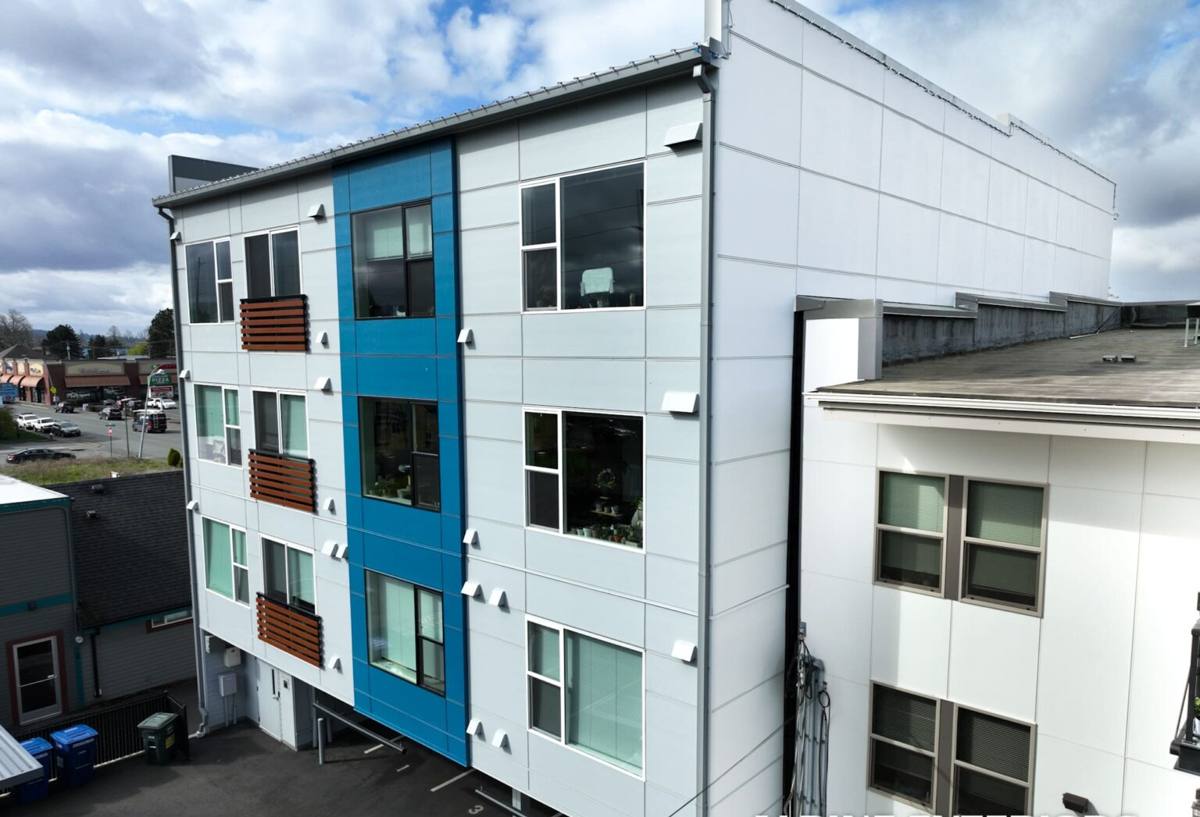
What Salt Air, Driving Rain, and Moss Season Actually Do to a New Install
Each of these local conditions stresses a different part of the window assembly:
- Salt air accelerates corrosion on exposed metal fasteners, hinges, and cheaper cladding finishes. It's slow and easy to ignore for the first few years, then shows up all at once.
- Driving rain off the bay pushes water sideways and upward at the window opening, which is exactly the load a proper flashing and sill-pan detail is designed to shed. A install that would be fine on a sheltered inland lot can leak in a Port Gardner storm if the sequencing was rushed.
- Moss season in Western Washington runs a good chunk of the year. Moss doesn't attack a window directly, but it holds moisture against sills, trim, and nearby siding, which keeps everything wetter for longer and puts more strain on caulk joints and finishes over time.
None of this means you need exotic materials. It means the ordinary steps — done in the right order, with the right products, by someone who's done it on this kind of site before — matter more here than they would forty minutes inland.
The Flashing and Water-Management Sequence We Follow
This is the part of a new-construction window install that homeowners rarely see and general contractors sometimes rush. It happens in a specific order, and skipping or reversing a step is how water finds its way behind the siding:
- Rough opening is checked for square, level, and correct size before anything goes in.
- A sill pan is installed at the bottom of the opening to catch and direct any water that gets past the window, rather than letting it sit on bare framing.
- The weather-resistive barrier (house wrap) is cut and lapped so water drains down and over each layer, never into a seam.
- Flashing tape goes around the jambs and head in a shingle-style sequence — sides first, then top — so every layer sheds water onto the one below it.
- The window is set, shimmed level and plumb, and fastened per the manufacturer's nailing schedule, not guesswork.
- The head flashing is integrated last, tucked behind the house wrap above the window so water is directed out and away rather than trapped.
- Gaps between the frame and rough opening are sealed and, where called for, insulated — not filled solid with expanding foam, which can bow a frame out of square.
Every one of those steps is inspectable before siding goes on, which is why we photograph the opening at key stages. It's the only real proof, once the wall is closed, that the water-management layer underneath is doing its job.
Choosing Windows That Hold Up in a Waterfront Neighborhood
Frame material matters more here than in a lot of Snohomish County neighborhoods, simply because of the salt air. There's no single "right" answer for every home — it depends on your budget, your home's style, and how much upkeep you want to take on.
| Frame Type | How It Holds Up Near the Bay | Upkeep |
|---|---|---|
| Vinyl | Good corrosion resistance since there's little exposed metal; performs well in salt air at a moderate price point | Low — occasional rinsing to clear salt film and moss spores |
| Fiberglass | Very stable in temperature swings and resists corrosion well; a strong fit for exposed, wind-loaded elevations | Low |
| Wood-clad | Attractive interior look, but the exterior cladding and any exposed fasteners need to be well-detailed to resist salt corrosion and moisture | Higher — finish and seams need periodic inspection |
| Aluminum | Strong and slim-profile, but bare aluminum is more prone to corrosion in salt air unless it has a marine-grade finish | Moderate to higher |
Hardware finish is worth a second look too. On elevations that face the water directly, we lean toward corrosion-resistant hardware and fasteners rather than the standard-grade options, since that's the part most likely to show wear first in a salt-air environment.
Glass and Elevation-Specific Choices
West- and southwest-facing openings toward the bay take the brunt of both sun and wind-driven rain. On those elevations we'll often talk through impact-resistant or heavier-gauge glass options, and we pay closer attention to how deep the window sits relative to any overhangs or trim, since a slightly deeper reveal gives extra protection from driving rain without changing the home's design.
Our Process on a New Build in Port Gardner
We work directly with your builder or general contractor, typically stepping in once framing and rough openings are complete and the weather-resistive barrier is ready to go on.
- Plan review: We check window sizes, swing directions, and egress requirements against the plans before ordering, so nothing gets discovered wrong on install day.
- Site walk: We look at each opening's exposure — which elevations face the bay and prevailing weather — and flag any that need extra attention before the sill pan goes in.
- Install: Sill pans, flashing, and windows go in following the sequence above, with photos taken before house wrap and siding cover the work.
- Final check: Every window is operated, checked for square and smooth function, and inspected for a clean, consistent sealant line before we sign off.
Because we're working before the exterior finish is on, this is also the point where any adjustments — reveal depth, trim details, hardware upgrades — are cheap and easy to make. Once siding is up, those same changes get expensive fast.
Mistakes We Commonly See on Waterfront New Builds
Most window problems on new construction near the water trace back to a handful of avoidable issues:
- Flashing installed in the wrong order (top before sides), which sets up a path for water to get behind the barrier instead of over it.
- Sill pans skipped or improvised with materials not meant for long-term water exposure.
- Standard-grade fasteners and hardware used on bay-facing elevations where a corrosion-resistant option would have cost little more.
- Windows shimmed out of square, which strains seals and hardware and can cause operational problems within a few years, well before the frame itself would ever fail.
- Gaps sealed with the wrong sealant for the substrate, which fails faster in a wet, salty environment than it would inland.
Each of these is a small decision at install time that's invisible once the home is finished — which is exactly why the crew doing the work, and their familiarity with this kind of site, matters as much as the window brand you choose.
What to Expect for Upkeep After Move-In
Even a well-installed window in Port Gardner will need a bit more attention than the same window on a sheltered inland lot:
- Rinse exterior frames and hardware periodically to clear salt film, especially on bay-facing elevations.
- Keep nearby gutters, sills, and trim clear of moss and debris so water doesn't sit against the window assembly during the wet months.
- Check exterior caulk lines once a year for cracking or separation, and have any gaps resealed before the rainy season sets in.
- Operate every window a few times a year, even ones you don't use often, so hardware doesn't seize up.
None of this is heavy maintenance — it's the kind of routine care that keeps a correctly installed window performing the way it's supposed to for its full service life.
A Quick Checklist Before Your Windows Go In
- Has the crew installed windows on other bay-facing or waterfront lots in Snohomish County?
- Will sill pans be installed at every opening, not just the most exposed ones?
- Is the flashing sequence documented or photographed before the wall is closed up?
- Are hardware and fasteners upgraded to corrosion-resistant options on elevations facing the water?
- Does the frame material and glass package match the sun and wind exposure of each elevation, not just a single spec for the whole house?
Why Local Experience in Port Gardner Matters
A window that's rated correctly on paper can still underperform if it's installed the way you'd install it on a dry, inland lot in the county. The difference in Port Gardner isn't the product — it's the sequencing, the hardware choices, and the attention paid to each elevation's exposure to the bay. That's the kind of judgment that comes from having actually done this work on this waterfront, in this weather, more than once. We've built our new-construction window process around exactly those conditions, because that's the environment your home has to hold up in for the next several decades.
If you're planning a new build or addition in Port Gardner, we're happy to walk the plans with you and talk through window options before anything is ordered. Reach out for a free, no-pressure estimate using the form below.