 Everett
 Roof Repair for Riverside Homes
Riverside sits close to the Snohomish River on the north side of Everett, and that low-lying, tree-shaded setting comes with a specific set of roofing problems. Homes here deal with heavier moss growth than drier parts of Snohomish County, more standing moisture under tree canopy, and the driving rain that comes off Puget Sound during fall and winter storms. A roof repair here isn't just patching a leak — it's addressing the reason that spot failed in the first place, which in Riverside is almost always some combination of trapped moisture, moss, or wind-driven rain finding a gap in flashing or shingles.
We work on roofs across Everett and Snohomish County regularly, and Riverside's older tree cover and river-adjacent humidity mean we see certain failure patterns here more often than in newer, more open subdivisions. Knowing what to look for on the first visit saves homeowners money — we're not guessing, we're checking the spots that actually fail in this neighborhood.
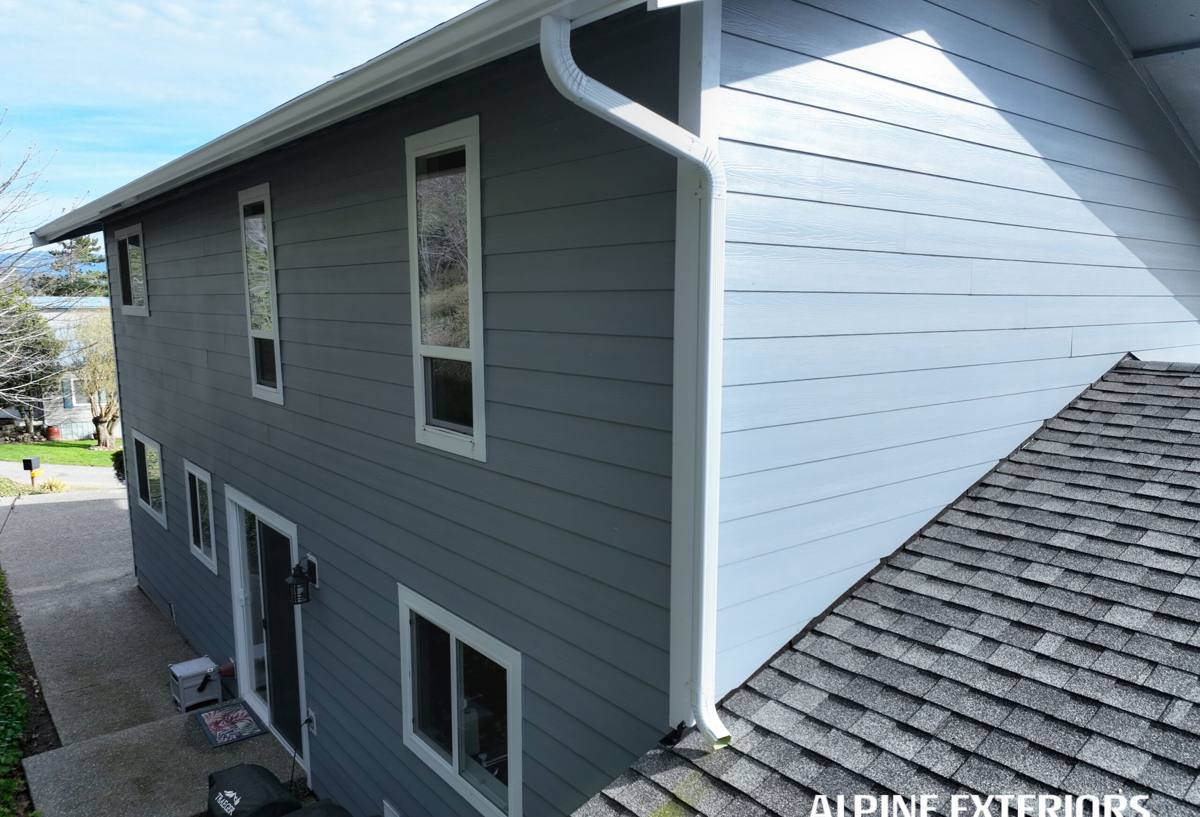
What Everett's Climate Does to a Riverside Roof
Snohomish County gets a long, wet stretch from October through May, and Riverside's proximity to the river and mature tree canopy extends the damp season even further. A few things happen as a result:
Moss Season Runs Long
Moss needs shade and moisture to establish, and Riverside has both in abundance. Once moss gets a foothold on a north-facing slope or under overhanging branches, it holds water against the roofing material year-round. On composition shingles, that moisture cycle lifts and softens the granule surface over time. On any roof type, moss growing at a seam or around a penetration acts like a wick, feeding water into places it was never meant to sit.
Driving Rain Finds Weak Flashing
Storms coming off the Sound don't just fall straight down — wind pushes rain sideways, up under shingle edges, and into any flashing that isn't sealed and lapped correctly. Chimneys, skylights, and roof-to-wall transitions are the usual failure points. A flashing detail that's held fine in light rain for years can start leaking the first time a real wind-driven storm hits it at the wrong angle.
Salt Air Adds Slow Corrosion
Everett's location near the water means metal roofing components — nails, flashing, vent caps, gutter hardware — corrode faster here than they would inland. Once a fastener or flashing panel starts to rust, it loses its seal integrity long before it looks obviously bad from the ground.
Tree Debris Compounds the Problem
Riverside's tree cover means more leaf and needle debris collecting in valleys and behind chimneys. Debris dams hold water against the roof surface exactly where moss also likes to grow, so the two problems tend to show up in the same spots.
Common Repair Calls We See in This Neighborhood
| Symptom | Likely Cause | Typical Fix |
|---|---|---|
| Ceiling stain near a chimney or skylight | Failed or under-sized flashing, often worsened by wind-driven rain | Remove and reinstall flashing with proper step and counter-flashing, reseal transitions |
| Dark streaking and thick moss on north-facing slopes | Shade, moisture retention, organic buildup under canopy | Careful moss removal, zinc or copper strip installation, damaged shingle replacement |
| Soft or spongy spot underfoot | Sustained moisture intrusion into the roof deck | Cut out and replace the affected decking, not just the shingles above it |
| Granule buildup in gutters | Aging shingles accelerated by moss and moisture cycling | Assess remaining shingle life; targeted repair vs. planning ahead for replacement |
| Leak that only shows up in wind-driven storms | Rain forced sideways under shingle edges or through a marginal seal | Re-seal or reinstall the affected edge detail, check adjacent fasteners for corrosion |
What a Correct Repair Actually Involves
A lot of roof "repairs" are really just surface patches — a bead of sealant over a visible gap, done from a ladder without getting on the roof to see what's underneath. That approach might buy a season, but in a climate like Everett's it usually fails again, often in a worse spot, because the underlying moisture path was never addressed.
A repair done right starts with finding the actual entry point, which is not always directly above the interior stain — water travels along the underside of the decking and rafters before it shows up inside. That means:
- Getting on the roof to inspect the suspect area and everything uphill of it, not just the spot where the stain appears indoors
- Pulling back shingles or panels around the failure to check the underlayment and decking condition, not just resealing the surface
- Identifying whether moss, debris, or a flashing gap caused the intrusion, and fixing that cause, not just the symptom
- Replacing any decking that's gone soft or delaminated, since sealing over compromised wood doesn't stop the rot
- Reinstalling flashing with correct laps and fasteners rather than relying on caulk alone to bridge a gap
- Matching replacement shingles or panels as closely as possible so the repair doesn't stand out or create a new weak seam
Moss Removal Done Without Damaging the Roof
Given how much moss pressure Riverside roofs deal with, moss treatment is often part of a repair visit rather than a separate job. It has to be done carefully — pressure washing or aggressive scraping strips granules off composition shingles and shortens their life, which trades one problem for another.
Our approach favors soft washing and hand removal for established moss, followed by zinc or copper control strips at the ridge on slopes that stay shaded, since rain washing over those metals discourages regrowth without chemicals running into gutters and landscaping. It's a maintenance step, not a one-time fix — moss will come back on a shaded, moist roof no matter what, so the goal is slowing it down and keeping it from causing structural damage between visits.
Flashing: Where Most Riverside Leaks Actually Start
Ask most roofers in this part of Snohomish County where leaks originate and flashing will be near the top of the list, ahead of worn-out field shingles. Flashing is the metal (or sometimes rubber) detail work around anything that penetrates the roof plane — chimneys, skylights, vent pipes, and the point where a roof meets a wall or a lower roofline.
Flashing fails for a few predictable reasons in this climate:
- Sealant used as the primary waterproofing instead of correct metal lapping — sealant degrades in UV and temperature cycling and isn't meant to be the only barrier
- Corrosion from salt-influenced air weakening thin or lower-grade metal over time
- Original installation that didn't account for wind-driven rain pushing water uphill under an edge
- Movement from the house settling or wood shrinking, opening gaps that weren't there when it was installed
When we repair flashing, we reinstall it with proper step flashing and counter-flashing where applicable, rather than smearing sealant over the existing metal and calling it done. That's slower, but it's the difference between a repair that holds through a real Everett winter and one that needs a return visit.
Our Repair Process
1. Inspection
We walk the roof, not just the ground, and check the specific spots that fail most often on Riverside homes: north-facing slopes, chimney and skylight flashing, valleys, and any area under heavy tree canopy. We'll also check the attic side if accessible, since that often shows a moisture path more clearly than the roof surface does.
2. Honest Assessment
We'll tell you plainly whether what you're dealing with is a straightforward repair, a repair with an underlying issue (like partially rotted decking) that needs addressing now to avoid a bigger job later, or a roof that's old enough that repair dollars would be better put toward planning a replacement. We're not going to sell you a repair on a roof that's genuinely at the end of its life, and we're not going to push replacement on a roof that just needs targeted flashing work.
3. The Repair Itself
We match materials as closely as possible, address the root cause (moisture path, flashing gap, moss buildup) rather than just the visible symptom, and replace any compromised decking rather than covering it. We clean up debris and moss as part of the job when it's a contributing factor, not as an upsell.
4. What We Leave You With
You get a clear explanation of what failed, why, and what we did about it — including whether there's anything worth keeping an eye on going forward, like a shaded slope that will need moss control again in a year or two.
A Quick Homeowner Checklist
Between visits from a roofer, a few things are worth checking yourself, especially heading into or coming out of the wet season:
- Look for moss or dark streaking building up on shaded or north-facing roof sections
- Check gutters for granule buildup, which can signal accelerated shingle wear
- Watch for ceiling stains near chimneys, skylights, and any roof-to-wall transitions after a windy storm specifically, not just after heavy rain
- Clear leaf and needle debris from valleys and behind chimneys if you can do so safely from a ladder — don't get on the roof yourself
- Note any soft spots or sagging visible from the attic, which usually means moisture has already reached the decking
- Get a professional inspection before or after a particularly hard windstorm, since wind-driven rain damage doesn't always show up on the ceiling right away
Why Local Experience in Riverside Matters
A roofer who mostly works drier, more open parts of the county can still do competent flashing work, but they're not necessarily thinking about moss pressure, canopy shade, or the specific way wind off the Sound drives rain into a roof edge. Working Riverside roofs regularly means we already know which slopes will need moss control again in a couple of years, which flashing details tend to be original and undersized on older homes in the area, and how to sequence a repair so it holds through the next wet season rather than needing a follow-up call in six months.
That local pattern recognition is what separates a repair that actually solves the problem from one that just delays it. We'd rather spend an extra twenty minutes on the roof finding the real cause than come back out next winter for the same leak in a different spot.
Get an Estimate
If you're dealing with a leak, visible moss buildup, or you just want a roof checked before the next round of storms, we're happy to take a look and give you a straightforward, no-pressure estimate. Use the form below to get started.