 Everett
 Riverside Sits Right Where Puget Sound Weather Gets Serious
Riverside is one of the older, established neighborhoods on Everett's north end, close enough to Puget Sound and the Snohomish River that homes here take on a specific mix of weather stress most inland Snohomish County properties don't deal with in the same combination. Salt-tinged air off the Sound, driving rain that comes in sideways during winter storms, and a moss season that can run eight or nine months out of the year all work on exterior siding at the same time, year after year. A siding product or installation method that would hold up fine in a drier part of the state can fail early here if it isn't matched to this specific climate.
We install siding across Everett and the rest of Snohomish County, but Riverside homes get particular attention because the combination of moisture exposure and salt air accelerates problems that show up more slowly elsewhere. Understanding what this neighborhood's climate actually does to a house is the starting point for doing the installation correctly.
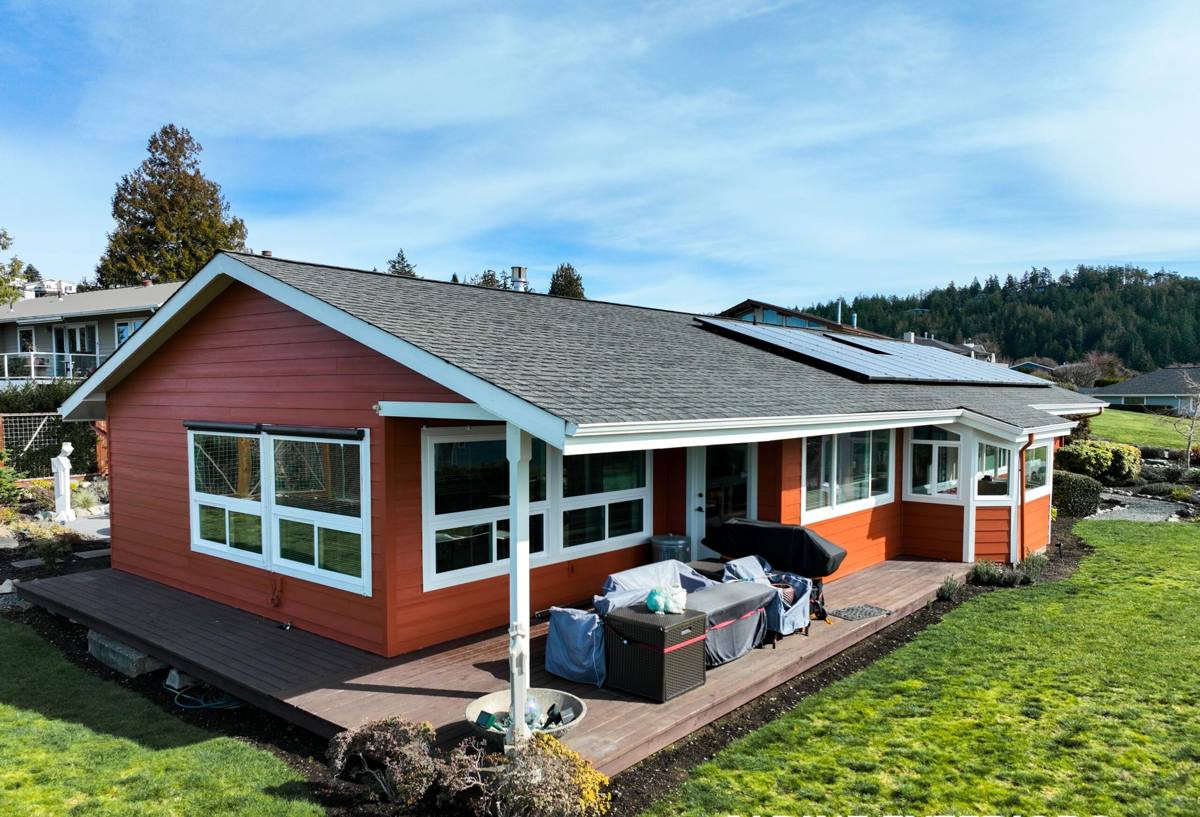
What Salt Air, Driving Rain, and Moss Actually Do to Siding
Salt Air
Airborne salt from Puget Sound doesn't just sit on the surface of siding — it works into fasteners, trim joints, and any exposed edge where the factory finish has been compromised. Over time it accelerates corrosion on metal components (nails, flashing, trim fasteners) and can degrade paint and coatings that aren't rated for coastal exposure. Homes closer to the water feel this more, but Riverside is close enough that it's a real factor, not a theoretical one.
Driving Rain
Everett's winter storms often bring rain at an angle, not straight down. That matters because siding isn't just a decorative skin — it's the first line of a water management system that has to shed wind-driven rain rather than absorb it. Poorly lapped panels, undersized gaps at trim, or missing flashing details let driving rain find its way behind the siding, where it can sit against sheathing and framing for months before anyone notices a problem.
Moss and Sustained Moisture
Snohomish County's long, wet stretch from fall through spring keeps exterior surfaces damp for extended periods, which is exactly what moss and algae need to establish. Moss holds moisture directly against siding, shaded and north-facing walls especially, which keeps the material wetter for longer than it would otherwise be and speeds up wear on anything that isn't dimensionally stable or properly finished.
None of these three factors is dramatic on its own. Together, and repeated every year for decades, they're why some siding jobs in Riverside look tired at year twelve and others still look sharp at year thirty. The difference almost always traces back to the material and the installation, not bad luck.
Why We Only Install James Hardie Fiber Cement Here
We made a decision as a company to install James Hardie fiber cement siding exclusively — not vinyl, not LP SmartSide, not primed wood, not other fiber cement brands. That's not a marketing position, it's a practical one based on what holds up in exactly the conditions Riverside deals with.
Fiber cement is non-combustible, dimensionally stable in wet climates, and doesn't rely on paint alone to resist moisture the way wood-based products do. James Hardie's ColorPlus factory finish is baked on under controlled conditions and backed by a real finish warranty, which matters in an area where field-applied paint gets tested hard by driving rain and prolonged damp. Hardie's HZ5 product line is engineered specifically for climates with heavy moisture and freeze-thaw cycling, which describes western Washington well. We'd rather install one product correctly and stand behind it than offer a menu of options with different long-term outcomes.
What Correct Siding Installation Involves
The material is only half the equation. Fiber cement siding installed poorly will still fail in this climate — usually not by rotting like wood, but by letting water get behind it through gaps, bad flashing, or fasteners that were never sealed correctly. A correct install includes:
- A properly lapped weather-resistive barrier (house wrap) installed shingle-style so water sheds outward, not into the wall
- Correct flashing at every window, door, and roofline intersection — this is where most water intrusion actually starts
- Manufacturer-specified nailing patterns and fastener spacing, with fasteners driven flush, not overdriven
- Proper clearance between siding and grade, decks, and roof lines to prevent wicking and splash-back
- Correctly sized gaps and sealed joints at trim, corners, and penetrations, using sealants rated for the exposure
- Panel and plank orientation and overlap that matches Hardie's installation specifications for the specific product line used
Skip any one of these and you've compromised the whole system, no matter how good the siding itself is. This is also why a warranty is only as good as the installation behind it — Hardie's product warranty assumes installation to spec, and a crew that cuts corners can quietly void protection the homeowner thinks they still have.
Our Process for a Riverside Siding Installation
1. On-Site Assessment
We look at the existing siding, sheathing condition, trim, and any signs of past moisture intrusion — especially around windows, roof transitions, and grade-level areas where Riverside homes tend to see the most exposure.
2. Tear-Off and Sheathing Check
Old siding comes off and we inspect the sheathing underneath. Any soft, water-damaged, or compromised sheathing gets addressed before anything new goes on — installing new siding over damaged sheathing just hides the problem instead of fixing it.
3. Weather Barrier and Flashing
This is the step that determines whether the house stays dry for the next 30 years. We install the weather-resistive barrier and flashing details to shed driving rain correctly, paying particular attention to window and door openings.
4. Hardie Installation
Panels or planks go on per James Hardie's specifications — correct fastener type and spacing, correct gaps, correct overlap. We match the product line (lap siding, panel systems, or trim) to what suits the home and how it's exposed to weather.
5. Finish and Walkthrough
Trim, caulking, and touch-up work get finished out, and we walk the exterior with the homeowner to review the work before calling the job complete.
Signs a Riverside Home's Siding Needs Replacing
Homeowners often wait too long because the damage that matters is happening behind the siding, not on the surface. Watch for:
- Soft or spongy spots when you press on siding, especially near the bottom courses or under windows
- Visible moss or persistent green staining that keeps returning after cleaning
- Paint that's peeling, bubbling, or failing faster than a normal repaint cycle would suggest
- Gaps opening up at seams, corners, or trim that weren't there a few years ago
- Warping, cupping, or visible separation between siding courses
- A musty smell or visible staining on interior walls that back up to exterior siding
Any one of these on its own might be minor. Several together, particularly on a home that's had the original siding for two or more decades, usually means it's time for a real assessment rather than another round of caulk and paint.
Cost Factors for a Riverside Siding Project
Every home is different, but the same variables drive cost on most Riverside projects. This isn't a quote — it's a guide to what actually moves the number up or down.
| Factor | Why It Matters |
|---|---|
| Sheathing condition | Water-damaged sheathing found during tear-off adds repair work before new siding can go on |
| Home size and complexity | More corners, dormers, and roof transitions mean more flashing and trim detail work |
| Siding profile chosen | Lap siding, shingle-style panels, and trim combinations vary in material and labor |
| Height and access | Multi-story sections and tight side yards near property lines slow the work |
| Trim and detail scope | Window trim, corner boards, and fascia work add to both material and labor time |
| Tear-off vs. new construction | Removing and disposing of old siding is additional labor a fresh build doesn't require |
What to Look for in a Crew Working in Riverside
Siding installation quality varies a lot between crews, and the mistakes aren't visible until water finds them years later. A few things worth checking before you hire anyone:
- Ask specifically what weather barrier and flashing details they use — a vague answer is a red flag
- Confirm they're a factory-trained or certified installer for the specific product they're proposing
- Ask how they handle window and door flashing, since that's where most failures start
- Find out whether they've worked in this specific area and understand the salt air and moisture exposure here
- Get clarity on what's covered by the manufacturer's product warranty versus the installer's workmanship warranty
- Ask what happens if they find damaged sheathing during tear-off, and how that's communicated and priced
A crew that's done real work in Riverside and similar Everett neighborhoods will have straight answers to all of this without hesitation. That local, repeat experience with the same climate conditions is worth more than a low bid from a crew that hasn't worked this side of the county.
Caring for New Siding After Installation
Correctly installed James Hardie siding is low-maintenance, but "low" isn't "none," especially in a moss-prone climate. A periodic gentle wash to keep moss and algae from establishing, keeping gutters clear so water isn't overflowing onto siding below, and an occasional visual check of caulking at trim and penetrations will keep the system performing the way it's designed to for decades. None of this requires repainting on any regular schedule the way wood siding does, which is part of why the ColorPlus finish holds up well against this area's weather.
If your Riverside home's siding is showing its age, or you're planning new construction and want it done right from the start, we're happy to take a look and give you an honest, no-pressure assessment. There's a free estimate form right below — we'll walk the exterior with you and tell you straight what we see.