 Everett
 Why Riverside Homes Wear Out Siding Faster Than You'd Expect
Riverside sits within Everett's stretch of Snohomish County, where homes take a steady beating from three things at once: salt-laden air moving in off Puget Sound, long stretches of driving rain that push moisture sideways into wall assemblies, and a moss season that can run eight months or longer in shaded, damp yards. Individually, each of these is manageable. Together, they shorten the useful life of siding that wasn't built or installed for this climate.
Salt air is corrosive to fasteners and finishes over time. Driving rain finds every gap, seam, and under-lapped joint, and it doesn't take much water intrusion behind siding to start rotting sheathing or growing mold before anyone notices from the curb. And moss doesn't just look bad — it holds moisture against the surface of the siding for weeks at a time, which is exactly the condition that causes the most damage to materials that aren't dimensionally stable or properly sealed.
If your Riverside home has siding that's cupping, soft to the touch, staining dark at the seams, or growing moss in the same spots every year, that's not cosmetic — it's a sign the wall assembly is losing the fight with the climate.
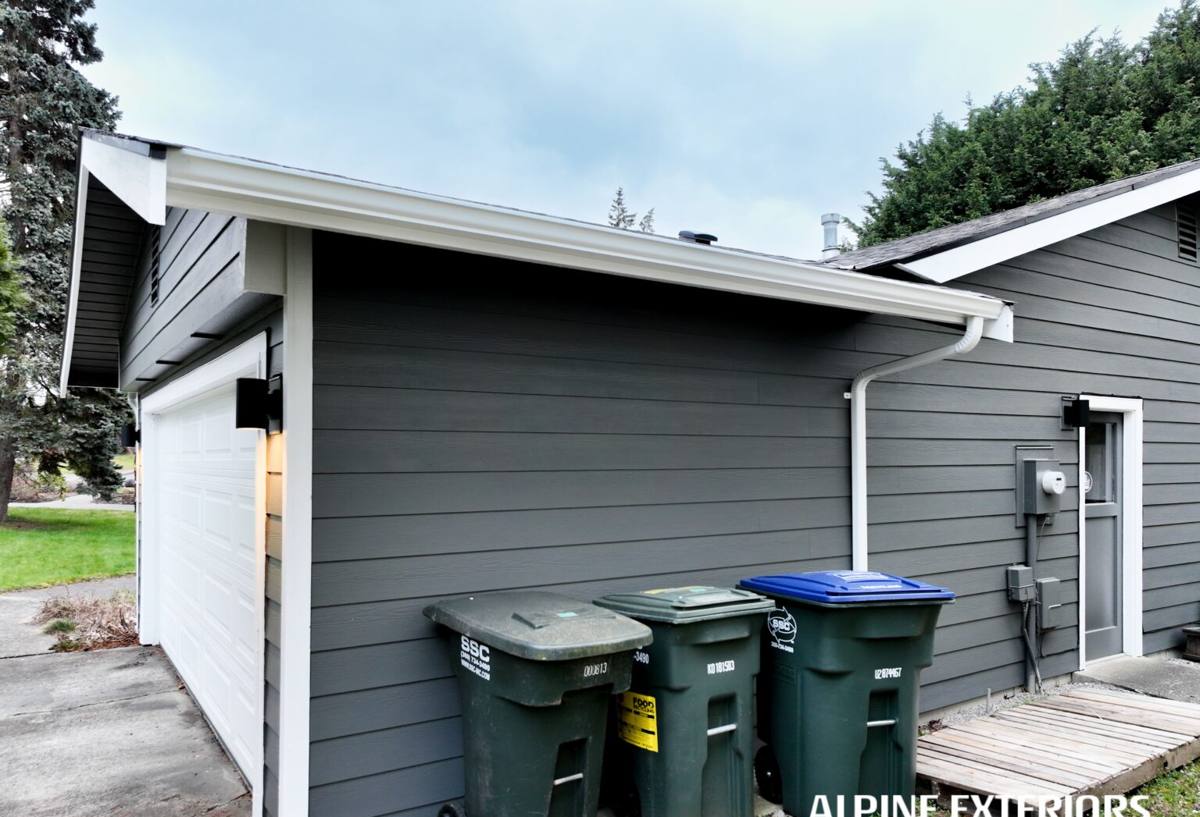
What "Correct" Siding Replacement Actually Involves Here
A siding replacement job done right in this part of Snohomish County isn't just pulling off old boards and nailing up new ones. The work that actually matters happens in layers most people never see once the job is finished.
Tear-Off and Inspection
Removing the old siding is also the only real chance to inspect the sheathing and framing underneath. In a climate with this much sustained rain, it's common to find soft or discolored sheathing around windows, at corners, or near ground level — areas where water has been getting in slowly for years. Any of that needs to be cut out and replaced before new siding goes on, not covered up.
Weather-Resistive Barrier and Flashing
A new weather-resistive barrier (house wrap) should go on correctly lapped, shingle-style, so water sheds downward and outward rather than working its way behind the barrier. Flashing at windows, doors, and any roof-to-wall transitions matters more here than in drier climates, because driving rain hits these transitions at an angle, not just straight down.
Rainscreen Gap
A drainage gap between the siding and the weather barrier lets any moisture that does get past the surface dry out instead of sitting against the wall. In a region with this much annual rainfall and humidity, this detail is one of the biggest differences between siding that lasts and siding that fails early.
The Siding Itself
Only after those layers are right does the visible siding go on — and the material choice matters as much as the installation.
Why We Install Only James Hardie Fiber Cement
We standardized on James Hardie siding for every job we do, including replacements in Riverside, because it's engineered for exactly the conditions this area throws at a house.
- Non-combustible: fiber cement doesn't burn, which matters for insurance and peace of mind alike.
- Moisture-resistant by design: Hardie's fiber cement doesn't swell, rot, or delaminate the way wood-based products can when they take on repeated moisture.
- ColorPlus factory finish: baked-on finish resists fading and chalking better than field-applied paint, and touches up cleanly if it's ever damaged.
- HZ5 and climate-engineered product lines: Hardie makes versions of its siding formulated for specific climate zones, including wetter, cooler regions like ours.
- Strong transferable warranty: a long manufacturer warranty that can transfer to the next owner, which matters if you sell within a decade or two of installing.
We don't install LP SmartSide, vinyl, Cemplank, Allura, primed spruce, or cedar. That's not because those products have no merit — it's because after years of doing this work in Snohomish County's climate, fiber cement from Hardie has consistently been the product that holds up with the least callback and the fewest long-term surprises for the homeowner. Vinyl can warp and fade and doesn't stop moss the way a solid fiber cement surface does. Wood-based and engineered wood products need more diligent maintenance to keep water out of their edges — maintenance that's easy to fall behind on when moss season runs most of the year. We'd rather install one product very well than several products with mixed confidence.
Moss, Algae, and Siding: What Actually Helps
No siding material is moss-proof — moss grows on the surface film of moisture and organic debris, not inside the material itself. But some siding resists it better than others. Fiber cement's dense, hard surface doesn't hold moisture the way a porous or fibrous surface can, and it doesn't provide the same foothold for spores to establish. Combined with a rainscreen gap that lets the wall breathe and dry, this meaningfully reduces how often moss becomes a chronic problem on shaded sides of a house.
Trim overhanging branches where you can, keep gutters clear so runoff doesn't sheet down the siding face, and rinse shaded north- and west-facing walls occasionally. These small habits extend the life of any siding, Hardie included.
Comparing Siding Options for a Riverside Home
| Factor | James Hardie Fiber Cement | Vinyl | Wood/Engineered Wood |
|---|---|---|---|
| Moisture resistance | High — dimensionally stable, doesn't rot | Won't rot, but can warp and gap at seams | Vulnerable at cut edges and joints |
| Fire rating | Non-combustible | Combustible, can melt/deform | Combustible |
| Finish longevity | Factory-baked ColorPlus finish | Color molded in, can fade/chalk | Needs repainting/resealing on a cycle |
| Moss/algae resistance | Dense surface, low uptake | Fair, but seams collect debris | Porous surfaces hold moisture longer |
| Maintenance | Low — occasional wash | Low, but repairs are visible | Higher — regular inspection and refinishing |
| Warranty | Long, transferable | Varies by manufacturer | Often limited or none on the wood itself |
Cost Factors for a Riverside Siding Replacement
Every home is different, so we won't quote a number without seeing the house, but the real cost drivers on a replacement job here are consistent:
- Extent of hidden damage: rot found during tear-off adds sheathing and framing repair before new siding can go on.
- Home size and complexity: more corners, gables, and trim details mean more cutting and labor.
- Siding profile: lap siding, shingle-style panels, and board-and-batten each price differently in material and install time.
- Access: tight side yards, second stories, and steep grades affect scaffolding and staging time.
- Trim and accessory work: fascia, soffits, and window trim replaced at the same time is more efficient than doing it later as a separate job.
Our Process for a Riverside Replacement
- On-site assessment: we walk the exterior, check for soft spots, staining, and moss patterns that point to trouble areas.
- Written scope and estimate: what's being replaced, what product and color, and a clear price before any work starts.
- Tear-off and sheathing inspection: old siding comes off, damaged sheathing is identified and replaced.
- Weather barrier, flashing, and rainscreen installation: the layers that actually keep water out long-term.
- Hardie siding installation: installed to manufacturer spec — proper fastening, clearances, and caulking.
- Final walkthrough: we review the finished work with you before calling the job done.
Why Hiring a Crew That Already Works in Riverside Matters
Siding installation instructions look the same on paper everywhere. What changes is how much margin for error a climate allows. A crew used to drier regions can get away with shortcuts on flashing details or rainscreen gaps for years before a problem shows up. In Everett's rain and salt air, those same shortcuts show up in one or two wet seasons — as staining, soft spots, or moss taking hold where it shouldn't. A crew that already works Riverside and the surrounding Snohomish County area has seen which details actually matter here and doesn't treat them as optional.
Local familiarity also means fewer surprises around permitting, typical lot conditions, and the kind of moisture patterns specific to homes near the water.
Signs It's Time to Replace, Not Repair
- Siding that's soft, spongy, or crumbles when pressed
- Persistent moss or algae that returns within weeks of cleaning
- Visible cupping, warping, or gaps at seams
- Paint or finish failing across large sections rather than isolated spots
- Rising energy bills with no other explanation, suggesting compromised insulation behind the siding
- Interior signs like musty smells or staining on walls that share an exterior wall with damaged siding
If you're seeing more than one of these, a replacement is usually more cost-effective than continuing to patch a wall assembly that's already losing the battle with moisture.
If your Riverside home is showing any of these signs, we're happy to take a look and give you a straightforward, no-pressure estimate — no obligation, just an honest read on what your siding actually needs.