 Everett
 Window Replacement Built for Riverside's Weather, Not Just Any Weather
Riverside sits close enough to the water and the Snohomish River corridor that its homes take a different kind of beating than a house twenty miles inland. Salt-laden air off Puget Sound corrodes hardware and finishes faster than manufacturers' warranty language usually accounts for. Driving rain, pushed sideways by wind off the water, finds its way into gaps that would stay dry in a calmer climate. And the long, damp moss season that Snohomish County lives with for a good chunk of the year keeps everything — siding, trim, window sills — wet longer than it should be. A window replacement here isn't just a cosmetic upgrade. It's a decision about how well your home sheds water and resists rot for the next twenty-plus years.
We work in Riverside regularly, which means we're not guessing at what the neighborhood's housing stock looks like or how it was originally built. That familiarity changes how we approach an estimate, what we check before we quote a price, and how we sequence the actual install.
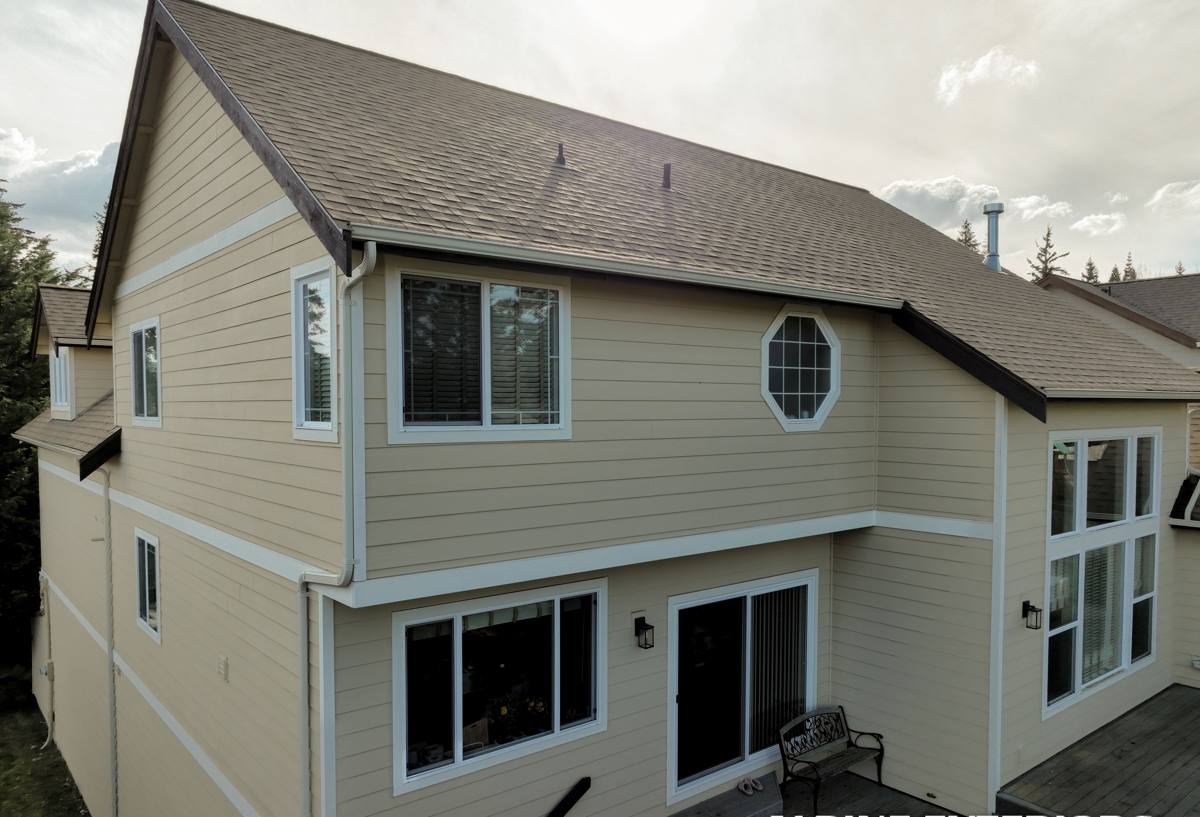
What Puget Sound Weather Actually Does to Old Windows
Before talking about replacement, it's worth understanding what's failing and why. Older aluminum-frame and early vinyl windows in this area tend to show the same handful of problems:
- Condensation trapped between panes, meaning the seal has failed and the insulating gas argon or air gap is gone
- Soft or discolored wood at the sill and jamb from years of moisture wicking in around a failed perimeter seal
- Corroded or stiff hardware — latches and rollers — from prolonged exposure to salt air
- Moss or algae staining on exterior trim right at the window head, a sign water is sitting instead of draining
- Drafts you can feel with a hand near the frame on a windy day, especially on walls facing the water or open exposure
None of these are dramatic on their own. But stacked together over a decade or two of Everett's wet season, they add up to real heat loss, real wood damage behind the wall, and windows that are more work to open and close than they should be.
Why Moss Season Matters More Than People Think
Snohomish County's moss season isn't just a roof problem. Any horizontal or near-horizontal surface — window sills, sloped trim, the top of a window head flashing — stays damp for months at a stretch. If the original flashing detail was ever marginal, that extended wet period is exactly when a small gap turns into a slow leak. We see it most on north- and west-facing exposures in Riverside, where sun exposure is lowest and surfaces dry out the slowest.
Signs It's Time to Replace, Not Just Repair
Not every window problem calls for full replacement. Sometimes a failed seal or worn weatherstripping can be addressed on its own. But there's a point where repair stops making financial sense. Watch for:
- Fogging or moisture between panes on more than one window — a sign the whole batch is reaching end of life together
- Visible wood rot at the sill, jamb, or the framing just below the window
- Windows that are painted shut or won't latch securely, which is both an energy and a safety issue
- Single-pane or early dual-pane units original to a home built before energy codes tightened up
- A noticeable draft or cold spot near the window even with it fully closed
- Exterior trim around the window that's soft, cracked, or showing consistent moss growth
If you're only seeing one or two of these on an otherwise sound window, a repair or resealing may buy you more years. If you're seeing several across the house, replacement is usually the more economical path once you account for the labor of repeated repairs.
What a Correct Window Replacement Job Actually Involves
The window itself is only part of the job. Most of the long-term performance — the part that determines whether you're dealing with the same rot problem again in eight years — comes down to how the opening is prepared and flashed.
Removal and Inspection
We remove the old unit carefully and inspect the rough opening before anything new goes in. This is the point where hidden water damage shows up — soft sheathing, rotted framing, or old flashing tape that's failed. It has to be addressed here, not covered over, or the new window inherits the old problem.
Flashing and Weatherproofing
This is the step that matters most in a climate like ours. Proper flashing means water that gets behind the siding or trim is directed back out, not into the wall cavity. That includes sill pan flashing, correctly lapped water-resistive barrier at the sides and head, and sealant used only where it belongs — sealant is a backup to good flashing, not a substitute for it.
Setting and Shimming the Unit
A window that's out of square or improperly shimmed will bind, won't seal evenly, and will stress the frame over time. We check level, plumb, and square before final fastening, not just at first placement.
Insulation and Interior Finish
The gap between the window frame and rough opening gets filled with a low-expansion foam or backer rod and sealant — never packed tight with fiberglass, which doesn't stop air movement the way people assume it does. Interior trim and exterior cladding are then reset or replaced to match.
Choosing the Right Window Type for a Riverside Home
Frame material and glass package both matter more here than in a drier, calmer climate. The table below reflects the trade-offs we walk homeowners through most often.
| Frame Material | Salt Air / Coastal Exposure | Maintenance | Typical Trade-Off |
|---|---|---|---|
| Vinyl | Handles salt air well; won't corrode or rust | Low — no painting, occasional cleaning | Best value; frame color choices are more limited than paint |
| Fiberglass | Very good; dimensionally stable in temperature swings | Low to moderate | Higher upfront cost, longer expected service life |
| Wood-clad | Cladding protects exterior, but any breach exposes wood to rot | Higher — cladding seams and interior wood need monitoring | Best interior appearance; more installation-sensitive in wet climates |
| Aluminum | Poor in salt air without upgraded coatings; prone to corrosion | Moderate | We generally steer homeowners away from bare aluminum this close to the water |
Our standard recommendation for most Riverside homes is a quality vinyl or fiberglass window with a dual-pane, low-E glass package. Wood-clad units can look excellent and we'll install them when a homeowner wants that look, but we're upfront that they demand more attention to installation detail and more long-term upkeep in a climate this wet — the cladding has to stay intact for the wood underneath to stay protected.
Glass Package Considerations
Low-E coatings and argon-filled dual-pane glass are the baseline we recommend for this area — they cut heat loss and reduce condensation on the interior glass surface during cold, damp mornings. Triple-pane is available and does offer a further step up in insulation and sound control, but for most homes here the added cost doesn't pencil out compared to a well-installed dual-pane low-E unit; we'll discuss it if you're building near a busier road or want the extra performance.
Our Process, Start to Finish
- On-site assessment — we look at each window individually, not just the house as a whole, since exposure varies wall to wall
- Written estimate — clear pricing by window, with options laid out rather than a single take-it-or-leave-it number
- Scheduling — we plan install timing around weather windows where possible, since a dry stretch makes for a cleaner, safer install
- Removal and opening prep — old units out, rough opening inspected and repaired if needed
- Flashing and installation — set, sealed, and insulated to code and to our own standard, not just the minimum
- Interior and exterior finish work — trim reset, caulking finished, site cleaned up
- Final walkthrough — we test operation on every window with you before calling the job done
What Affects the Cost of a Window Replacement in Riverside
There's no single number that applies to every home, but the factors that move the price are consistent from job to job.
| Factor | Why It Matters |
|---|---|
| Number and size of openings | Larger or more numerous windows mean more material and labor |
| Frame material chosen | Vinyl, fiberglass, and wood-clad carry different unit costs |
| Condition of the rough opening | Rot or water damage found during removal adds repair time before the new window can go in |
| Access and height | Second-story or hard-to-reach windows take more setup time |
| Existing exterior cladding | Matching or patching siding around the new unit affects finish labor |
| Custom sizes or shapes | Anything outside standard sizing is special-order and priced accordingly |
We give a firm, itemized number after the on-site look — not a phone estimate — because the rough opening condition alone can shift the scope once we're actually into the wall.
Why It Matters That We Already Work in Riverside
A crew that's worked this neighborhood knows the general housing stock and construction era, which speeds up diagnosing what's original versus what's been altered over the years. We're also familiar with how the City of Everett and Snohomish County handle permitting on window replacement work, which keeps the paperwork side from slowing down your project. And because we're local, warranty follow-up or a callback question isn't a scheduling headache months down the line — we're not driving in from out of the area to take care of it.
None of that replaces careful workmanship on any individual job, but it does mean fewer surprises and a faster, more accurate estimate from the first visit.
Keeping New Windows Performing Through Everett's Wet Season
A correctly installed window shouldn't need much attention, but a little seasonal care extends its life:
- Clear moss or debris from sills and tracks before it holds moisture against the frame
- Check exterior caulking annually for cracking or gaps, especially after a hard winter
- Operate every window at least a few times a year so hardware doesn't seize up from disuse
- Keep gutters and downspouts clear so roof runoff isn't sheeting down across upper-story windows
If you're noticing drafts, fogged glass, soft trim, or windows that are simply getting harder to use, it's worth having them looked at before the next wet season sets in. We're happy to come out, take a straightforward look at your windows, and put together a free, no-pressure estimate — use the form below to get started.