 Everett
 Roof Repair in Lake Stevens: What the Local Climate Actually Demands
Lake Stevens sits a few miles inland from Puget Sound, but the roofs here take the same beating as the rest of Snohomish County. The marine air that moves in off the Sound carries salt and moisture well past the shoreline, and it settles into every valley, vent boot, and nail head on a roof. Add the tree cover around the lake and the surrounding residential streets, and you get long stretches of shade that never quite dry out between storms. That combination — salt-laden air, driving rain that comes in sideways during a winter blow, and a moss season that can run from fall through spring — is exactly what wears down a roof faster than the manufacturer's spec sheet ever accounts for.
A roof repair here isn't the same job as a roof repair in a dry inland climate. The materials, the flashing details, and the sequencing all have to account for a roof that rarely gets a full day to dry out before the next system rolls through. That's the lens we bring to every repair call in Lake Stevens.
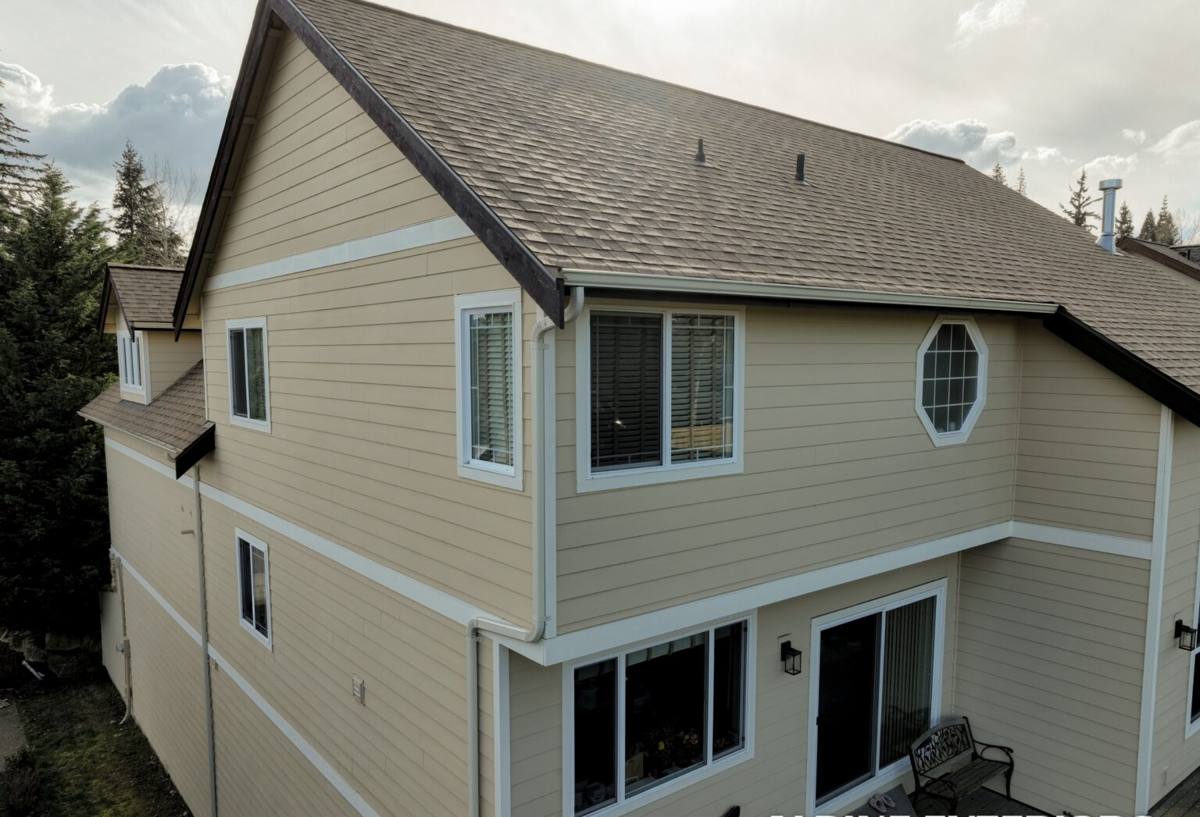
How Moss and Driving Rain Actually Damage a Roof
Homeowners often assume moss is a cosmetic problem. It isn't. Moss holds water against the shingle surface long after the rest of the roof has dried, which softens the mat, breaks down granule adhesion, and can lift shingle edges just enough for wind-driven rain to get underneath. Once rain is driving sideways — which happens regularly during Snohomish County's winter storms — water doesn't need a big opening to find its way in. It needs capillary action and a lifted edge, and moss provides both.
Driving rain also exposes weaknesses that a light, straight-down rain never would. Flashing around chimneys, skylights, and roof-to-wall transitions can look fine in dry weather and still leak the moment wind pushes water uphill under a shingle course. This is why a lot of Lake Stevens leak calls happen during or right after a big windstorm — the roof was already compromised, but it took a sideways rain event to prove it.
Where we see the most damage
In practice, the failure points repeat themselves from house to house:
- North-facing and heavily shaded slopes, where moss and moisture linger longest
- Valleys, where two roof planes meet and water volume concentrates
- Chimney and skylight flashing, where metal meets shingle and seals age unevenly
- Roof-to-wall step flashing, especially on additions or dormers
- Pipe boots and vent collars, where rubber gaskets crack years before the shingles around them fail
Warning Signs a Lake Stevens Homeowner Shouldn't Ignore
- Visible moss or dark streaking on the roof surface, especially on shaded sections
- Granules collecting in gutters or at downspout outlets after a storm
- Curling, cupping, or lifted shingle edges you can see from the ground
- Water stains or discoloration on interior ceilings or upper walls
- Daylight visible through the roof deck when you look up in the attic
- Soft or spongy spots when walking the roof deck (a sign for a professional, not a DIY check)
- Rusting, lifted, or separated flashing around chimneys and vents
What a Correct Roof Repair Actually Involves
A lasting repair starts with figuring out where water is actually entering, which is not always where the stain shows up inside. Water can travel along rafters or sheathing seams before it drips somewhere visible, so a repair that just patches the spot on the ceiling below often misses the real entry point entirely. Our process starts on the roof, not in the attic ceiling.
Once we've traced the source, a proper repair typically includes:
- Removing the damaged shingles and any surrounding material affected by moisture
- Inspecting the decking underneath for soft spots, delamination, or rot before anything new goes down
- Replacing or re-sealing flashing rather than just caulking over it — caulk is a stopgap, not a repair
- Matching shingle color and style as closely as the existing roof allows
- Re-sealing pipe boots and vent collars with proper gaskets, not just tar
- Clearing moss and organic debris from the surrounding area so the repair isn't undermined again in a season
That last point matters more here than in drier regions. A technically correct patch surrounded by a moss-covered roof is a short-term fix — the moss will keep pushing moisture at the repair edges. We treat the surrounding area as part of the job, not a separate conversation.
Repair or Replace? How We Help You Decide
Not every roof problem in Lake Stevens calls for a full replacement, and not every leak is fixable with a patch. The honest answer depends on the roof's age, how widespread the damage is, and what condition the decking is in once we actually get eyes on it.
| Factor | Leans Toward Repair | Leans Toward Replacement |
|---|---|---|
| Roof age | Under 15–18 years, within expected shingle lifespan | Near or past manufacturer lifespan for the material |
| Extent of damage | Isolated to one section, flashing point, or slope | Spread across multiple slopes or recurring in several spots |
| Decking condition | Solid, dry sheathing under the damaged area | Soft, delaminated, or rotted sheathing found during tear-off |
| Moss history | First occurrence, manageable with treatment | Chronic moss buildup that keeps returning after cleaning |
| Shingle condition elsewhere | Rest of the roof still granule-intact and flexible | Widespread curling, cracking, or granule loss |
We'll tell you plainly if a repair is throwing money at a roof that's near the end of its life — and just as plainly if a full replacement isn't necessary yet. That call should be based on what we find on your roof, not on which job is bigger for us.
What Drives the Cost of a Roof Repair
We don't quote prices sight unseen, because two roofs with the same visible symptom can require very different work once we're actually up there. What we can tell you is what moves the cost up or down, so you know what to expect before we give you a number.
| Cost Factor | Why It Matters |
|---|---|
| Roof pitch and access | Steeper slopes and harder-to-reach areas take longer and require more safety setup |
| Number of repair locations | One flashing repair is a different job than three separate leak points |
| Decking condition | Rotted sheathing found under the shingles adds material and labor beyond the original scope |
| Material matching | Discontinued shingle lines or uncommon colors can take longer to source |
| Moss and debris removal | Heavy buildup adds cleaning time before any actual repair work can start |
| Weather window | Winter scheduling around Snohomish County's wet stretches can affect timing more than price |
Most isolated repairs are a modest expense compared to replacement — but the range is genuinely wide, which is why we inspect before we quote rather than guessing over the phone.
Our Roof Repair Process
- Inspection. We get on the roof (not just a look from the ground) and check the attic side where accessible, since that's often where the real story is.
- Diagnosis. We trace the leak to its actual source and check the decking condition before proposing a scope of work.
- Written scope. You get a clear explanation of what we found and what we recommend — repair, and what that repair includes, or a straight answer if replacement makes more sense.
- The repair. Damaged material out, decking checked and addressed if needed, new material and flashing in, matched as closely as possible to your existing roof.
- Cleanup and check. Debris and old material cleared, gutters checked near the repair area, and a final walk-through so you know exactly what was done.
Why a Crew That Already Works Lake Stevens Matters
Roofing crews that only pass through the area occasionally don't have a feel for which slopes in this part of Snohomish County hold moss the longest, or how a given roof design tends to handle a hard winter blow off the Sound. That's not a knock on any particular contractor — it's just what comes from being local. A crew that regularly works Lake Stevens and the surrounding Everett-area neighborhoods has seen the same tree cover, the same drainage patterns, and the same shingle brands installed across the local housing stock for years.
There's a practical warranty angle too. If a repair needs a follow-up visit, a local crew can get back out to your roof quickly rather than scheduling around a long drive. That matters in a climate where a small unresolved leak can turn into a decking problem over one wet season.
Questions worth asking any roofer before you hire them for a repair
- Are you licensed and insured to work in Washington, and can you provide proof?
- Will you inspect the decking, or just replace the visible shingles?
- How do you handle moss removal as part of the repair, not as a separate upsell?
- What's your plan if you find rot once the old material comes off?
- Do you warranty the repair, and for how long?
Maintenance Between Repairs
A repair holds up longer when the rest of the roof is kept in reasonable condition. Keeping gutters clear so water doesn't back up under the roof edge, trimming back branches that keep a section of roof shaded and damp, and having moss treated before it spreads are all things that reduce how often you need a repair call in the first place. None of it replaces a professional inspection, but it buys time between them — which matters in a climate that doesn't give a roof much of a break.
If you're dealing with a leak, moss buildup, or storm damage on a Lake Stevens roof, we're happy to take a look and give you a straight assessment. The estimate is free, there's no pressure to sign anything on the spot, and you'll get a clear answer about what your roof actually needs. Use the form below to get in touch.