 Everett
 Why Roofs in Delta Wear the Way They Do
Delta sits close enough to the water that salt-laden air is a constant, low-grade stress on every exposed metal component on a roof — nails, flashing, vent caps, gutter hardware. On its own, salt air isn't dramatic. Over ten or fifteen years, though, it accelerates corrosion on anything that isn't rated for coastal exposure, and a roof is only as good as its weakest fastener or flashing seam.
Add in Snohomish County's driving rain — wind-blown, not just straight-down — and you get water finding its way sideways under shingle tabs, around chimney flashing, and into valleys that weren't detailed correctly the first time. Then there's moss. Delta's tree cover and the long stretch of wet, mild months mean moss doesn't just grow on north-facing slopes; it works its way under shingle edges, holds moisture against the roof deck, and lifts material over time. A roof built for a drier climate, or built without these three things in mind, ages faster here than the same product would somewhere inland.
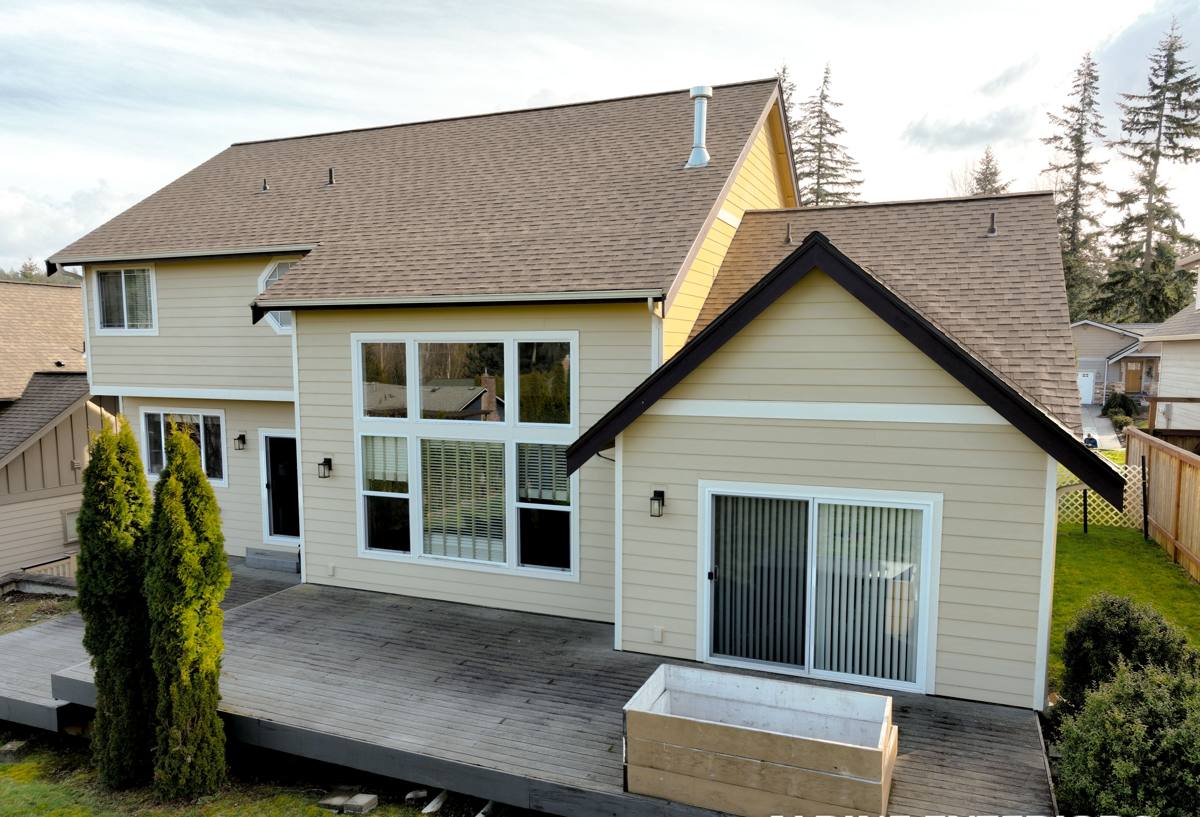
Signs a Delta Home Needs Replacement, Not Another Repair
Not every roof problem calls for a full tear-off. But there's a point where patching becomes a losing game — you're spending money to delay the inevitable instead of fixing it. Here's what tells us a roof is past the repair stage:
- Granule loss heavy enough that you're finding shingle grit in the gutters every time it rains
- Shingles that are curling, cupping, or cracking across multiple sections of the roof, not just one spot
- Moss established thick enough that it's lifted shingle edges rather than just sitting on the surface
- Soft or spongy decking felt underfoot during inspection, or daylight visible from the attic
- Repeated leaks in different spots each season, rather than one recurring failure point
- A roof at or past 20-25 years old (asphalt) with no major work done in that time
- Flashing around chimneys, skylights, or vents that's visibly corroded or separating from the surface
If you're seeing one or two of these, a repair might still make sense. If you're seeing several at once, replacement is usually the more honest recommendation, and we'll tell you that directly rather than stringing out repairs.
What a Correct Roof Replacement Actually Involves
A roof replacement is more than swapping old shingles for new ones. The parts you don't see are what determine whether the roof holds up through a Snohomish County winter or starts leaking in year three.
Tear-Off and Deck Inspection
We remove the existing roofing down to the deck rather than layering over it. That's the only way to actually see the plywood or OSB underneath — soft spots, rot around old flashing, or water staining that tells us where past leaks were happening. Any damaged decking gets replaced before anything new goes down; skipping this step is the single most common reason a new roof fails early.
Ice and Water Shield in the Right Places
Given how much wind-driven rain this area gets, we install self-adhering ice and water barrier at eaves, valleys, and around every roof penetration — chimneys, skylights, vent stacks. These are the spots where wind-blown rain and moss-driven moisture cause the most damage, and standard underlayment alone isn't enough protection there.
Flashing Done Properly
Flashing is where most roof leaks actually start, not in the field of the shingles themselves. Corrosion-resistant flashing, properly stepped and sealed at every wall intersection, chimney, and skylight, is non-negotiable — especially this close to salt air, where standard-grade metal flashing corrodes faster than it should.
Ventilation
A roof that traps heat and moisture in the attic will fail from the inside before the shingles ever wear out from the outside. We check and correct intake and exhaust ventilation as part of every replacement — it's what keeps moss growth, ice damming, and premature shingle aging in check over the life of the roof.
Choosing a Roofing Material for This Climate
There's no single "best" roofing material — the right choice depends on budget, how the home is shaded, and how much long-term maintenance a homeowner wants to take on. Here's how the common options actually compare for a home in Delta's conditions:
| Material | Moss/Algae Resistance | Typical Lifespan Here | Maintenance Load |
|---|---|---|---|
| Standard 3-tab asphalt | Low without treatment | 15-20 years | Moderate — moss removal needed periodically |
| Architectural (laminate) asphalt | Moderate; better with algae-resistant granules | 25-30 years | Low to moderate |
| Metal (standing seam) | High — sheds moss and debris well | 40-50+ years | Low |
| Cedar shake | Low unless well-maintained | 20-30 years with upkeep | High — requires regular treatment |
| Synthetic/composite shingle | High | 30-50 years | Low |
For most Delta homes, we recommend architectural asphalt with algae-resistant granules as the practical middle ground, or metal for homeowners planning to stay long-term and wanting to largely forget about moss maintenance. We're honest about the trade-offs of each — cedar shake looks great but demands upkeep in a climate this wet, and we'll say so rather than sell you on it and let you find out later.
Our Roof Replacement Process
- On-site inspection and estimate — we walk the roof (or use appropriate access for steep pitches), check the attic for ventilation and moisture issues, and give you a written estimate with no pressure to sign that day.
- Material selection — we go over the options above based on your budget, the home's shading and tree exposure, and how long you plan to stay in the house.
- Scheduling and permitting — we handle the permit filing with the relevant local jurisdiction before work starts.
- Tear-off and deck repair — old roofing comes off, decking is inspected, and any compromised sections are replaced.
- Underlayment, ice and water shield, and flashing — installed per the details above, not shortcut.
- New roofing material installed — per manufacturer specifications, which matters for keeping the material warranty valid.
- Ventilation check and final details — ridge and soffit ventilation confirmed, all penetrations sealed.
- Cleanup and walkthrough — magnetic sweep for nails, debris hauled off, and we walk the finished roof with you before calling the job done.
What Actually Drives the Cost
Roof replacement pricing varies enough between homes that a number quoted for one house down the street won't necessarily apply to yours. These are the factors that move the price:
| Factor | Why It Matters |
|---|---|
| Roof size and pitch | Steeper roofs take longer and require more safety setup |
| Number of layers to remove | Tearing off two layers of old shingles costs more than one |
| Decking condition | Rotted plywood/OSB found during tear-off adds material and labor |
| Material chosen | Asphalt, metal, and synthetic products span a wide price range |
| Roof complexity | Valleys, dormers, chimneys, and skylights all add flashing work |
| Access | Trees, tight lot lines, or difficult staging areas affect labor time |
We won't know your real number until we've actually seen the roof — anyone quoting a firm price over the phone without an inspection is guessing.
Why a Crew That Already Works in Delta Matters
A roofer who's worked this specific area knows which streets sit under heavy tree canopy and need extra attention to moss prevention, which homes are close enough to the water that we'll spec corrosion-resistant flashing and fasteners without being asked, and what wind exposure to plan for on an open lot versus a sheltered one. That local knowledge shows up in decisions you might not think to ask about — but it's the difference between a roof that's still performing in year twenty and one that's leaking by year eight.
It also means faster response if something goes wrong. A crew based in the area doesn't need to factor a long drive into an emergency tarp job during a fall storm, and we're not learning the local permitting process for the first time on your project.
Permits and Working in Everett Neighborhoods
Roof replacement typically requires a permit through the applicable local building department, and inspections are part of a legitimate job — it's not extra paperwork we're adding, it's how you confirm the work was done to code. We handle the permit application and coordinate inspections as part of the project so you're not the one chasing it down.
If your roof is showing its age or you just want an honest read on whether repair or replacement makes more sense for your home, we're happy to take a look. Fill out the form below for a free, no-pressure estimate — we'll walk the roof, tell you what we find, and give you a straight answer.