 Everett
 Deck Repair for Silver Lake's Lake-and-Woods Setting
Silver Lake sits in south Everett surrounded by mature trees and, of course, the lake itself — a combination that's beautiful to live around and hard on an exposed wood or composite deck. Between the tree canopy, the humidity that comes off the water, and the marine air that moves through this part of Snohomish County off Puget Sound, decks here take on moisture from more directions than a typical inland yard. A deck repair here isn't just "fix the board that's soft" — it's understanding why that board went soft in the first place and making sure the fix outlasts another wet Pacific Northwest winter.
We repair decks for homeowners around Silver Lake and the rest of Everett, and the pattern is consistent: the damage almost always starts at the parts of the deck that trap water or stay shaded longest, not the parts that get the most sun and airflow.
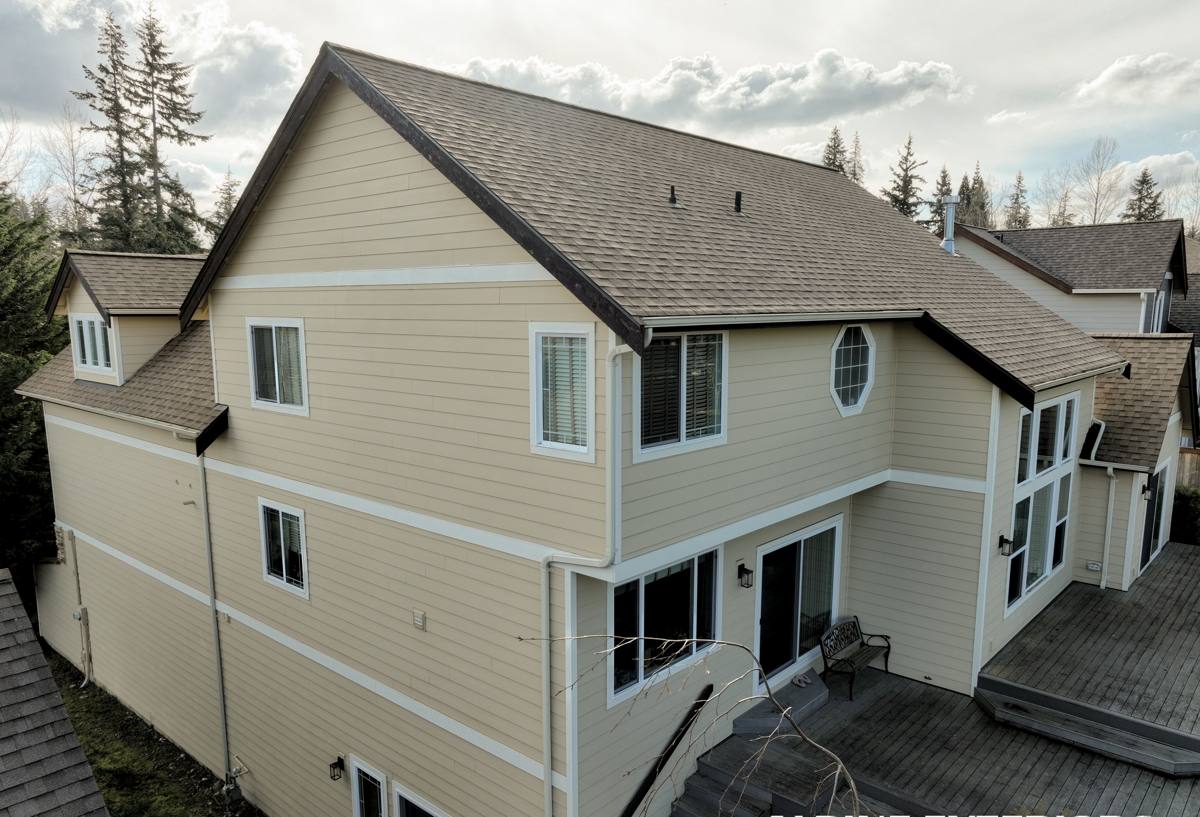
Why Decks Struggle in This Part of Everett
Three things drive most of the deck repair calls we get in this neighborhood:
Driving Rain and Standing Moisture
Everett gets a long, steady rainy season, and wind off the lake and the Sound can push rain sideways into areas a deck's own overhang would normally protect. Water gets driven under railings, into board gaps, and against the house where the deck ledger attaches — one of the most damage-prone spots on any deck in this climate.
A Long Moss and Algae Season
Shaded, tree-lined lots like many around Silver Lake stay damp for months at a time. Moss and algae don't just look bad on decking — they hold moisture directly against the wood surface and turn boards slick and slippery, which is a real fall hazard on stairs and ramps.
Salt-Tinged Marine Air
Everett's proximity to Puget Sound means the regional air carries a light salt content that speeds up corrosion on exposed metal — fasteners, joist hangers, railing brackets. A deck can look fine on the surface while the hardware holding it together is quietly rusting away underneath.
None of this means a deck around Silver Lake is doomed — it means the repair has to address moisture and hardware, not just the boards you can see.
Signs Your Deck Needs Repair, Not Just a Cleaning
A pressure wash and a coat of stain can make a tired deck look better without fixing what's actually wrong underneath. Before you resurface anything, it's worth checking for these:
- Boards that feel spongy, springy, or noticeably softer underfoot in one area
- Gaps opening up between boards, or boards visibly cupping or crowning
- Rust streaks running down from screws, bolts, or joist hangers
- Wobble or movement where the railing posts meet the deck frame
- Any looseness where the deck attaches to the house (the ledger board)
- Persistent green or black film that comes right back a few weeks after cleaning
- Stairs that feel less solid than they used to, or noticeably slick when wet
Any one of these on its own might be minor. A ledger board issue combined with rusted hardware, though, is a structural conversation, not a cosmetic one — and it's worth having a contractor look at the framing, not just the decking surface.
What a Correct Deck Repair Actually Involves
A repair that's done right starts underneath the deck, not on top of it. Here's what we check and address:
Framing and Structure
Joists, beams, and posts get inspected for rot, especially where they sit close to the ground or against damp soil. Any structural member showing decay gets sistered or replaced — patched-over rot doesn't stop spreading just because it's covered up.
The Ledger Connection
Where the deck bolts to the house is the single most important structural point on most decks, and it's also the spot most exposed to water running off the roof or siding. We check flashing, fastener condition, and whether water has been getting behind the ledger.
Fasteners and Hardware
Given the marine air in this area, we look closely at joist hangers, structural screws, and post connectors for corrosion. Undersized or rusted hardware gets replaced with fasteners rated for exterior, coastal-influenced conditions — this is a small cost that prevents a much bigger failure down the line.
Decking and Railings
Individual boards get replaced where they're soft, split, or badly cupped. Railings get re-secured or rebuilt if they've loosened, since a wobbly railing is a safety issue, not just an appearance one.
Moss and Surface Treatment
Once the structure and hardware are sound, we clean the deck properly and, where it makes sense, treat it to slow moss and algae regrowth — buying you more time between maintenance cycles.
Repair or Replace? How to Think About It
Not every damaged deck needs to come down. The honest answer usually comes down to how much of the frame is still sound versus how much of the damage is limited to the surface.
| Factor | Repair Usually Makes Sense | Replacement Usually Makes Sense |
|---|---|---|
| Framing condition | Joists and beams are solid, damage is localized | Rot has spread through multiple structural members |
| Ledger board | Attachment is sound, flashing just needs attention | Ledger is compromised or was never flashed correctly |
| Decking surface | Scattered boards are bad, rest are stable | Most boards show cupping, splitting, or soft spots |
| Age of the deck | Built within the last 10-15 years, well-built originally | Original construction is older or was undersized from the start |
| Budget goals | Want to extend life a number of years affordably | Want a long-term reset, possibly with a material change |
We'll always tell you plainly which category your deck falls into before we quote anything — including if that means a smaller repair than you expected, or a frank conversation about why a patch job isn't the better long-term move.
Our Deck Repair Process
- On-site inspection — we get under the deck, check framing, hardware, and the ledger connection, not just what's visible from above
- Honest scope and estimate — you get a clear breakdown of what's structural, what's cosmetic, and what's optional
- Structural repairs first — framing, ledger, and hardware issues get corrected before anything else
- Decking and railing work — damaged boards and railing components get replaced or resecured
- Cleaning and finish — surface treatment to address moss, algae, and weathering
- Final walkthrough — we go over what was done and what to watch for going forward
Material Choices: What We Use and Why
Most decks we repair around Silver Lake are pressure-treated lumber, sometimes with cedar accents, and a growing number of composite decks like Trex or TimberTech. Each has trade-offs worth knowing:
- Pressure-treated lumber — affordable and easy to spot-repair board by board, but needs regular sealing to hold up against this area's rain and moss season
- Cedar — naturally more rot-resistant and attractive, but softer and more prone to surface wear, and it still needs upkeep in a wet climate
- Composite decking — resists rot and doesn't need staining, but repairs mean matching board profiles and colors, and moisture problems can still develop in the framing underneath even when the surface looks fine
We repair all three. When a homeowner is deciding what to replace damaged sections with, we'll walk through the maintenance burden and moisture behavior of each option honestly rather than push whatever's easiest for us to install.
After the Repair: Keeping It That Way
A repaired deck around a shaded, lake-adjacent lot still needs some seasonal attention. A short annual routine goes a long way:
- Clear leaves and debris from between boards and off railings each fall
- Rinse or treat for moss before it gets established, especially on shaded sections
- Check fasteners and hardware for early rust once a year
- Reseal wood decking on the manufacturer's recommended schedule, not just when it looks dry
- Keep gutters and downspouts clear so roof runoff isn't draining onto the deck
Why a Crew That Already Works Silver Lake Matters
Deck problems in this neighborhood tend to look alike — moss buildup in the same shaded corners, corrosion on hardware from the same marine air, ledger issues from the same driving rain patterns. A crew that's already repaired decks around Silver Lake and the rest of Everett has seen those patterns enough times to know where to look first, instead of treating every job as a blank slate. That familiarity translates into a faster, more accurate inspection and a repair scope that addresses the actual cause of the damage, not just its symptoms.
If your deck around Silver Lake has soft spots, rust stains, or just feels less solid than it used to, we're happy to take a look and give you a straight answer on what it needs. Reach out for a free, no-pressure estimate using the form below.