 Everett
 Metal Roofing Built for Snohomish's Weather, Not Just Any Weather
Snohomish sits close enough to Puget Sound and the Snohomish River basin that homes here deal with a specific combination of punishment: salt-laden air moving in off the water, rain that comes in sideways during fall and winter storms, and a wet season long enough to grow a healthy crop of moss on anything that holds moisture. A metal roof that's correctly specified and installed for this environment can outlast two or three asphalt roofs. A metal roof that's installed the way it would be in a dry inland climate will show problems within a few years — usually at the fasteners, the flashing, or wherever moss has been allowed to sit.
This page is about what metal roofing actually needs to hold up on a Snohomish-area home, what a correct installation looks like, and how we approach the job when we're working in this specific corner of Snohomish County.
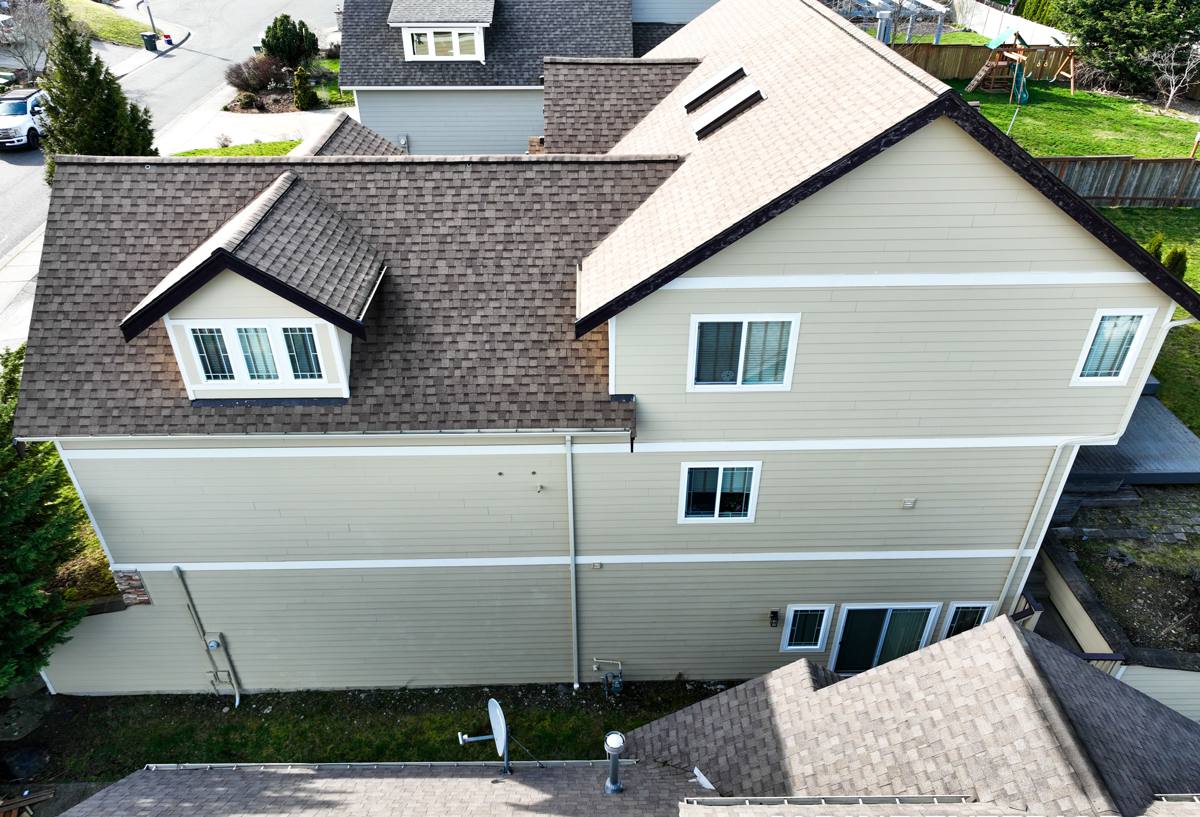
The Three Climate Factors That Drive Every Decision
Salt Air
Even well inland from the immediate shoreline, moisture carried off Puget Sound reaches homes throughout the Everett and Snohomish area. Salt in the air accelerates corrosion on any exposed metal fastener, cut edge, or scratch in a panel's protective coating. This is why fastener choice and coating quality matter more here than in a landlocked region — a fastener rated for general use can start rusting within a few seasons in this air, and a rust streak at a screw head is often the first visible sign that a roof was installed with the wrong hardware.
Driving Rain
Storms coming off the Sound don't just drop rain straight down — wind pushes it sideways and up under laps, flashing, and roof-to-wall transitions. A metal roof sheds water well when the water is falling normally, but wind-driven rain will find any gap in the underlayment, any short flashing lap, or any penetration that wasn't properly sealed. Most of the "metal roof leak" calls we see trace back to a detail around a chimney, skylight, or wall intersection, not the field panels themselves.
Long Moss Season
Between the tree cover common in and around Snohomish and the number of overcast, damp days each year, moss and algae have a long window to establish themselves on any roof surface that stays shaded and moist. On asphalt shingles moss roots into the granules and holds water against the roof deck. Metal doesn't give moss anything to root into, but moss and debris can still collect in valleys, at panel laps, and around fasteners if a roof isn't detailed and maintained with that in mind.
What a Correctly Installed Metal Roof Includes
"Metal roofing" isn't one product — it's a system, and every layer of that system has to be right for this climate, not just the visible panel on top.
- Underlayment: A synthetic, high-temperature, self-sealing underlayment beneath the metal — not the builder's-grade felt sometimes used under asphalt. This layer is the actual water barrier if wind-driven rain gets past the panels.
- Fasteners: Corrosion-resistant fasteners matched to the panel metal, with sealing washers rated for long-term exposure. Mixing incompatible metals (for example, the wrong fastener against certain panel coatings) can cause galvanic corrosion that eats the fastener from the inside out.
- Flashing and Underlayment at Penetrations: Every chimney, vent pipe, skylight curb, and wall transition needs flashing that's lapped correctly with the underlayment beneath it — not just caulked over the top. Caulk fails; properly lapped flashing doesn't depend on caulk to keep water out.
- Panel Seams and Laps: On standing seam roofs, the seam itself is mechanically locked, not just overlapped and screwed. On exposed-fastener panels, lap spacing and fastener pattern need to match the manufacturer's wind and water-shedding specifications.
- Ventilation: A metal roof over a poorly ventilated attic can trap condensation on the underside of the panels. Proper intake and exhaust ventilation keeps moisture from building up where you can't see it.
Standing Seam vs. Exposed-Fastener: Which Fits a Snohomish Home
Both systems are legitimate metal roofing products, but they behave differently in salt air and driving rain, and the right choice depends on the home, the roof pitch, and the budget.
| Factor | Standing Seam | Exposed-Fastener |
|---|---|---|
| Fastener exposure | Fasteners are concealed under the seam — no exposed screw heads for salt air to attack | Fasteners penetrate the panel face and are exposed to weather and salt air directly |
| Long-term maintenance | Very low — no gaskets to inspect or replace | Fastener washers/gaskets should be checked periodically and can need replacement over the roof's life |
| Upfront cost | Higher material and labor cost | Lower upfront cost |
| Typical best use | Primary roofs, homes near the water, longer ownership horizon | Secondary structures, shops, budget-driven projects |
| Appearance | Clean, unbroken panel lines | Visible fastener rows, ribbed panel look |
For a primary residence in Snohomish, we lean toward standing seam when the budget allows it, specifically because it removes exposed fasteners from the salt-air equation. That said, a well-installed exposed-fastener system with the right hardware is still a durable, honest option, and it's the right call for plenty of homeowners.
How We Approach a Metal Roofing Project in This Area
Assessment First
Before we talk panel style or color, we look at the roof deck condition, the existing ventilation, the roof's exposure to prevailing wind and rain direction, and any trouble spots — valleys, dormers, chimneys — where a Snohomish storm is most likely to test the installation.
Tear-Off or Overlay Decision
Metal can sometimes be installed over an existing roof with the right furring or underlayment system, but if the deck has moisture damage from a prior leak — which we do find on older roofs in this area — that gets addressed before anything new goes on. Covering a wet deck just hides the problem.
Installation
Underlayment, then panels, then flashing details, installed in the sequence and lap order that actually sheds wind-driven rain rather than just looking finished from the ground. We don't shortcut flashing details to save time — that's where most metal roof failures in this climate actually start.
Final Walkthrough
We walk the roof and the ground with the homeowner, point out any maintenance items (a valley that will collect debris, a shaded section prone to moss), and make sure there's a clear understanding of what upkeep, if any, the roof will need.
Maintenance That Actually Matters Here
Metal roofing is low-maintenance compared to asphalt, but "low-maintenance" doesn't mean "no maintenance" in a climate like this one. A short annual routine prevents almost all of the problems we get called out for.
- Clear debris and needles out of valleys and behind chimneys before fall rains start
- Check for moss or algae buildup in shaded areas and remove it gently — no pressure washing directly at seams or fasteners
- Look at exposed fasteners (on exposed-fastener panels) for early rust staining
- Confirm gutters are clear so water isn't backing up under the roof edge during heavy rain
- After any significant windstorm, a quick visual check for lifted flashing or panel edges
What Metal Roofing Costs Depend On
We won't quote a number without seeing the roof, but the factors that move the price are consistent from job to job.
| Factor | Effect on Cost |
|---|---|
| Panel system (exposed-fastener vs. standing seam) | Standing seam typically runs higher due to material and labor |
| Roof complexity (valleys, dormers, penetrations) | More cuts and flashing detail means more labor time |
| Deck condition | Repair or replacement of damaged decking adds cost before panels go on |
| Tear-off vs. overlay | Removing an old roof adds labor and disposal cost but is often the right call |
| Ventilation upgrades | Adding or correcting attic ventilation is a smaller line item but protects the whole system |
Why a Crew That Already Works This Area Is Worth Something
Metal roofing isn't installed differently in theory from one town to the next, but the details that determine whether it lasts 20 years or 40 are shaped by local conditions — how far a home sits from open water, how much tree cover shades the roof, which direction storms typically push rain. A crew that regularly works Snohomish and the surrounding Everett area has already seen where roofs in this area tend to fail and details the installation to avoid those exact failure points, rather than applying a generic specification and hoping it holds up.
There's also a practical benefit: local availability. If a storm causes damage or a maintenance issue comes up, a crew based in the area can respond faster than one traveling in from farther out.
Is Metal Roofing the Right Call for Your Home
Metal roofing isn't automatically the right choice for every home or every budget, and we'll tell you honestly if a well-installed asphalt or other system makes more sense for your situation. It tends to be the strongest fit when a homeowner plans to stay in the home long-term, when the roof has heavy exposure to wind and rain, or when reducing moss-related maintenance is a priority. If your current roof is showing granule loss, moss buildup that keeps coming back, or you're just planning ahead for a replacement, it's worth having an honest conversation about whether metal is the right upgrade.
If you'd like a straightforward look at your roof and an honest opinion on what it needs, we offer free, no-pressure estimates for homes in Snohomish and the surrounding Everett area — just fill out the form below.