 Everett
 Asphalt Shingle Roofing Built for South Everett's Weather
South Everett homes take a steady beating from the Pacific Northwest — not dramatic storms, but the slow, relentless combination of driving rain, marine humidity off the Sound, and shade from mature trees that keeps roofs damp far longer than roofs in drier climates. Asphalt shingle roofing is still the most practical, cost-effective choice for the vast majority of homes here, but only when it's installed with this specific climate in mind. A shingle roof that would perform fine in a dry inland region can fail early in Snohomish County if the underlayment, ventilation, and flashing details aren't matched to how much moisture this area actually sees.
We work on roofs throughout South Everett regularly, which means we're not guessing at how a given roof style, tree cover, or elevation will behave over a Pacific Northwest winter. We've seen which shingle lines hold their granules through repeated freeze-thaw and moss cycles, which underlayment products actually stop wind-driven rain at the eaves, and where the moss tends to take hold first on a typical South Everett roofline.
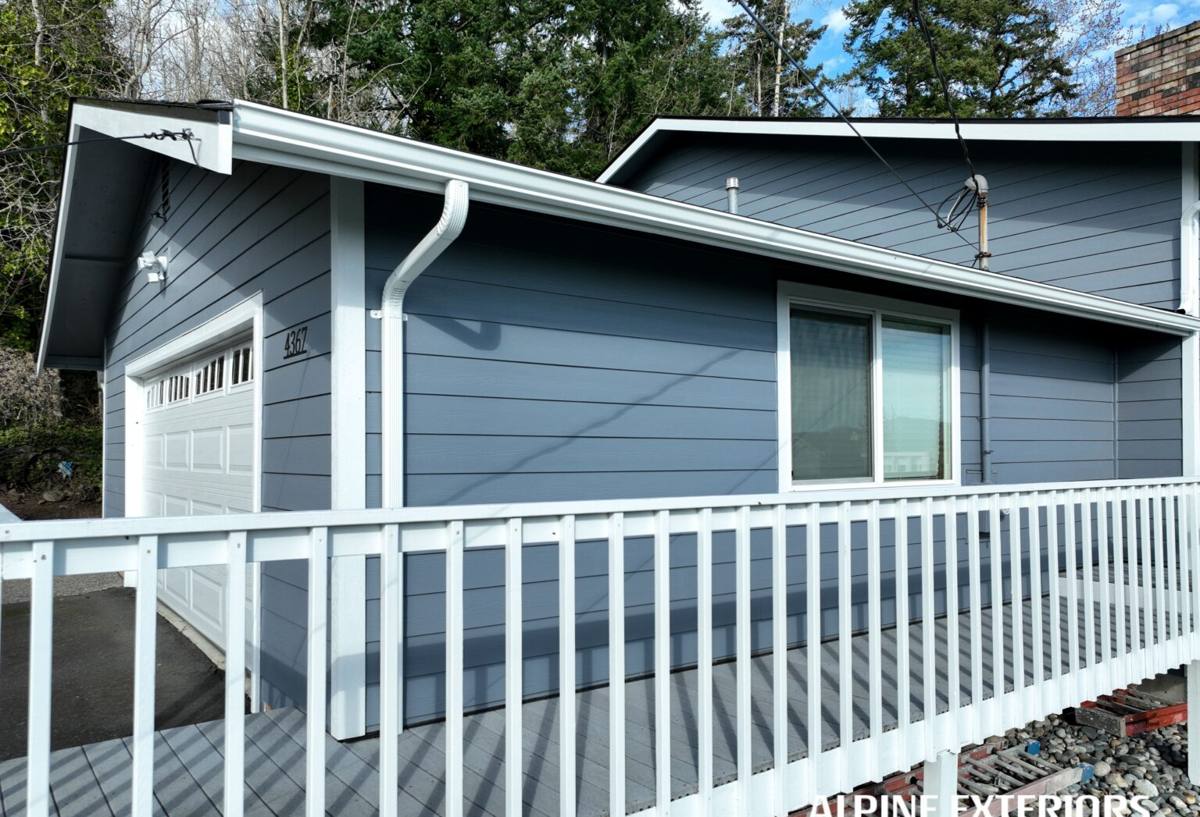
What South Everett's Climate Does to a Shingle Roof
Moss and Organic Growth
Snohomish County's long wet season — often eight or more months of intermittent rain — gives moss, algae, and lichen plenty of time to establish on north-facing slopes and shaded valleys. Moss isn't just cosmetic. As it grows, its root structure lifts shingle edges and holds moisture directly against the mat, which accelerates granule loss and can eventually work moisture under the shingle course itself. Roofs under fir or cedar canopy, common throughout South Everett's residential streets, are especially prone to this.
Driving Rain and Wind-Driven Moisture
Storms coming off the Sound don't just fall straight down — wind pushes rain sideways under shingle tabs, into exposed nail heads, and up under ridge caps if those details weren't sealed correctly. A roof can look intact from the ground and still be letting water past the shingle layer at the laps, valleys, or penetrations.
Salt Air and Metal Fasteners
Being close to Puget Sound means a measure of salt-laden air reaches South Everett roofs, which speeds up corrosion on exposed metal — nail heads, flashing edges, and vent stacks in particular. Corroded fasteners lose their grip and their seal at the same time, which is a slow, hidden failure point on older roofs.
Temperature Swings and Granule Loss
Everett's freeze-thaw cycles are mild compared to inland climates, but repeated cold snaps followed by wet, mild days still stress the asphalt mat over years, gradually loosening granules and making the shingle more brittle at the tab.
What a Correct Asphalt Shingle Roof Includes Here
A roof that's going to hold up under South Everett conditions needs more than good shingles laid in a straight line. The systems underneath and around the shingles matter as much as the shingles themselves.
- Ice-and-water shield at eaves and valleys — a self-adhering membrane in the areas most exposed to wind-driven rain and ice damming, not just a code-minimum strip.
- Synthetic underlayment across the full deck — a water-resistant secondary barrier that keeps the deck dry even if wind gets under a shingle tab during a storm.
- Proper starter strip and drip edge — sets the first course correctly and keeps water from wicking back under the fascia.
- Balanced attic ventilation — intake at the eaves, exhaust at the ridge, sized to the attic volume. Poor ventilation traps moisture in the attic, which condensates on the underside of the deck and rots it from the inside, regardless of how good the shingles are.
- Corrosion-resistant fasteners and flashing — appropriate metal for a marine-influenced climate, installed at the correct nailing pattern for wind exposure.
- Sealed penetrations — vent stacks, chimneys, and skylights flashed and sealed with materials rated for long-term UV and moisture exposure, not just caulk.
Common Signs South Everett Roofs Need Attention
| Sign | What It Usually Means |
|---|---|
| Moss or dark streaking on north-facing slopes | Organic growth holding moisture against shingles; needs treatment or, if advanced, shingle replacement |
| Granules collecting in gutters | Shingle mat is aging and losing its protective surface |
| Curling or lifted tab edges | Ventilation issue, aging underlayment, or wind damage letting water underneath |
| Interior ceiling stains after a storm | Active leak, often at a valley, flashing point, or worn penetration seal |
| Rusty streaks near vents or flashing | Corroding fasteners or flashing that need replacement before they fail completely |
| Roof over 18-20 years old, no major work done | Approaching or past the practical service life for most asphalt shingle products in this climate |
Repair, Roof-Over, or Full Replacement?
Not every issue means a new roof. We evaluate the whole system before recommending anything.
When Repair Makes Sense
Isolated damage — a few storm-damaged shingles, a failed flashing detail, a section of moss growth caught early — can usually be repaired without touching the rest of the roof, as long as the shingles are still within their useful life and the deck underneath is sound.
Why We Don't Recommend Roofing Over Old Shingles
Installing new shingles directly over an existing layer is sometimes offered as a cheaper shortcut, but it comes with real trade-offs we won't hide from a homeowner: it traps whatever moisture or damage already exists in the old layer, it prevents inspection of the deck underneath, it adds weight without adding ventilation, and it typically shortens the lifespan of the new shingles compared to a proper tear-off. Our standard is a full tear-off so the deck can be inspected, repaired if needed, and the new system installed correctly from the sheathing up.
When Full Replacement Is the Right Call
Widespread granule loss, multiple leak points, an aging roof nearing the end of its service life, or deck damage found during inspection all point to replacement being the more cost-effective long-term choice over repeated repairs.
Our Process for South Everett Homes
- On-site inspection — we walk the roof (or use a lift/drone where pitch or access requires it), check the attic for ventilation and moisture signs, and document the actual condition rather than guessing from the ground.
- Honest written estimate — what needs to happen, why, and what it costs, with options laid out plainly if there's more than one reasonable path.
- Material selection — matched to the home's exposure (shaded vs. open, wind exposure, HOA or neighborhood expectations where relevant).
- Tear-off and deck inspection — old roofing removed, deck checked and repaired as needed before anything new goes down.
- Underlayment and flashing installed to climate-appropriate detail — not just code minimum.
- Shingle installation — correct nailing pattern, exposure, and sealing for wind and rain exposure typical of this area.
- Ventilation check and cleanup — confirming intake/exhaust balance and leaving the property clear of debris and nails.
- Final walkthrough — reviewing the finished roof and warranty coverage together.
Cost Factors for a South Everett Shingle Roof
| Factor | Why It Affects Cost |
|---|---|
| Roof size and number of stories | More square footage and steeper access both add material and labor time |
| Roof pitch and complexity | Multiple valleys, dormers, and steep slopes take longer and require more flashing detail |
| Tear-off vs. roof-over | Full tear-off costs more upfront but avoids trapped moisture and deck problems later |
| Deck condition | Rotted or soft sheathing found during tear-off needs repair before new roofing goes on |
| Shingle tier | Standard three-tab, architectural, and premium/impact-resistant lines vary in material cost and warranty length |
| Ventilation upgrades | Adding or correcting intake/exhaust vents adds labor but protects the whole system |
We give exact numbers only after seeing the roof in person — anyone quoting a firm price sight unseen is guessing, and on a re-roof that guess usually gets adjusted upward once the tear-off starts.
Why Hire a Crew That Already Works South Everett
A roofing crew that works this area regularly already knows which streets sit under heavy tree canopy and need moss-resistant products, which neighborhoods catch the worst of the wind off the Sound, and what Everett's permitting and inspection process actually requires — so there are no surprises mid-project. That local familiarity translates directly into fewer callbacks and a roof that's built for the conditions it will actually face, not a generic install pulled from a national playbook.
If you're noticing moss buildup, granule loss, or you just want an honest read on how many years your current roof has left, we're glad to take a look. Reach out for a free, no-pressure estimate using the form below.