 Everett
 Fiber Cement Siding Built for South Everett's Weather
South Everett sits close enough to Puget Sound and the Snohomish River lowlands that homes here take a steady beating from moisture year-round. Between the marine-influenced salt air drifting in off the Sound, driving rain that comes sideways during winter storms, and a moss season that can stretch from October through May, exterior siding in this part of Snohomish County works harder than it does almost anywhere else in the state. We install James Hardie fiber cement siding exclusively, and on South Everett homes specifically, that choice comes down to how the material handles sustained wet exposure without breaking down.
This page focuses on one service, in one area: Hardie fiber cement siding installation for South Everett homes. We're not going to give you a generic rundown of what fiber cement is everywhere in America. We're going to talk about what your siding actually deals with on a South Everett lot, what a correct installation looks like given that exposure, and why a crew that already works this neighborhood catches problems that an out-of-town installer might miss.
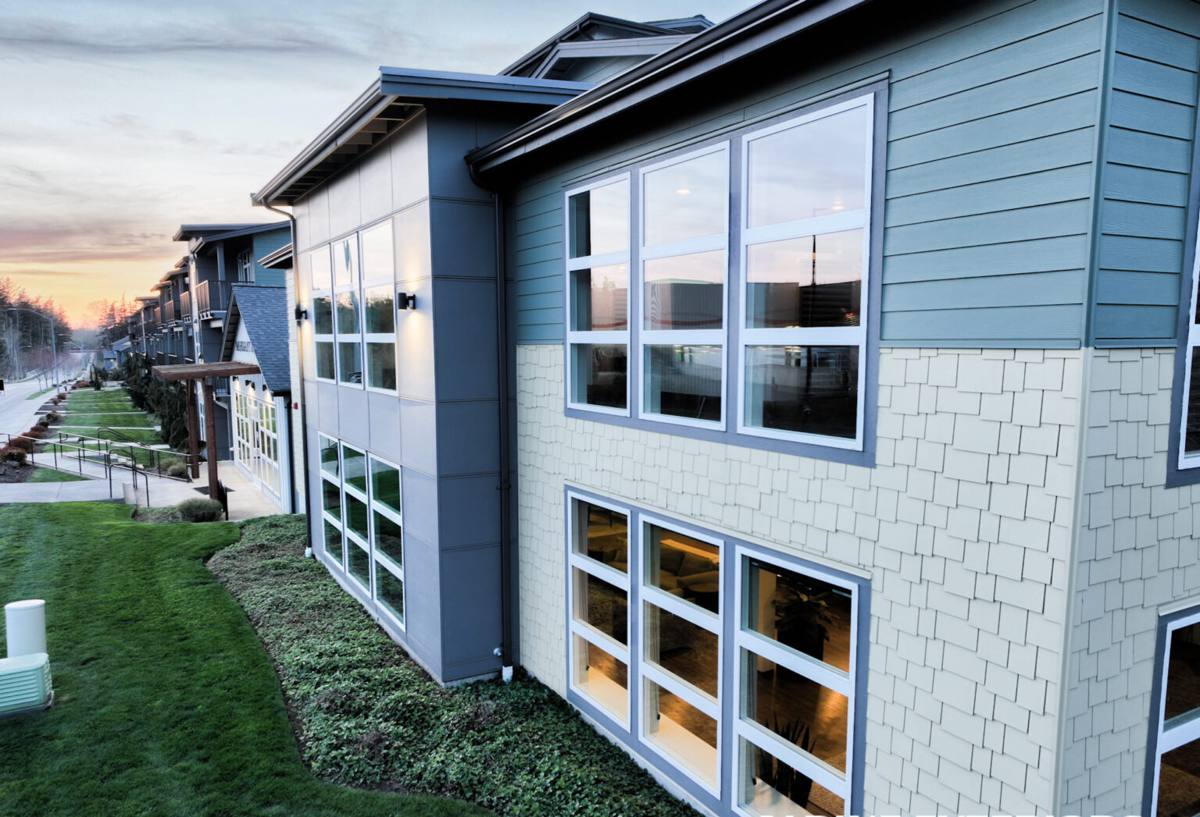
What South Everett's Climate Actually Does to Siding
Salt Air and Corrosion
Homes closer to the water pick up airborne salt that settles on exterior surfaces and accelerates corrosion of exposed metal fasteners, flashing, and trim. Over years, that corrosion can telegraph through paint and caulk lines, and it's a major reason fastener and flashing selection matters as much as the siding panel itself.
Driving Rain
Everett's winter storms frequently bring wind-driven rain rather than straight-down rain. Wind-driven moisture gets pushed sideways into laps, seams, and penetrations — around windows, doors, hose bibs, and vents — far more aggressively than a still, vertical rain would. Any weakness in the water-resistive barrier or flashing detail becomes a real entry point under these conditions, not just a theoretical one.
Moss and Sustained Dampness
South Everett's tree cover and long damp season create ideal conditions for moss and algae growth on north-facing walls, under eaves, and anywhere siding stays shaded and slow to dry. Moss holds moisture against the surface for extended periods, which is exactly the kind of sustained dampness that punishes moisture-sensitive siding materials and degrades paint films faster than intermittent rain alone.
Why We Only Install James Hardie Here
James Hardie fiber cement is engineered from cement, sand, and cellulose fiber — it doesn't absorb and swell with moisture the way wood-based products can, and it won't rot. That matters directly in a climate where siding stays damp for days at a stretch during moss season and takes on driving rain multiple times a month in winter. Hardie's ColorPlus factory-applied finish is also baked on and cured under controlled conditions, which gives it better adhesion and color retention against UV and moisture cycling than field-applied paint typically achieves over the same span.
Hardie also builds region-specific product lines (HZ5 for this climate zone) engineered for exactly this kind of freeze-thaw and moisture exposure. We don't install LP SmartSide, vinyl, Cemplank, Allura, or primed wood species like spruce or cedar on the homes we work on — not because those products have no merit anywhere, but because we've standardized on one system we can install, flash, and warranty consistently, and because Hardie's non-combustible composition and moisture behavior line up best with what South Everett homes are actually up against.
How Hardie Compares to Alternatives on Moisture Exposure
| Material | Moisture Behavior | Finish Durability | Combustibility |
|---|---|---|---|
| James Hardie fiber cement | Does not absorb/swell; resists rot | Factory-cured ColorPlus finish | Non-combustible |
| Vinyl siding | Doesn't absorb, but seams/laps can trap moisture behind panel | Color molded-in, can fade and become brittle over time | Combustible, can warp near heat |
| Primed wood (cedar/spruce) | Absorbs moisture, prone to rot without diligent maintenance | Field-applied paint needs regular recoating | Combustible |
| Engineered wood (e.g., LP SmartSide) | Treated to resist moisture but still wood-based; edge sealing is critical | Factory or field finish, varies by product | Combustible |
This table isn't meant to trash the alternatives — vinyl and engineered wood both have legitimate uses and loyal installers. It's meant to show why, for the specific moisture load South Everett throws at a house, we've settled on one product system and put our installation standards behind it.
What a Correct Fiber Cement Installation Involves
The siding panel itself is only part of the system. In a climate with this much wind-driven rain, the water-resistive barrier and flashing details behind the panel are what actually keep water out of the wall assembly. A correct installation on a South Everett home includes:
- A continuous, properly lapped weather-resistive barrier installed shingle-style so water drains down and out, never inward
- Correct flashing at every window and door head, with kick-out flashing at roof-to-wall intersections where runoff concentrates
- Proper fastener selection and placement, following Hardie's fastening schedule for the HZ5 zone rather than generic spacing
- Minimum clearance gaps at the bottom of the siding and around all penetrations, so panels aren't wicking moisture from grade, decks, or roof lines
- Caulking only where Hardie's installation instructions call for it — over-caulking traps moisture rather than shedding it
- Field-cut edges sealed per manufacturer spec, since exposed raw edges are more vulnerable to moisture uptake
Skipping any one of these doesn't usually cause an obvious problem in year one. It shows up two, five, or ten years later as a soft spot behind the siding, staining at a window head, or moss and algae taking hold faster than it should on a properly ventilated wall. That's why the installation process matters at least as much as the product choice.
Our Process for South Everett Homes
1. On-Site Assessment
We walk the exterior and look specifically at drainage paths, shaded north- and west-facing walls where moss tends to establish first, existing flashing condition, and any areas where the current siding shows signs of prior water intrusion.
2. Removal and Sheathing Check
Once old siding comes off, we inspect the sheathing underneath for soft spots or existing moisture damage before anything new goes on. Installing new siding over compromised sheathing just hides a problem rather than fixing it.
3. Water-Resistive Barrier and Flashing
This is the step that determines how the wall performs in wind-driven rain. We install and lap the barrier correctly and flash every penetration before a single piece of Hardie board goes up.
4. Hardie Panel Installation
Panels go up to Hardie's published fastening and clearance specifications for the HZ5 climate zone, with attention to consistent reveal lines and properly sealed field cuts.
5. Trim, Caulk, and Final Detailing
Corner boards, trim, and caulk joints are finished according to manufacturer spec — enough to seal properly, not so much that we trap moisture behind a bead of caulk that should have been left open to drain.
6. Walkthrough
We walk the finished job with the homeowner, covering what routine maintenance actually looks like for a Hardie system in this climate, which is minimal but not zero.
Living with Moss Season: Maintenance That Actually Matters
Fiber cement doesn't rot from moss contact the way wood siding can, but moss and algae buildup still isn't something to ignore — it holds moisture against the surface and can dull the finish over time if left unchecked for years. A simple homeowner maintenance checklist for South Everett:
- Rinse siding gently once or twice a year, focusing on shaded north-facing and tree-covered walls where moss establishes first
- Keep gutters clear so overflow doesn't run down the siding face during heavy rain events
- Trim back vegetation and tree limbs that keep a wall shaded and slow to dry
- Watch for caulk cracking at trim joints and have it addressed before a wet winter, not after
- Check that soil, mulch, or deck surfaces haven't crept up to reduce the siding's clearance from grade
None of this is heavy labor, and it's a fraction of what a wood or engineered-wood exterior typically demands in the same climate.
Cost Factors Specific to South Everett Jobs
| Factor | Why It Affects Your Project |
|---|---|
| Existing wall condition | Homes with prior moisture intrusion may need sheathing repair before new siding goes on |
| Wall exposure | Walls facing prevailing wind-driven rain often need extra flashing attention at penetrations |
| Shade and tree cover | Heavily shaded walls with established moss may need more prep work and washing before installation |
| Home size and complexity | Roofline intersections, dormers, and multiple stories add flashing and access time |
| Trim and detail level | Corner treatments, trim profiles, and reveal choices affect material and labor |
We won't quote a number without seeing the home, but these are the honest variables that move a South Everett project's scope up or down.
Why a Crew That Works This Neighborhood Matters
South Everett's mix of tree-covered lots, proximity to the water, and a housing stock spanning several decades of construction means every job has its own wrinkles — different sheathing types, different flashing histories, different sun and shade exposure from one street to the next. A crew that regularly works this specific area has already seen how the local moisture pattern plays out on real houses: where moss tends to take hold first, which wall orientations catch the worst of the wind-driven rain, and what to look for when opening up an older wall. That local pattern recognition is what separates a correct installation from one that merely looks correct on installation day.
We install James Hardie fiber cement siding on South Everett homes because we believe it's the right long-term match for this climate, and because a single-product focus lets our crew get genuinely expert at installing it correctly, every time. If you're weighing a siding replacement or repair in South Everett, we're happy to take a look at your home and walk you through what we'd recommend and why. Request a free, no-pressure estimate using the form below.