 Everett
 Why Glenhaven Roofs Take a Different Kind of Beating
Glenhaven sits close enough to Puget Sound and the Snohomish River lowlands that roofs here deal with a combination most inland neighborhoods don't: salt-tinged air moving in off the water, wind-driven rain that comes in sideways during winter storms, and a moss season that runs long and heavy under the Pacific Northwest's grey-sky months. None of these on their own is unusual for Western Washington. Together, on the same roof, year after year, they add up faster than most homeowners expect.
Salt air accelerates corrosion on exposed metal — flashing, fasteners, gutter hangers, vent caps. Driving rain doesn't just fall straight down; wind pushes water sideways and up under shingle edges, lap joints, and flashing seams that were never designed to shed water from that angle. And moss doesn't just look bad — it holds moisture against the roofing material, lifts shingle edges as it grows, and works its way under laps where it keeps wood and underlayment damp long after a storm has passed. A roof that looks intact from the yard can already have water finding its way into the deck underneath.
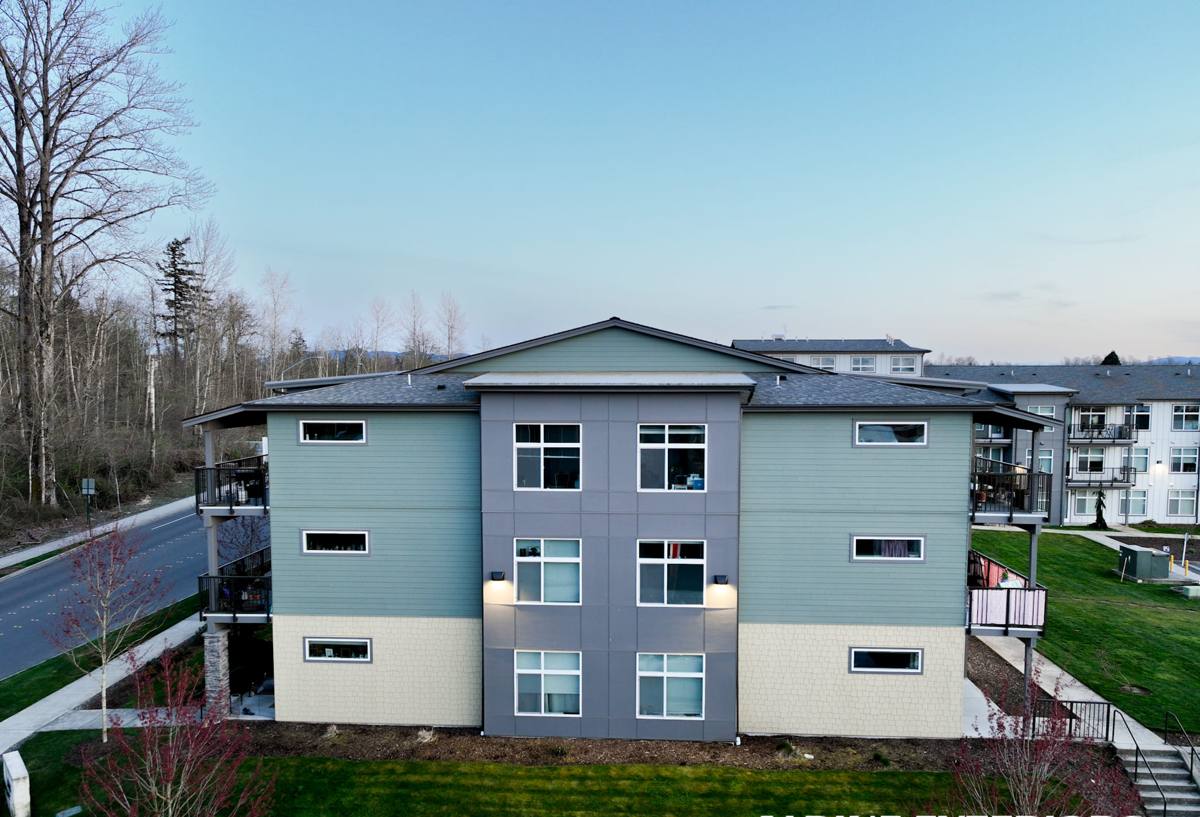
What Actually Counts as Storm Damage
"Storm damage" covers more than a few shingles ripped off in a windstorm. In this area, the damage we're most often called out for after a hard blow or a heavy rain event includes:
- Wind-lifted or creased shingles — the seal is broken even if the shingle didn't blow off
- Flashing pulled loose or bent at chimneys, skylights, and roof-to-wall transitions
- Granule loss from wind-blown debris, exposing the asphalt mat underneath
- Gutter and downspout damage that redirects water onto fascia and siding
- Moss-related lifting where wind got underneath an already-loosened shingle edge
- Punctures or bruising from tree limbs and wind-carried debris
- Water intrusion at valleys and low-slope sections where pooling water finds the smallest gap
Some of this is obvious. A lot of it isn't — which is the real problem with storm damage. The leaks that show up on your ceiling months later usually started as small, hard-to-see damage from a storm you'd already forgotten about.
Signs Worth a Closer Look
- Shingles that look "wavy" or slightly lifted at the edges, especially on the side of the roof facing prevailing wind
- Granules collecting in gutters or at downspout outlets after a storm
- New or worsening moss growth concentrated on north-facing or shaded slopes
- Rust streaking below flashing or exposed fasteners
- Any soft spot, discoloration, or new stain on interior ceilings after a storm
- Daylight visible through the attic roof deck at joints or nail penetrations
What a Correct Repair Actually Involves
Storm damage repair done right is not "replace what's obviously missing and caulk the rest." A repair that holds up through another Everett winter has to account for what the storm did to the surrounding material, not just the spot that failed.
Inspection Before Anything Gets Touched
We walk the roof (weather permitting) and check the attic from the inside — decking, insulation, and framing near the damaged area. Water almost never travels straight down from where it enters. Tracing the actual path matters more than patching the visible hole.
Matching Repair to the Existing Roof
Shingles fade with UV and weather exposure, so a patch using new material next to a 10-year-old roof will look mismatched — that's a cosmetic reality we're upfront about, not something we hide. On repairs, we source shingles as close to the existing color run as we can and place them where the mismatch is least visible. If the damage is spread across enough of a slope, or the surrounding shingles are already brittle from age and moss exposure, we'll tell you honestly whether a full slope replacement is the better long-term move rather than layering another repair onto material that's near the end of its service life.
Flashing and Underlayment, Not Just Shingles
Most repeat leaks we get called back to fix on other contractors' work trace back to flashing that got reused instead of replaced, or underlayment that wasn't extended far enough past the damaged zone. Wind-driven rain needs a continuous water barrier, not just new shingles laid over old flashing. We replace flashing at any point it was disturbed and lap new underlayment correctly under the surrounding courses — not just tucked in at the edge.
Fastening for Wind, Not Just for Code Minimum
Code minimum nailing patterns are a floor, not a target. On slopes exposed to prevailing wind, we follow manufacturer high-wind fastening specs so the repair doesn't become next winter's failure point.
Our Process, Start to Finish
- Inspection and documentation. We assess the damage, photograph it, and give you a plain-English explanation of what happened and what it will take to fix — no upsell pressure toward a full replacement if a repair is the honest answer.
- Written scope and estimate. You get a clear description of the work, materials, and price before anything starts.
- Insurance coordination, if needed. If you're filing a claim, we provide documentation your adjuster can use and can meet them at the property.
- Temporary protection, if the roof is actively leaking. Tarping or emergency sealing to stop active water intrusion while the full repair is scheduled.
- The repair itself. Removal of damaged material, inspection of the deck underneath, flashing and underlayment work, matched shingle installation, correct fastening.
- Cleanup and final walkthrough. Debris and old material hauled off, gutters checked and cleared if they were involved, and a walkthrough so you know exactly what was done.
Repair vs. Replacement: How We Help You Decide
Not every storm-damaged roof needs to come off. But some do, and pretending otherwise just delays a bigger bill. Here's how we generally think through it:
| Factor | Leans Toward Repair | Leans Toward Replacement |
|---|---|---|
| Age of roof | Under roughly 10-12 years | Nearing or past manufacturer's expected service life |
| Extent of damage | Isolated to one area or slope | Spread across multiple slopes or the whole roof |
| Condition of surrounding shingles | Still flexible, granules intact | Brittle, cracking, heavy granule loss nearby |
| Moss/moisture history | Minor, recently treated | Long-term moss damage to decking or underlayment |
| Underlying decking | Sound, no soft spots | Soft, delaminated, or water-stained plywood |
| Insurance scope | Adjuster approves targeted repair | Adjuster's scope covers full slope or roof |
We'll give you our honest read on where your roof falls on this list. If a repair is the right call, that's what we'll recommend and price — a bigger job isn't automatically a better one for you.
Working With Insurance on Storm Claims
Most storm damage claims in this area come down to documentation. Adjusters need clear photos, a written description of the mechanism of damage (wind, impact, water), and a scope that matches what's actually wrong — not padded, not thin. We document damage the way adjusters need to see it and can walk the roof with your adjuster if that's helpful. We don't handle the claim itself or negotiate on your behalf as a public adjuster would, but we make sure the physical evidence supports a fair outcome, and we'll answer direct questions about scope and pricing if the adjuster has them.
Why a Crew That Already Works Glenhaven Matters
Roofing generalists who cover all of Snohomish County or drive up from Seattle for storm work aren't wrong about roofing in general — but they don't have the specific read on this neighborhood that comes from being here regularly. A crew that already works Glenhaven knows:
- Which roof pitches and styles are common on the homes here, and how that affects wind exposure and drainage patterns
- How fast moss recolonizes on the shaded, tree-lined lots typical of this area, and how that changes maintenance timing
- The realistic timeline for permitting and inspection through the City of Everett or Snohomish County, depending on which side of the boundary a property falls on
- Which storm patterns (wind direction, typical rainfall intensity) tend to hit this specific area hardest each season
There's also a practical response-time reason to hire locally. After a regional storm, every roofing company in the Puget Sound area gets flooded with calls at once. Crews that are already routing through Everett and the surrounding Snohomish County neighborhoods on a normal week can get to an active leak faster than a company dispatching from further out — and a faster tarp-and-stabilize response is often the difference between a contained repair and a ceiling replacement.
After the Repair: Keeping the Next Storm From Doing the Same Damage
A repair without a maintenance plan just resets the clock. A few things make a real difference in this climate:
Moss Management
Zinc or copper strips near the ridge slow moss regrowth over time; periodic gentle moss removal (never pressure-washing shingles) keeps it from lifting shingle edges again. Moss should be controlled, not scraped aggressively — aggressive scraping damages the granule layer that protects shingles from UV and weather.
Gutter and Drainage Checks
Clogged gutters back water up under the roof edge during heavy rain, which is exactly the driving-rain scenario that causes repeat damage. A fall and a post-storm gutter check catches most of this before it becomes a leak.
Flashing Inspection on a Schedule
Salt air corrodes exposed metal faster here than it does further inland. Flashing and exposed fasteners are worth a visual check at least once a year, ideally before the winter storm season sets in.
Quick Reference: Post-Storm Roof Checklist
- Walk the property and look for shingle pieces, granules, or metal debris in the yard or gutters
- Check the attic for new water stains, damp insulation, or daylight at the decking
- Look at ceilings and upper-floor walls for new discoloration
- Note the date and general weather conditions of the storm for insurance purposes
- Photograph anything visible from the ground — don't climb onto a wet or damaged roof yourself
- Call for an inspection before the next rain if you suspect any damage, even minor
If a recent storm has you wondering about your roof — or you just want a second opinion before winter — we're happy to take a look. Estimates are free, there's no pressure to sign anything on the spot, and you'll get a straight answer about whether you're looking at a repair or something bigger. The form below gets you on our schedule.