 Everett
 Why West Everett Roofs Wear Differently
West Everett sits close enough to Port Gardner Bay and the Sound that salt-laden air is a constant, low-grade factor in how roofing materials age here — not just an occasional storm event. Combine that with Snohomish County's long wet season, frequent driving rain off the water, and shaded, moisture-holding tree cover in older residential pockets, and you get a roofing environment that's tougher on materials than most manufacturers' generic warranty language assumes. Asphalt shingles in this kind of exposure tend to hold moisture longer, grow moss faster, and lose granules sooner than the same product installed twenty miles inland. Metal roofing, installed correctly for this specific climate, handles all three of those stressors better — but "installed correctly for this climate" is doing a lot of work in that sentence, and it's the part that gets skipped by crews who don't normally work this close to the water.
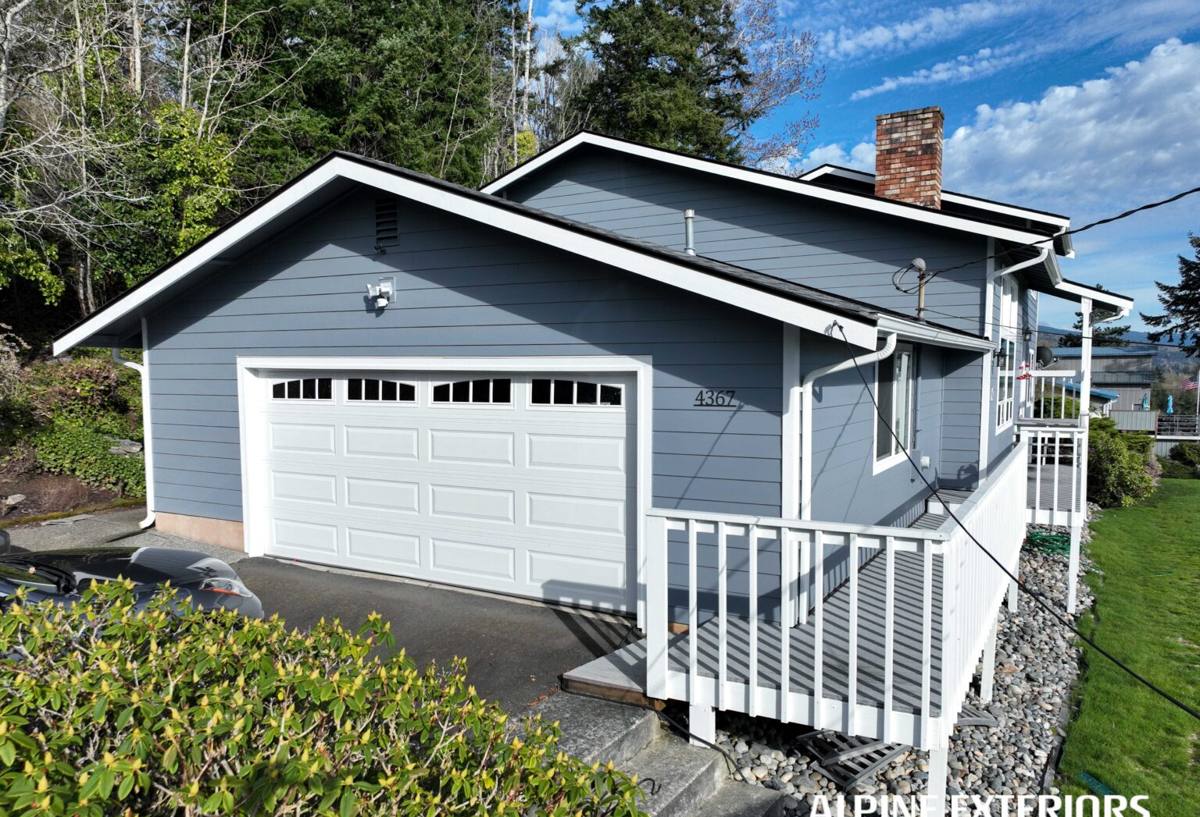
What Local Homes Actually Need From a Metal Roof
A metal roof in West Everett has three jobs beyond just shedding water: resist corrosion from salt-air exposure, shed moss and organic buildup instead of trapping it, and stand up to wind-driven rain that pushes water sideways under poorly lapped seams. Those needs shape real decisions — panel profile, coating type, fastener material, and underlayment — not just aesthetic ones.
Salt Air and Corrosion
Coastal-adjacent exposure accelerates corrosion at cut edges, fastener heads, and any point where a coating gets scratched during installation or by later foot traffic. This is why fastener material and coating quality matter more here than they would on a roof twenty miles inland — a mismatch between panel metal and fastener metal (galvanic corrosion) shows up faster in salt air than almost anywhere else in the county.
Moss and Organic Growth
Snohomish County's moss season runs long — realistically most of the year in shaded, north-facing, or tree-covered sections of a roof. Moss on asphalt shingles works its way under tabs and holds moisture against the deck. On a properly installed metal roof, the smooth, non-porous surface and steeper effective water flow give moss far less to grip, but valleys, low-slope transitions, and areas near overhanging trees still need to be detailed correctly or they'll accumulate debris just like any other roof.
Driving Rain and Wind
Storms coming off the water often carry enough wind to push rain sideways and uphill under panel laps, at ridge caps, and around penetrations. This is a flashing and lap-length problem more than a "metal roofing is waterproof" problem — metal sheds water well only when every seam, transition, and penetration is detailed to handle wind-driven moisture, not just gravity-fed runoff.
Standing Seam vs. Exposed-Fastener Panels
Both are legitimate metal roofing systems, but they perform differently in a salt-air, high-moisture environment, and the right choice depends on the roof's slope, exposure, and your maintenance expectations.
| Factor | Standing Seam | Exposed-Fastener (Ag Panel) |
|---|---|---|
| Fastener exposure | Concealed clips, no exposed penetrations | Screws through the panel face |
| Salt-air corrosion risk | Lower — fewer exposed metal-to-metal contact points | Higher — exposed fasteners are the first failure point |
| Maintenance | Minimal; no fasteners to re-tighten or reseal | Fastener washers degrade over time and need periodic checking |
| Upfront cost | Higher | Lower |
| Typical use case | Primary residence roofs, longer-term ownership | Outbuildings, shops, budget-driven projects |
For a primary home in West Everett's exposure, we generally steer owners toward standing seam when budget allows, specifically because it removes the recurring maintenance item — checking and resealing exposed fastener washers — that salt air and freeze-thaw cycling make more urgent here than in a drier inland climate.
What a Correct Installation Involves
Metal roofing fails prematurely almost never because of the panel material itself — it fails because of shortcuts underneath and around it. A correct job on a West Everett home includes:
- Deck inspection and repair before anything goes down — metal panels won't hide a soft or uneven deck, they'll telegraph it
- A high-temp, self-adhered underlayment at eaves, valleys, and penetrations, with synthetic underlayment across the field for a true secondary water barrier
- Fastener and clip material matched to the panel metal to avoid galvanic corrosion in salt-air exposure
- Proper panel overlap and seam sealing sized for wind-driven rain, not just standard-slope gravity flow
- Ice-and-water style protection at valleys and low-slope transitions where moss and debris tend to collect
- Correct ventilation at ridge and soffit so trapped moisture doesn't condense against the underside of the panels
- Flashing details at every penetration — chimneys, vents, skylights — fabricated to the actual roof geometry, not stock trim forced to fit
Skipping any one of these doesn't show up on day one. It shows up two or three wet seasons in, as a leak at a valley or a rusted-through fastener head — long after the crew that installed it has moved on.
Our Process for a West Everett Metal Roof
We approach every metal roof install the same structured way, adjusted for the specific exposure of the property:
1. On-Site Assessment
We walk the roof, check the deck condition, note tree cover and shade patterns that drive moss growth, and assess exposure to wind and driving rain based on the home's orientation relative to the water.
2. Tear-Off and Deck Prep
Old roofing comes off, the deck gets inspected board by board, and any soft or water-damaged sections are replaced before underlayment goes down — never over.
3. Underlayment and Flashing
Self-adhered membrane at critical zones, synthetic underlayment across the field, and custom-fabricated flashing at every penetration and transition.
4. Panel Installation
Panels and fasteners matched for material compatibility, seams and laps sized for wind-driven rain, and ridge/soffit ventilation confirmed before final trim goes on.
5. Final Walkthrough
We walk the finished roof with the homeowner, point out any maintenance items specific to that roof's exposure, and leave documentation of what was installed and where.
Cost Factors to Understand Before You Get Quotes
Metal roofing costs more upfront than asphalt shingles, and the range varies based on real factors — not just panel choice. Rather than quote a number that won't reflect your actual roof, here's what actually moves the price:
| Factor | Why It Matters |
|---|---|
| Panel system (standing seam vs. exposed-fastener) | Standing seam runs higher due to labor and concealed-fastener hardware |
| Roof complexity | Valleys, dormers, and multiple penetrations add flashing labor |
| Deck condition | Rot or soft decking found at tear-off adds repair cost before installation can proceed |
| Coating and gauge | Heavier gauge and marine-grade coatings cost more but hold up better to salt-air exposure |
| Tear-off scope | Full tear-off of old roofing vs. install over existing deck (when code and condition allow) |
| Access and pitch | Steep or hard-to-access roofs increase labor time and safety equipment needs |
Generally, expect metal roofing to run well above asphalt shingle pricing per square foot, with standing seam at the higher end of that range. The honest trade-off is a much longer service life and far less recurring maintenance in this climate — but we'll always give you the specific number for your roof, not a generic range, after an on-site look.
Maintenance in a Long Moss Season
A correctly installed metal roof needs far less upkeep than shingles, but "far less" isn't "none," especially with West Everett's tree cover and moisture load.
- Clear needles, leaves, and debris from valleys once or twice a year — they hold moisture against the panel even if moss itself can't grip
- Check gutters and downspouts for buildup, since metal roofs shed water fast and can overwhelm a clogged system
- Look for scratched coating near foot traffic areas — chimneys, satellite mounts, solar penetrations — and have it touched up before bare metal corrodes
- Trim back overhanging branches where practical to reduce shade-driven moss and debris accumulation
- Have fastener washers on exposed-fastener systems checked periodically — this step doesn't apply to standing seam
Why Hiring a Crew That Already Works West Everett Matters
Metal roofing installation isn't uniform across the country, or even across Snohomish County. A crew that mostly installs in drier inland conditions can do competent general work and still miss the specific details that matter here — fastener-to-panel metal compatibility in salt air, valley detailing sized for a genuinely long moss season, and flashing built for wind-driven rain rather than straight-down runoff. None of that shows up as a defect at handoff. It shows up as a call two winters later. Working this neighborhood regularly means we've already seen how these roofs age here, not just how the manufacturer's spec sheet says they should perform in ideal conditions.
Get an Honest Look at Your Roof
If you're weighing metal roofing for a home in West Everett, we're glad to come take a look, walk the roof, and give you a straight answer on what it needs and what it would cost — no pressure, no upsell. Use the form below to request a free estimate.