 Everett
 Siding Replacement Built for West Everett's Weather
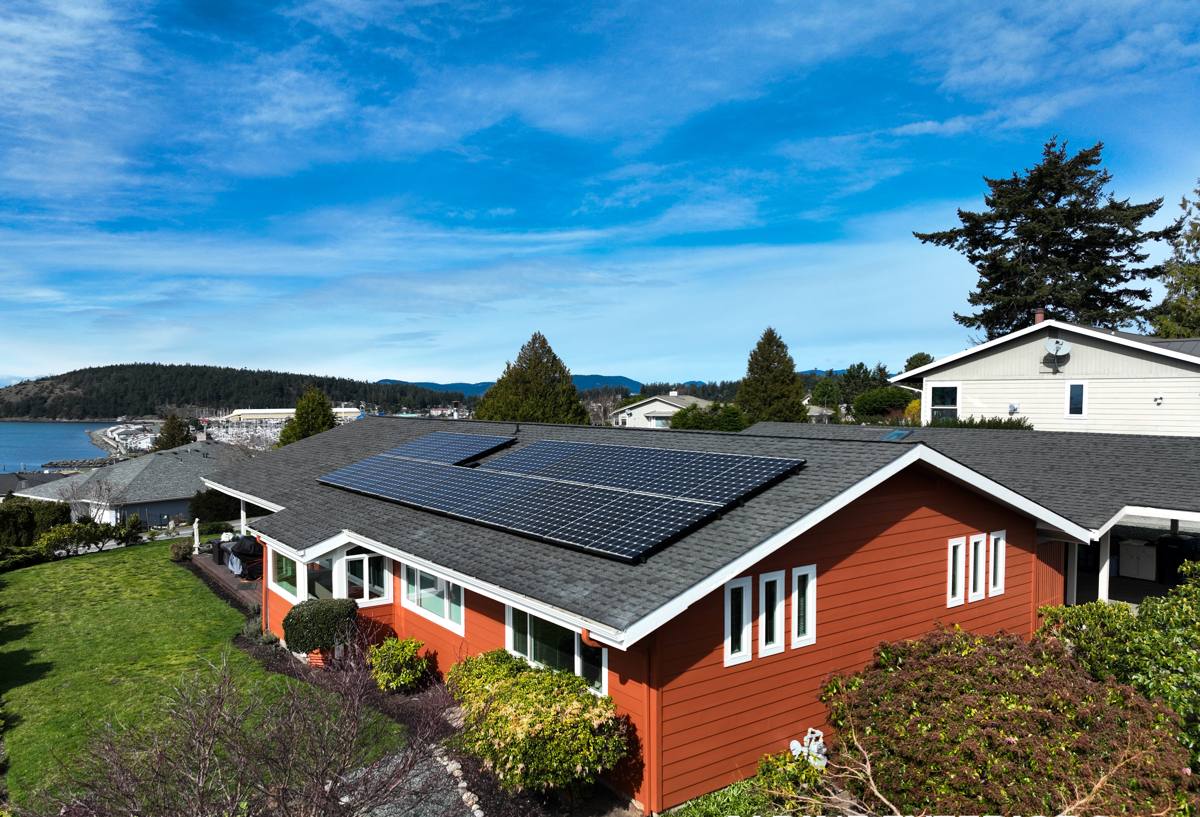
West Everett homes sit close enough to the water that the weather here isn't quite the same as a few miles inland. Salt-tinged air off Port Gardner Bay and Possession Sound, wind-driven rain that hits siding at an angle instead of falling straight down, and a moss season that runs most of the year all put steady pressure on an exterior wall. Siding that would hold up fine in a drier, more sheltered part of Snohomish County can start showing problems here years earlier — soft spots at the bottom courses, streaking under gutters, moss creeping up from ground level, paint that won't hold a finish past a few seasons.
Siding replacement in West Everett isn't a cosmetic project. It's the point where you decide whether the next material on your walls is going to actually handle this climate, or just look good in the driveway for a year or two before the same problems start over. We install James Hardie fiber cement exclusively, and this page walks through what West Everett's conditions actually do to siding, what a correct replacement job involves, and how our process works from first look to final walk-through.
What Salt Air, Driving Rain, and Moss Do to a Wall
Salt Air
Homes closer to the water pick up salt-laden moisture in the air, even without a direct ocean view. Over years, that salt content accelerates corrosion on fasteners, flashing, and any exposed metal trim, and it can degrade certain coatings faster than a drier inland site would. Materials and hardware chosen for this part of Everett need to be rated for it — this isn't a detail that shows up on a spec sheet as an afterthought, it should be part of the material selection from the start.
Driving Rain
West Everett catches wind off the water, and wind-driven rain behaves differently than rain falling straight down. It gets pushed sideways into laps, seams, and butt joints that a calmer climate would never test. That's a water-management problem as much as a material problem — the siding itself matters, but so does the weather-resistive barrier behind it, the flashing at every penetration, and the lap spacing that gives water somewhere to go instead of somewhere to sit.
Moss and Sustained Moisture
Tree cover and a long wet season mean surfaces here don't get much of a real drying window for a good chunk of the year. Moss and algae take hold wherever moisture lingers — north-facing walls, areas shaded by mature trees, low courses near landscaping beds that hold dampness. Left alone, sustained moisture behind or on top of siding is what eventually leads to soft substrate, not any single storm.
Signs a West Everett Home Needs Siding Replaced, Not Patched
Not every siding problem calls for a full replacement — but in this climate, surface fixes on failing siding tend to buy a homeowner very little time. A few signs point toward replacement being the honest recommendation rather than another round of caulk and paint:
- Soft or spongy spots when you press on the siding, especially near the bottom courses or below windows
- Paint that's peeling, bubbling, or won't hold a fresh coat for more than a couple of years
- Visible warping, cupping, or separation at the seams and laps
- Moss or algae that returns within months of being cleaned, especially on shaded or north-facing walls
- Rising utility bills alongside drafts or temperature swings that point to a failing weather barrier
- Siding that's original to a home more than 20-25 years old, particularly wood or older composite products not built for coastal exposure
If what you're seeing is limited to one or two boards and the rest of the wall tests solid, a repair may genuinely be the right call. Our job on an estimate is to tell you which situation you're actually in, not to sell a full replacement when a smaller fix would do.
What a Correct Siding Replacement Job Involves
Tear-Off and Inspection
Old siding comes off down to the sheathing, and that's the point where a lot of hidden damage first becomes visible — rot, insect damage, or a weather barrier that's already failed. Skipping a real inspection at this stage and just re-siding over a compromised wall is how a homeowner ends up paying for the same problem twice.
Weather-Resistive Barrier and Flashing
Given how much wind-driven rain West Everett sees, the barrier behind the siding and the flashing around every window, door, and penetration matter as much as the siding itself. Correct lapping — upper layers over lower layers, everything shedding water downward and outward — is what actually keeps a wall dry, and it's also the step that's easiest to rush on a job that isn't being supervised closely.
Fastening and Spacing to Manufacturer Spec
James Hardie siding has specific fastening patterns, gapping, and clearance requirements, and they exist for a reason — they account for the board's expansion and contraction and for how water needs to move off the wall. Installed off-spec, fiber cement siding can fail early in exactly the ways it's designed to resist. This is also where the manufacturer's installation warranty lives or dies; installed wrong, that warranty coverage can be compromised regardless of how good the material itself is.
The Right Product Line for This Climate
We install Hardie's HZ5 product line here, engineered for colder, wetter Pacific Northwest conditions rather than a generic national spec. That distinction matters in a neighborhood dealing with salt air and near-constant moisture cycling — it's a formulation decision made before color or texture ever enters the conversation.
Why We Install Only James Hardie Fiber Cement
We don't install vinyl, LP SmartSide, or other engineered wood products, and West Everett's climate is a big part of why. Vinyl can warp and become brittle under UV and temperature swings, and its seams give wind-driven rain more chances to find a way in. Engineered wood products depend on their coatings and edge-sealing staying intact to resist moisture — a maintenance burden that's harder to keep up with in a climate this wet, this often. Fiber cement doesn't rot, doesn't feed moss the way wood-based products can, and is non-combustible, which matters given the wildfire smoke seasons the broader Pacific Northwest has seen in recent years.
| Factor | Vinyl / Engineered Wood | James Hardie Fiber Cement |
|---|---|---|
| Moisture resistance | Depends on intact coating/sealing; vulnerable at cut edges and seams | Cement-based composition doesn't absorb and swell like wood fiber products |
| Salt air exposure | Coatings and seams can degrade faster near coastal moisture | Factory ColorPlus finish engineered to resist fading and coastal wear |
| Moss and algae | Wood-based substrates can be more hospitable to growth if moisture gets in | Doesn't provide the organic material that feeds growth the way wood fiber can |
| Fire resistance | Combustible (wood-based) or heat-sensitive (vinyl) | Non-combustible material |
| Warranty structure | Varies by manufacturer, often shorter or more conditional | Strong transferable warranty when installed to spec |
None of this means those products are junk everywhere they're used — plenty of homes in drier climates do fine with them. It means we've made a professional call that West Everett's combination of salt air, driving rain, and a long moss season isn't the environment where we're willing to put our name behind them.
Our Siding Replacement Process
- Walkthrough and assessment: we look at the current siding, the underlying sheathing where accessible, drainage around the foundation, and any moisture patterns specific to your lot and sun exposure.
- Written estimate: a clear scope covering tear-off, barrier and flashing work, product line and color, and timeline — no vague allowances buried in the fine print.
- Tear-off and structural check: old siding comes off, sheathing gets inspected, and any rot or damage gets addressed before anything new goes up.
- Weather barrier and flashing installation: the layer that actually keeps West Everett's driving rain out, installed and lapped correctly around every window, door, and penetration.
- Hardie installation to manufacturer spec: correct fastening, gapping, and clearances, using the HZ5 product line suited to this climate.
- Final walk-through: we review the completed work with you before calling the job done.
Cost Factors for a West Everett Siding Replacement
Every home is different, but the same handful of factors tend to drive the cost of a siding replacement here more than anything else:
| Factor | Why It Matters Locally |
|---|---|
| Extent of hidden damage | Homes with prior moisture intrusion often need sheathing repair before new siding can go on |
| Home size and wall complexity | More corners, gables, and trim details mean more cutting, flashing, and labor |
| Product line and profile | HardiePlank lap, panel, and shingle profiles carry different material and labor costs |
| Access and site conditions | Mature trees, fencing, or tight lot lines common in older West Everett neighborhoods can affect staging and labor time |
| Existing trim and flashing condition | Aging trim and flashing exposed to salt air and rain often need replacement alongside the siding, not after |
We don't publish blanket pricing because the honest number depends on what we find once the old siding is off — but we'll give you a straight, itemized estimate before any work starts, and we'll tell you plainly if something looks like it's going to add cost once we're into the wall.
Why Hire a Crew That Already Works This Neighborhood
A crew that's replaced siding on other homes in West Everett already knows what this specific stretch of Everett does to an exterior — where salt air tends to hit hardest, which wall orientations hold moss longest, how driving rain off the water behaves differently than it would a few miles inland. That's not something you can fully substitute with a general spec sheet. It shows up in small decisions on the jobsite: where to pay extra attention to flashing, which fastener hardware to use given the salt exposure, how to sequence the work around this area's weather windows.
It also matters for accountability. A contractor who works this neighborhood regularly has a reputation to protect here, not just a one-time job to finish and move on from.
If your siding is showing wear, or you're just trying to get ahead of what West Everett's climate does to an aging exterior, we're happy to take a look and give you a straight assessment. Reach out for a free, no-pressure estimate using the form below.