 Everett
 Why West Everett Homes Need Windows Installed a Certain Way
West Everett sits close enough to the water that salt air is a daily fact of life for anything on the outside of a house. Add Snohomish County's long wet season — months of driving rain off the Sound, followed by a stretch of gray, damp weather that grows moss on anything that holds moisture — and you have a climate that is genuinely harder on window openings than most of the country deals with. A window that's simply "put in" rather than properly flashed, sealed, and integrated with the wall's water management will eventually let water behind the siding, and by the time you see a stain on the interior sill, the framing underneath may already be compromised.
This isn't a scare story, it's just what salt-laden, wind-driven rain does over years. Homes in West Everett — whether older houses with original wood-frame windows or newer construction with vinyl or fiberglass units — all face the same basic exposure. The right installation approach accounts for that exposure from the start instead of trying to caulk over it later.
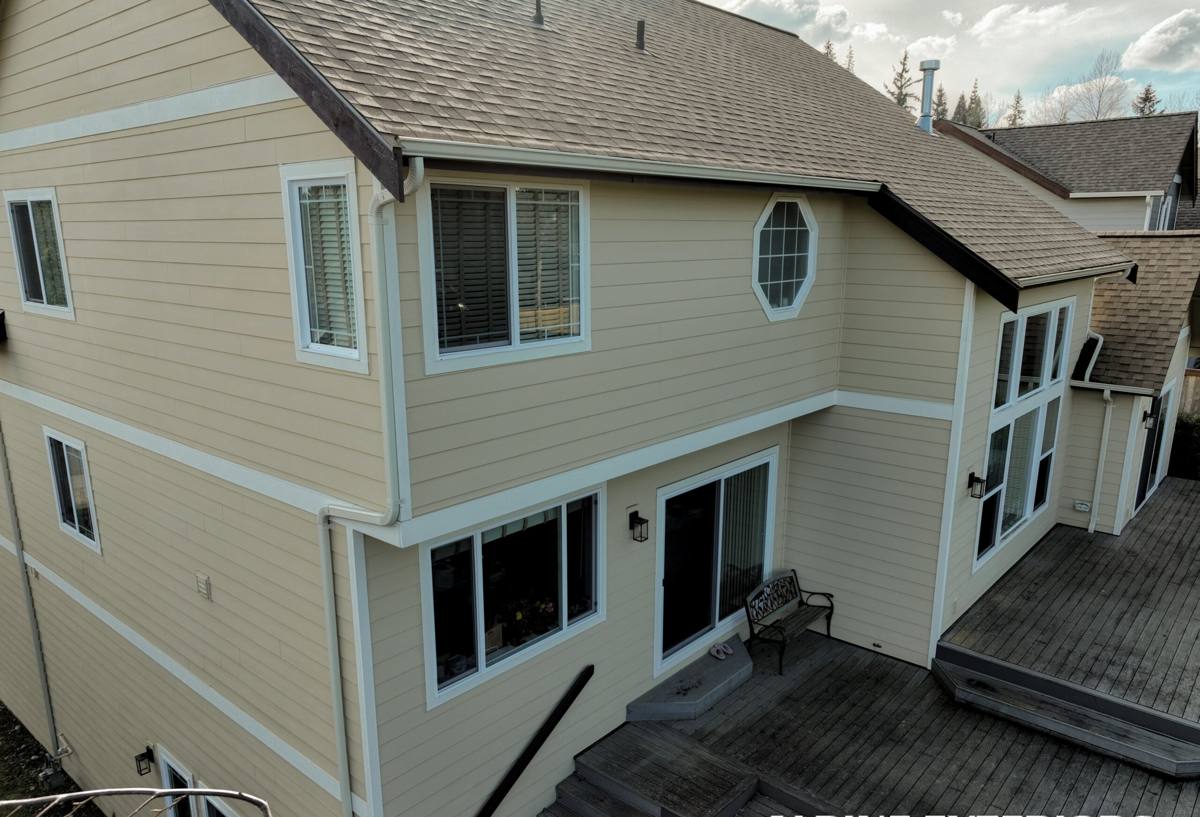
What "Correct" Actually Means for a Window Install Here
It Starts With the Opening, Not the Window
A lot of window problems have nothing to do with the window itself and everything to do with how the rough opening was prepared before the new unit ever went in. On a proper install, we're looking at:
- Sound, dry framing at the sill, jambs, and header — any rot or soft wood gets cut out and replaced before anything else happens
- A sloped sill pan so any water that gets past the window drains back outside instead of pooling in the framing
- Correctly lapped house wrap or building paper so water sheds down and over each layer, never up and under it
- Flashing tape or flexible flashing at the jambs and head, integrated with the water-resistive barrier in the right shingle-style order
- A visual and physical check for existing moisture or moss staining around the old window before removal — a sign of a problem that predates the new install
Then the Window Itself
Once the opening is prepped, the window has to be set plumb, level, and square, shimmed correctly so it isn't racked (which stresses seals and can cause a window to bind or fail to latch over time), and fastened per the manufacturer's instructions — not just "however it fits." Backer rod and quality exterior sealant go in at the right joints, and interior air sealing (often overlooked) matters just as much for keeping condensation from forming inside the wall cavity.
Climate Factors That Change the Job in This Area
| Local Factor | Why It Matters | How We Account For It |
|---|---|---|
| Salt-laden air off the Sound | Accelerates corrosion on fasteners, hardware, and some metal flashing over time | Corrosion-resistant fasteners and flashing metals, sealants rated for coastal exposure |
| Driving, wind-blown rain | Pushes water sideways into joints that would stay dry in a calmer climate | Full sill pan flashing and properly lapped WRB, not just a bead of caulk |
| Long wet/moss season | Trapped moisture behind siding or trim breeds moss, mold, and slow rot | Drainage gaps and sloped sills so water can't sit against wood or sheathing |
| Temperature swings, marine humidity | Condensation risk inside the wall if air sealing is sloppy | Proper interior air sealing separate from exterior weatherproofing |
Our Process, Start to Finish
1. Assessment and Honest Scoping
We look at the existing windows and the wall assembly around them, not just the glass. If there's evidence of past water intrusion — soft trim, staining, moss buildup at the sill — we tell you before the quote, not after we've started demo.
2. Removal Without Making Things Worse
Old windows come out carefully so we don't tear up more siding or trim than necessary, and so we can actually see the condition of the framing underneath before deciding what needs repair.
3. Opening Prep and Flashing
This is the step that gets skipped by installers in a hurry, and it's the step that determines whether the window lasts 25 years or leaks in five. Sill pan, flashing tape, WRB integration — done in the right order, every time.
4. Setting the Window
Plumb, level, square, properly shimmed and fastened, with manufacturer-specified clearances so the unit isn't stressed by the framing or by house settling.
5. Sealing and Trim
Exterior sealant at the right joints (and only the right joints — over-sealing can trap moisture instead of releasing it), interior air sealing, and trim work that matches the surrounding siding.
6. Walkthrough
We check operation, latching, and the exterior seal with you before we call it done.
Choosing the Right Window for This Exposure
Material matters as much as installation quality. Vinyl windows handle the wet climate well and need little maintenance, but lower-end vinyl can warp or discolor with years of UV and salt exposure — we favor mid- to upper-tier vinyl or fiberglass lines with a track record in Western Washington's marine climate. Wood windows look great and can be the right call on an older or historic-style home, but they demand real upkeep here — repainting, sealing, and vigilance against moisture — because bare or poorly maintained wood is exactly what this climate and moss season attack first. Aluminum-clad options split the difference: wood interior, weather-resistant exterior, at a higher price point.
We don't push a single brand as the answer for every house. We'll talk through your budget, how much maintenance you actually want to do, and what fits the look of your home, then recommend a product line that has a solid warranty and holds up in this specific climate — not just whatever has the best margin.
Signs Your West Everett Home's Windows Need Attention
- Moss or dark staining building up on the sill or trim below a window
- Fogging between panes on a double- or triple-glazed unit (a sign the seal has failed)
- Drafts you can feel near the frame even when the window is fully closed and latched
- Wood trim that feels soft or spongy when pressed
- Windows that are hard to open, close, or latch — often a sign the frame has racked or swollen
- Visible gaps or cracked/missing caulk at the exterior trim joints
Any one of these is worth a look. None of them mean you necessarily need a full window replacement — sometimes it's a repair or a re-seal — but ignoring them in a climate this wet tends to turn a small fix into a bigger one.
Cost Factors Worth Understanding
Window installation pricing varies a lot based on a handful of factors, and it's worth knowing what actually drives the number before you compare quotes:
| Factor | Why It Affects Cost |
|---|---|
| Window material and brand | Vinyl, fiberglass, wood, and aluminum-clad all price differently, and quality tiers within each vary widely |
| Extent of framing repair needed | Rot or water damage found during removal has to be addressed before the new window goes in |
| Number and size of openings | Larger or custom-sized windows cost more in both materials and labor |
| Access and story height | Second-story or hard-to-reach windows take more time and sometimes equipment |
| Full-frame vs. insert replacement | Full-frame replacement (removing down to the framing) costs more but is often the right call when flashing or the WRB needs updating |
Be cautious of a quote that's dramatically lower than everyone else's — it usually means shortcuts somewhere in the prep work you can't see once the trim goes back on.
Why a Crew That Already Works This Area Matters
Snohomish County's coastal microclimate isn't the same as installing windows in a dry inland region, and it isn't identical to installing them in Seattle either — local wind exposure, rainfall patterns, and moss pressure vary block by block depending on how close you are to the water and how much tree cover you have. A crew that regularly works West Everett homes has already seen how the local exposure plays out over years on houses just like yours, which siding and trim details tend to fail first here, and which product lines actually hold up to salt air instead of just being marketed for coastal use. That's the kind of judgment that doesn't show up on a spec sheet — it shows up when the crew makes a call in the field about flashing detail or drainage that a generic install wouldn't think to include.
What to Expect From Us
We'll give you a straightforward assessment of your current windows and openings, an honest recommendation on repair versus replacement, and a clear explanation of what's included in the install — flashing, sealing, and trim — so you're not guessing what you paid for. No pressure, no inflated urgency. If your windows have a few good years left, we'll tell you that too.
If you're noticing drafts, fogged glass, sticking sashes, or moss creeping up your trim, reach out for a free, no-pressure estimate. Fill out the form below and we'll take a look at what your West Everett home actually needs.