 Everett
 Silver Lake Homes Have Their Own Window Problems
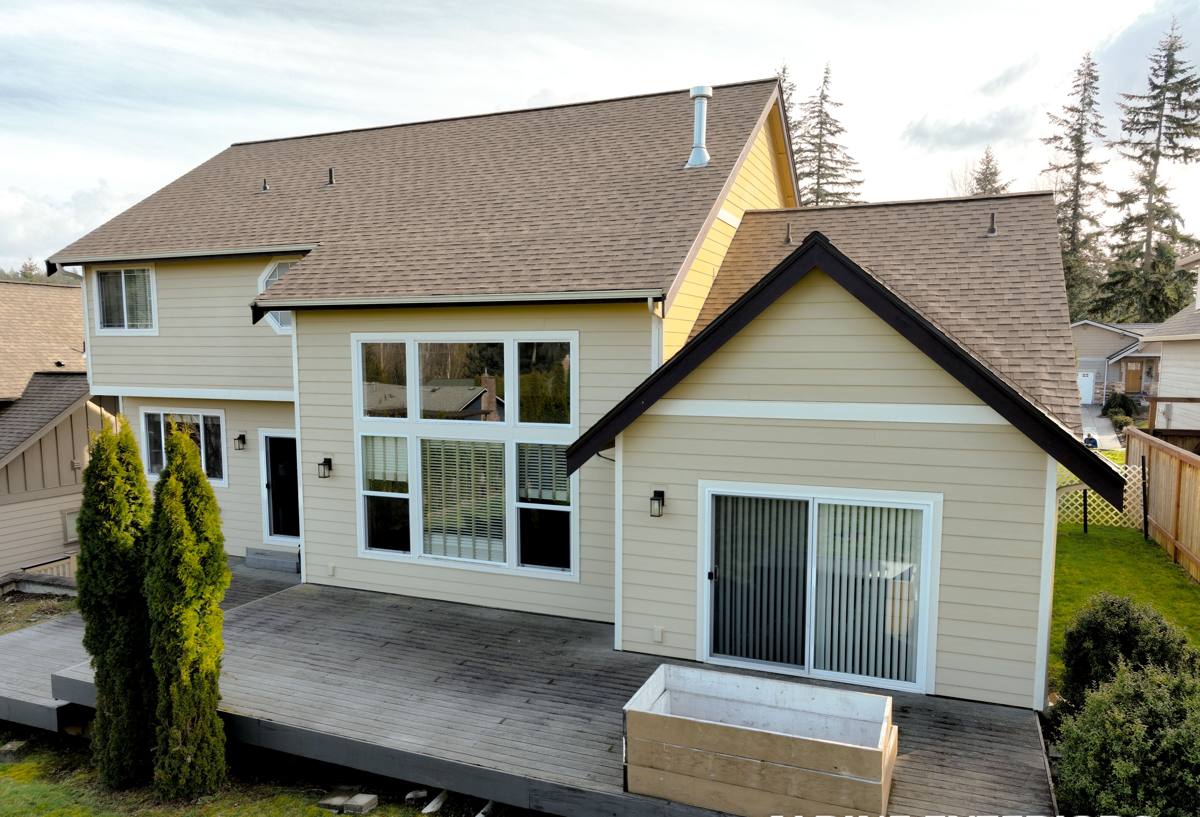
The Silver Lake area mixes older ranch and split-level houses built from the 1960s through the 1980s with newer construction closer to the water. That age spread matters for window work. A lot of the older stock still has its original aluminum-frame or early vinyl windows, sometimes replaced once already with a builder-grade unit that was never properly flashed. Add in the mature fir and cedar canopy that shades much of the neighborhood, and you get a specific combination: windows that stay damp longer after every rain because they're shaded from drying sun, and frames that have to deal with organic debris — needles, pollen, moss spores — settling into tracks and sills year-round.
None of that is unique to any one house here. It's the pattern we see across the neighborhood, and it changes what "correct installation" means compared to a drier climate or a house that gets full afternoon sun.
What Everett's Climate Does to Windows Over Time
Snohomish County's marine climate means long stretches of low-intensity rain rather than occasional downpours, high ambient humidity most of the year, and a moss season that can run eight months or longer in shaded spots. None of that damages a window overnight — it's cumulative, and it shows up in predictable ways.
Moss and Debris in Tracks and Sills
Weep holes at the bottom of a window frame exist to let water that gets past the outer seal drain back out. Once moss, needles, or dirt pack into those weep paths, water backs up inside the frame instead of draining. That trapped moisture is what rots wood sills and corrodes aluminum hardware over a few seasons, and it's one of the most common issues we find on service calls in this neighborhood — not from a bad window, but from a drainage path nobody ever cleared.
Seal Failure and Fogged Glass
Dual-pane windows rely on a sealed gap between the panes to hold their insulating gas fill. That seal has a service life, and constant humidity swings — soaked in the fall and winter, drying briefly in summer — accelerate seal breakdown compared to a stable, dry climate. Fogging or a hazy film between the panes means the seal has failed and the insulating value is gone; it can't be cleaned out, only replaced.
Salt-Influenced Air and Hardware Corrosion
Everett sits close enough to Puget Sound that homes throughout the area, including inland neighborhoods like Silver Lake, get some exposure to salt-laden air on top of the general humidity. Over years, that accelerates corrosion on aluminum frames, hinges, and locking hardware faster than it would inland. It's a slow effect, but it's part of why older aluminum windows in this area often show pitting and stiff operation well before the glass itself fails.
Signs a Silver Lake Homeowner Shouldn't Ignore
- Fog, haze, or visible moisture between the glass panes
- A noticeable draft near the frame even with the window latched
- Sashes that stick, drop, or won't stay open on their own
- Soft, spongy, or discolored wood at the sill or bottom corners
- Moss or dark staining building up inside the track
- Daylight visible around the frame from inside
- Condensation forming on the inside of the glass in cold weather
- A heating bill that's crept up without any other explanation
Any one of these on its own might just need a repair. Several at once, especially on a west- or south-facing wall that takes the brunt of driving rain, usually means the window and its flashing are due for a real look.
What a Correct Window Installation Actually Involves
Window installation is easy to do adequately and hard to do correctly. In a climate this wet, the difference between the two shows up in five to ten years, not on install day.
Flashing and Weather Barrier Integration
The single biggest factor in whether a window leaks over time is how it ties into the wall's weather-resistant barrier. Water has to be directed to shed outward and downward past the window opening, layered like shingles, so it never gets a path to travel behind the siding. This is the step that gets rushed on quick installs, and it's the one that costs the most to fix later once it's caused hidden rot.
Sill Pans and Drainage
A sill pan at the base of the rough opening gives any water that does get past the window a way out instead of a place to pool. It's a small, inexpensive component that makes a real difference in a climate where the window opening is exposed to moisture most months of the year.
Shimming, Squaring, and Insulation
A window has to be shimmed level, plumb, and square before it's fastened, or it won't operate correctly and won't seal evenly for its whole service life. The gap around the frame should be filled with a low-expansion foam or backer rod rather than packed solid with standard spray foam, which can bow the frame and cause operational problems.
Exterior Sealant Selection
Not every caulk is meant for this climate. We use sealants rated for continuous UV and moisture exposure, and we leave the weep points designed into the window unsealed so the drainage system can still do its job — sealing a window completely shut looks tidy but works against how the window is engineered to shed water.
Retrofit vs. Full-Frame Replacement
One of the first decisions on any project is whether the existing frame stays in place (a retrofit or "insert" replacement) or comes out entirely (full-frame). It depends on the condition of what's already there, not on preference.
| Factor | Retrofit (Insert) | Full-Frame Replacement |
|---|---|---|
| Best suited for | Sound existing frame with no rot or damage | Rotted, damaged, or badly out-of-square frames |
| Access to flashing/WRB | Limited — existing flashing stays in place | Full access to re-flash the opening correctly |
| Disruption to siding | Minimal | Siding at the opening is disturbed and repaired |
| Typical cost | Lower | Higher |
| Long-term fit for this climate | Good, if the frame and flashing were sound to start | Best option when moisture has already reached the framing |
We tell homeowners honestly which category their windows fall into. A retrofit on a frame that's already been taking on water just seals a problem behind new trim — it doesn't solve it.
Choosing Materials for This Climate
Frame material matters more here than in a dry climate, because whatever you choose is going to spend most of the year damp.
| Frame Material | Moisture Behavior | Maintenance | Notes for This Area |
|---|---|---|---|
| Vinyl | Doesn't rot or corrode; won't absorb water | Low | Most common choice for this climate and budget range |
| Fiberglass | Very stable; minimal expansion/contraction | Low | Holds up well to wet-dry cycling; higher upfront cost |
| Wood-clad | Exterior clad protects wood, but any breach exposes it to rot | Moderate to high | Interior wood look; needs sound flashing and sealant maintenance |
| Bare aluminum | Poor — conducts cold and is prone to corrosion near salt air | Moderate | We don't recommend it for new installs in this area |
For glass, dual-pane with a low-E coating and argon fill is the standard we install for Snohomish County's energy code and climate. On walls that take the most driving rain, we'll also talk through slightly upgraded seal warranties, since that's the component most exposed to our weather.
Our Installation Process
- On-site assessment of existing windows, framing condition, and drainage paths
- Honest recommendation: repair, retrofit, or full-frame replacement
- Product selection based on the wall's sun and rain exposure
- Careful removal and inspection of the opening for hidden moisture damage
- Correct flashing, sill pan, and weather barrier integration
- Precision shimming, squaring, and low-expansion insulation
- Exterior sealant and trim work matched to the existing siding
- Walkthrough with the homeowner and warranty paperwork
If a hidden rot or flashing problem turns up once we open the wall, we stop and show it to the homeowner before proceeding — that's not an upsell, it's the only honest way to price a job accurately.
Why a Crew That Already Works Silver Lake Matters
Window installation done wrong doesn't usually fail in the first year — it fails quietly, behind the siding, over the next five. A crew that works this specific neighborhood regularly has already seen how the tree canopy and shading here keep certain walls damp longer than others, which windows in this area tend to fail from moss-clogged drainage versus which fail from old seals, and how to sequence a window replacement with siding work so flashing only gets disturbed once instead of twice. We also handle the Snohomish County permitting and energy code requirements that apply to window replacements as a normal part of the job, not as an afterthought.
That local familiarity is also why we can usually tell a homeowner fairly quickly, from a short look at the frame and sill, whether they're dealing with a simple weep-hole cleaning or something that needs a real replacement — instead of guessing at it from a general climate zone that doesn't account for how shaded and damp this particular area stays.
Get an Honest Look at Your Windows
If you're noticing drafts, fogged glass, or sticking sashes on a Silver Lake home, we're happy to come take a look and give you a straight answer about what's actually going on — no pressure, no inflated scope. Use the form below to request a free estimate.