 Everett
 Window Replacement Built for West Everett's Weather
West Everett sits close enough to Puget Sound that homes here take a different kind of beating than houses a few miles inland. Salt-laden air off the water accelerates corrosion on hardware and fasteners. Driving rain, pushed sideways by wind off the Sound, finds every gap in a tired window frame. And the long gray stretch from October through May keeps siding, trim, and window sills damp for weeks at a time, which is exactly the environment moss and mildew need to take hold. If you've owned a house in this neighborhood for more than a few years, you've probably already noticed one or more of these signs: sashes that stick or won't stay up, a persistent draft near the frame, fogging between panes, or paint and caulk failing faster than it should.
Window replacement isn't just a cosmetic upgrade here — it's one of the more effective things you can do to stop water intrusion, cut heating costs, and protect the wall framing behind the window. But it only works if the install accounts for how this specific area behaves in weather, not just what looks good in a showroom.
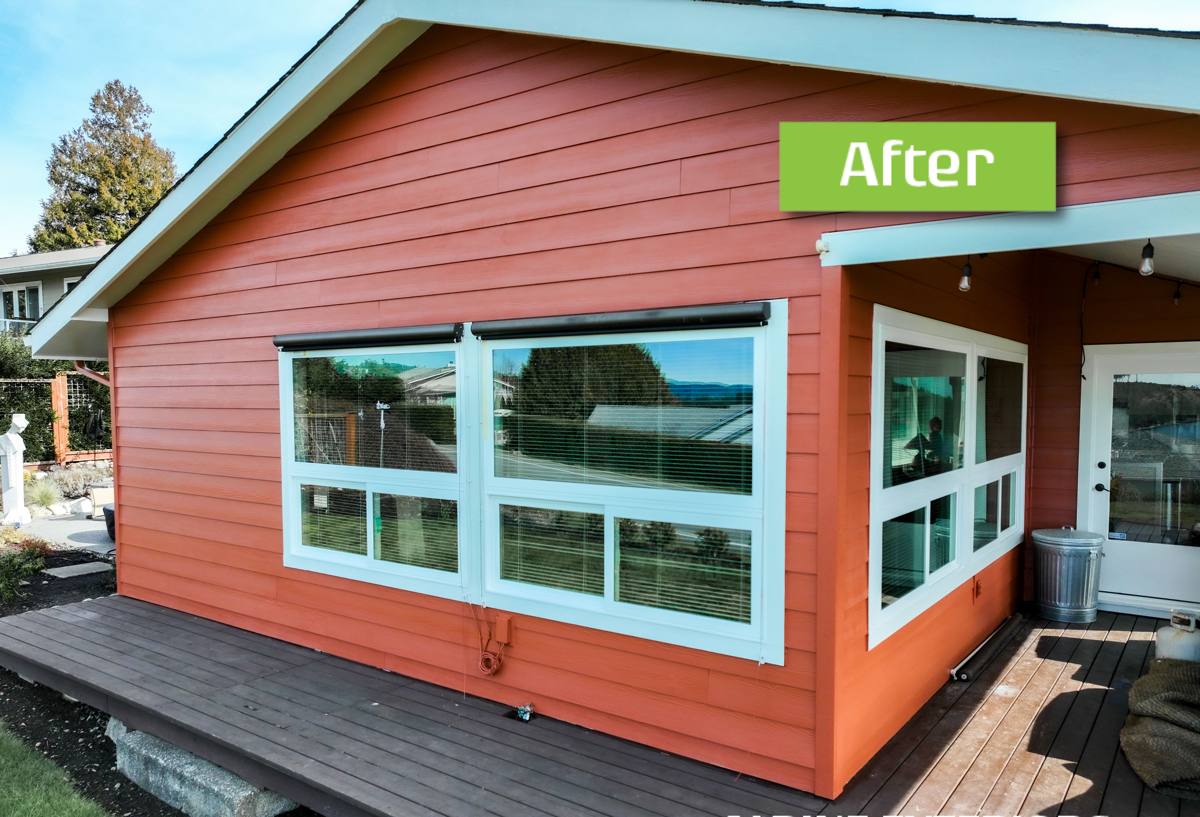
What West Everett Homes Actually Need From New Windows
Weather Resistance That Matches the Exposure
Not every house in West Everett faces the same conditions. A home with more direct westerly or southwesterly exposure toward the Sound catches more wind-driven rain and salt air than a home tucked behind other structures or mature trees. We look at your home's actual orientation and exposure before recommending glass packages, frame materials, and flashing details — a one-size answer isn't a correct answer here.
Moisture Management, Not Just a Weather-Tight Seal
A window can be perfectly sealed the day it's installed and still fail in three years if the flashing and drainage path behind it are wrong. Snohomish County's wet season means any water that does get past the sash needs somewhere to go — a proper sill pan and integrated flashing plan matter more here than in a drier climate, because there's simply more moisture testing the details, more often.
Materials That Shrug Off Moss and Mildew Growth
Constant dampness feeds organic growth on frames, sills, and the trim around them. Frame materials and finishes that resist moisture absorption and don't give moss and mildew a foothold hold their appearance and function far longer than materials that stay damp against the wood.
Signs It's Time to Replace, Not Repair
- Visible condensation or fogging between panes of a double- or triple-glazed window (a sign the seal has failed)
- Wood sills or frames that feel soft, spongy, or show dark staining
- Drafts you can feel with a hand near the frame on a windy day
- Paint or caulk that cracks and fails within a year or two of being redone
- Windows that are difficult to open, close, or lock — often a sign the frame has shifted or swollen
- A noticeable jump in heating bills without any other explanation
- Visible gaps between the window frame and siding or trim
If you're only seeing one or two of these and the frame itself is sound, a repair or re-caulk may buy you more time. Once moisture has reached the framing or the seal has failed, replacement is the more honest recommendation — patching a failed window usually costs money without solving the underlying problem.
What a Correct Window Replacement Involves
A window replacement done right is mostly about what happens before and around the window unit itself, not just swapping glass and frame.
1. Remove and Inspect
The old window comes out and we inspect the framing, sill, and sheathing underneath for water damage or rot. This is the point where hidden problems — the ones that caused the old window to fail in the first place — actually get found and fixed, rather than sealed back up behind a new frame.
2. Repair What's Underneath
Any soft or water-damaged framing gets replaced before the new window goes in. Installing a new window over compromised framing just delays the same failure.
3. Flash and Seal for Local Conditions
Proper flashing integration with the house wrap or weather barrier, plus a sill pan to direct any incidental water back outside, is non-negotiable in a climate that sees this much sustained rain. This step is invisible once the job is done, but it's the difference between a window that lasts and one that fails again in a few years.
4. Set, Shim, and Insulate
The window is set level and plumb, shimmed correctly so it operates smoothly, and the gap around it is insulated — not just caulked — to control both drafts and condensation risk.
5. Finish and Trim
Exterior trim and caulking are finished with materials suited to constant moisture exposure, and everything is cleaned up so the result looks intentional, not patched.
Comparing Common Frame Materials for This Climate
| Material | Moisture Behavior | Maintenance | Notes for This Area |
|---|---|---|---|
| Vinyl | Doesn't absorb moisture or rot | Low — occasional cleaning | Good general-purpose choice for wet, salt-air exposure; quality varies by manufacturer |
| Fiberglass | Very stable, resists warping | Low | Handles temperature and moisture swings well; typically a higher upfront cost |
| Wood-clad | Exterior clad protects the wood, but any breach in the cladding lets moisture reach the wood core | Higher — needs monitoring at joints and cladding seams | Attractive interior look, but riskier in constant damp exposure unless detailing is meticulous |
| Aluminum | Doesn't rot, but conducts heat and cold readily and can corrode near salt air without proper finishing | Moderate | Less common as a primary residential choice here for that reason |
We don't push one material on every job. The right call depends on your home's exposure, your budget, and how much long-term maintenance you're willing to take on. What we won't do is install a product whose moisture behavior or maintenance demands don't match what West Everett's climate actually requires — that's a decision we make based on our own installation standards, not brand preference.
Our Process, Start to Finish
- Walkthrough and assessment: We look at each window's condition, your home's exposure to wind and rain, and what's driving the problem — drafts, failed seals, rot, or all three.
- Honest recommendation: We tell you which windows need replacing now, which can wait, and which are a repair rather than a replacement — with real numbers, not upsell pressure.
- Written estimate: Clear pricing by window, material, and glass package, so you know what you're paying for before any work starts.
- Scheduled install: We work efficiently to limit how long your home is opened up, which matters in a climate where an unexpected rain shower is always a possibility.
- Framing repair as needed: Any rot or water damage found during removal gets addressed and documented before the new window goes in.
- Final walkthrough: We check operation, seals, and finish work with you before calling the job done.
Why Hiring a Crew That Already Works West Everett Matters
Window replacement mistakes usually aren't visible for a year or two — they show up as a soft sill, a moldy corner, or a draft that wasn't there before. A crew that's worked this specific stretch of Snohomish County knows which exposures take the worst of the wind-driven rain, how fast moss establishes on north-facing trim in this microclimate, and what flashing details actually hold up through a full wet season rather than just passing inspection. That local pattern recognition is the difference between a window install that's fine on day one and one that's still tight five winters later.
It also means faster, more accurate estimates. We're not guessing at how your neighborhood's weather behaves — we've already seen it play out on homes nearby.
Questions Homeowners Ask Before Committing
How long does a typical window replacement take?
Most single-window replacements are a one-day job per opening once work begins, though full-home replacements take longer depending on window count and whether framing repairs are needed. We schedule around weather windows when possible to limit exposure during the install.
Do I need to replace all my windows at once?
No. Many homeowners replace windows in phases, prioritizing the ones with the worst drafts, failed seals, or water damage first. We'll help you sequence it sensibly if budget is a factor.
What's a realistic budget range?
Costs vary widely based on window size, frame material, glass package, and whether framing repair is needed. We give you an itemized, written estimate after seeing the actual windows — broad ballpark numbers without an inspection aren't useful to you.
If your windows are drafty, fogged, or showing signs of moisture damage, it's worth getting a straight answer on what's actually needed. Request a free, no-pressure estimate below and we'll walk your home, tell you what we see, and give you real numbers — no obligation.