 Everett
 Why Bayside Homes Face a Tougher Siding Environment
Homes in Bayside deal with a combination of conditions that most siding products were never really engineered for. Being close to the water means near-constant exposure to salt-laden air, which is corrosive to fasteners, hardware, and lower-grade cladding. Add in the driving, wind-pushed rain that comes through Snohomish County for much of the year, and a moss season that can stretch across most of the calendar, and you have a wall system that's under attack from three directions at once: salt, water, and organic growth. Siding that performs fine in a drier inland climate can fail early here — not because it's poorly made, but because it was never matched to this specific environment.
This page is about one thing: doing James Hardie fiber cement siding correctly on a Bayside home, given what this climate actually does to a house over time.
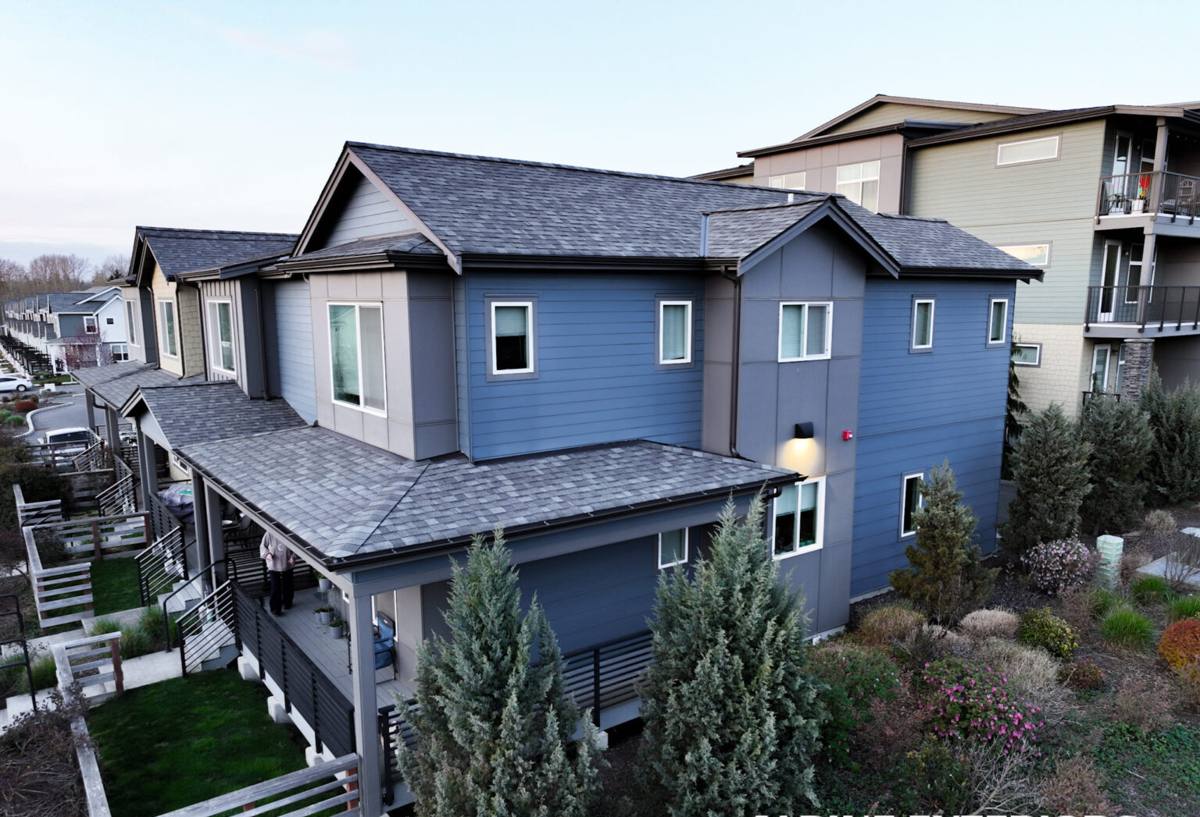
What Salt Air, Rain, and Moss Actually Do to a Wall System
It helps to understand the mechanics before talking about the fix. Salt air accelerates corrosion on any exposed metal — nails, flashing, fasteners — and it can also degrade certain paint and coating systems faster than a standard exterior finish is built to handle. Driving rain doesn't just wet the surface of a wall; wind pressure forces water sideways and upward, finding any gap in flashing, caulking, or panel overlap and pushing moisture behind the cladding rather than off of it. Once moisture gets behind siding, it has nowhere to go quickly in a climate that rarely gets a long, dry stretch to fully evaporate it out.
Moss and algae are the visible result of all that lingering moisture. They thrive on siding that stays damp on shaded or north-facing walls, and once established, they hold even more water against the surface, compounding the problem. A siding choice and installation method that doesn't account for all three of these — salt, wind-driven water, and prolonged dampness — is set up to underperform in Bayside regardless of what it costs.
Why This Matters More Here Than in a Typical Inland Neighborhood
Plenty of siding products look identical on a spec sheet until you put them in a marine-influenced, high-moisture climate for a few winters. The gap between "rated for exterior use" and "actually holds up a block from the water" is where a lot of premature siding failures come from.
Why We Only Install James Hardie
We standardized on James Hardie fiber cement siding for every project we take on, including here in Bayside, and we don't install vinyl, LP SmartSide, Cemplank, Allura, primed spruce, or cedar. That's not a marketing position — it's a practical one. Fiber cement is non-combustible, dimensionally stable, and doesn't absorb and swell with moisture the way wood-based products can. James Hardie's ColorPlus factory finish is baked on under controlled conditions rather than applied on site, which gives it better adhesion and color retention in a climate where paint gets tested hard by UV, salt, and constant damp-dry cycling.
We're not going to tell homeowners that other products are worthless — many have legitimate uses. But when we weigh moisture behavior, maintenance burden, and long-term performance against what a Bayside home actually needs, Hardie is the product we're willing to put our name behind and back with correct installation.
The Hardie Products We Choose for This Climate
James Hardie makes region-specific product lines, and that matters. Their HZ10 formulation is engineered for wetter, harsher climates like the Pacific Northwest, with a moisture and freeze-thaw performance profile suited to exactly the conditions Bayside sees. We select from lap siding, panel siding, and Hardie shingle siding based on the home's architecture, but the underlying HZ10 substrate stays consistent because it's the right match for this coastline.
- HardiePlank lap siding — the most common choice for full re-sides, available in several exposure widths and textures.
- HardieShingle siding — used for accent gables or homes going for a shingle-style look, without the moisture absorption of real cedar shingles.
- HardieTrim boards — for corners, window and door casings, and fascia, so the whole exterior envelope is fiber cement rather than mixing in wood trim that will weather differently.
- ColorPlus finishes — factory-applied color that resists fading and chipping better than field-applied paint, which matters when a house is getting hit with salt air year-round.
What a Correct Installation Looks Like Here
James Hardie siding is only as good as the installation behind it, and in a climate like this, installation details are the difference between siding that lasts decades and siding that traps moisture behind it within a few years.
The Details We Don't Skip
- Correct starter strip placement and consistent bottom clearance off decks, patios, and grade, so water has somewhere to go instead of wicking up into the bottom course.
- Proper flashing at every window, door, and roofline intersection — the most common place we find water intrusion on older, poorly installed siding.
- Manufacturer-specified nail placement and fastener spacing, using corrosion-resistant fasteners suited to a salt-air environment.
- Correct panel and joint gaps with the right sealant, not caulk smeared over gaps that are too tight or too wide.
- A drainage plane behind the siding wherever the wall assembly calls for one, so any moisture that does get past the cladding has a path down and out instead of sitting against the sheathing.
None of this is exotic — it's just James Hardie's own installation instructions followed completely, every time, rather than rushed or adapted to save labor hours.
Our Process, Start to Finish
We start with an on-site assessment of the existing siding and sheathing, because you can't price or plan a re-side correctly without knowing what condition the wall is in underneath the old cladding. In Bayside specifically, we pay close attention to north- and west-facing walls, areas with heavy moss buildup, and any spots where past caulking or flashing has clearly failed.
- Inspection and moisture check of existing siding and sheathing.
- Removal of old siding and repair or replacement of any damaged sheathing or framing found underneath.
- Installation of house wrap or a drainage plane where the wall assembly requires it.
- Flashing installed at every penetration, window, door, and roofline before a single panel goes up.
- James Hardie panels, trim, and accessories installed to manufacturer spec, with attention to fastener type and spacing for this climate.
- Final caulking, touch-up, cleanup, and a walkthrough so you know exactly what was done and how to maintain it.
Why a Bayside-Experienced Crew Makes a Real Difference
A crew that's worked other homes in this neighborhood already knows which walls tend to hold moss, how wind-driven rain typically hits certain exposures, and what the older housing stock in this part of Everett tends to have going on behind the existing siding before they ever pull the first piece off. That's not something you get from a crew that mainly works drier, inland jobs and treats every coastal Snohomish County project as a one-off.
It also means we're not guessing on code requirements or typical wall assemblies for this area — we're applying what we've already confirmed works on homes with the same exposure, the same rain patterns, and the same salt air your house deals with every day.
Cost Factors for a Bayside Hardie Siding Project
| Factor | Why It Affects Price |
|---|---|
| Condition of existing sheathing | Moisture-damaged sheathing found during tear-off requires repair before new siding can go on correctly |
| Home size and wall complexity | More corners, gables, and window/door penetrations mean more flashing detail and labor time |
| Product mix | Lap siding, shingle accents, and trim boards are priced differently, and most homes use a combination |
| Drainage plane requirements | Adding a rain screen or upgraded house wrap adds labor and material cost but pays off in a high-moisture climate |
| Access and site conditions | Tight lots, fencing, or difficult grading near the water can affect equipment access and labor time |
Keeping Your New Siding Looking Right
James Hardie siding is low-maintenance compared to wood, but "low-maintenance" doesn't mean "no maintenance," especially this close to the water. A little routine attention keeps it performing and looking the way it should for the long run.
- Rinse siding down once or twice a year to clear salt residue, dust, and early moss growth before it takes hold.
- Keep gutters and downspouts clear so water isn't overflowing directly onto siding runs below.
- Trim back vegetation and tree cover that keeps walls shaded and damp longer than they need to be.
- Check caulking at trim and penetrations periodically and have any cracked or missing sealant redone before it becomes a moisture path.
- Address any moss or algae growth promptly with a gentle wash rather than pressure that can force water behind panels.
If you're weighing a siding replacement for a Bayside home and want a straight answer about what your walls actually need, we're happy to take a look. Reach out for a free, no-pressure estimate using the form below.