 Everett
 Custom Windows for Glenhaven Homes
Glenhaven is a mixed neighborhood — older single-family homes sitting next to newer infill construction, additions bolted onto houses that were never designed for them, and porches or sunrooms added years after the original build. That mix is exactly where "custom windows" stops being a marketing term and starts being a practical necessity. When an opening isn't a standard stock size, isn't square, or was framed for a window style that's no longer made the same way, you can't just order a replacement off a shelf. Someone has to measure the actual opening, account for how the house has settled, and either special-order or fabricate a window that fits it correctly.
We work on homes across Everett and the rest of Snohomish County, and Glenhaven's housing stock is a good example of why "custom" and "correct" go hand in hand. A window that's slightly undersized or improperly flashed doesn't just look wrong — in this climate, it becomes a slow, ongoing water and air-sealing problem.
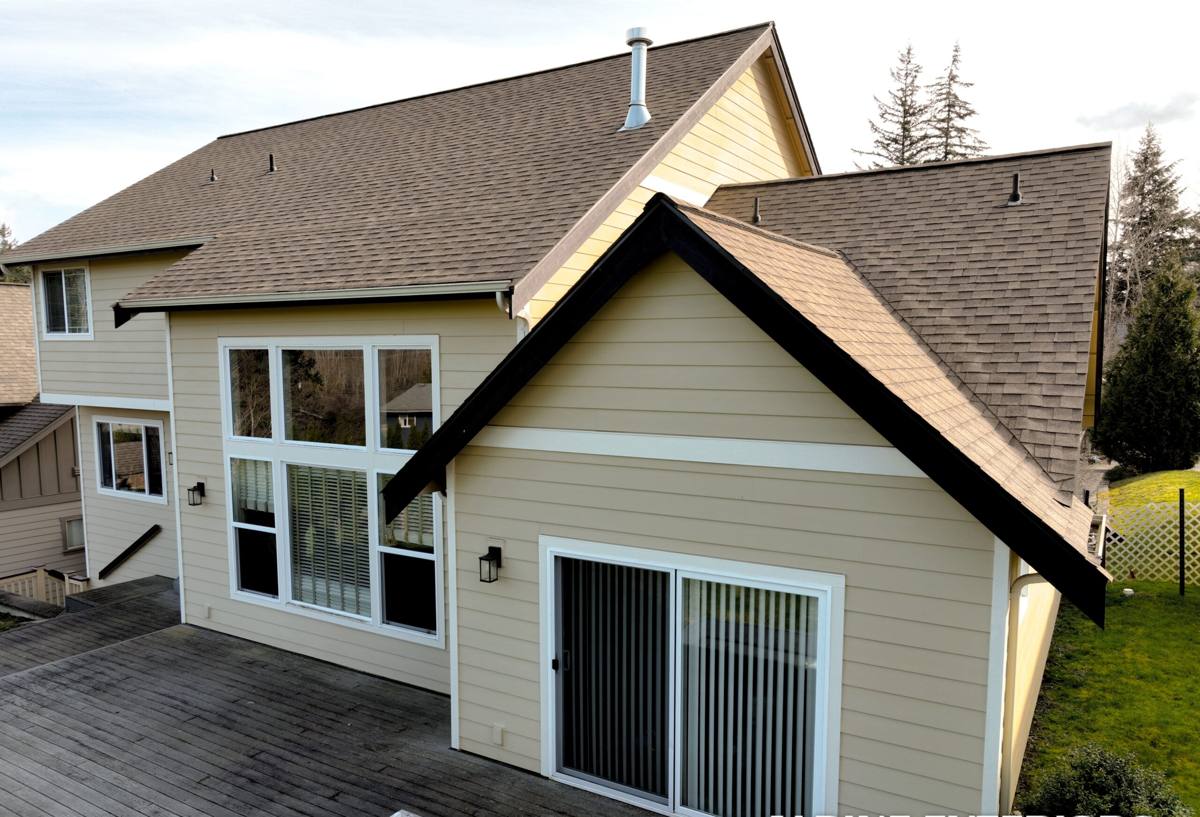
What Everett's Climate Does to Windows Over Time
Snohomish County's climate is mild compared to a lot of the country, but mild doesn't mean easy on building materials. Three things in particular wear on windows here, year after year.
Salt Air
Everett sits close enough to Puget Sound that salt-laden air reaches inland neighborhoods, not just waterfront properties. Salt air accelerates corrosion on metal window components — hinges, balance mechanisms, screen frames, and especially lower-grade aluminum. It also breaks down some sealants and finishes faster than they'd wear in a dry inland climate. Over a decade or two, that corrosion is often what causes a window to stop operating smoothly long before the glass or frame actually fails.
Driving Rain
Everett gets a lot of rain, and a meaningful share of it comes in sideways during winter storms, driven by wind off the Sound. Driving rain finds every gap in flashing, every undersized bead of sealant, and every spot where a window wasn't shimmed and set level. A window that would perform fine in a climate with mostly straight-down rain can leak here if the flashing detail wasn't built for wind-driven water.
Moss and Prolonged Damp
The long wet season means moss and algae get a real foothold on anything that stays damp and shaded — window sills, trim, and the wood or composite material around older frames. Moss holds moisture against the surface it's growing on, which speeds up rot in wood components and can stain or degrade lower-quality vinyl and composite trims. It's a slow process, but it's constant for months at a time every year.
None of this means Glenhaven homes need anything exotic. It means the materials, sealing details, and installation sequence have to be chosen with this specific combination of conditions in mind, rather than defaulting to whatever's cheapest or fastest to install.
What "Custom" Actually Means in Practice
People sometimes assume "custom windows" means expensive or decorative. Usually it just means the window has to be made or ordered to match a real-world opening instead of a catalog size. That comes up constantly in older neighborhoods like Glenhaven:
- Openings that are slightly out of square from decades of house settling
- Additions or converted porches with rough openings that don't match any standard window dimension
- Bay, bow, or picture window configurations that need to be built as a matched set
- Replacing an odd shape — an arch top, an angled gable window, a narrow transom — where nothing on a shelf will work
- Matching sightlines and trim proportions across a wall of windows so the house doesn't end up with a mismatched look
In every one of these cases, the job starts with accurate field measurement, not a guess based on the old window's nominal size. Get that wrong and you're either forcing a window into an opening it doesn't fit, or leaving gaps that have to be packed with foam and trim and hoped to hold — which is exactly the kind of shortcut that fails first in driving rain.
Choosing Materials for Coastal Exposure
Material choice matters more here than it would in a drier, calmer climate. Here's how the common options generally hold up under salt air, wind-driven rain, and a long damp season:
| Material | Coastal/Moisture Performance | Maintenance | General Cost Position |
|---|---|---|---|
| Vinyl | Good moisture resistance, won't corrode; quality varies a lot by manufacturer | Low — occasional cleaning | Lower to mid |
| Fiberglass | Very stable in temperature swings and damp conditions; resists warping | Low | Mid to higher |
| Wood-clad (exterior clad, wood interior) | Good if cladding and flashing are done right; exposed end grain or gaps invite rot over time | Moderate — clad exterior, interior wood may need occasional attention | Higher |
| Aluminum | Prone to corrosion and condensation in salt air unless it's a marine-grade or thermally broken product | Moderate to high | Varies widely |
We don't push one material for every job — the right choice depends on the home's style, the homeowner's budget, and how exposed the specific wall or elevation is to wind and rain. What we do avoid is installing lower-grade aluminum or unclad wood in fully exposed, weather-facing walls in this climate, because the maintenance burden and long-term moisture risk usually outweigh any upfront savings. That's a professional judgment call based on how these materials behave over years of Snohomish County weather, not a knock on any specific manufacturer.
What a Correct Custom Installation Involves
The window itself is only part of the job. In a climate with sideways rain and a lot of standing damp weeks, the installation details are what actually keep water out.
Accurate Measurement and Prep
Every opening gets measured on site — width, height, and diagonal checks for square. If the framing has shifted over the years, that gets addressed before the new window goes in, not covered up with extra caulk.
Flashing and Drainage Path
Proper flashing creates a path for any water that gets behind the siding to drain back out, rather than sitting against the framing. This is the single most common point of failure we see on older or poorly installed windows in this area — skipped or reversed flashing that traps water instead of shedding it.
Sealing Built for Wind-Driven Rain
Sealant and weatherstripping choices account for wind pressure, not just still-air rain. A bead of caulk that would hold up in a calmer climate can fail under sustained wind-driven water.
Fit and Operation
A custom window has to be shimmed, leveled, and fastened so it operates smoothly for years — not just look right on installation day. Hardware exposed to salt air gets checked for corrosion resistance appropriate to the location.
How We Approach a Glenhaven Custom Window Project
The process is straightforward, and it's the same whether it's one odd-shaped window or a full-house replacement:
- On-site assessment — we look at the existing openings, framing condition, and how exposed each wall is to wind and rain.
- Accurate measurement — every custom opening is field-measured, not estimated from the old window's label.
- Material and glass selection — we walk through the trade-offs above in plain terms so the decision fits the budget and the exposure of that specific wall.
- Removal and prep — old windows and any compromised framing, sill, or flashing material come out, and the opening is checked and corrected before anything new goes in.
- Installation with proper flashing and sealing — built for wind-driven rain, not just vertical rainfall.
- Final check and cleanup — operation, seal, and trim are checked before we consider the job finished.
Why a Crew That Already Works Glenhaven Matters
Every neighborhood in Everett has its own quirks in housing age, construction style, and exposure to weather, and Glenhaven is no exception. A crew that's already worked houses in this area has a head start on knowing what kind of framing, siding, and window conditions to expect before they even open the walls up. That means fewer surprises, more accurate estimates, and less time spent re-explaining the basics of the home's construction.
There's also a practical side to hiring locally in Snohomish County: permitting requirements, typical inspection expectations, and realistic scheduling around our wet season are all things a local crew already has a handle on. A crew driving in from outside the area doesn't carry that same familiarity, and it can show up in scheduling delays or details that don't quite match how homes here are actually built.
Signs Your Glenhaven Home May Need Custom Window Work
- Windows that are hard to open, stick, or won't stay up without a prop
- Visible gaps, uneven reveals, or trim that doesn't sit flush around the frame
- Condensation between panes, which usually means a failed seal on an older insulated unit
- Soft or discolored wood trim or sill, especially on north- or west-facing walls
- Moss or algae buildup that keeps returning on sills or trim within weeks of cleaning
- Drafts you can feel near the frame on a windy day
- An addition, porch conversion, or remodeled room with windows that were never a great fit to begin with
Any one of these on its own might just need a repair. Several together, especially on an older home, are usually a sign it's time to talk about a proper custom replacement instead of another patch.
Getting an Honest Estimate
Custom window work is never one-size-fits-all, and pricing depends on the number and shape of openings, the material chosen, and what condition the existing framing is in. The only way to give an honest number is to actually look at the openings in person. If you're in Glenhaven or elsewhere in Everett and dealing with drafty, stuck, or aging windows, we're happy to come take a look and put together a free, no-pressure estimate — use the form below to get started.