 Everett
 Metal Roofing in Lynnwood: Built for What This Climate Actually Does
Lynnwood sits in the southern end of Snohomish County, inside the same marine-influenced weather system that shapes exterior work across this whole region. That means salt-tinged air moving in off the Sound, rain that arrives sideways as often as it falls straight down, and mild, damp conditions that give moss and algae a growing season that runs most of the year rather than a few weeks in spring. A roof that isn't specified with those conditions in mind — the wrong coating, the wrong fastener, underlayment that isn't rated for sustained moisture — tends to show its age here faster than a homeowner expects, no matter what the material is.
We install siding, roofing, windows, and decks throughout the area, and metal roofing has become one of the more common requests we get from Lynnwood homeowners looking for a roof that outlasts a couple of asphalt replacement cycles. Done right, a metal roof is one of the better matches for this climate. Done with the wrong panel system, the wrong underlayment, or corner-cut flashing, it can develop problems just as easily as any other roofing material — sometimes in ways that are more expensive to fix. This page walks through what actually matters on a metal roof in this specific climate, not the generic version of the pitch.
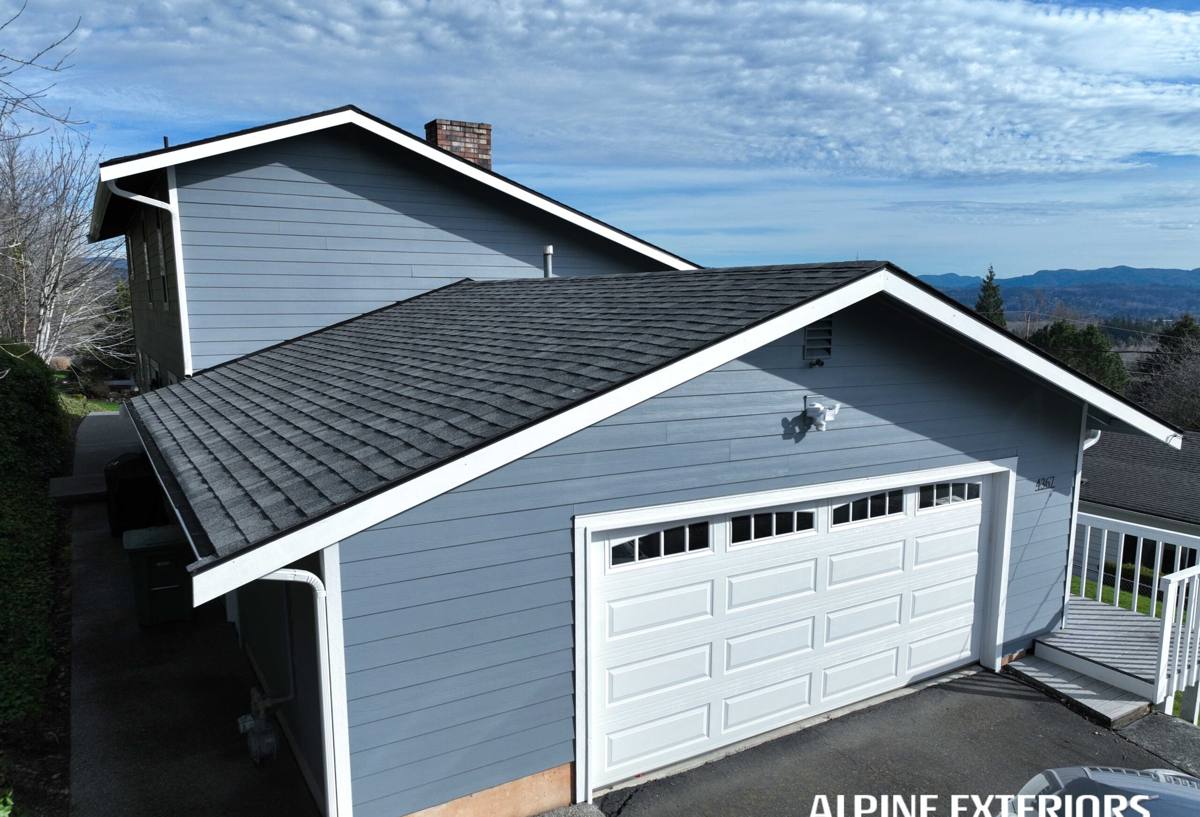
What Salt Air, Driving Rain, and Moss Season Do to a Roof
Salt-Tinged Marine Air
Lynnwood isn't a waterfront town, but it sits within the broader Puget Sound air pattern that carries salt-laden moisture inland across South Snohomish County. That exposure is less severe than it is on a shoreline lot, but it's still real, and it matters most for anything metal on the roof — fasteners, flashing, and the roofing panels themselves. Lower-grade coatings and uncoated or poorly coated hardware corrode faster under that kind of sustained exposure, which is why coating system and fastener spec matter as much as the panel material on a metal roof here.
Wind-Driven Rain and Underlayment
Rain in this part of Washington doesn't reliably fall straight down. Wind pushes it sideways into valleys, under panel laps, and around every penetration — vent pipes, chimneys, skylights. On a metal roof, that makes underlayment and flashing detail work just as important as the panels on top of them, maybe more so, because the panels themselves shed water well when everything underneath is done correctly. Where roofs fail in this climate, it's almost always at a transition or penetration, not across the open field of the roof.
Moss, Shade, and Tree Canopy
A lot of Lynnwood's residential streets have real tree cover, and shaded, north-facing roof planes stay damp longer than sun-exposed ones. Moss doesn't take hold on a smooth metal surface the way it does on asphalt shingle granules, which is one of metal's real advantages here — but valleys, gutters, and any spot where leaves and needles collect will still need periodic clearing, and debris sitting against a metal roof's edge or in a valley long-term can still trap moisture against flashing and fasteners.
Why Metal Roofing Makes Sense for a Lot of Lynnwood Homes
Metal isn't automatically the right choice for every roof or every budget, but it holds up well against exactly the conditions this area produces. A properly installed metal roof sheds wind-driven rain efficiently because it has far fewer laps and seams than a shingle roof, resists the moss and algae growth that shortens the life of asphalt in shaded, damp conditions, and carries a Class A fire rating. It also handles the occasional wet snow this area sees better than most materials — snow tends to slide off a smooth metal surface rather than sitting and adding sustained weight. For homeowners planning to stay in a house long-term, the extended lifespan compared to asphalt is usually the deciding factor once they've priced it out.
The trade-offs are real too: higher upfront cost, a different visual profile than a shingle roof, and a job that has less room for error on the flashing and underlayment details than a straightforward shingle tear-off. We'll walk through the actual math for your roof rather than assuming metal is automatically the right call.
Standing Seam vs. Exposed-Fastener Panels: Choosing the Right System
"Metal roofing" covers more than one system, and the differences matter more than most homeowners realize going in. The two most common options for a residential roof in this area are standing seam and exposed-fastener panel systems.
| Feature | Standing Seam | Exposed-Fastener Panel |
|---|---|---|
| Fasteners | Hidden, attached with floating clips beneath the seam | Screwed directly through the panel face |
| Thermal movement | Panels can expand and contract without stressing fasteners | Fasteners are fixed points that can work loose over years of movement |
| Long-term weak point | Seam and clip quality at install | Fastener washers/gaskets, which degrade and need eventual replacement |
| Typical cost | Higher material and labor cost | Lower upfront cost |
| Best fit | Long-term ownership, complex rooflines, best moisture performance | Simpler rooflines, tighter budgets, secondary structures |
Exposed-fastener panels aren't a bad product — they're a legitimate, widely used system, and they can perform well for decades when the fastener pattern and gasket quality are right and someone is willing to inspect and replace worn fasteners over time. Standing seam simply removes that maintenance item entirely, which is a meaningful difference in a climate where every roof penetration is a spot rain can eventually find its way through.
What a Correct Installation Actually Involves
Underlayment and Condensation Control
Metal conducts temperature quickly, and in a cool, humid climate like ours, warm interior air meeting the cold underside of a metal panel can condense — enough, over time, to look and behave like a roof leak that has nothing to do with the panels themselves. A correct install uses underlayment rated for sustained moisture exposure and, on most jobs, either a vented batten system or a high-perm underlayment that lets that moisture escape rather than trapping it against the roof deck.
Flashing and Penetrations
Every valley, chimney, vent pipe, and roof-to-wall transition gets flashing detailed and lapped specifically for the panel profile being installed, not a generic one-size-fits-all approach. Pipe boots made for metal roofs are different from standard shingle boots and need to be matched to the actual panel system.
Fasteners, Gauge, and Coating
In an area that still sees salt-tinged marine air, fastener and flashing hardware should be corrosion-resistant, not just the cheapest option that passes inspection. Panel gauge (thickness) affects both denting resistance and how much "oil canning" — the visible waviness some metal roofs show — you'll see on flat panel runs. Coating system matters just as much: a PVDF (often called Kynar) finish holds color and resists chalking significantly longer than a lower-cost SMP coating, which is worth understanding before you compare two quotes that look similar on price.
Cost Factors and What Actually Moves the Number
Metal roofing costs vary more than asphalt does, mostly because "metal roof" covers a wide range of systems, coatings, and complexity. The table below covers the main factors that move a quote up or down.
| Factor | Why It Affects Price |
|---|---|
| Panel system | Standing seam runs higher than exposed-fastener due to material and labor complexity |
| Coating | PVDF/Kynar finishes cost more upfront than SMP but hold color and resist fading longer |
| Roof complexity | Steep pitches, multiple valleys, dormers, and skylights add labor and flashing work |
| Tear-off vs. recover | Removing old roofing and repairing deck issues costs more than installing over sound decking, when that's an option |
| Ventilation upgrades | Adding proper intake/exhaust venting or a batten system for condensation control adds cost but prevents bigger problems later |
We'll break down where your specific quote lands on each of these rather than handing you a single number with no explanation behind it.
Signs Your Lynnwood Roof Needs a Closer Look
- Rust streaking below fasteners or panel seams on an existing metal roof
- Loose, backed-out, or missing fasteners on an exposed-fastener panel roof
- Water staining on interior ceilings, especially near valleys, chimneys, or roof-to-wall transitions
- Visible gaps or lifted flashing around vent pipes and skylights
- Debris buildup in valleys or along the eave that isn't draining properly
- Condensation or dripping from the underside of the roof deck in the attic, separate from any active rain
- An aging asphalt roof with recurring moss regrowth and granule loss in gutters, worth evaluating against a metal replacement
Any one of these is worth a professional look before it turns into a deck repair or interior damage. On an existing metal roof, most of these issues are addressable as a repair if caught early — it's neglected fastener maintenance or long-ignored flashing damage that eventually forces a bigger fix.
Our Process, From Inspection to Cleanup
We start with an on-site inspection of the existing roof, or the framing if it's new construction, and talk through panel system, coating, and color options based on your budget and how long you're planning to stay in the house. From there we handle permitting through the appropriate local jurisdiction, schedule tear-off or prep work, and install with the underlayment, ventilation, and flashing details covered above as standard practice, not an upsell. We clean up thoroughly at the end of the job, including a magnetic sweep for stray fasteners around the property, and walk the finished roof with you before we consider the job done.
Why a Local Snohomish County Crew Matters
A crew that installs metal roofs across Snohomish County through every season learns things that don't show up on a spec sheet — which panel profiles handle this area's wind-driven rain best, how much ventilation a given attic actually needs to avoid condensation issues, and which flashing shortcuts show up as callbacks two winters later instead of on install day. It also means someone who's already familiar with Lynnwood's mix of established neighborhoods and newer developments, some of which carry HOA guidelines on roofing color and material that are worth checking before you order panels. We'd rather flag that up front than have a homeowner find out after the material's ordered.
Metal roofing is one part of the exterior work we do — we also handle siding, windows, and decks, and we install James Hardie fiber cement siding as our standard for the same reason we're particular about roofing details: this climate rewards materials and installation practices built for sustained moisture, not just a dry install day.
Get a Free, No-Pressure Estimate
If you're weighing metal roofing for a Lynnwood home — new construction, a full replacement, or you're just trying to understand whether it's worth the upgrade over asphalt — we're glad to take a look and walk you through the real trade-offs for your specific roof. Reach out using the form below to schedule a free, no-pressure estimate.