 Everett
 Why Lynnwood Roofs Wear Differently Than Roofs Inland
Lynnwood sits close enough to Puget Sound that homes here deal with a specific mix of conditions: salt-laden marine air, long stretches of steady rain rather than short heavy downpours, and mature tree cover that keeps roof surfaces shaded and damp for much of the year. None of that is dramatic on its own, but stacked together over years, it shortens the life of a roof that was installed without those conditions in mind.
Salt air is corrosive to unprotected metal. Fasteners, flashing, and drip edge that aren't rated for coastal-influenced environments can start to rust years before they should. Driving rain, especially wind-blown rain during winter storms, finds its way into gaps that would stay dry in a calmer climate — around chimneys, skylights, and wall-to-roof transitions. And Snohomish County's long moss season, often eight months or more where a roof stays shaded, means organic growth is working on the shingles almost year-round, not just in a wet month or two.
A roof built for Lynnwood has to account for all three at once. That's a different job than a standard reroof, and it's why the materials and details matter as much as the installation itself.
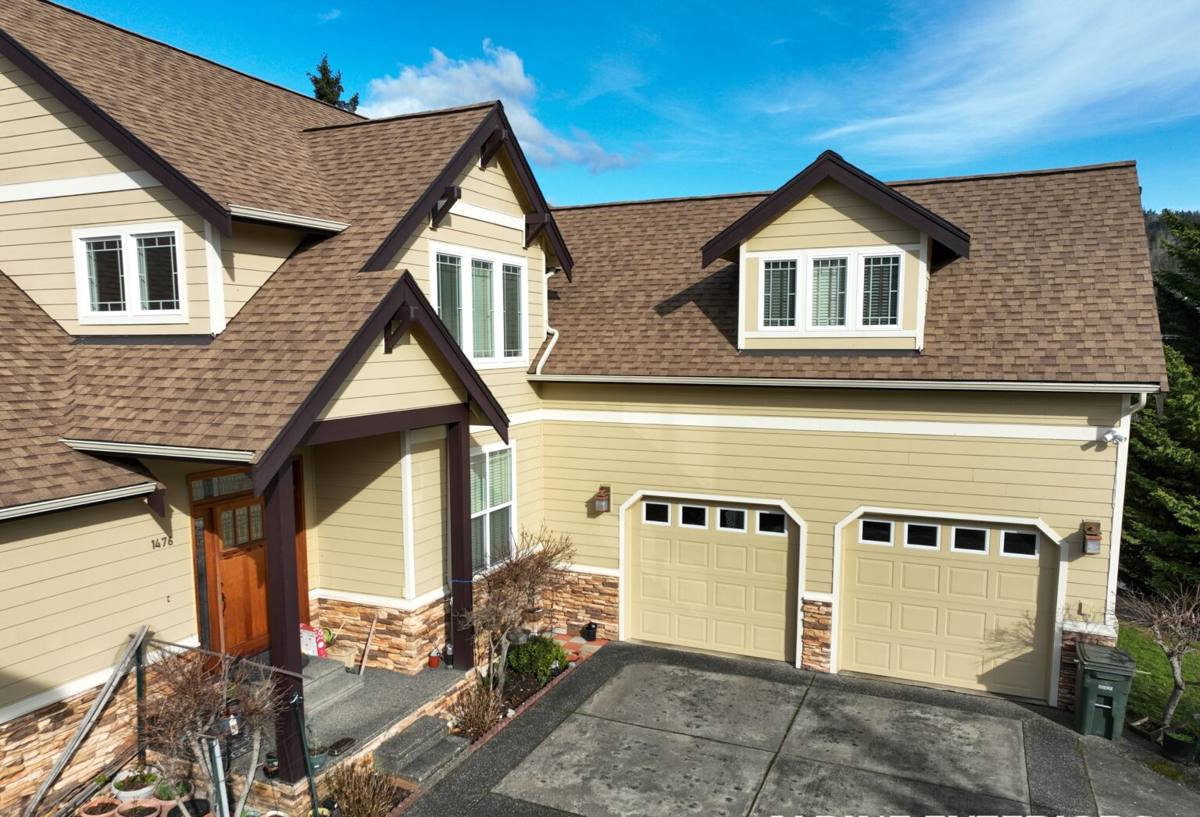
Signs Your Lynnwood Home Needs a New Roof, Not Another Repair
Age and Material Lifespan
Most composition shingle roofs in this region are rated for 25 to 30 years under ideal conditions, but moss, moisture, and salt air tend to shorten that in practice. If your roof is past the 20-year mark and has had more than one or two repairs, a patch is often a short-term fix on a system that's failing broadly, not just in one spot.
Visible Exterior Warning Signs
- Shingles that are cupping, curling at the edges, or missing granules in large patches
- Thick moss growth on the north-facing or shaded sections of the roof
- Rusted or lifting flashing around chimneys, vents, and skylights
- Sagging in the roofline, which can indicate deck damage underneath
- Dark streaking that keeps returning shortly after cleaning
Signs Showing Up Inside the House
Water stains on ceilings, musty smells in the attic, or visible daylight through the roof deck are all signs that moisture has already gotten past the shingles. By the time these show up, the deck itself may need repair or replacement, which is something worth confirming before a new roof goes on rather than after.
What a Correctly Installed Roof Actually Involves
A new roof is more than swapping old shingles for new ones. The parts homeowners don't see are what determine whether the roof holds up to Snohomish County winters.
Full Tear-Off and Deck Inspection
We remove the old roofing down to the deck rather than layering over it. That lets us actually see the plywood or OSB underneath and replace any sections that are soft, delaminated, or water-damaged — a common find on older Lynnwood homes where a leak went unnoticed for a while.
Underlayment and Moisture Protection
Given how much rain this area gets, the underlayment matters as much as the shingle on top of it. We use synthetic underlayment across the field of the roof and self-adhered ice-and-water membrane at the vulnerable points — eaves, valleys, and roof-to-wall transitions — where wind-driven rain is most likely to work its way underneath.
Ventilation Built for a Wet Climate
Balanced intake and exhaust ventilation keeps the attic dry and temperature-stable. In a marine climate, poor ventilation traps moisture in the attic, which leads to mold, rot, and premature aging of the roof deck from underneath — a failure mode that has nothing to do with the shingles themselves.
Flashing and Penetration Details
Chimneys, skylights, plumbing vents, and any wall that meets a roofline are where the vast majority of leaks start. Correct step flashing, counterflashing, and sealant work at these points is a slower part of the job, but it's the part that actually keeps water out for the long haul.
Roofing Material Options for Lynnwood's Climate
There isn't one "best" material for every home — it depends on your roof's pitch, sun exposure, budget, and how much long-term maintenance you want to take on. Here's how the common options compare for a home dealing with moss, rain, and salt air.
| Material | Typical Lifespan | Moss & Algae Resistance | Maintenance Needs |
|---|---|---|---|
| Standard architectural asphalt shingle | 20-25 years locally | Moderate — benefits from periodic cleaning | Low to moderate |
| Algae-resistant (copper/zinc-granule) shingle | 25-30 years locally | Higher — granules actively resist growth | Low |
| Metal roofing (standing seam) | 40+ years | High on steep slopes; less debris retention | Low, but needs coastal-rated fasteners |
| Cedar shake | Varies widely with upkeep | Low — retains moisture, needs regular treatment | High |
For most Lynnwood homes with tree-shaded roof sections, we steer people toward algae-resistant shingles or metal over plain architectural shingles — not because standard shingles are a bad product, but because the extra moss resistance pays for itself in fewer cleanings and a roof that looks better longer. Cedar shake can work on the right home, but it demands a maintenance commitment that most homeowners underestimate in a climate this wet.
How Our Installation Process Works
Every new roof we install for a Lynnwood or greater Everett homeowner follows the same sequence, whether the home is a small single-story or a larger two-story with multiple roof planes.
- On-site inspection and honest assessment of whether you need a repair or a full replacement
- Written estimate covering materials, labor, disposal, and any deck repair contingencies
- Permit pulled through the appropriate local jurisdiction before work begins
- Property protection — tarps and plywood at landscaping, siding, and windows
- Complete tear-off and deck inspection, with photos of any damage found
- Underlayment, ice-and-water membrane, and flashing installed at all vulnerable points
- New roofing material installed to manufacturer specifications
- Ventilation checked and corrected if intake or exhaust is inadequate
- Full site cleanup, including a magnetic sweep for stray nails
- Final walkthrough so you can see the finished work before we consider the job done
Moss, Algae, and Salt Air: Ongoing Roof Care After Installation
Even the right materials benefit from some upkeep in this climate. Keeping gutters clear so water doesn't back up under the shingle edge, trimming back branches that overhang the roof to cut down on shade and debris, and having moss gently removed rather than pressure-washed off (which can strip granules) will all extend the life of a new roof. If you're near enough to the Sound to notice salt on your car or windows, it's also worth having flashing and exposed fasteners checked every few years rather than assuming they'll hold up indefinitely.
None of this is meant to create work for you — a well-installed roof with the right materials shouldn't need much. But a five-minute gutter check after a windstorm is a lot cheaper than a ceiling repair.
Why Hiring a Crew That Already Works in Lynnwood Matters
We're based in Everett and do a lot of our work in Snohomish County, including Lynnwood. That matters for a few practical reasons: we already know which local jurisdiction handles permitting for a given address, we're familiar with how the microclimates in this area vary block to block depending on tree cover and sun exposure, and we're not driving in from out of the area to give an estimate and then disappearing if something needs a follow-up visit. A roof is a long-term investment, and it's worth having a crew nearby that stands behind the work after the last shingle is nailed down.
Permits, Timeline, and What to Expect During Your Project
Most residential reroofs are a permitted job, and we handle pulling that permit as part of the process rather than leaving it to the homeowner. Timeline depends heavily on the weather window — we plan around the rain rather than around a fixed calendar, since installing certain materials in a downpour isn't good practice regardless of deadline pressure. A typical single-family reroof, once started, usually wraps in a matter of days rather than weeks, though larger or more complex roofs with multiple planes or extensive deck repair can take longer.
Cost for a full replacement varies a lot based on roof size, pitch, number of layers being removed, material chosen, and how much deck repair is needed — an accurate number only comes from an in-person look at your specific roof rather than a generic estimate.
If your roof in Lynnwood is showing its age or you're just trying to plan ahead before the next wet season, we're happy to come take a look and give you a straight answer about what it actually needs. Reach out for a free, no-pressure estimate using the form below.