 Everett
 Why North Everett Siding Wears Out Faster Than the Warranty Card Says
Most siding products are rated and marketed based on lab conditions or a national average climate. North Everett doesn't get an average climate. Homes here sit close enough to the water to catch salt-laden air off Puget Sound, take on long stretches of driving, wind-blown rain through the fall and winter, and spend a good chunk of the year in the shade and dampness that moss thrives in. None of that is unusual for Snohomish County, but it does mean siding here needs to handle a heavier combination of moisture, salt exposure, and organic growth than the same product would face further inland.
That's the backdrop for every siding replacement we do in this neighborhood. We're not guessing at what North Everett homes need — we're accounting for salt air, driving rain, and moss season as design conditions, not afterthoughts.
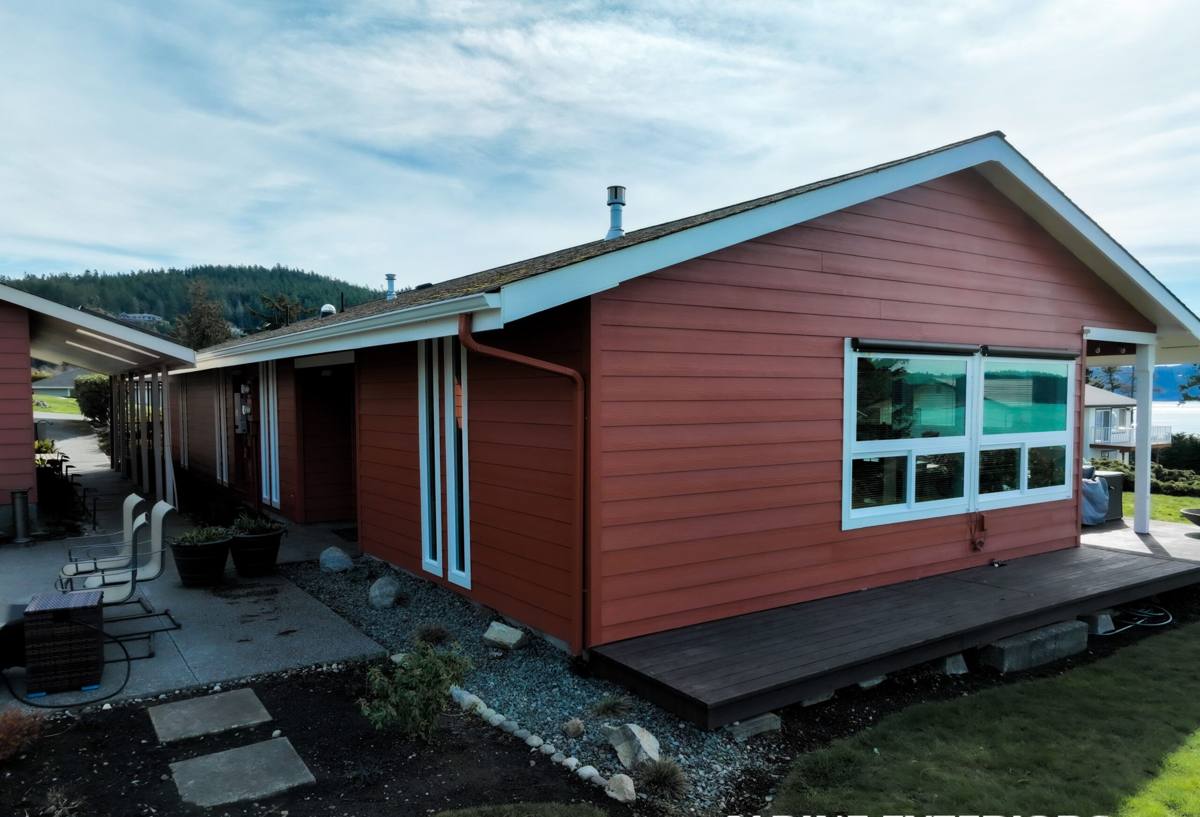
What's Actually Happening Behind Your Siding
Salt Air
Airborne salt doesn't just affect boats and metal railings. It settles on exterior surfaces, holds moisture against them longer than plain rainwater would, and accelerates the breakdown of paint films, caulking, and fasteners. Siding that's marginal on moisture resistance ages faster in a salt-air environment because the surface rarely gets a clean, dry reset between wet periods.
Driving Rain
Everett's winter storms don't just fall straight down — wind pushes rain sideways into wall assemblies, seams, and butt joints. A siding system that's fine in a light, vertical rain can still let water in when it's coming in at an angle. This is where flashing details and lap installation matter as much as the siding material itself.
Moss Season
Shaded north- and side-facing walls, mature landscaping, and our long stretch of gray, damp months add up to real moss and algae growth on exterior surfaces. Moss holds moisture against siding, and on materials that aren't dimensionally stable or properly sealed, that trapped moisture is what eventually causes swelling, delamination, or rot at the substrate.
Signs You're Due for a Replacement, Not Another Repair
- Soft or spongy spots when you press on the siding, especially near the bottom courses or below windows
- Paint that won't hold — repainted within the last few years but already peeling, bubbling, or chalking
- Persistent moss or dark streaking that comes back within a season of cleaning
- Visible gaps, warping, or buckling at seams and butt joints
- Cracked or missing caulking around trim, windows, and corners that keeps reappearing
- Interior signs — musty smell, staining, or soft drywall on an exterior wall
One or two of these on their own might mean a repair. Several at once, especially combined with the age of the siding, usually means the underlying material or installation has reached the end of what it can hold back.
What a Correct Siding Replacement Actually Involves
Tear-off and Sheathing Inspection
Replacement starts with removing the old siding down to the sheathing — not siding over it. That's the only way to find and fix hidden rot, soft sheathing, or old moisture damage before it gets sealed behind a new wall. On a coastal, wet-climate job like this, skipping that step is how homeowners end up paying to fix the same problem twice.
Weather-Resistive Barrier and Flashing
A correctly installed weather-resistive barrier, properly lapped and taped, along with flashing at every window, door, and horizontal transition, is what actually keeps driving rain out of the wall assembly. The siding itself is the visible layer — the barrier and flashing behind it are what do the real work during a sideways winter storm.
Fastening and Clearances
Fastener spacing, type, and depth all affect how the siding performs over time, and manufacturer specs exist for a reason — under- or over-driven fasteners are a common cause of premature failure. Ground clearance and proper gaps at trim and corners also matter here, since standing moisture and trapped debris are exactly what feed moss and rot in a climate like ours.
Finish
The finish coat is your first line of defense against salt air and UV. A factory-applied finish that's baked on and warrantied performs more consistently over time than field-applied paint, which is one of the practical reasons we standardized on a factory-finished product rather than relying on paint alone.
Comparing Siding Materials for North Everett's Climate
| Material | Moisture & Moss Resistance | Salt-Air Durability | Maintenance | Typical Lifespan |
|---|---|---|---|---|
| James Hardie fiber cement | Strong — dimensionally stable, won't swell or rot | Strong — non-combustible, factory finish holds up to salt exposure | Occasional wash, no repainting on ColorPlus finish | Multiple decades with proper install |
| Vinyl | Won't rot, but can warp or crack in temperature swings and trap moisture behind it if installed loose | Can fade and become brittle faster in salt-exposed, sun-and-storm cycles | Low, but cannot be repainted easily if it fades or cracks | Variable, shorter in harsh exposure |
| LP SmartSide (engineered wood) | Vulnerable at cut edges and seams if not perfectly sealed and maintained | Moderate — depends heavily on caulking and paint upkeep | Regular inspection and recaulking required | Shorter if maintenance lapses |
| Cedar / primed spruce | Natural material, absorbs and releases moisture, prone to moss and rot without diligent upkeep | Weakens faster under repeated wet-dry, salt-air cycling | High — regular staining, sealing, or painting | Shorter without consistent maintenance |
This is why we install James Hardie fiber cement exclusively. It's not that the alternatives are junk — vinyl, engineered wood, and cedar all have honest uses and plenty of homes wearing them just fine. It's that in a climate that combines salt air, driving rain, and a long moss season, the products that depend most on perfect ongoing maintenance are the ones most likely to disappoint a homeowner five or ten years down the road. Fiber cement with a factory finish gives us a material that's dimensionally stable, non-combustible, and backed by a strong transferable warranty, without asking the homeowner to stay on top of recaulking and repainting to keep it performing.
Our Process for a North Everett Siding Replacement
- On-site assessment — we look at your current siding, trim, flashing, and any signs of moisture or rot, and walk you through what we find
- Written estimate — clear scope, product line and color selection, and a realistic timeline before any work starts
- Tear-off and sheathing check — old siding removed, sheathing inspected and repaired as needed before anything new goes up
- Weather barrier and flashing installed to manufacturer spec at every window, door, and transition
- James Hardie siding installed to fastening, clearance, and joint specifications
- Final walkthrough — we go over the finished work with you before calling the job done
Why a Crew That Already Works North Everett Matters
Siding installation is detail-sensitive work, and the details that matter shift depending on climate. A crew that mainly works dry, inland regions may not think twice about a fastener that's slightly proud, a flashing lap that's a little short, or a clearance gap that's tighter than spec — none of which cause problems right away in a mild climate, but all of which show up as callbacks within a few wet seasons here. Working regularly in and around Everett means we're already accounting for salt exposure, wind-driven rain, and moss growth as standard practice, not something we're learning on your house.
It also means we're familiar with Snohomish County permitting requirements and the kind of inspection expectations that come with exterior work in this area, so there are fewer surprises mid-project.
Living With Your New Siding
Correctly installed fiber cement siding with a factory finish is genuinely low-maintenance, but "low-maintenance" doesn't mean "zero-attention." A yearly rinse-down to keep moss and grime from building up, a quick visual check of caulking at trim and penetrations, and prompt attention to anything that looks off after a major storm will keep your siding performing for the long haul. None of that compares to the recaulking, spot-painting, and edge-sealing routine that comes with engineered wood or natural wood siding in this climate.
What to Ask Before You Sign a Siding Contract
- Will the sheathing be inspected and repaired, not just covered over?
- What weather-resistive barrier and flashing details will be used at windows and doors?
- Is the fastening schedule based on manufacturer specs for your specific siding product?
- What does the product warranty actually cover, and is it transferable if you sell the home?
- Does the contractor have experience with this specific product line, not just siding in general?
- What's the plan for cleanup and protecting landscaping and windows during tear-off?
A contractor who answers these clearly, without hedging, is telling you something about how they'll handle the parts of the job you won't be able to see once the new siding is up.
If your North Everett home is showing signs of moss buildup, soft spots, or paint that won't hold, we're happy to take a look and walk you through what we find. Reach out for a free, no-pressure estimate using the form below.