 Everett
 Port Gardner sits right on the water, and that location does more to a house than give it a view. The same bay exposure that makes the neighborhood desirable also means homes here take a steadier beating from wind, moisture, and temperature swings than houses set back a few miles inland. Windows are usually the first place that shows up — as drafts, fogged glass, cold spots near the frame, or a heating bill that never quite makes sense given the size of the house.
This page is about one thing specifically: energy-efficient window replacement for Port Gardner homes, done in a way that actually accounts for the conditions here. Not a general window overview, and not a sales pitch for one brand — a straight explanation of what "energy-efficient" means in practice, what a correct installation involves in this climate, and how we approach the work.
Why Port Gardner Homes Lose Energy Through Their Windows
A lot of the housing stock near the bay was built across several different eras, and window technology has changed a great deal even in the last twenty years. Older single-pane and early dual-pane units were never designed to the standards that current energy codes expect, and even a dual-pane window installed decades ago is likely using a plain air gap and no low-emissivity coating — both of which matter a lot for how much heat it lets through. On top of that, the seal in an aging insulated glass unit eventually fails, letting moisture between the panes and killing whatever insulating value the gas fill or air gap once had.
The Bay's Effect on Window Performance
Waterfront exposure adds a layer most inland homes don't deal with. Wind off the water pushes harder against a wall of glass than a sheltered lot would, which matters more when a frame or sash has started to warp or a weatherstrip has compressed and lost its seal. The temperature differential between a cold windowpane and a warm interior room also tends to be more noticeable in a house exposed to steady bay wind, which is part of why condensation and cold-feeling rooms near windows are such a common complaint in this neighborhood.
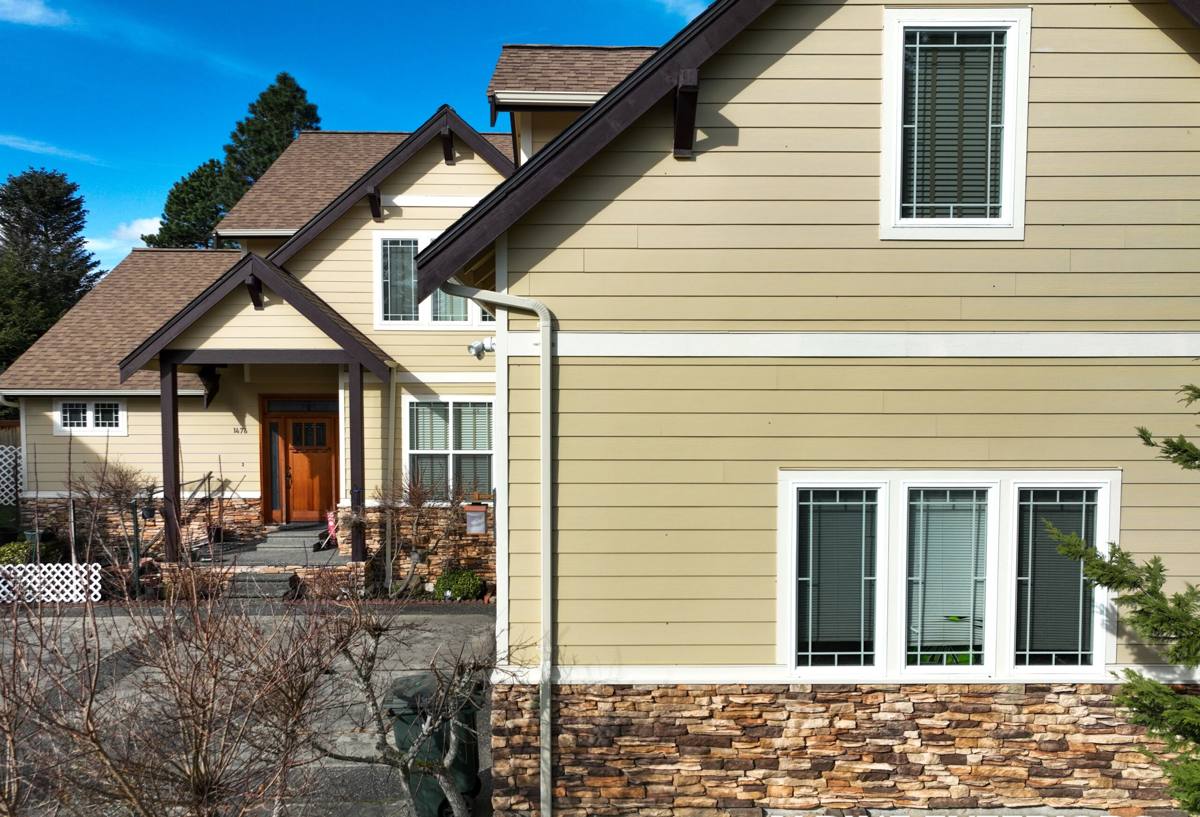
The Climate Conditions Energy-Efficient Windows Have to Handle Here
Snohomish County's marine climate is part of every window decision we make in Port Gardner, not a side note. Three conditions in particular shape how we spec and install a window in this neighborhood.
Salt air. Being close to Port Gardner Bay means airborne salt is a real factor, and it accelerates corrosion on hardware, fasteners, and lower-grade frame components faster than it would a few miles inland. Locks, hinges, and balance mechanisms take the brunt of this over time.
Driving rain. Storms here push rain sideways into wall assemblies and window flashing instead of letting gravity carry it straight down, which tests every flashing detail around a window opening far harder than a calm rain would. A flashing shortcut that would go unnoticed in a drier climate tends to get found out here, eventually.
A long moss season. Shade, dampness, and mild temperatures support moss and mildew growth on north-facing walls and trim for much of the year. Around windows, that sustained dampness is hard on exterior wood trim and can mask early water intrusion if nobody is looking closely.
Where Failing Windows Actually Waste Energy
It's tempting to assume energy loss is all about the glass, but in practice a lot of it happens at the edges. Air leaking around a poorly sealed frame-to-wall joint, a warped sash that no longer closes tight, or a failed weatherstrip can lose as much comfort and energy as an outdated glass package. That's part of why we treat the installation as at least as important as the window unit itself — a well-made window installed poorly will underperform a modest window installed correctly.
What "Energy-Efficient" Actually Means on a Window Label
Window efficiency ratings can look like a wall of jargon, but the underlying ideas are simple.
- U-factor measures how much heat passes through the window — lower is better for keeping heat in during our cool, wet winters.
- SHGC (Solar Heat Gain Coefficient) measures how much solar heat comes through the glass — less critical here than in a hot, sunny climate, since Everett's climate is heating-dominated rather than cooling-dominated.
- Low-E coatings are a microscopically thin layer on the glass that reflects heat back where you want it, without noticeably changing how clear the glass looks.
- Gas fills, usually argon, sit between panes and insulate better than plain air.
- Warm-edge spacers separate the panes at the edge of the glass and reduce the cold spot that used to form right at a window's perimeter.
For this area, we generally steer homeowners toward windows built for a northern, heating-dominated climate — prioritizing a low U-factor over an aggressive SHGC rating, since keeping heat inside matters more here than blocking solar gain does.
Frame Material Trade-Offs for a Bayfront Climate
The frame matters as much as the glass package, especially with salt air and constant moisture in the mix. There isn't one universally "right" answer — it depends on the home, the budget, and how much upkeep an owner wants to take on.
| Frame Material | Energy Performance | Moisture / Salt-Air Resistance | Maintenance |
|---|---|---|---|
| Vinyl | Good, with a well-designed multi-chamber profile | Doesn't corrode or rot; seams and welds are the long-term watch point | Low — no painting required |
| Fiberglass | Very good; expands and contracts closer to glass, which helps seals last | Strong resistance to moisture and salt exposure over time | Low to moderate |
| Wood-clad | Good, with a warmer interior feel | Cladding protects the exterior face, but any breach exposes wood beneath it | Higher — exterior cladding and any exposed wood need monitoring |
Our standard recommendation for homes with direct bay exposure leans toward vinyl or fiberglass for the exterior-facing components, simply because they hold up to salt air and driving rain with less ongoing maintenance. That's a professional judgment about long-term performance in this specific setting, not a knock on wood-clad windows generally — they can be a great fit on a more sheltered lot where the maintenance commitment makes sense.
What a Correct Energy-Efficient Window Installation Involves
An efficient window can still underperform badly if it's installed loosely. The details that actually determine performance happen at the rough opening, not on the spec sheet.
- A sloped sill pan that directs any water that gets past the window back outside, instead of into the wall
- Flashing integrated with the home's existing water-resistive barrier, lapped correctly so water sheds outward and downward
- Low-expansion foam or proper insulation in the gap between the frame and rough opening — not left empty, and not overpacked in a way that bows the frame
- Shimming that keeps the unit square and plumb, so the sash operates and seals correctly for years, not just on install day
- Interior air sealing at the frame perimeter, separate from the exterior weatherproofing
- Exterior trim and caulking that's compatible with the surrounding siding and detailed to shed water, not trap it
Our Process for a Port Gardner Window Project
- On-site assessment — we look at the existing windows, the condition of the openings, and any signs of past water intrusion before recommending anything.
- Product selection — we walk through frame material, glass package, and U-factor trade-offs based on your home's exposure and budget, rather than defaulting to one product line.
- Careful removal — old units come out without unnecessary damage to surrounding siding or trim, and we address any hidden framing or moisture issues we find before moving forward.
- Installation and flashing — the new unit is set, shimmed, insulated, and flashed to a sequence built for this climate's wind-driven rain, not a generic manufacturer minimum.
- Trim and finish — exterior trim is integrated to match the home, and interior finish work is completed cleanly.
- Final walkthrough — we check operation, seals, and sightlines with you before calling the job done.
Common Mistakes That Undercut Energy Efficiency
Most of the energy-efficiency complaints we get called out to inspect trace back to installation shortcuts rather than a bad window. Skipped sill pans, foam gaps left empty, flashing that wasn't properly lapped into the existing wall system, and reliance on caulk alone instead of a real flashing sequence are the patterns we see most. None of these show up on a spec sheet, and none of them are things a homeowner can easily catch by looking at the finished trim — they only become obvious later, as drafts, soft spots, or fogged glass. It's part of why we treat the installation process itself as the deciding factor in how a window performs here, regardless of the brand on the label.
Why a Local Port Gardner Crew Matters
Manufacturer installation guidance is written for average conditions in a moderate climate. Port Gardner's bay exposure isn't average — the salt air, wind-driven rain, and long wet season all push harder against a shortcut installation than they would a few miles inland. A crew that has actually installed windows on homes exposed to this specific stretch of water knows which parts of a standard installation aren't optional here, and where extra time on flashing or sealant pays for itself over the life of the window.
Questions Worth Asking Before You Hire
- Ask whether they've installed windows on other homes near Port Gardner or similar waterfront exposure
- Ask how they handle flashing and sill pans specifically, not just "we seal everything with caulk"
- Confirm current Washington contractor licensing and insurance
- Ask which frame materials they'd recommend for your home's exposure, and why
- Get a written scope of work that separates labor warranty from the manufacturer's product warranty
If your windows are drafty, fogged, or just old enough that you're wondering whether they're costing you money every month, it's worth having someone take an honest look before you start comparing quotes. We offer free, no-pressure estimates for energy-efficient window projects in Port Gardner and the surrounding Everett area — use the form below to get a time on the schedule.